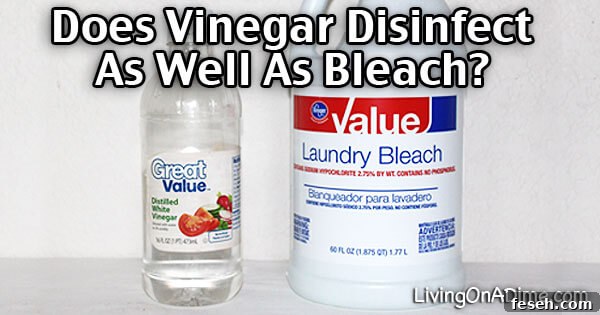
Does Vinegar Disinfect as Well as Bleach? Some people avoid bleach and prefer vinegar for cleaning, but is vinegar as effective at disinfecting?
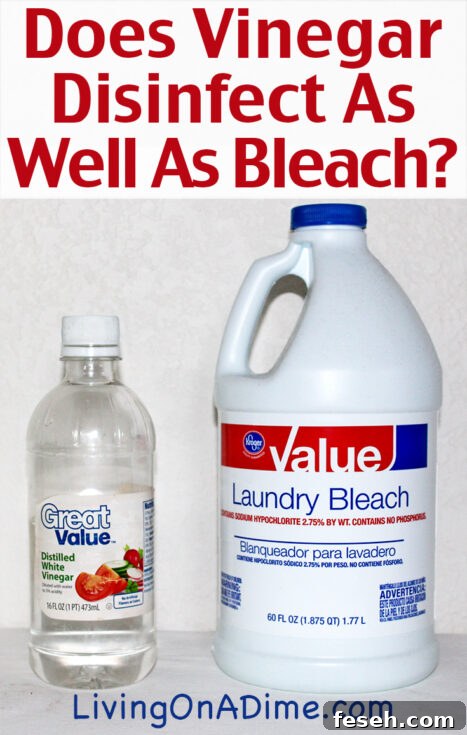
Does Vinegar Disinfect As Well As Bleach?
When my mom suggested disinfecting countertops with bleach, many readers responded that they prefer vinegar instead. That prompted us to look at reliable sources and separate facts from opinion.
We avoid publishing incorrect or potentially dangerous advice, so for questions like this we consult trusted health authorities. Even groups that recommend vinegar acknowledge that its disinfecting ability is not as thoroughly tested as bleach.
Vinegar is not as effective as bleach at killing germs. Vinegar has some antimicrobial properties, but studies and health guidance indicate it does not inactivate as many bacteria, viruses, or molds as bleach does. Reported effectiveness for vinegar varies, and it generally does not reach the high kill rates associated with household bleach.
Bleach is far more effective for disinfection. Household bleach (sodium hypochlorite solutions used at the correct dilution) is widely recommended by health agencies for disinfecting surfaces because it reliably inactivates a broad range of bacteria, viruses, and mold when used properly.
Because the effectiveness of different cleaning agents depends on concentration, contact time, and the type of organism, relying on vinegar when you need dependable disinfection can leave you and your family at greater risk. For routine cleaning, soap and water are very effective at removing germs; for disinfection when required, dilute bleach solutions are the more reliable option.
We are not suggesting you use excessive amounts of bleach every day. I use bleach for laundry and disinfect surfaces as needed—more often during illness in the household and less frequently otherwise. A little bleach goes a long way when mixed correctly. Overusing or mixing bleach with incompatible products can create fumes or hazards, so proper dilution and ventilation matter.
Some people worry that disinfectants like bleach have caused increases in illnesses, but the ability to control life-threatening bacteria and viruses has also prevented many serious infections. Modern disinfectants and public health measures have contributed to declines in many infectious diseases.
I appreciate that people have concerns about chemicals and safety. When weighing risks and benefits, remember that effective disinfectants can protect vulnerable people from severe illness. Choosing the right product for the right job, using it at the recommended dilution, and following safety guidance reduces risk while maximizing benefits.
Find our easy Homemade Clorox Disinfecting Wipes Recipe Here!
If you are concerned about bleach and the environment, you might want to review information from manufacturers and regulators:
- Household bleach products are typically based on sodium hypochlorite, a chlorine-based compound derived from sodium chloride (table salt) during manufacturing.
- Many bleach formulations break down into simple byproducts; proper use and wastewater treatment reduce environmental release.
- Manufacturers and regulators provide guidance on safe use, disposal, and environmental considerations for household bleach.
- Always follow label directions for safe handling and disposal of any disinfectant product.
Most people simply use too much bleach when cleaning. Proper dilution is important for effectiveness and safety.
If you plan to add bleach to dishwater, ensure any detergent is compatible with bleach. Some scented or specialized soaps can react with bleach and produce unpleasant or hazardous fumes. Always read product labels and warnings before mixing.
To disinfect correctly, follow manufacturer and public health guidance:
- To disinfect hard, nonporous surfaces: Use a properly diluted bleach solution as directed on product labels. Common guidance recommends about 1/4 cup (60 ml) of household bleach per gallon (3.8 L) of water for routine disinfection, but always follow current label instructions.
- To disinfect water in emergencies: When boiling is not possible, small amounts of household bleach can be used to treat water. Typical emergency recommendations involve adding a few drops of unscented household bleach per liter or gallon, mixing thoroughly, and waiting the recommended time before use. Follow current public health instructions for exact dosages and procedures.

Check out cooking resources and cookbooks to help you plan budget-friendly meals at home.