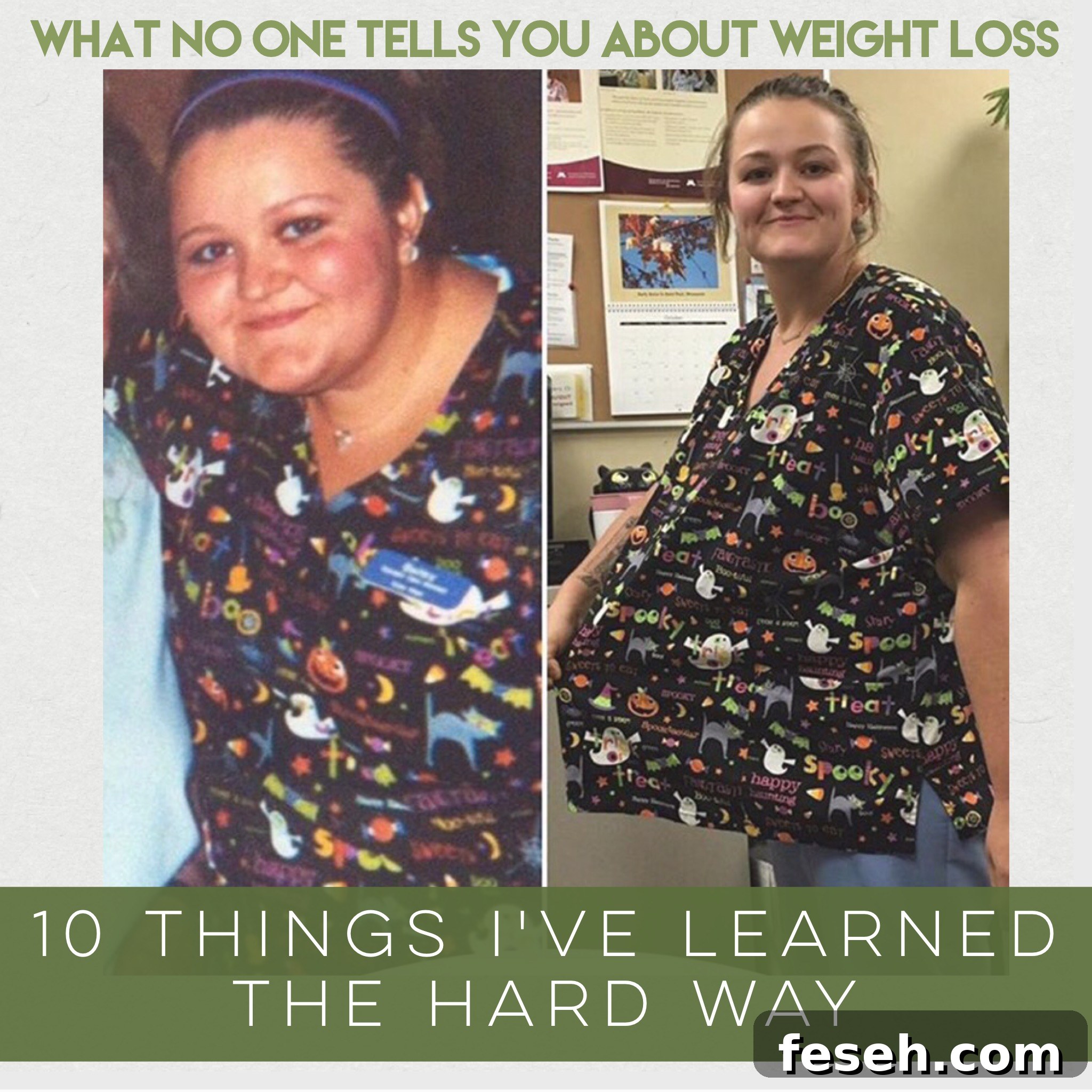
There are many changes that come with losing a significant amount of weight. They’re as emotional as they are physical, and they affect everyday life—from casual interactions and relationships to hard, honest realizations. Here are 10 things I learned the hard way during my weight-loss journey.
Check out my podcast episode on this topic to hear more about what no one tells you about weight loss!
1. Your body won’t look like you imagined
How your body looks after major weight loss depends on many factors: where you carried weight, genetics, age, and how quickly you lost it. I carried most of my weight in my midsection and arms, and as I lost pounds, I noticed excess skin appearing. That was hard to accept. I’d hold the loose skin in front of a mirror and compare it to the image I’d held in my head for years. The reality didn’t match the fantasy.
At first I felt trapped by my body and punished by the reminders of past choices. Over time, though, I shifted my perspective. The loose skin became proof that I fought hard to change my life. I learned to appreciate what my body can do now—how much more capable and healthier it is—rather than focus only on how it looks. I still hope for improvements, but I wouldn’t trade my health for the old me.
2. People will want to talk about your weight loss
When I was heavy, no one mentioned it. Losing weight flipped that script: suddenly everyone wanted to ask, compliment, or know how I did it. That attention was awkward at first. I didn’t know how to receive compliments because I’d never been on the receiving end for my appearance. I’d often mutter a shy “thank you” and change the subject.
After dozens of conversations, the positive attention became motivating and even enjoyable. It boosted my confidence and encouraged me to keep going. But eventually it can be exhausting when weight loss becomes the only topic people bring up. I appreciate the curiosity and support, yet sometimes I simply want to talk about anything else.
3. Everyone has an opinion—and some of it isn’t helpful
Lose weight and you open the door to constant advice and commentary, often well-meaning but poorly worded. Favorite examples: “Be careful—you don’t want to get too skinny,” “Keep going!” and “I don’t remember you being that big.” Comments like these sting because they carry unintended implications: judgment about your past size, pressure to continue changing, or a dismissal of how you remember your own body.
I had to learn to take these remarks with a grain of salt. Typically people mean to flatter or encourage, not to wound. I started interpreting comments more generously and moved on instead of letting each sentence derail me emotionally.
4. You’ll do everything “right” and still hit stalls
Weight loss isn’t linear. Even when you follow your plan, external factors—hormones, sleep, stress, medications, genetics—can cause plateaus or small gains. Those stalls are frustrating, but they’re normal. Learning to trust the process, to celebrate non-scale victories, and to enjoy exercise for how it makes you feel helped me stick with long-term changes. Eventually my body responded.
5. Not everyone will understand your commitment—and some will take it personally
Many are supportive until your choices inconvenience them. Invitations, celebrations, and family gatherings can become minefields. Early in my journey I skipped a friend’s dinner that I knew would tempt me, offering an alternative instead. She took it personally; she thought I was being selfish. People who feel pressured to change their habits or to accommodate your needs sometimes get defensive.
Food pushers are common: relatives or friends insisting “just one bite” or “it’s a special occasion.” I’ve learned simple responses—saying I already ate or thanking them and declining—avoid conflict. Explaining my choices in detail often causes defensiveness, so sometimes keeping it brief is kinder for everyone.
6. You’ll get annoyed with the “I’m too busy” excuse
Hearing people say they “don’t have time” to prioritize their health can be frustrating because it feels like an excuse to avoid change. I used to say the same thing, and I know real change requires making time, not waiting for it to appear. When someone says they’re too busy, it often signals a lack of prioritization rather than an actual impossibility.
That said, empathy helps. Everyone has different constraints. I try to focus on encouraging small, sustainable steps rather than judging someone’s timeline.
7. You’ll find yourself judging others—and worrying they judge you
It’s normal to notice others’ choices after you’ve changed your own habits. Sometimes I judged strangers’ meals out of concern, wanting to share what I’d learned. That impulse reminded me to be careful: I don’t know someone’s story or struggles.
At the same time, I worried people were monitoring my food choices, so I preemptively explained myself when I ate something indulgent. Over time I realized most people aren’t as focused on my plate as I imagined. Reducing that self-consciousness eased my anxiety around food and social situations.
8. You’ll realize how much you were settling
Weight loss can change more than your body; it can reshape your standards. Gaining confidence and valuing yourself more makes it clearer when you’ve been settling—in relationships, jobs, or friendships. For me this realization was painful but empowering. I ended some unhealthy situations and pursued better ones. Recognizing that I deserved more was a major part of my transformation.
9. Regular-sized clothes don’t solve every wardrobe issue
Shopping becomes easier in one sense—more options—yet some garments still fit awkwardly because of loose skin or body proportions. I often need different sizes for arms versus midsection or prefer higher-waisted workout pants to feel secure. Learning what styles flatter and support my comfort took trial and error, but I’ve gradually built a wardrobe that suits my new life.
10. Your relationships will change
Relationships shift after major life changes. Some friendships faded when our common activities—like going out for food or drinks—no longer matched my priorities. Other relationships deepened as I became more present, confident, and engaged. I made new friends who know me as the healthier version of myself. Family dynamics evolved, and my romantic life changed as I stopped tolerating people who didn’t treat me well and made room for someone who does.
Change is rarely all good or all bad. Losing weight redefined how I see myself and how others see me, and it forced choices about who deserves to stay in my life.
Have you experienced similar lessons after a big change in health or lifestyle? I’d love to hear how your journey reshaped your life.