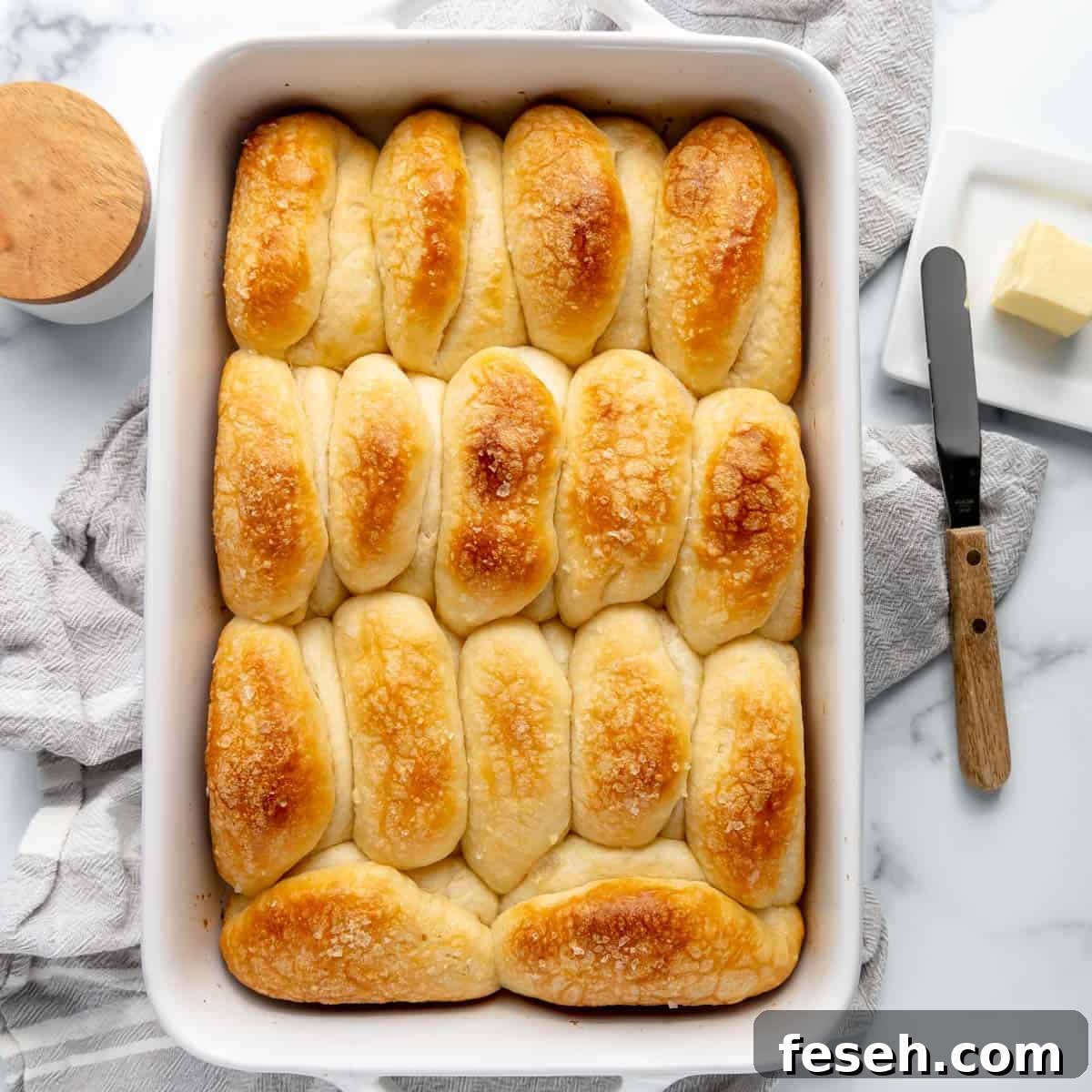
Whether you’re new to baking or have been making bread for years, this authentic Parker House Rolls recipe delivers consistently excellent results. With one little secret ingredient and straightforward technique, these classic New England dinner rolls come out extra soft, fluffy, and richly buttery every time.
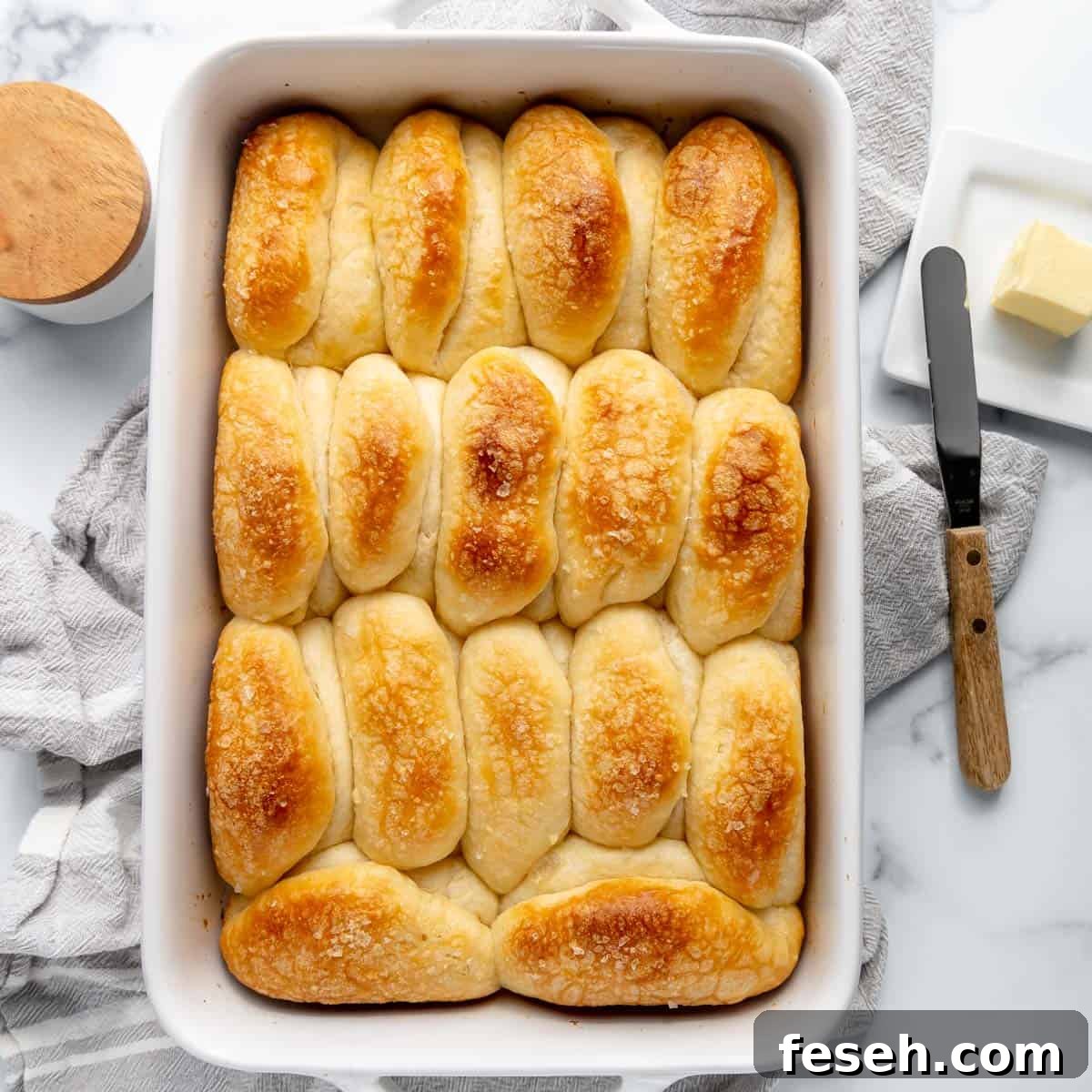
I used to be intimidated by yeast, and making bread at home felt out of reach. But once I tried it, I realized it’s much simpler than it seems. I developed this recipe to be approachable for beginners while delivering bakery-quality rolls every time.
This homemade version of the New England classic yields tender, pillowy dinner rolls with a slightly chewy, buttery top. The dough is forgiving, making this an ideal recipe for anyone learning to bake with yeast.
These rolls are perfect for family dinners, holiday feasts, and even sandwiches — think lobster rolls or sliders. Once you try them, they’ll likely become a staple.
Why You’ll Love This Parker House Rolls Recipe
- Classic New England flavor and texture
- Forgiving dough that’s great for beginner bakers
- Extremely soft and fluffy rolls with a buttery crust
- Make ahead, refrigerate overnight, or freeze before baking
- Pairs well with many meals and is impressive for guests
Ingredients
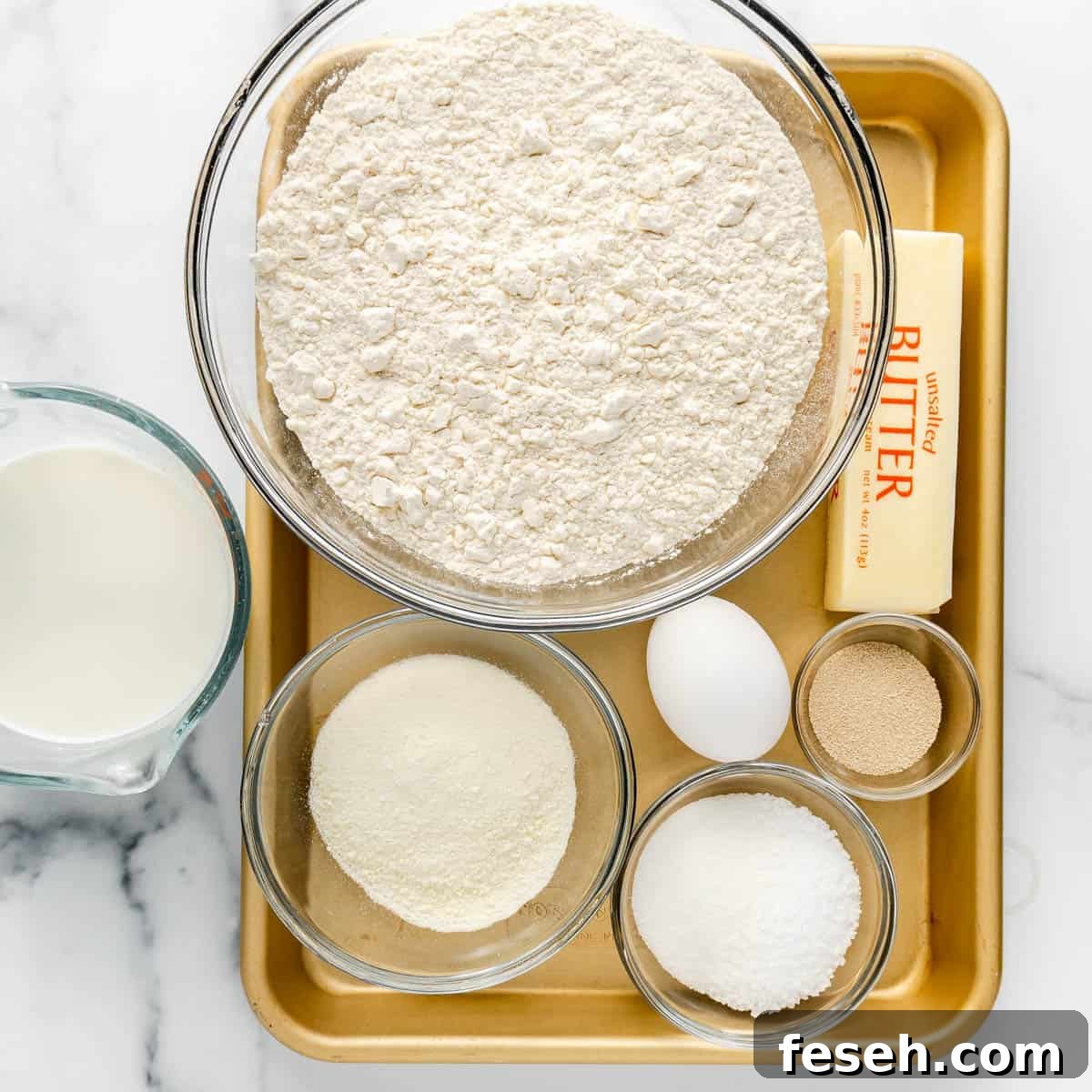
- Instant yeast – Can be added directly to the flour. If using active dry yeast, bloom it in the milk first.
- Whole milk – lukewarm
- Large egg – beaten
- Unsalted butter – melted and divided
- Bread flour – gives better structure and chew than all-purpose
- Nonfat dry milk powder – the secret ingredient for tender, fluffy rolls
- Coarse kosher salt
- Granulated sugar
- Egg wash – 1 large egg + 2 tsp milk (optional)
- Flaky sea salt – for sprinkling before baking
Recipe adapted from King Arthur’s White Sandwich Bread.
Step-by-Step Overview
Below is a concise walkthrough; full details appear in the recipe card at the end.
Before you start: If using active dry yeast, dissolve it in lukewarm milk and let it bloom for about 5 minutes until bubbly. If using instant yeast, add it directly to the dry ingredients.
Step 1
Measure and add the bread flour to the bowl of a stand mixer.
Step 2
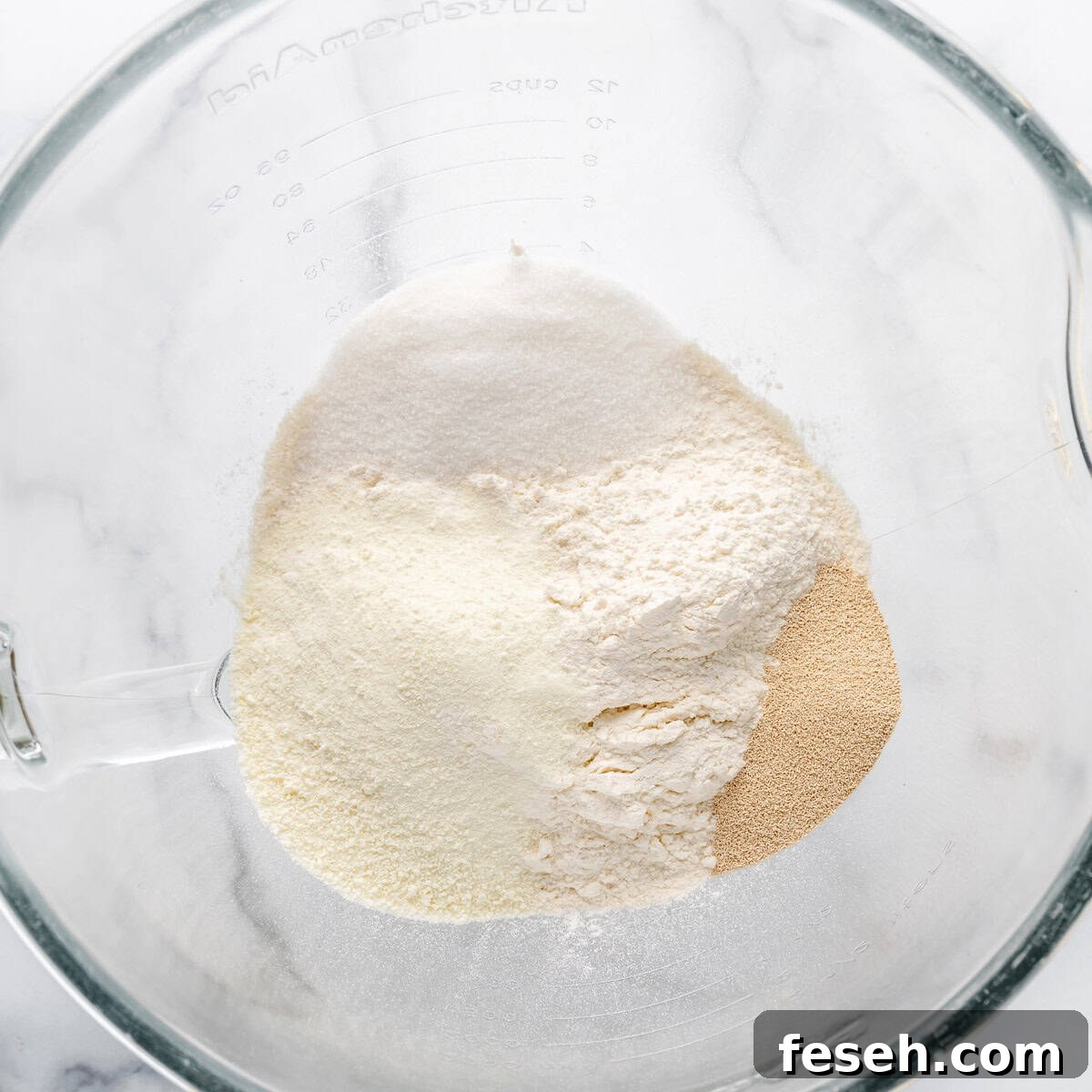
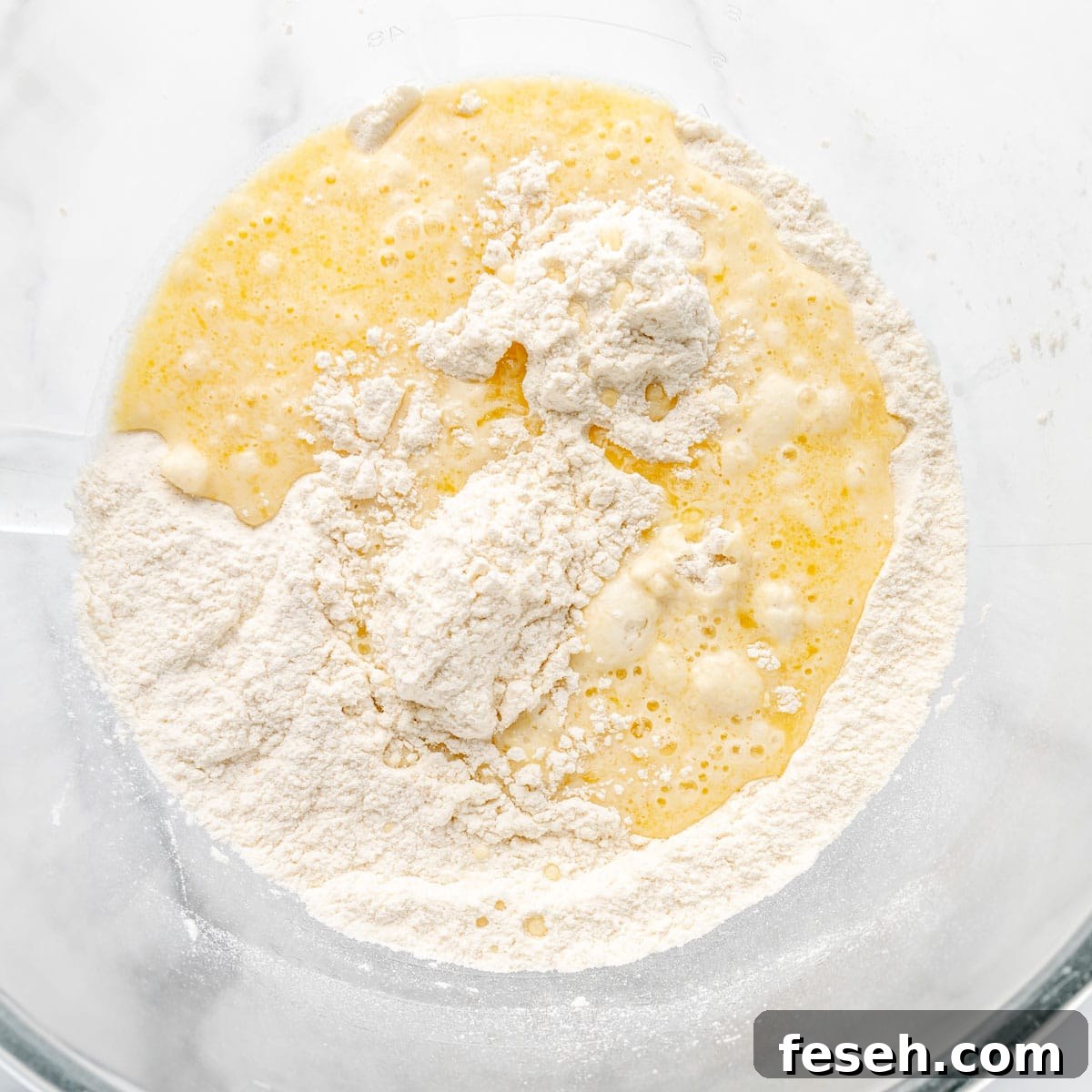
Add the dry ingredients (including the instant milk powder, sugar, salt, and yeast if using instant yeast). Mix on low speed with a dough hook for about 90 seconds until combined.
Step 3
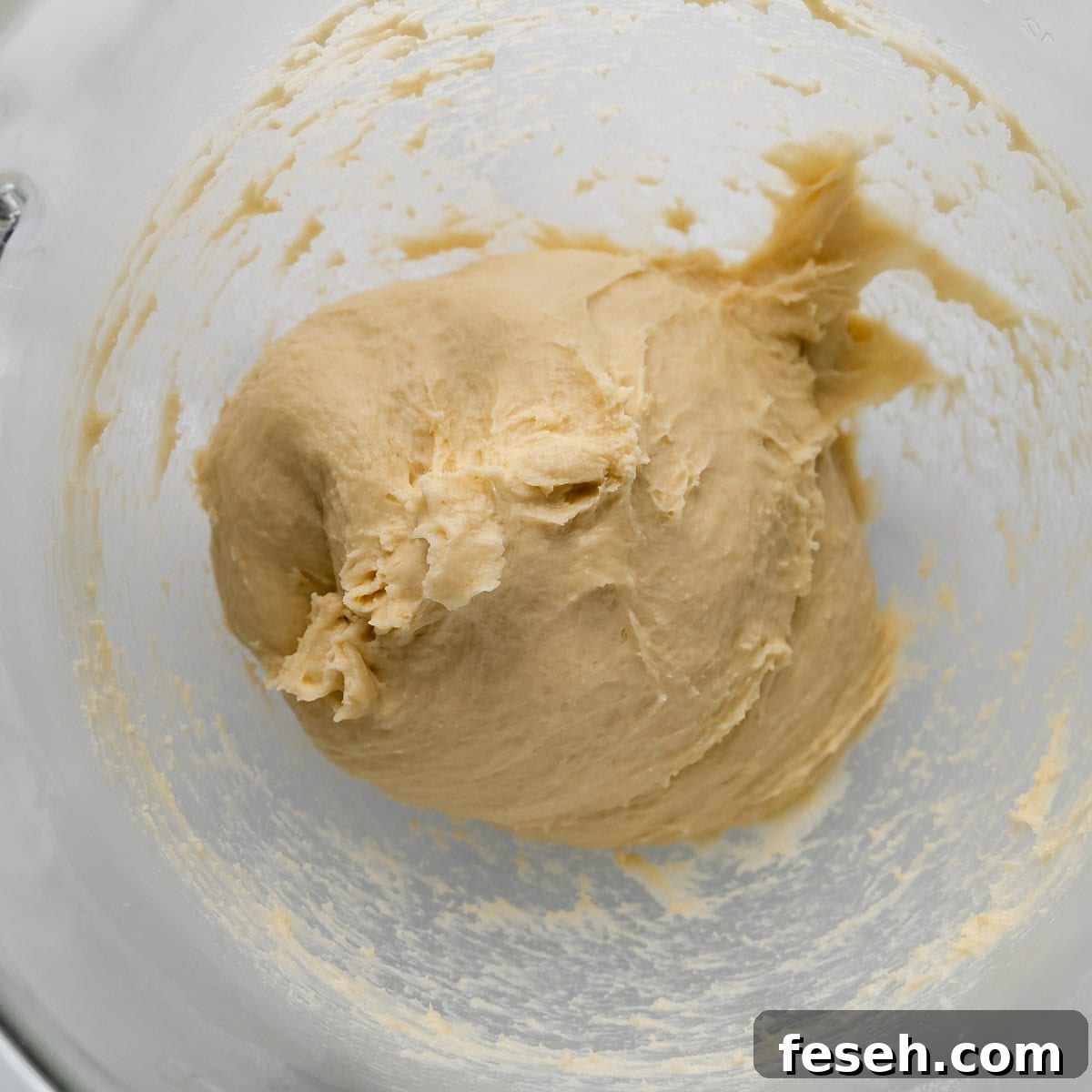
Increase to medium speed and knead until the dough barely clears the bowl sides but still sticks lightly to the bottom — about 7–8 minutes in a stand mixer. Resist the urge to add extra flour; the dough should look slightly sticky.
Step 4
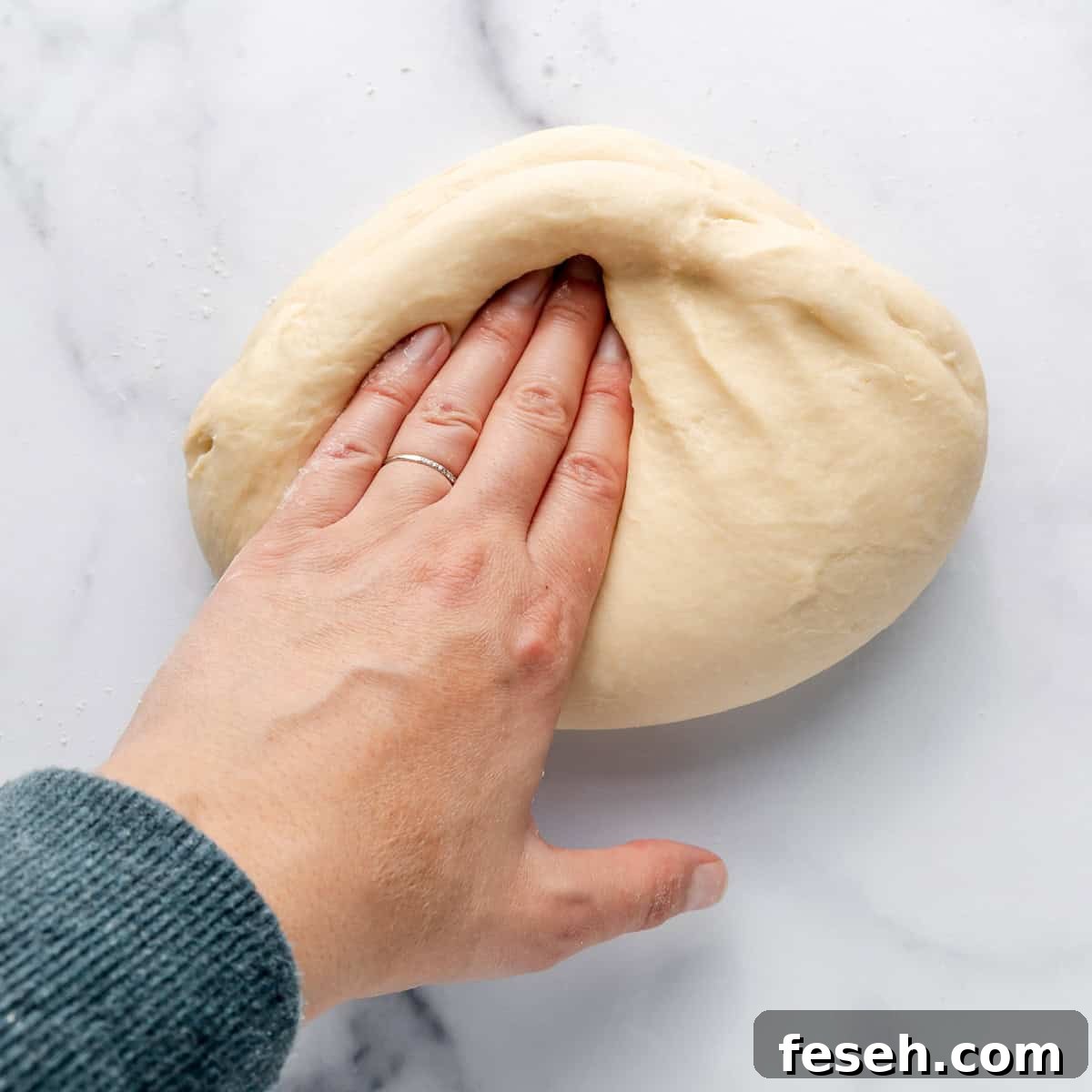
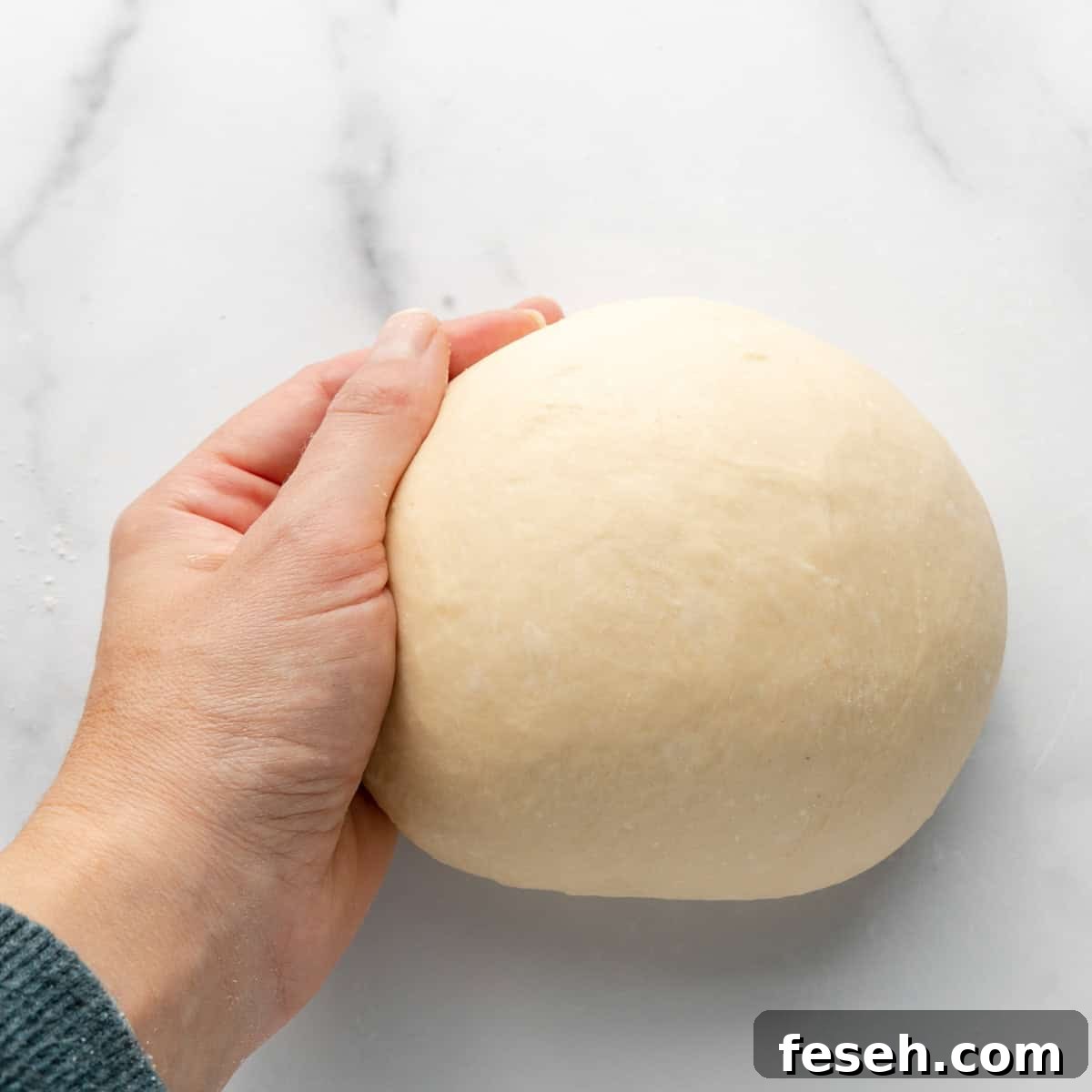
Lightly flour your work surface and turn the dough out. Knead briefly by hand until it forms a smooth ball — very soft but not sticky.
Step 5
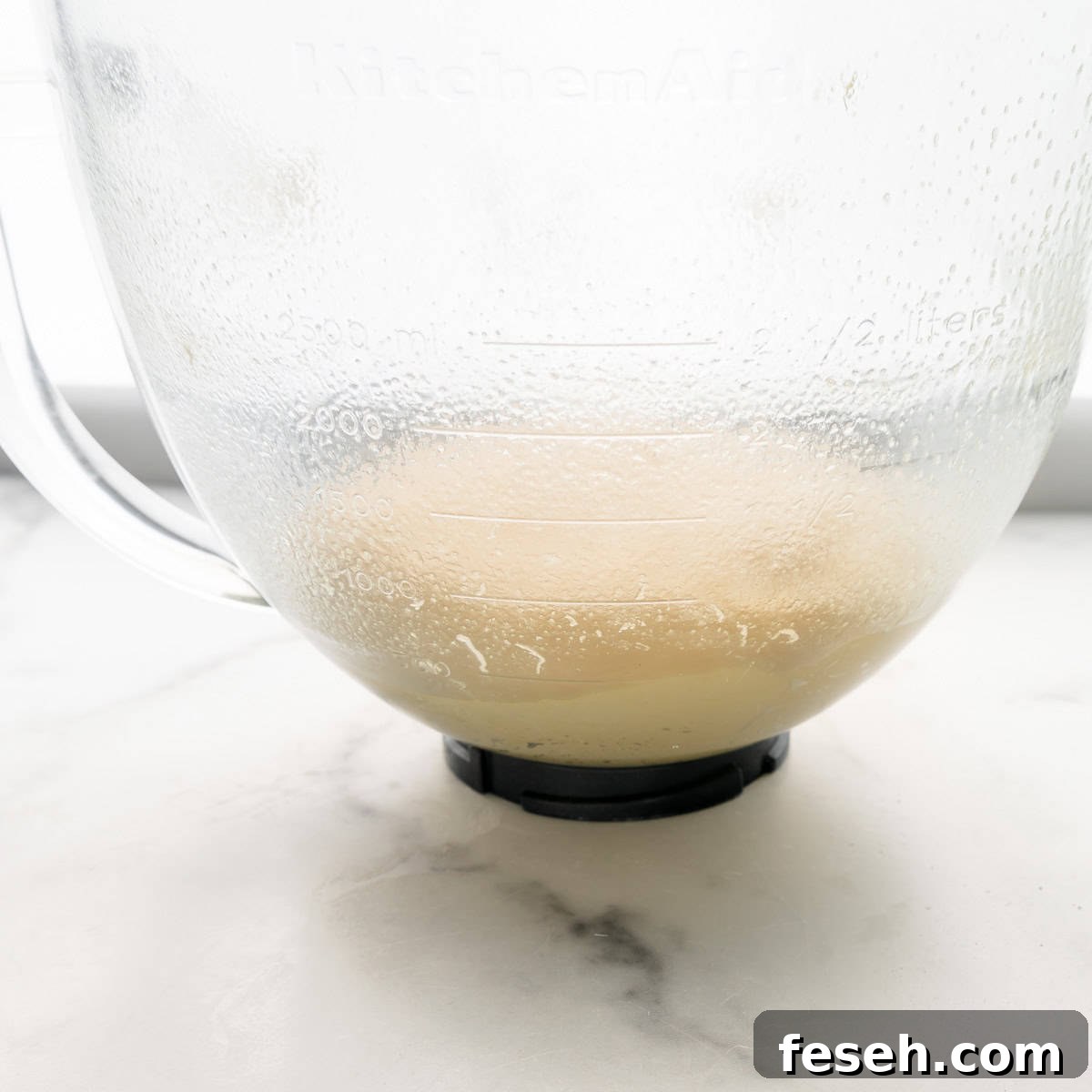
Place the dough in a lightly greased bowl, cover, and let rise at room temperature until nearly doubled — typically 1–1½ hours, longer if your kitchen is cool.
Shaping the Rolls and Second Rise
Step 6
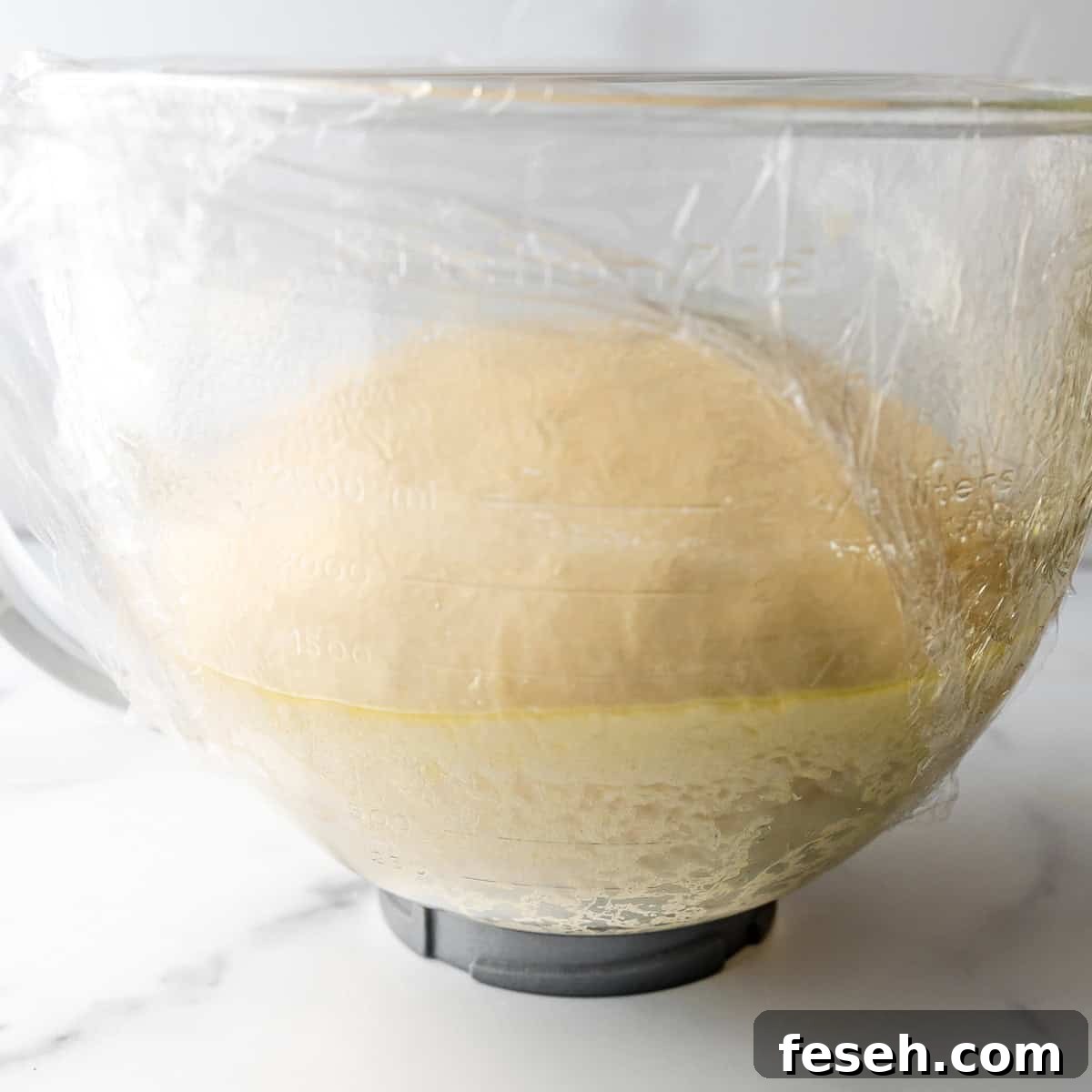
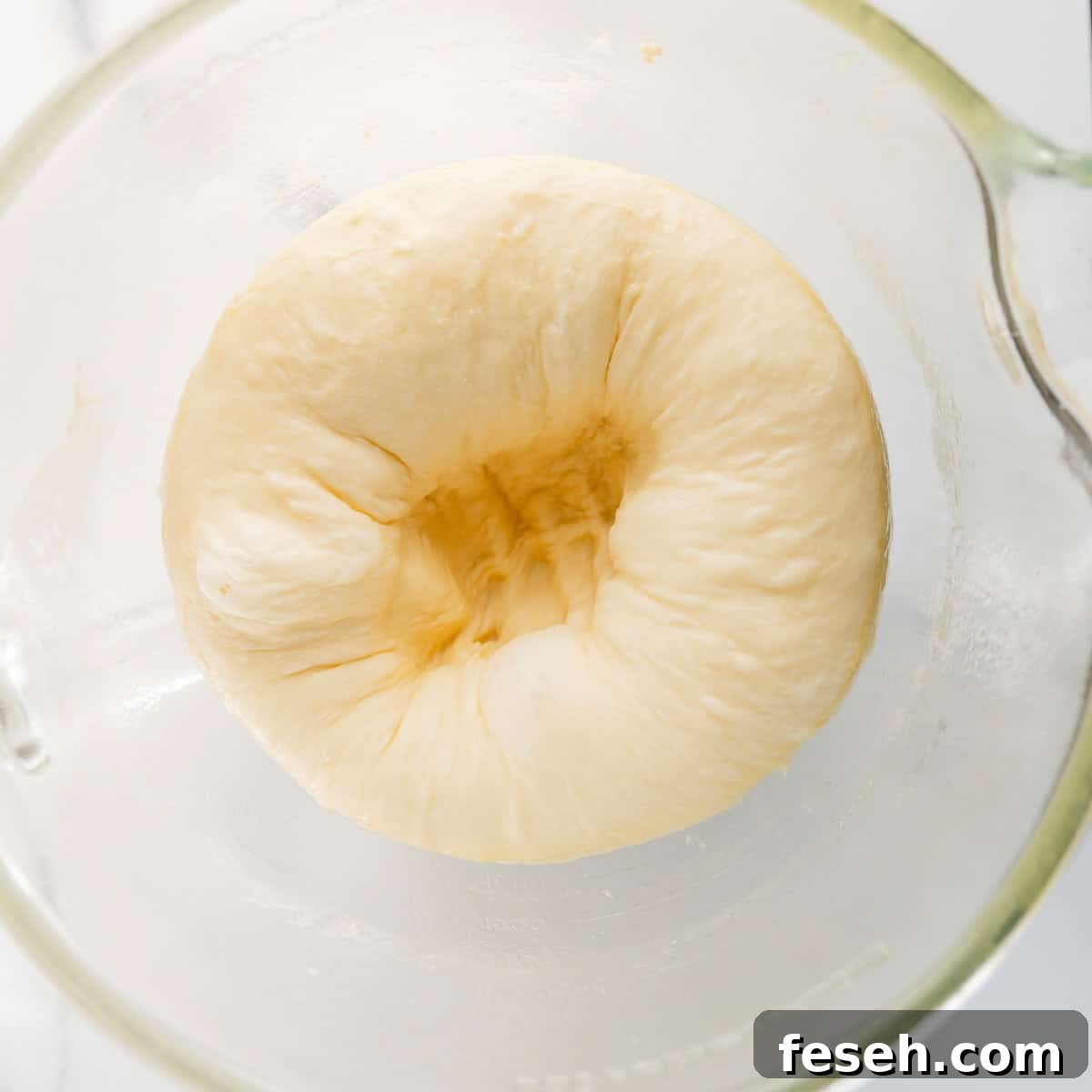
After the dough doubles, gently deflate it.
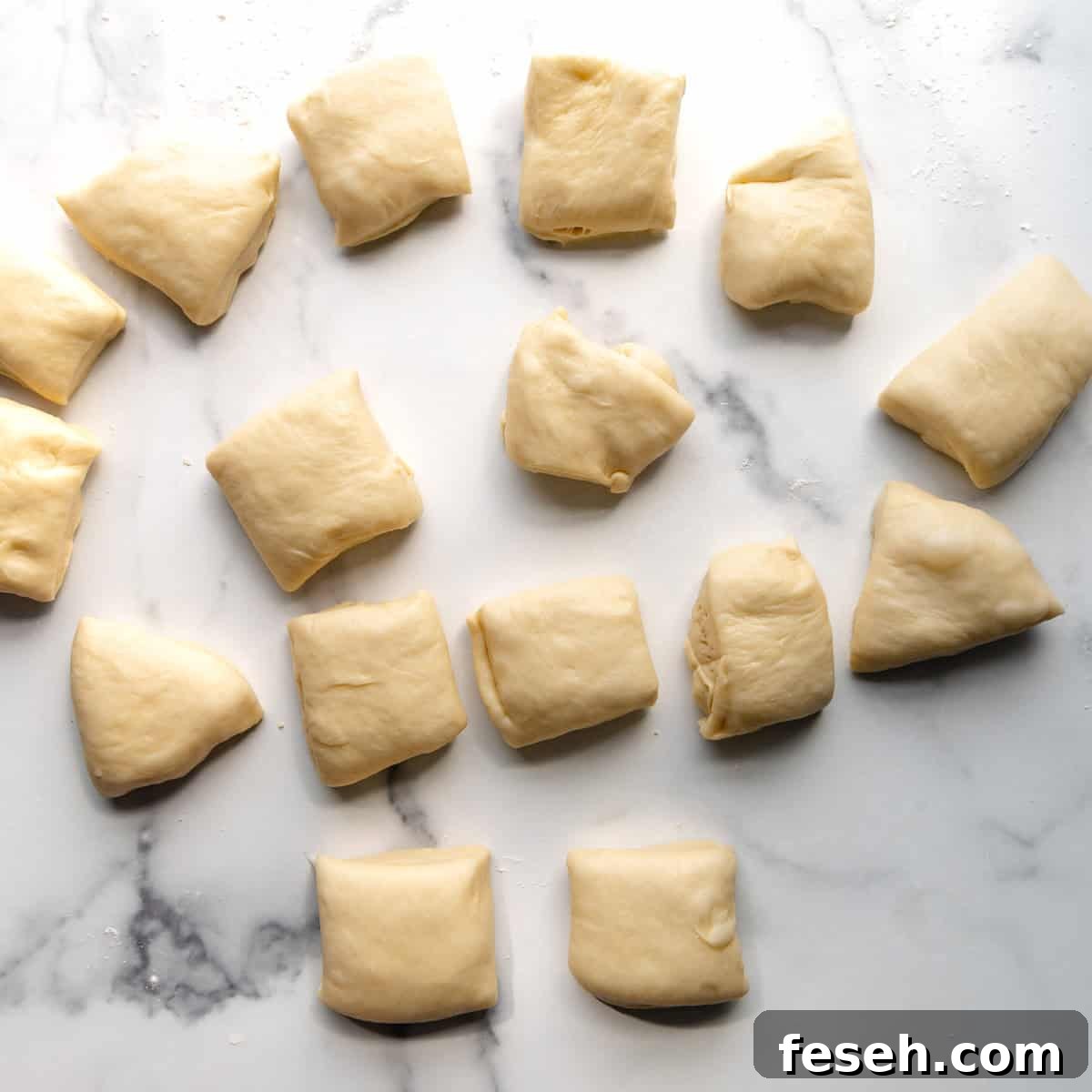
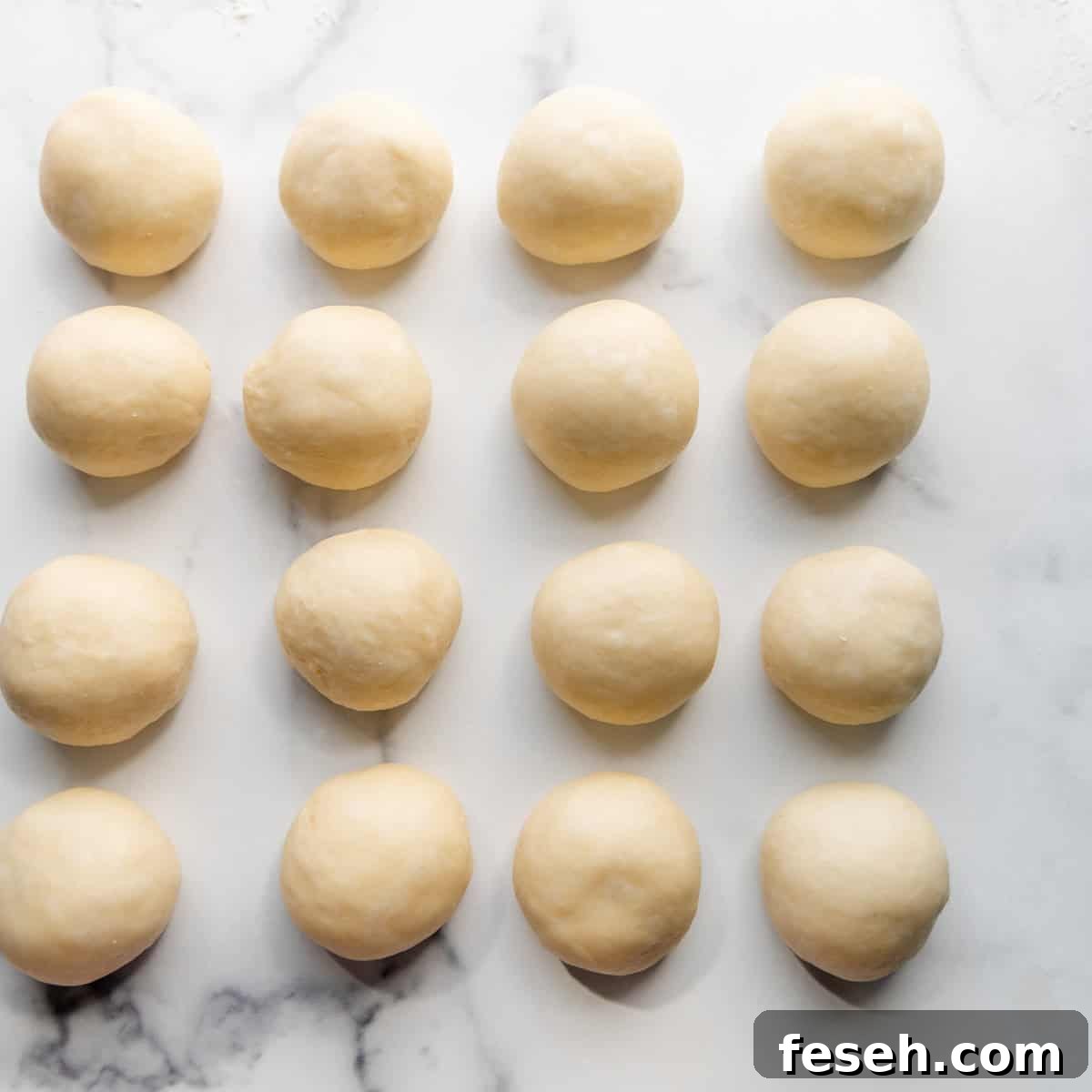
Divide the dough into 16 equal pieces as best as you can.
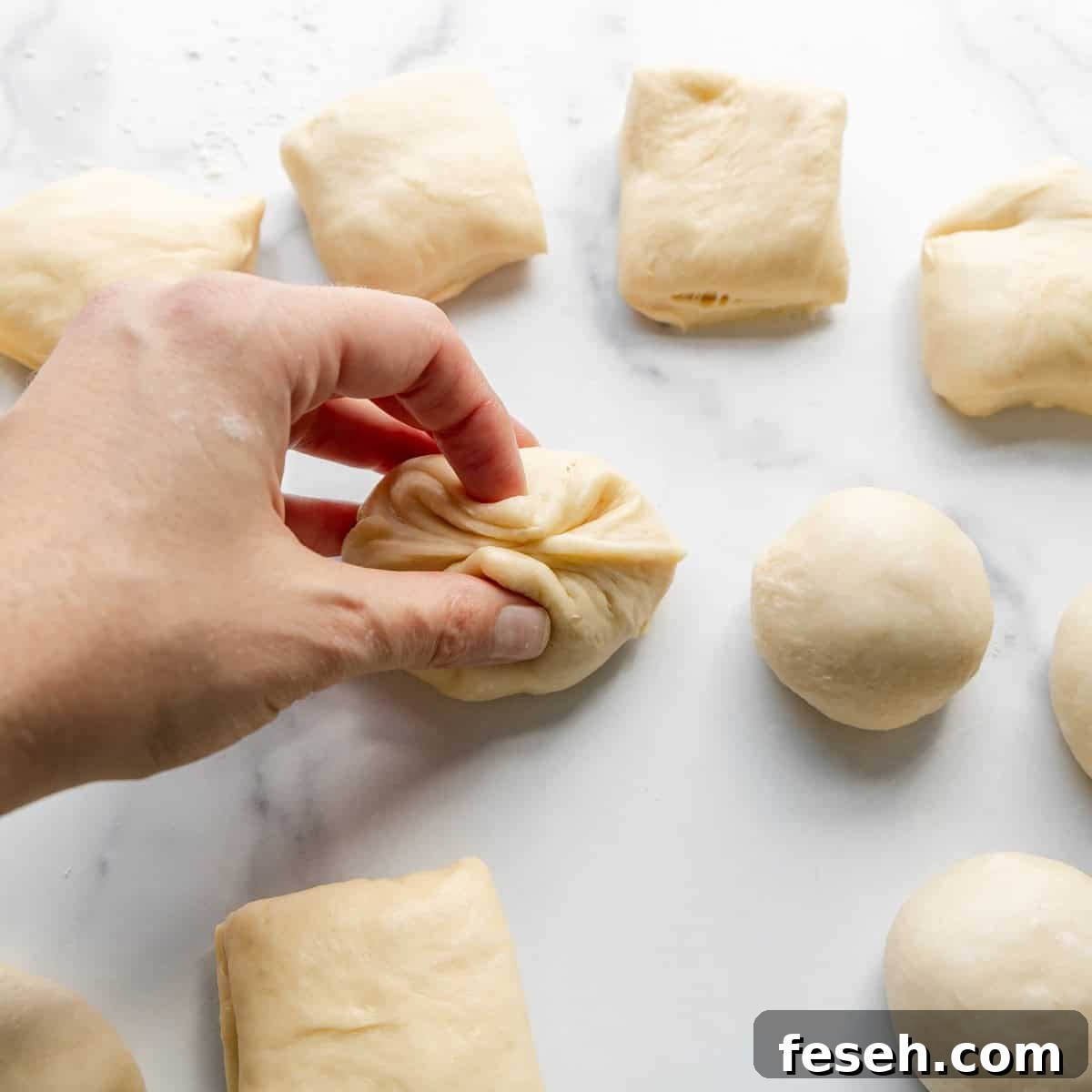
Pinch each portion into a rough mound, then roll each under your hand into a smooth ball.
Flatten each ball to a 1/4″ thick circle about 3½” wide. Use a finger or the handle of a wooden spoon to make a shallow crease across the center.
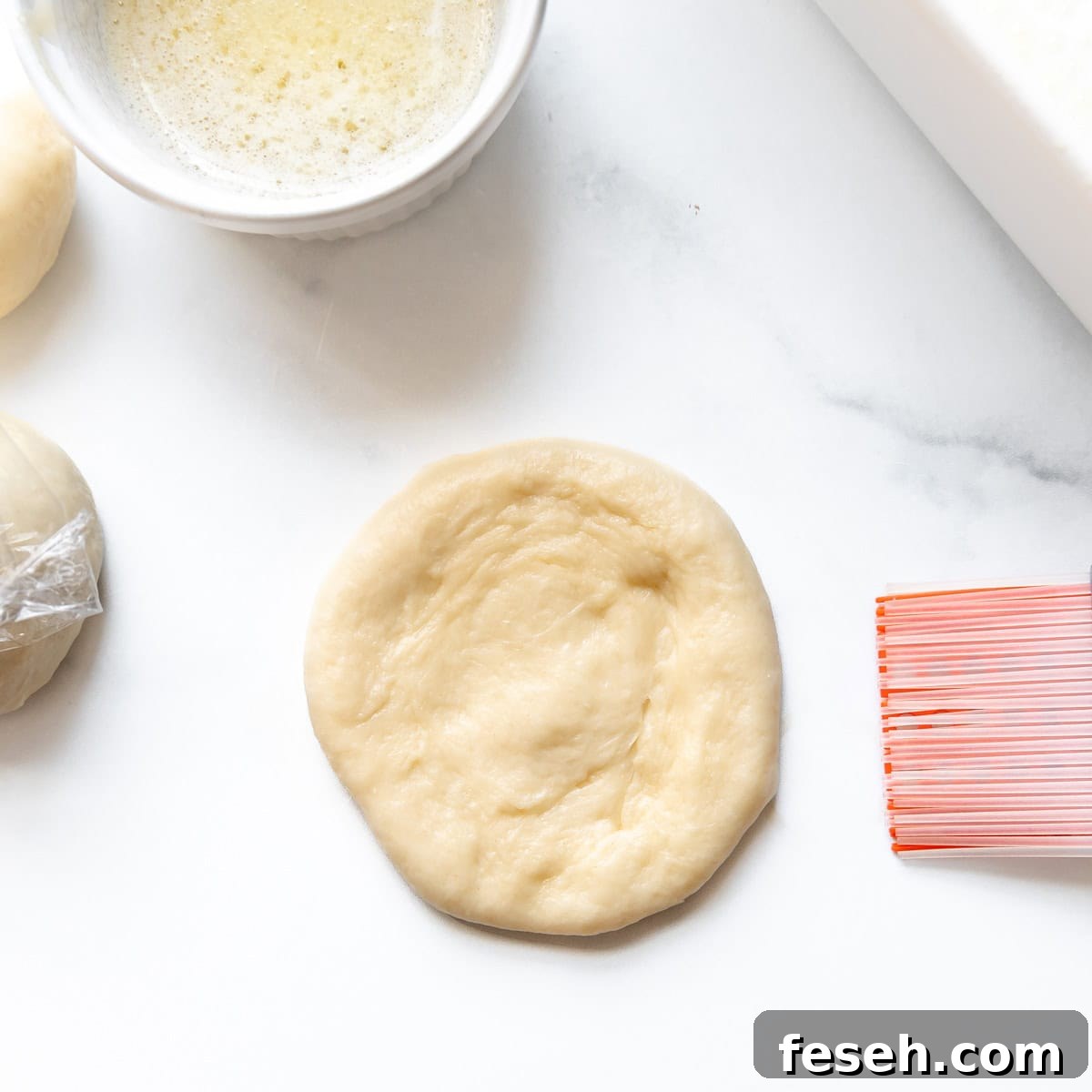
Brush the tops with melted butter and fold each circle in half along the crease.
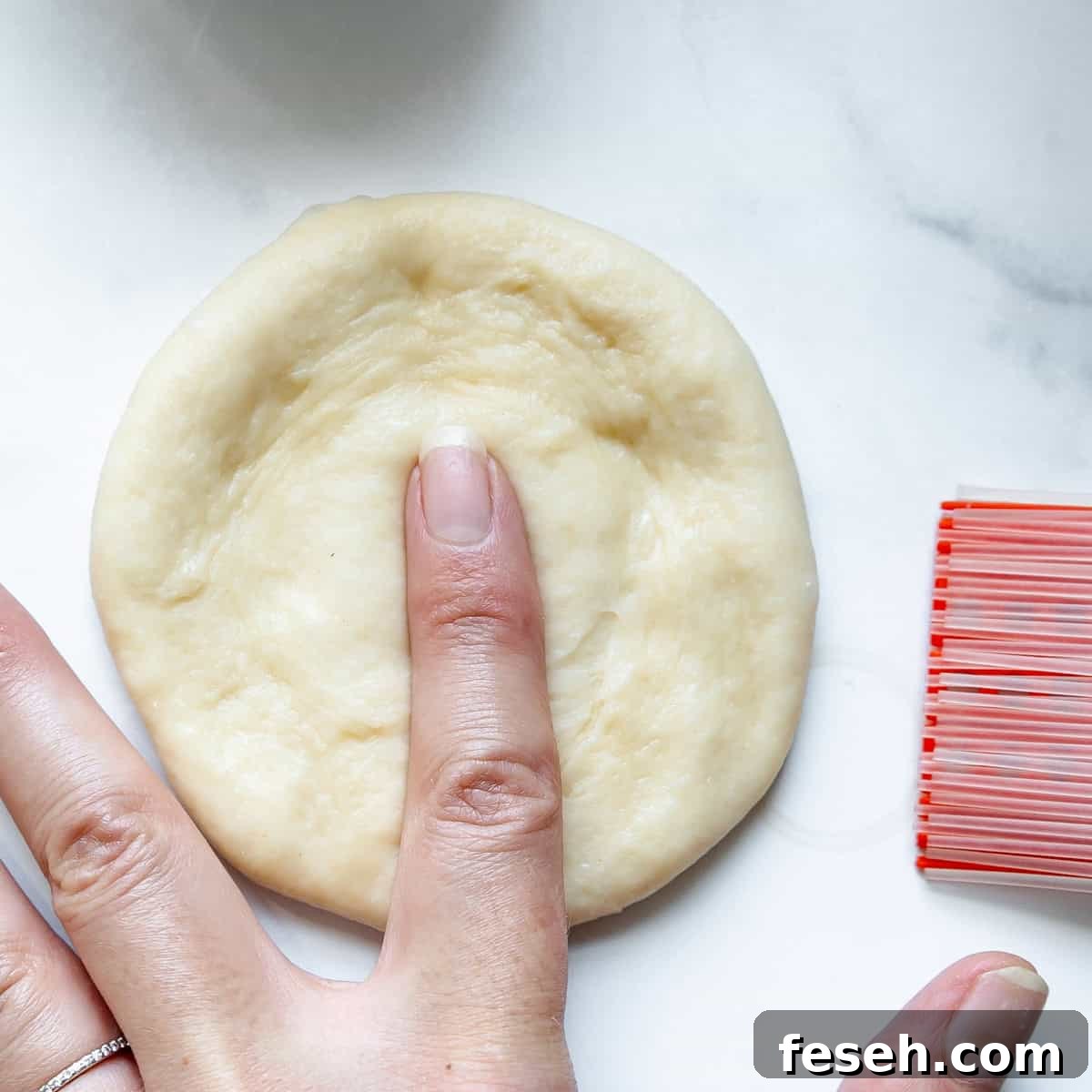
Gently press the two halves together so they adhere. This folded shape is the signature Parker House roll form.
Tip: If the dough resists shaping, let it rest 10–15 minutes so the gluten relaxes.
Step 7
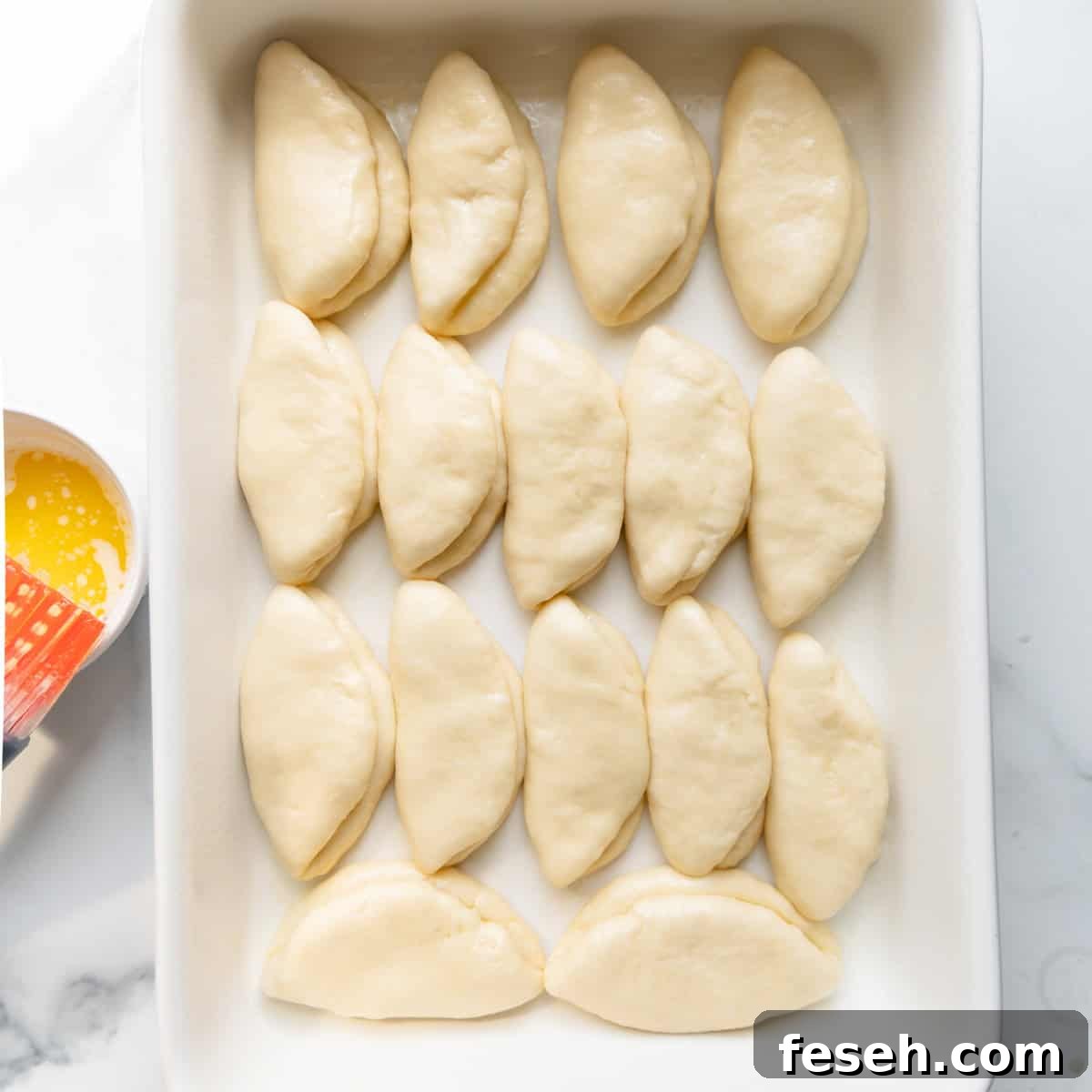
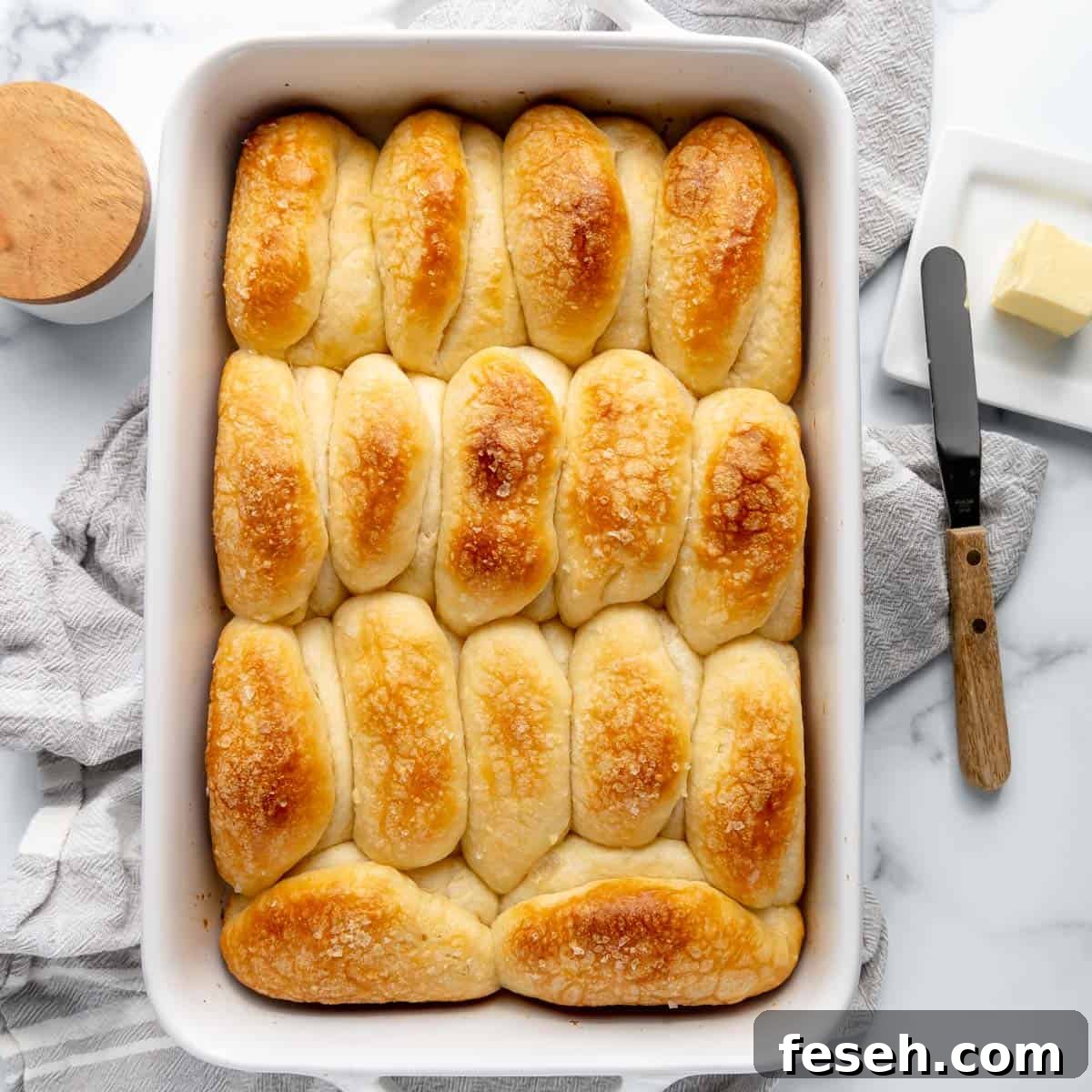
Place the folded rolls in a 13×9″ pan, arranging 3–4 rows. Brush the tops with remaining melted butter, cover with lightly greased plastic wrap, and let rise until very puffy. If your kitchen is cold, this will take longer.
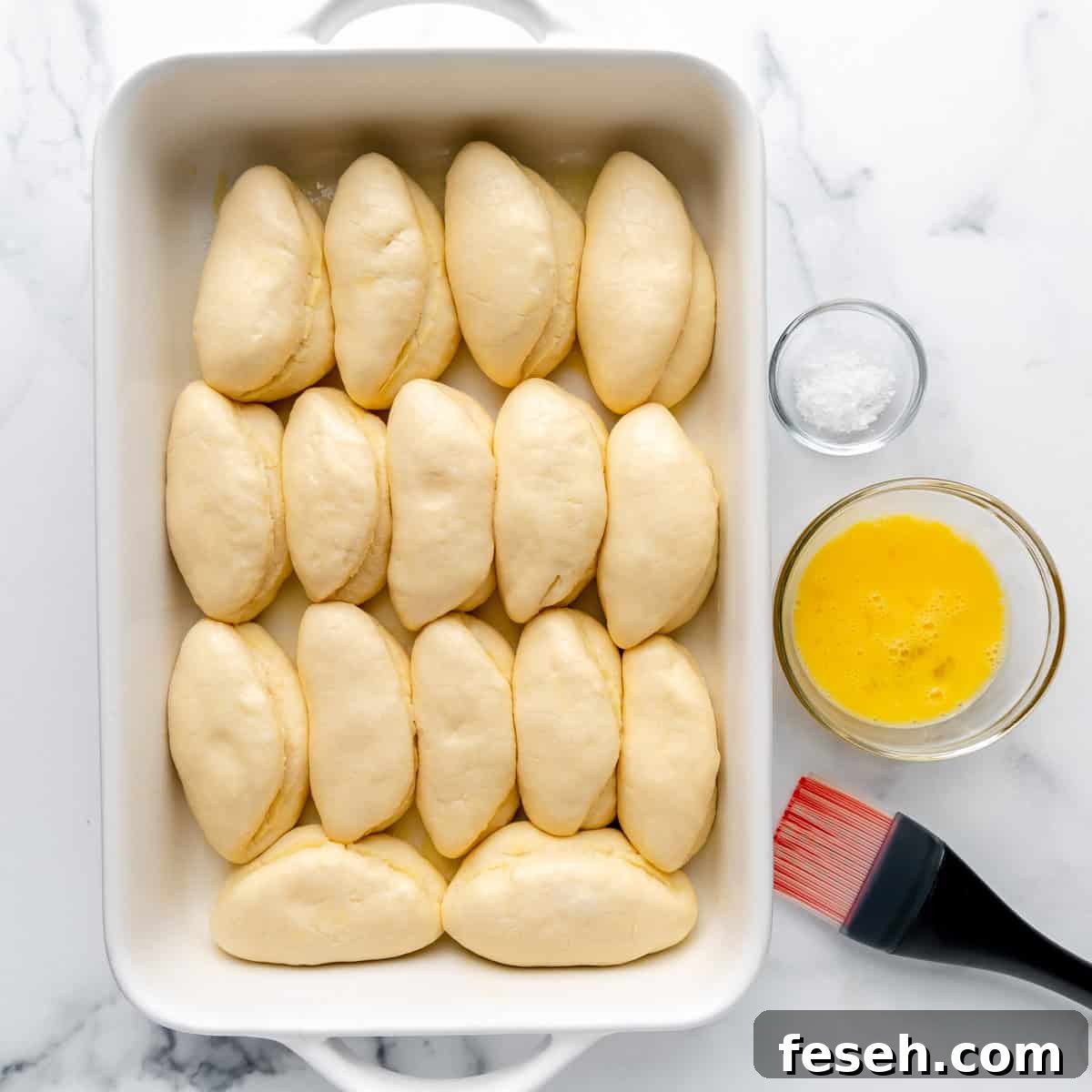
Hint: The rolls are ready to bake when a finger press leaves an indent that doesn’t spring back right away.
Baking the Rolls
Step 8
Preheat the oven to 350°F while the rolls finish rising. Whisk the egg wash (1 egg + 2 teaspoons milk).
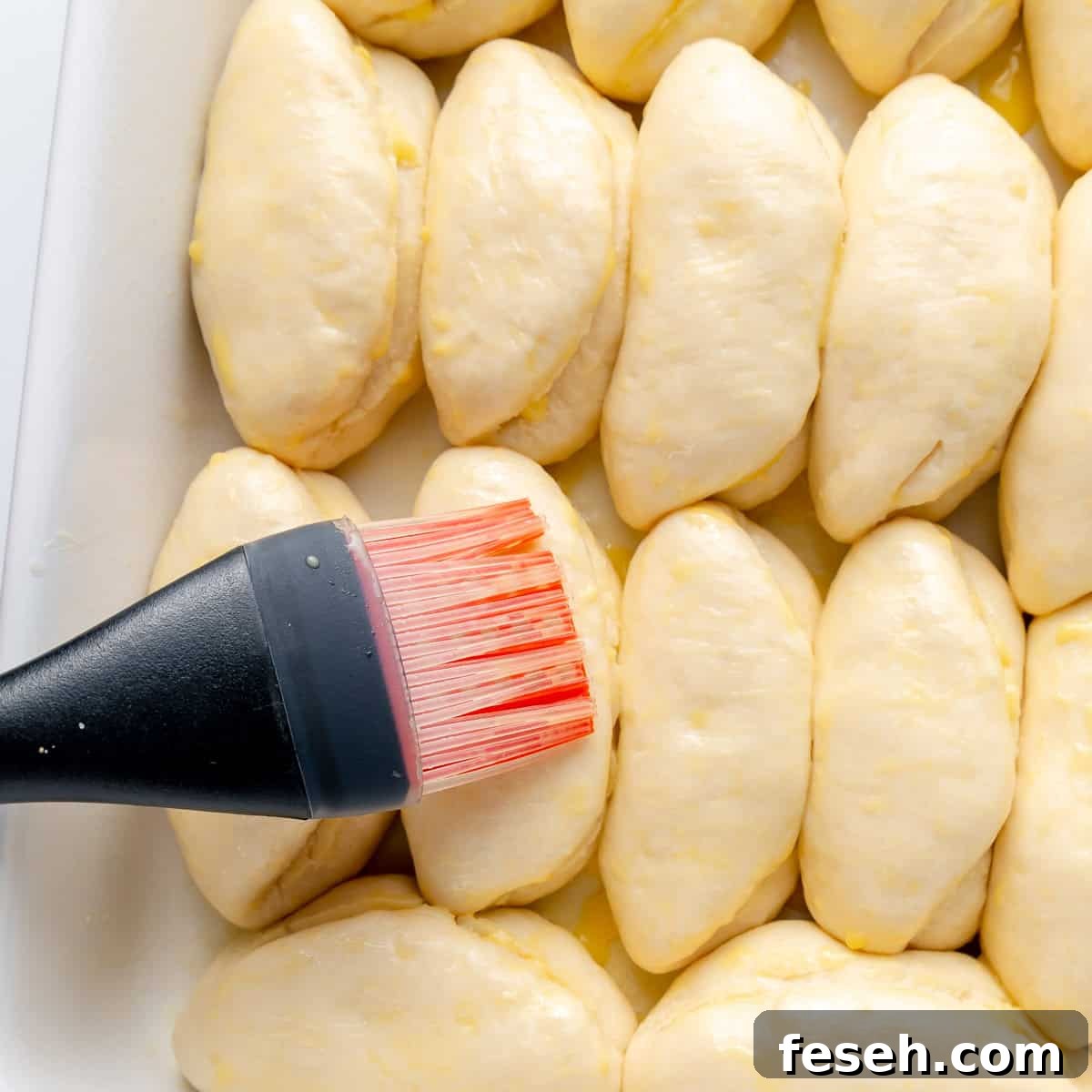
Brush the rolls with the egg wash, sprinkle with flaky sea salt, and bake for 20–25 minutes until golden brown and the internal temperature reads about 190°F.
Serve warm and enjoy.
Tips & Tricks
- Instant nonfat dry milk powder boosts tenderness and helps produce a softer crumb.
- The dough should be soft and slightly sticky after mixing — avoid adding too much flour.
- Use sparing flour on the work surface when shaping; excess flour makes the rolls dry.
- Bread flour gives the best texture thanks to higher protein, creating a slightly chewy crust and airy crumb.
Substitutions & Variations
- Flour: All-purpose flour can be used but results will be a little less chewy.
- Egg wash: Skip it or brush with milk/cream instead if you prefer not to use eggs.
- Yeast: Either active dry or instant yeast works — bloom active dry in milk first.
- Herbs: Fold finely minced fresh herbs into the dough for added flavor.
- Flavored butter: Brush with garlic butter or honey butter after baking for a tasty finish.
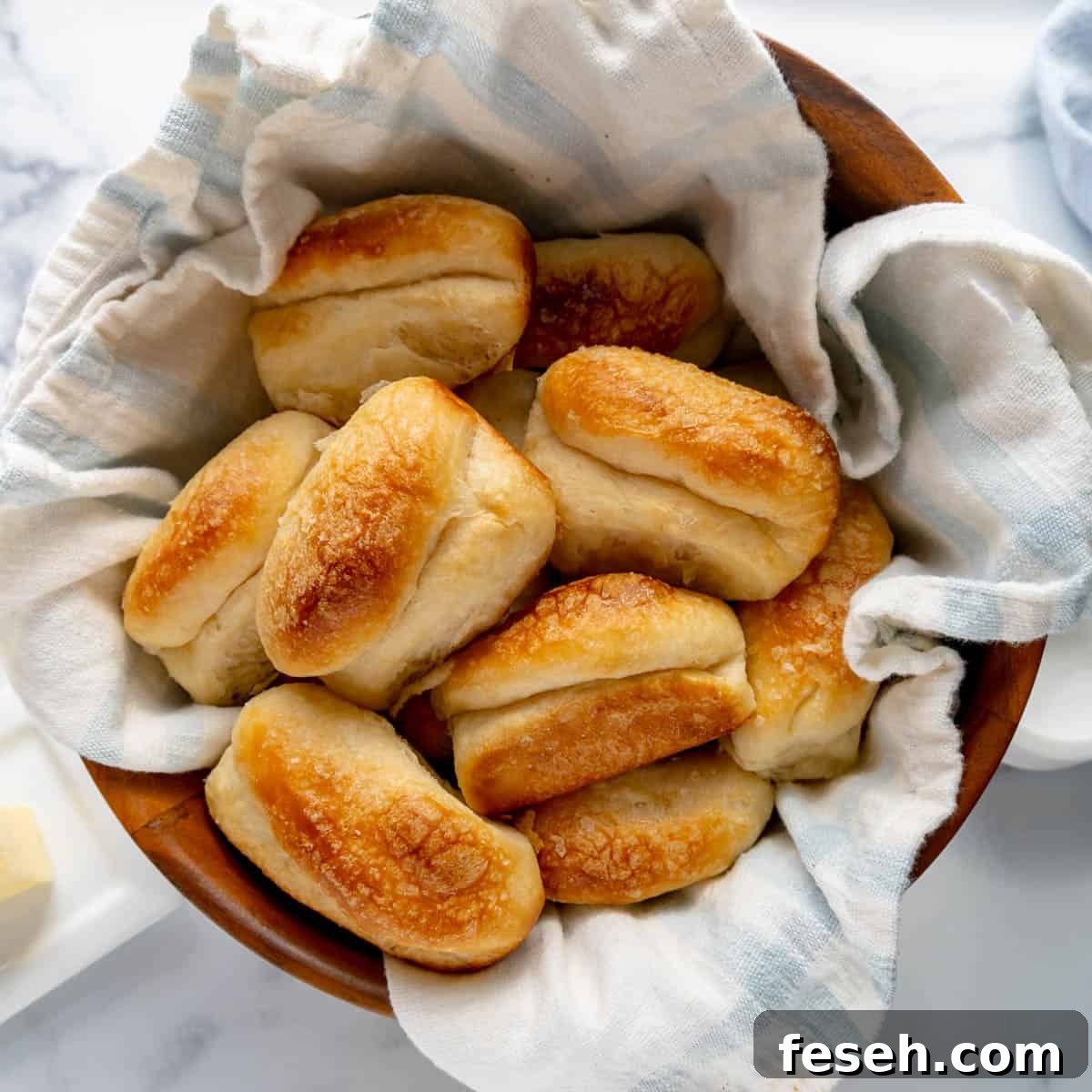
How to Store Leftover Dinner Rolls
Keep leftover rolls in an airtight container or well wrapped in plastic at room temperature for 2–3 days. Reheat before serving to restore softness.
How to Reheat Rolls
Warm rolls in a 350°F oven for 10–15 minutes until soft and heated through. Alternatively, warm in an air fryer at 300°F for about 5 minutes.
Make-Ahead Parker House Rolls
You can prepare the rolls up to the shaped-pan stage and refrigerate overnight.
- After the first rise, shape the rolls, place them in the pan, brush with butter, and cover tightly. Refrigerate overnight before the second rise.
- Remove from the fridge 60–90 minutes before baking to come up to room temperature. When they’re puffed and don’t spring back when poked, brush with egg wash and bake.
- Bake according to the recipe instructions.
Freezing Instructions
To freeze before baking: After the first rise and shaping, place the rolls in the baking dish, brush with butter, wrap in two layers of plastic and a layer of foil, and freeze up to one month.
Thaw in the refrigerator for 8–12 hours before baking. On baking day, remove the foil and one layer of plastic, let the rolls sit at room temperature for 3–4 hours until puffed and warm, then finish with egg wash and bake as directed.
Serving Suggestions
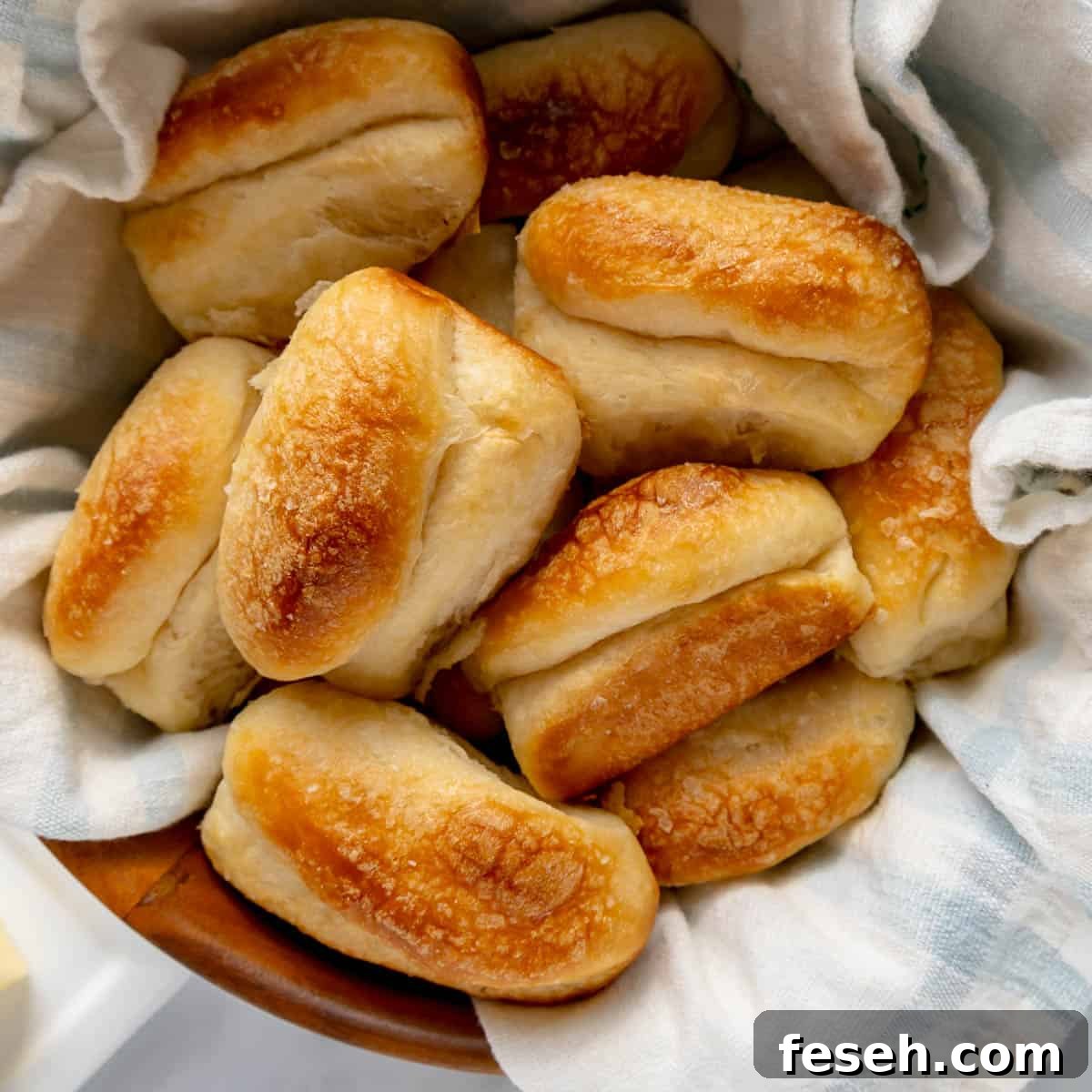
These Parker House Rolls pair beautifully with soups, chowders, salads, and main courses — a versatile side for many meals.
- Creamy chicken tortellini soup
- New England fish chowder or clam chowder
- Chicken sausage corn chowder
- Apple walnut salad
- Air-fried or baked fish entrees
- Beef stroganoff or baked chicken Alfredo
More Side Dish Recipes
If you make this recipe, give it a 5 STAR rating and leave a comment!
Authentic Parker House Rolls Recipe
Ingredients
- 3 cups bread flour
- 1/4 cup nonfat dry milk powder
- 1 1/2 teaspoons coarse kosher salt
- 3 tablespoons granulated sugar
- 2 1/4 teaspoons instant yeast
- 1 cup whole milk lukewarm
- 1 egg beaten
- 9 tablespoons unsalted butter divided
Egg Wash (optional)
- 1 large egg
- 2 teaspoons milk
- 1 teaspoon flaky sea salt
Instructions
-
If using instant yeast, add it to the dry ingredients. If using active dry yeast, dissolve it in lukewarm milk for 5 minutes until bubbly, then proceed with the wet ingredients.
-
Spoon the bread flour into a measuring cup and level it. Add the flour to the mixer with the nonfat dry milk powder, sugar, and salt (and instant yeast if using).
-
Mix the dry ingredients on low with the dough hook until combined.
-
Add the lukewarm milk and beaten egg to the mixer.
-
Melt 6 tablespoons of the butter and add it to the mixer with the other ingredients.
-
Knead on medium speed until the dough just clears the sides but still sticks slightly to the bottom, about 7–8 minutes. Do not add extra flour.
-
Turn the dough out onto a lightly floured surface and knead into a smooth ball. It should be soft but not sticky.
-
Place the dough in a greased bowl, cover, and let rise at room temperature 1–1½ hours, until nearly doubled.
-
Gently deflate the dough and divide into 16 even pieces. Pinch each portion into a ball and roll smooth on the work surface.
-
Flatten each ball to a 1/4″ thick circle about 3½” wide. Make a shallow crease across the middle with a finger or spoon handle.
-
Melt the remaining 3 tablespoons of butter and brush each circle. Keep a little butter aside for the tops.
-
Fold each circle in half along the crease and press gently so the halves stick together. If the dough resists, let it rest 10–15 minutes.
-
Arrange the rolls in a 13×9″ pan, brush with remaining butter, and cover with greased plastic wrap.
-
Let rise until very puffy and not springy when poked, about 45–60 minutes.
-
Preheat the oven to 350°F and whisk together the egg wash (1 egg + 2 tsp milk).
-
Brush rolls with egg wash, sprinkle flaky sea salt, and bake 20–25 minutes until golden and the internal temperature reaches 190°F. Serve warm.
Notes
Make Ahead Rolls
- After the first rise, shape the rolls in the pan, brush with butter, cover, and refrigerate overnight.
- Remove from the fridge 60–90 minutes before baking to warm up. They’re ready when puffed and no longer cold to the touch and don’t spring back when poked.
- Brush with egg wash and bake according to the recipe.
Nutrition
| Carbohydrates: 23g
| Protein: 5g