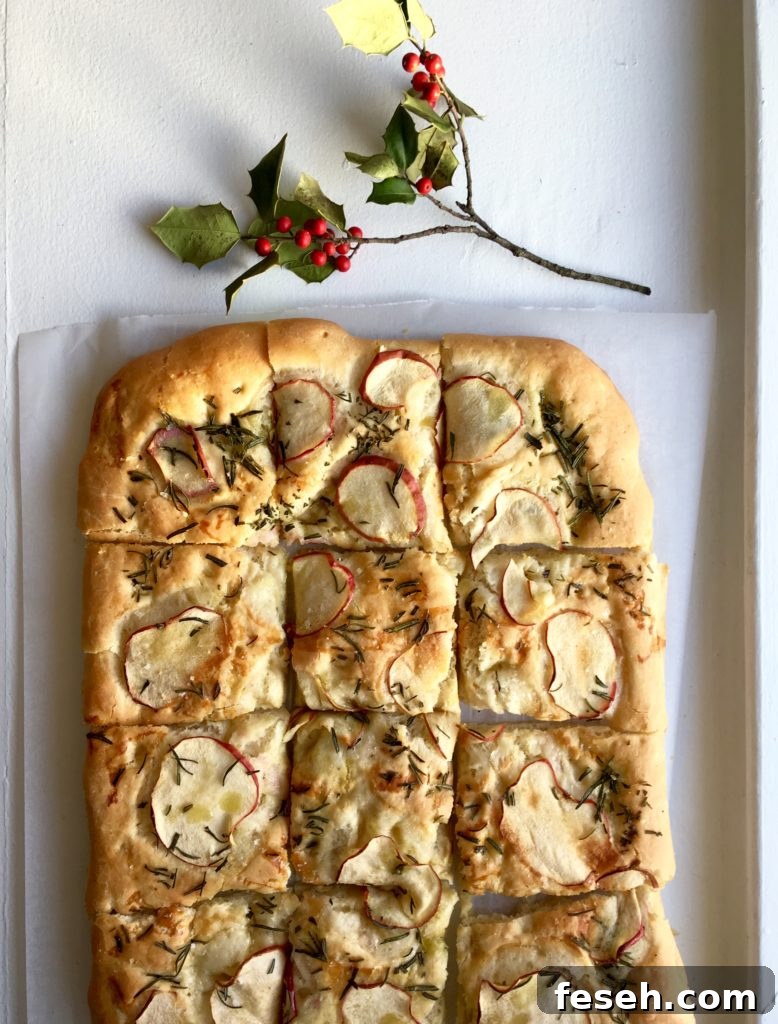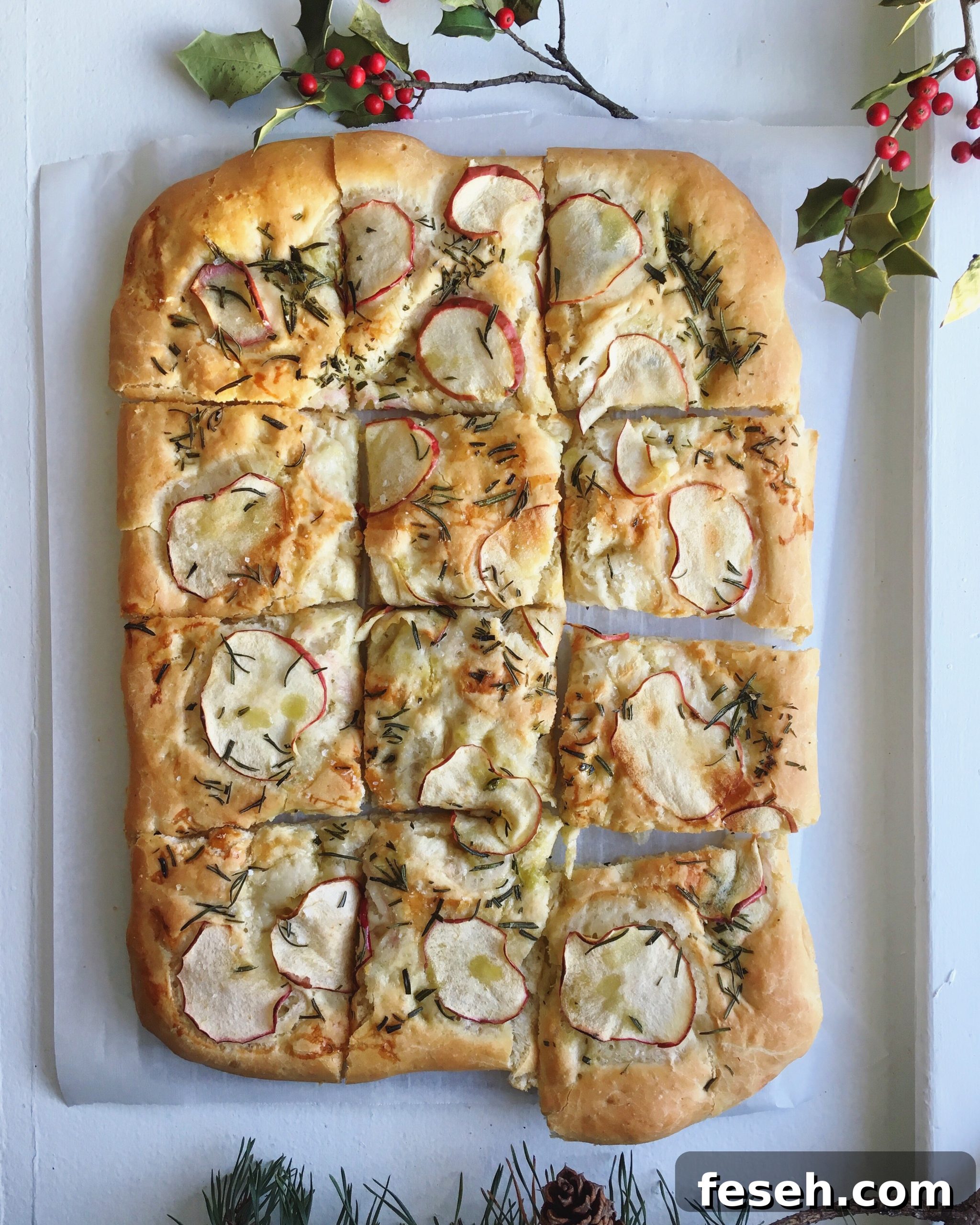
One reason I chose a career as a practicing lawyer instead of an academic is that I prefer being given problems to solve rather than inventing them. I work best when a specific challenge focuses my productivity. The same is true of my baking: although I’ve discovered some creative impulses lately, my best ideas often come from an external spark. This apple and rosemary focaccia is a perfect example.
Instagram is still new to me, so when someone from Della Pace, a woman-owned olive oil company, messaged about a “collab,” I asked what that meant. It turned out to be a simple project: they sent extra virgin olive oil and asked me to bake with it, photograph the result, and post it on Instagram. Browsing the Della Pace site I found an apple cake recipe that made me think of pairing apples with olive oil—then I imagined apples, rosemary, and olive oil together in a focaccia. A little research and a plan followed.
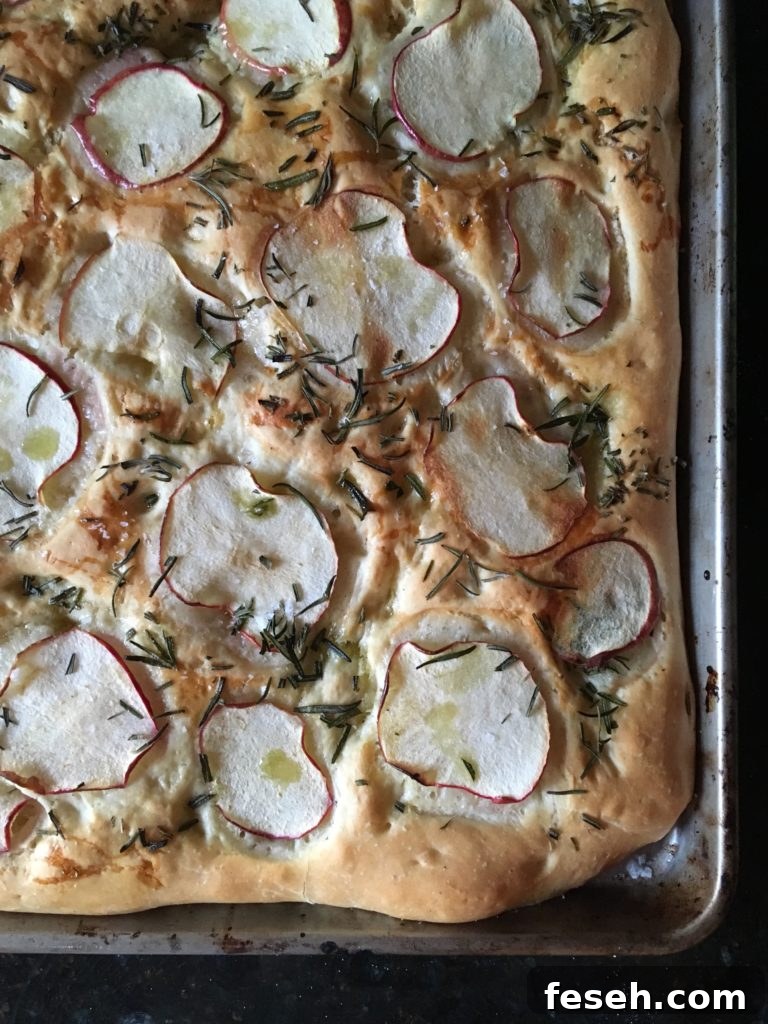
This focaccia is adapted from a King Arthur Flour recipe and incorporates a bit of sourdough starter for added depth of flavor. If you don’t keep a starter, you can substitute the sponge made with commercial yeast instead. I made a few adjustments: I reduced the salt slightly, added a touch of honey to the dough, and topped the finished focaccia with sliced apples, more honey, flaky sea salt, rosemary, and extra olive oil. I leave the apple skins on and slice them thinly—red-skinned varieties look especially pretty against the rosemary.
Apple and Rosemary Foccacia
A slightly sweet and savory focaccia adapted from a King Arthur Flour recipe.
Appetizer, Breakfast
apples, extra virgin olive oil, focaccia, rosemary
Ingredients
Focaccia Dough
-
227
g
ripe (fed) sourdough starter -
2 1/4
tsp (1 packet)
instant (rapid rise) yeast -
113
g
bottled water
(lukewarm) -
241
g
all-purpose flour -
1
tsp
table salt or fine sea salt -
1
tsp
honey -
25
g (2 tbsp)
extra virgin olive oil
(plus more for pan)
Topping
-
2
medium apples
(a crisp, flavorful variety) -
37
g (3 tbsp)
extra virgin olive oil,
divided -
37
g (3 tbsp)
honey,
divided -
1
tsp
flaky sea salt,
such as Maldon -
1 1/2
tbsp
rosemary
Instructions
-
In a stand mixer fitted with a dough hook, combine the sourdough starter, instant yeast, lukewarm water, flour, honey, 2 tablespoons olive oil, and salt. Mix on low–medium speed for about 5 minutes until the dough becomes smooth and elastic.
-
Transfer the dough to a lightly oiled bowl, cover with plastic wrap, and let it rise in a warm spot for 1 hour.
-
Grease a half-sheet pan with neutral oil or nonstick spray, then drizzle about 2 tablespoons of extra virgin olive oil into the pan.
-
Place the risen dough in the prepared pan and gently stretch it into a rectangle, nudging it toward the edges without tearing.
-
Cover the pan and let the dough rest for 30 minutes until slightly puffy. Use your fingers to press irregular dimples into the dough, pressing nearly to the pan but not through the dough. Cover again and let it rise for another hour.
-
If using a baking stone, place it on a lower rack and preheat the oven to 425°F (220°C).
-
Thinly slice the apples, discarding the core, and coarsely chop the rosemary.
-
Uncover the dough and drizzle with 2 tablespoons of extra virgin olive oil and 2 tablespoons of honey. Arrange apple slices over the top (you might not need both apples). Drizzle the remaining tablespoon each of olive oil and honey, then sprinkle with chopped rosemary and flaky sea salt.
-
Bake on the preheated stone or middle rack for 20–25 minutes, until the focaccia is golden brown and the apples are tender.
Recipe Notes
- If your tap water is heavily chlorinated (as it is where I live), use bottled spring water when baking with sourdough starter, since chlorine can inhibit wild yeast. If you use a commercial yeast sponge instead, chlorinated water is less likely to be an issue.
- The original King Arthur recipe suggests spritzing the focaccia with water before baking. I forgot to spritz and still got a nicely browned, crisp crust—perhaps due to the honey—but you can spritz if you prefer a different crust texture.
- I used sweet-tart, red-skinned heirloom apples; many crisp apple varieties will work so long as they hold their shape when baked rather than turning mushy.