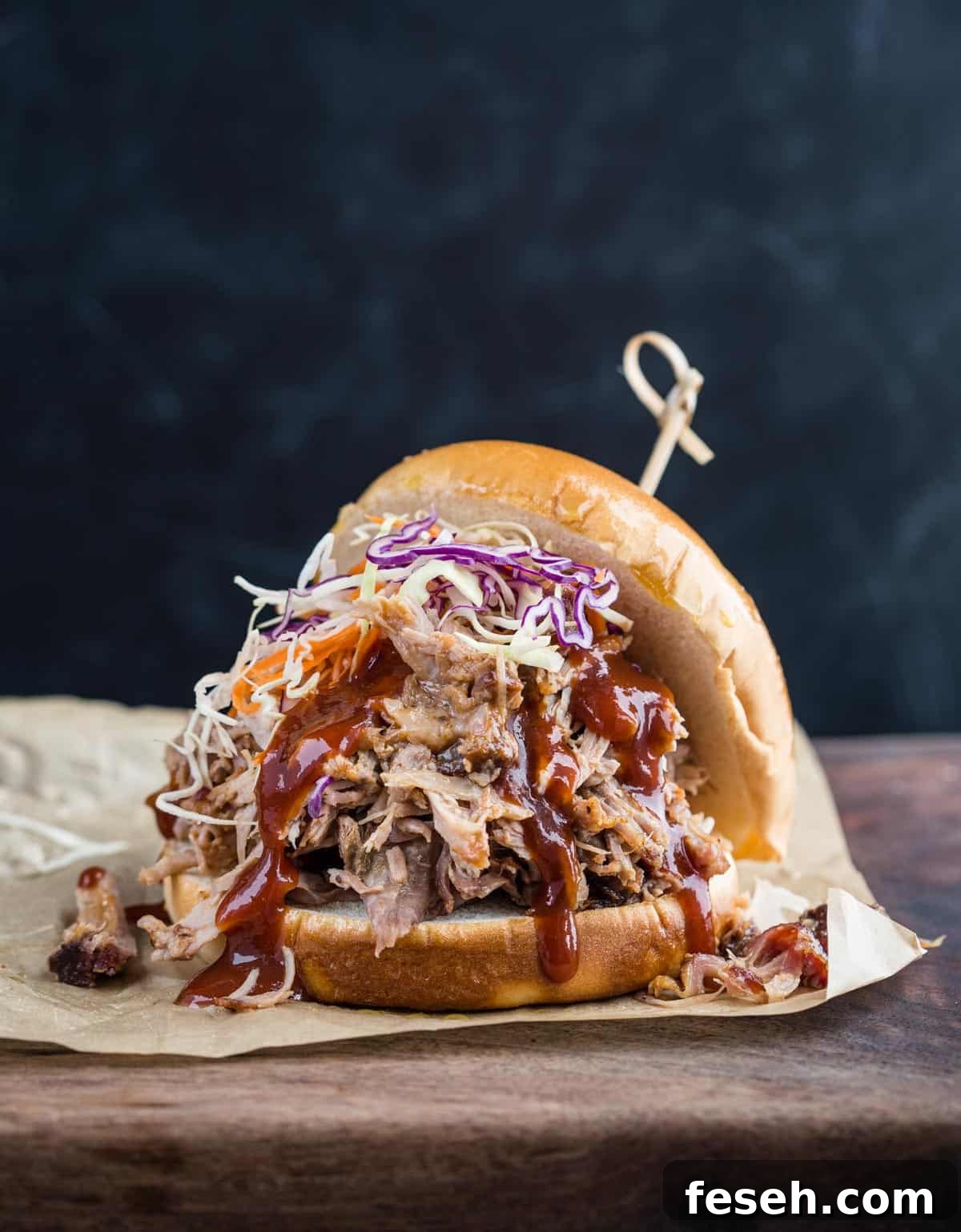
There is no better dish to serve from the smoker than tender, well-made smoked pulled pork. This recipe keeps things simple: season a pork shoulder, place it in the smoker, and wait until it reaches the right temperature and texture. Follow a few key steps and you’ll go from good to great.
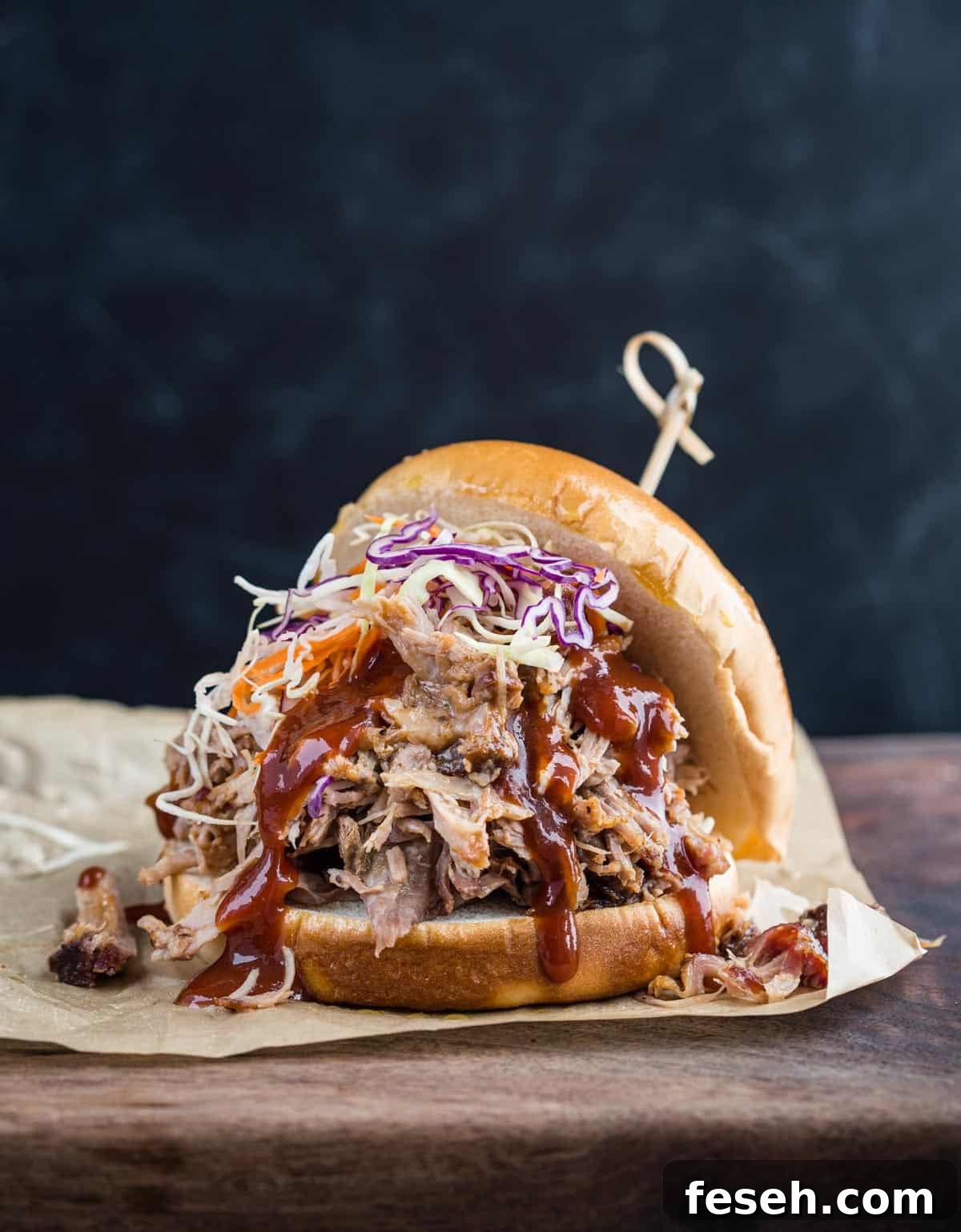
We’ve smoked hundreds of pork shoulders through catering, testing, and teaching. The common questions are how to get a good smoke flavor, tender meat, and a juicy finish. There are many techniques — including injecting and wrapping to speed the cook — but this version is intentionally easy. After you master it, you can tweak seasonings, wood choice, or timing to suit your preferences and schedule.
Table of Contents
- The Cut
- Sourcing
- Preparation and Seasoning
- Smoking
- The Stall – What to Expect
- Rest and Pull the Pulled Pork
- Reheating Pulled Pork
- Leftover Ideas
- FAQ
- Easy Pulled Pork Recipe
The Cut
Pulled pork comes from the pork shoulder. For this simple method, a bone-in pork shoulder (Boston butt) is easiest. You may see a pork picnic (the entire shoulder and upper leg); while usable, a picnic requires more trimming and longer cook time. Bone-in shoulders hold their shape and cook more consistently as the roast slowly heats.
Boneless modification: If you only have a boneless shoulder, tie it with kitchen twine after seasoning so it forms a uniform rectangle. Boneless cuts can cook faster — possibly about an hour less — so monitor internal temperature and texture rather than relying solely on time.
Cuts to avoid for pulled pork: ham (thigh), pork loin, and pork belly are not ideal for classic pulled pork. These cuts either lack the intramuscular fat or are better suited to slicing, curing, or other preparations.
Sourcing
When buying a shoulder, look for visible marbling and a fresh pack date. The meat should be a healthy pink, not gray. Check that the fat cap isn’t excessively thick — you don’t want to pay for large trimmings.
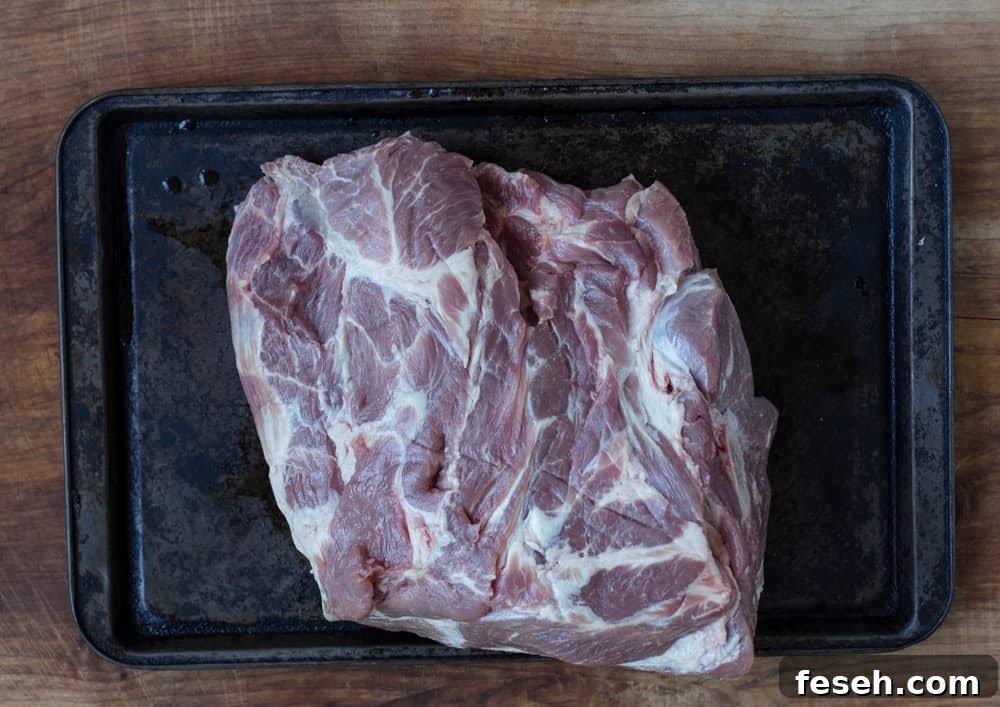
If cooking for a crowd, plan roughly one pound of raw shoulder for every two people (about 1/2 pound finished pulled pork per adult). For example, feed 20 people with about 10 pounds of pre-cook shoulder.
Preparation and Seasoning
Trim the shoulder so it has an even shape and remove large, loose fat pockets, glands, or cartilage. Leave about 1/4 inch of fat cap. The steps below create a consistent surface for seasoning.
- Trim excess fat and any visible glands or cartilage, aiming for an even rectangle or rounded block.
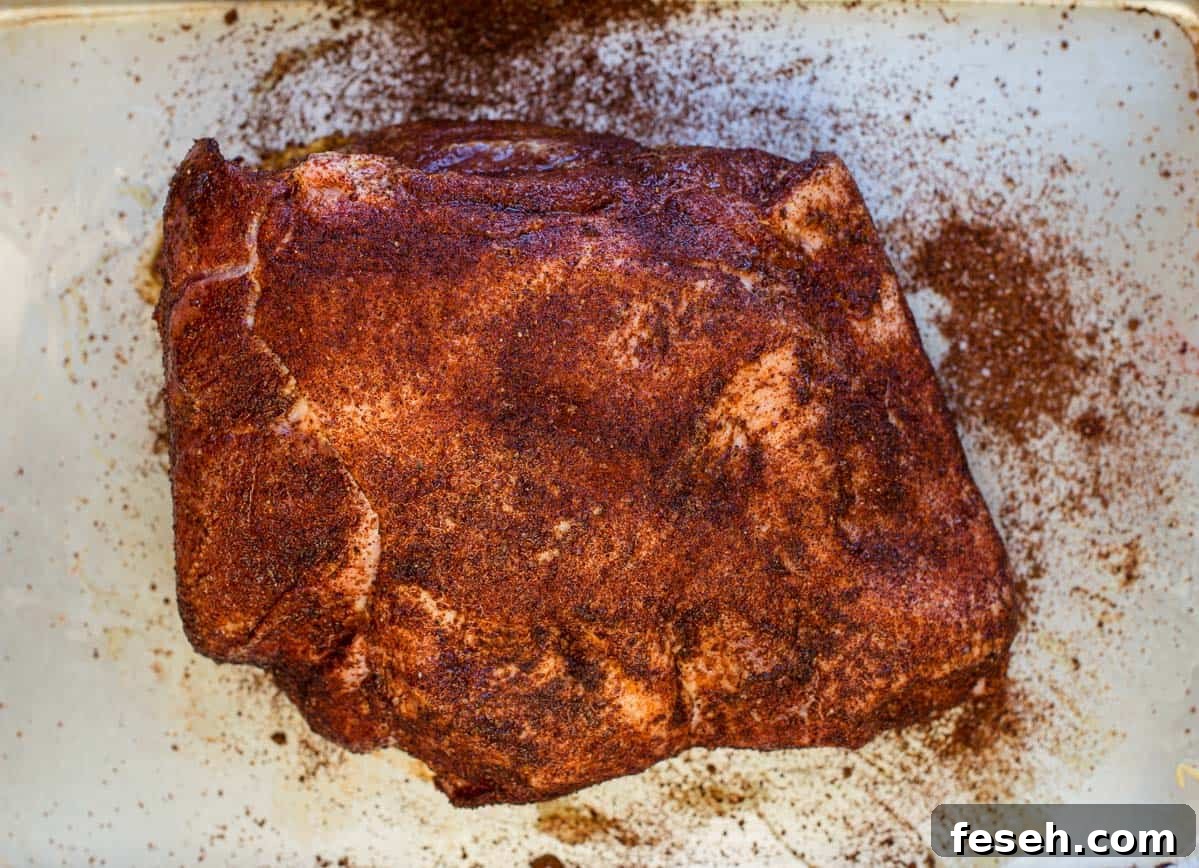
- Spread a thin layer of Dijon or yellow mustard over the surface to help the dry rub adhere.
- Liberally apply your favorite pork dry rub to all sides.
Smoking
- Preheat the smoker to around 250°F. Oak, apple, or cherry provide a balanced smoke profile.
- Insert a probe thermometer into the center of the shoulder, avoiding contact with bone, so you can monitor internal temperature. A Bluetooth or remote probe is helpful, but use an instant-read as a secondary check.
- Place the shoulder on the smoker, close the lid, and target roughly one hour of cook time per pound. Expect the shoulder to be ready when it reaches the right texture and internal temperature (typically in the 190–210°F range for pulling).
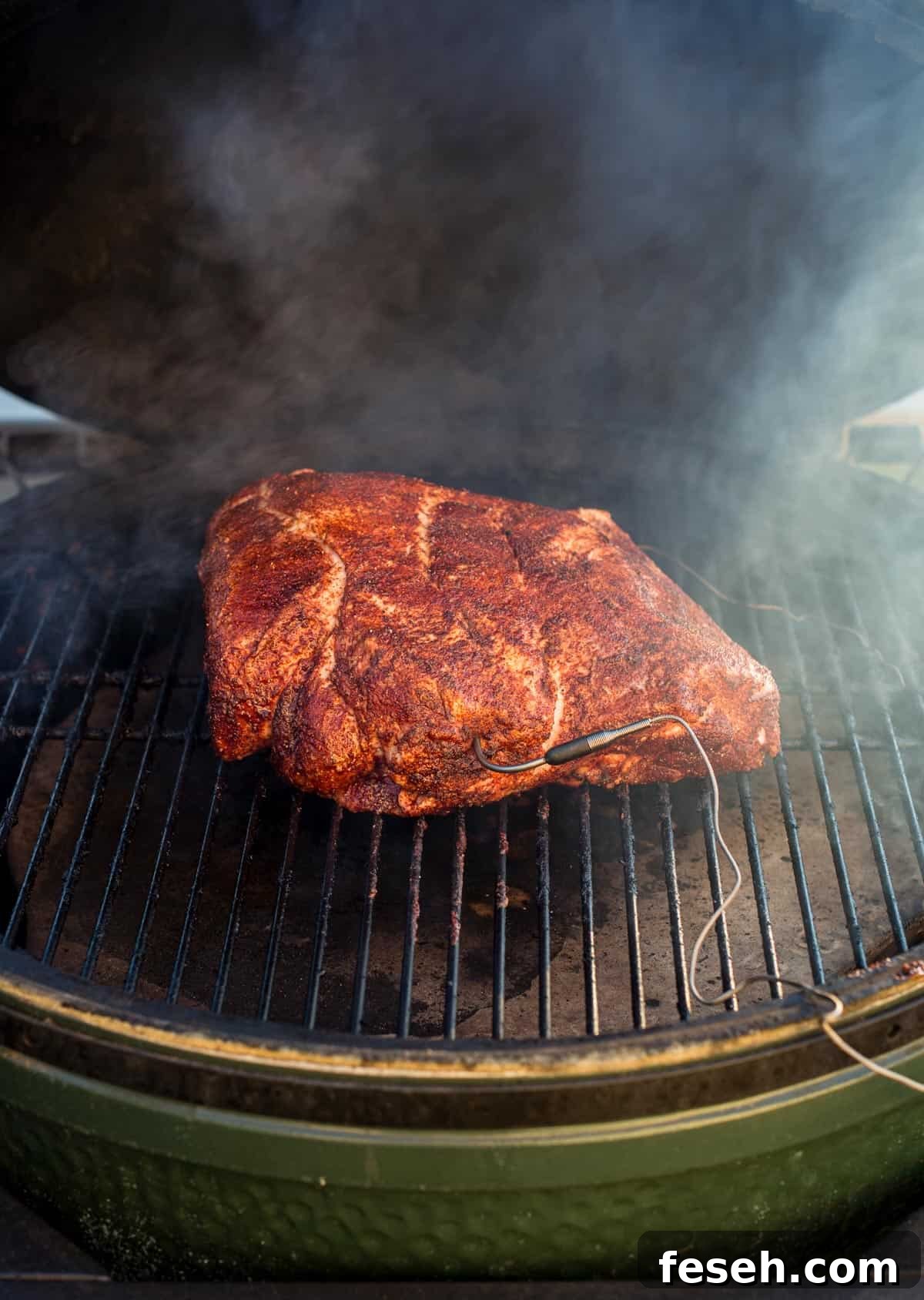
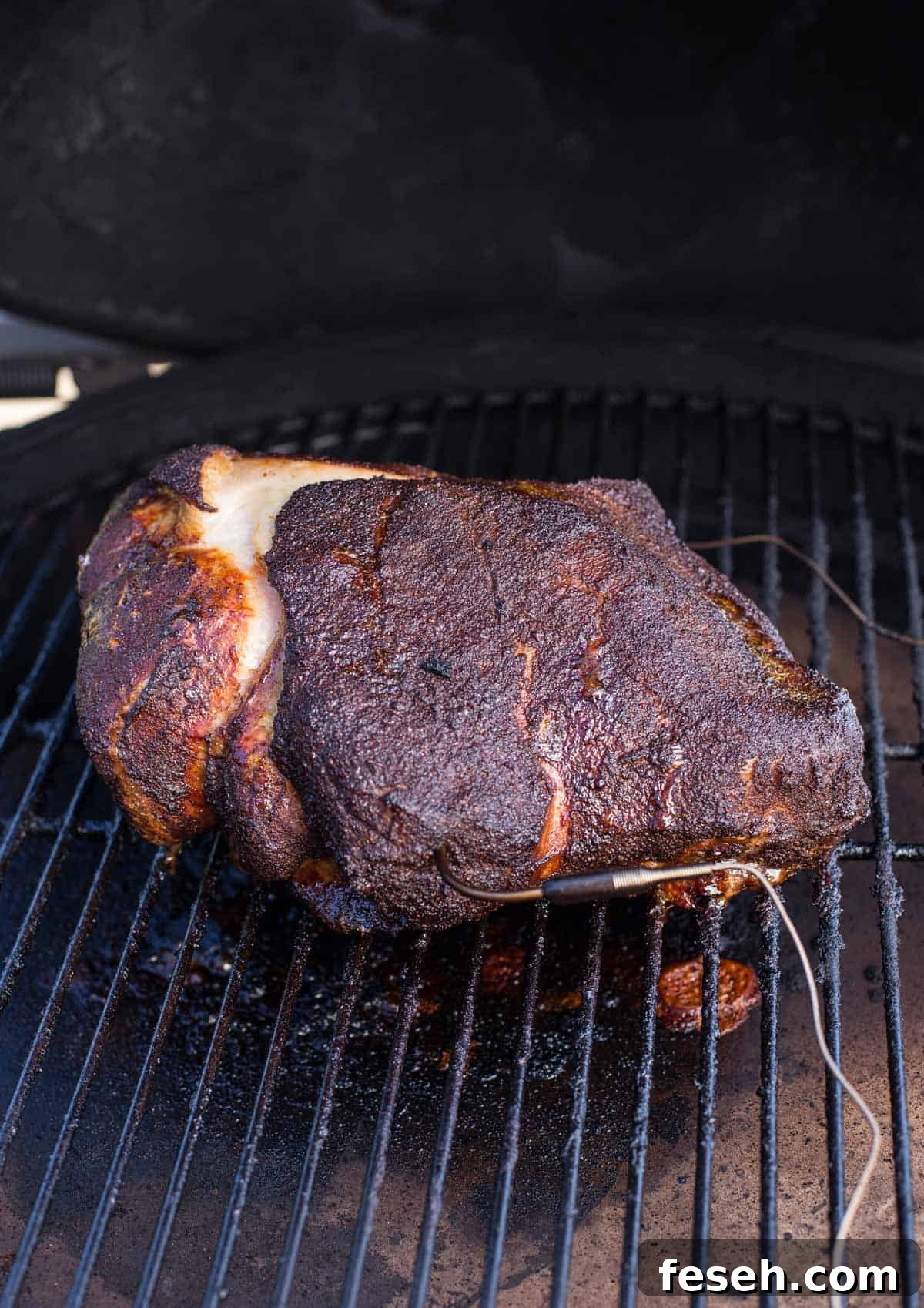
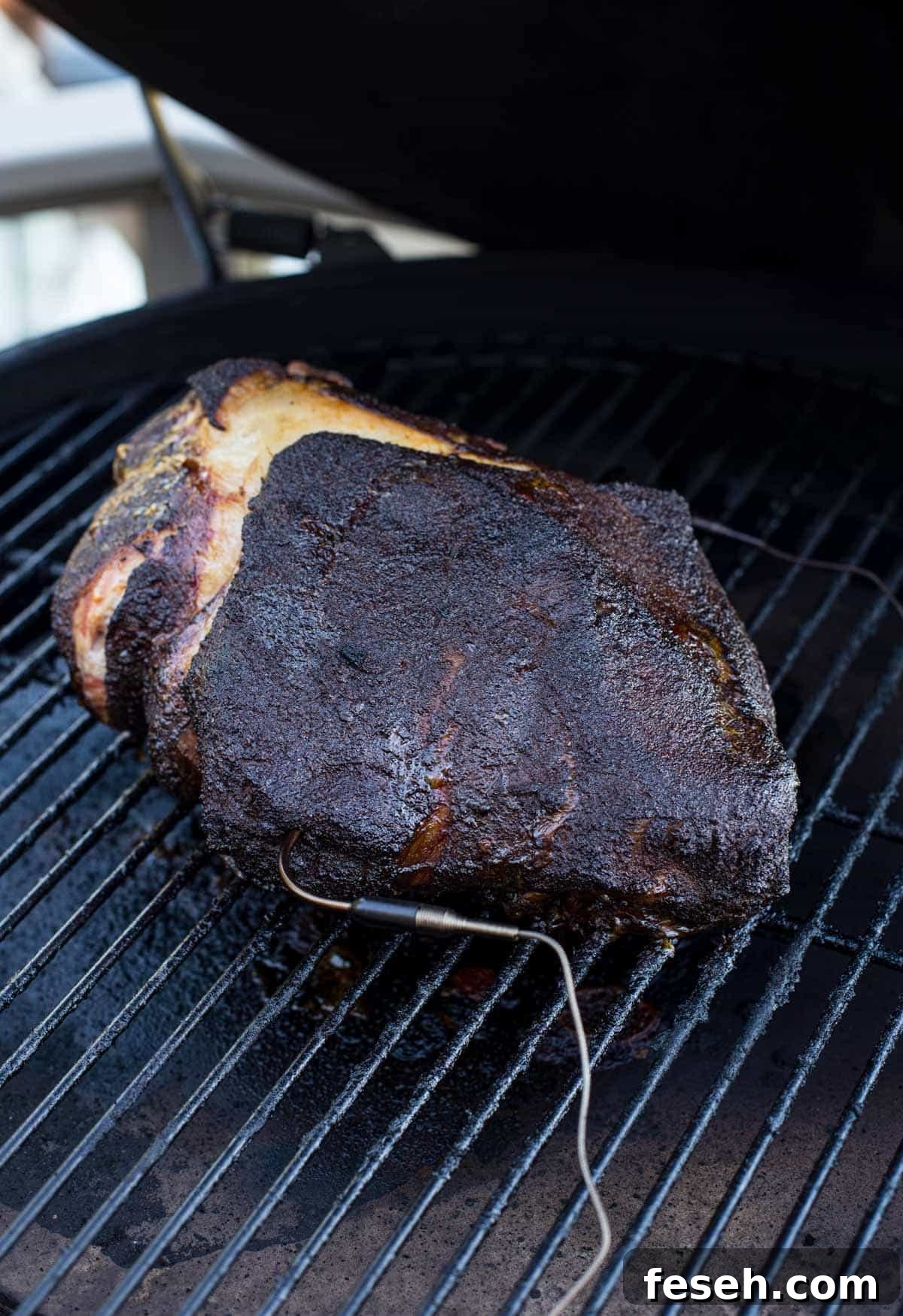
As the shoulder cooks, fat will render and pockets may separate slightly — this is normal. Use an instant-read thermometer to probe the thickest part in several spots; the meat should feel like room-temperature butter when the probe slides in easily. Some cooks aim for around 203°F, though tenderness is the true test.
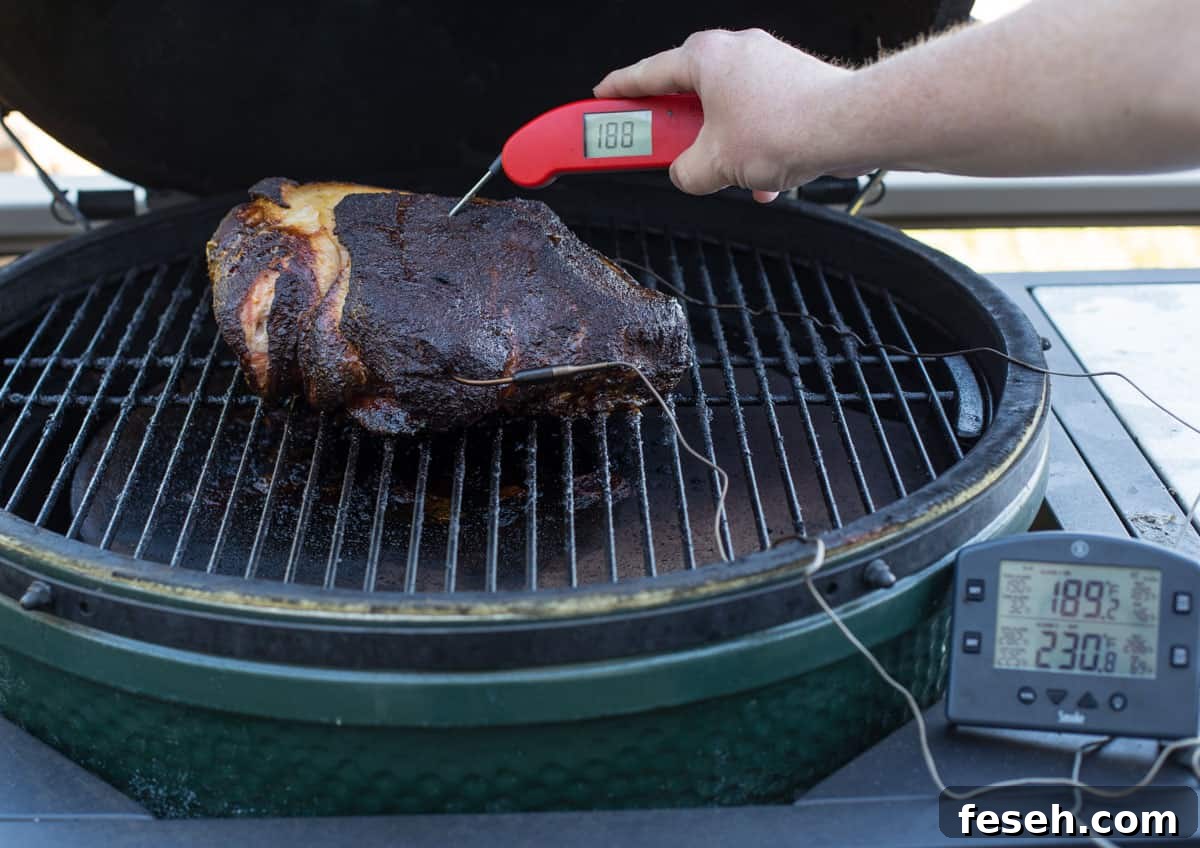
Pro tip: with bone-in shoulders you can occasionally pull on the bone. When it starts sliding out cleanly, the meat is likely tender. Still, verify with temperature and feel to avoid overcooking.
The Stall – What to Expect
The stall is a common phase where the internal temperature stalls between roughly 165–180°F as fat renders and evaporative cooling slows the rise. It’s normal — be patient. Once rendering finishes, the temperature will climb more quickly toward your target.
Rest and Pull the Pulled Pork
When the shoulder reaches the desired tenderness and temperature, lift it into a cooler lined with foil (no ice). Close the lid and rest for one hour before pulling. This rest stabilizes the juices and makes the meat easier to shred. You can hold the shoulder in the cooler for up to four hours if needed.
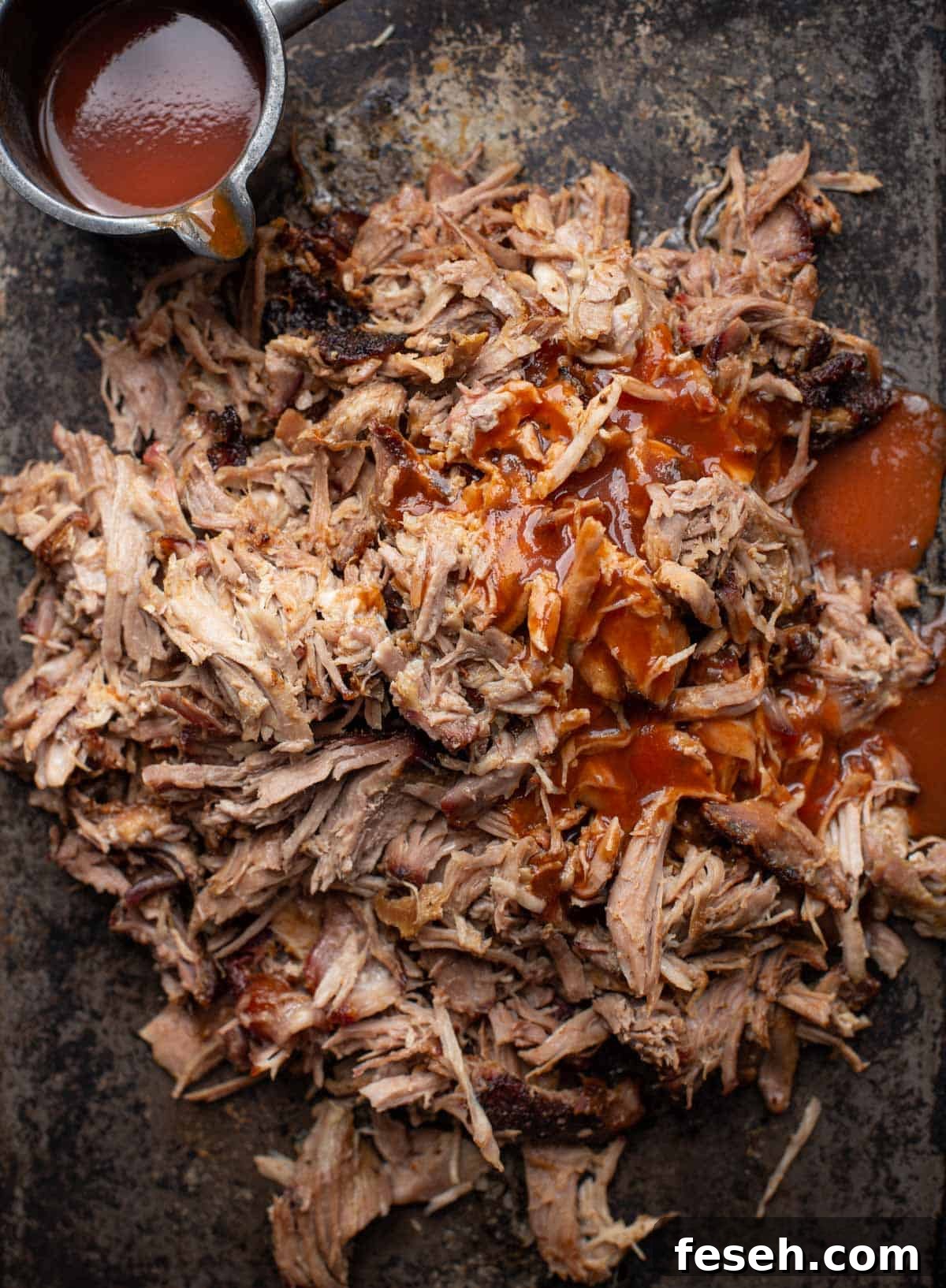
After resting, transfer the shoulder to a large pan. Using forks or your preferred tools, pull the meat into large chunks, remove bone, cartilage, and excess fat, then shred the chunks into serving-sized pieces. Serve with your favorite sauce or enjoy as-is.
Reheating Pulled Pork
To reheat leftovers, preheat the oven to 300°F. Place pork in a baking dish, add about 1/4 cup apple cider vinegar or a few tablespoons of barbecue sauce, cover tightly with foil, and warm for about 20 minutes or until heated through. Serve immediately.
Leftover Ideas for Easy Smoked Pulled Pork
Pulled pork is versatile: use it in tacos, sliders, nachos, wontons, or quesadillas. It reheats well and can be adapted to many cuisines and flavor profiles.
Food Safety
Follow basic food-safety practices:
- The USDA minimum safe temperature for pork is 145°F; pulled pork should reach a much higher internal temperature to break down collagen and become tender.
- Never use utensils that touched raw meat on cooked food without washing them first.
- Wash hands after handling raw meat and consider wearing gloves when prepping.
- Don’t leave cooked food at room temperature for long periods.
- If resting meat in a cooler, do not exceed four hours and ensure the pork remains at a safe temperature while holding.
Frequently Asked Questions
Plan about 1/2 pound of finished pulled pork per adult, which translates to roughly one pound of raw shoulder for every two people to account for trimming and shrinkage.
Estimate about one hour per pound of raw shoulder plus one hour of resting time. Allow an extra hour for delays or weather. Monitor texture and temperature rather than relying solely on time.
Ham (the pig’s thigh) is leaner and better suited to curing or slicing. For classic pulled pork, shoulder is preferred for its intramuscular fat and connective tissue that render down to moist, pullable meat.
Around 250°F is ideal for balancing smoke flavor and tender results. Smoking at 225°F takes longer and risks drying; 275–300°F cooks faster but imparts less smoke flavor.
A smoker gives the best flavor, but you can adapt this method to a conventional oven using similar temperature ranges. Pressure cookers and slow cookers can also produce pulled pork, though the texture and smoke character will differ.

Easy Pulled Pork Recipe
Ingredients
- 7 pound bone-in pork shoulder, trimmed of most fat and glands
- 2 tablespoons Dijon mustard
- 1/4 cup pork dry rub
Instructions
- Preheat smoker: Target 250°F and choose a wood such as oak, apple, or cherry.
- Season meat: Rub Dijon mustard over the shoulder, then coat all sides with the dry rub.
- Smoke: Place the shoulder on the smoker and insert a probe thermometer (away from bone). Maintain about 250°F and smoke for approximately seven hours, monitoring internal temperature and tenderness.
- Check tenderness: After about six hours start probing with an instant-read thermometer in several places. The probe should slide in like room-temperature butter when the meat is ready. The finish range is often between 190–210°F.
- Rest and pull: Transfer the shoulder to a foil-lined cooler (no ice) and rest one hour. Remove the bone, discard cartilage and excess fat, then pull the meat into serving pieces.
Notes
Boneless shoulder: Tie with kitchen twine after seasoning to form a uniform shape. It may cook faster; watch temperature and texture.
Timing: The internal temperature rises quickly, stalls between 165–180°F while fat renders, then climbs to the finishing range (often around 203°F) as the meat becomes tender.
Pro Tip: With bone-in shoulders you can test doneness by seeing when the bone begins to pull away easily; always confirm with tenderness and temperature.
Nutrition
Nutrition information is an estimate.