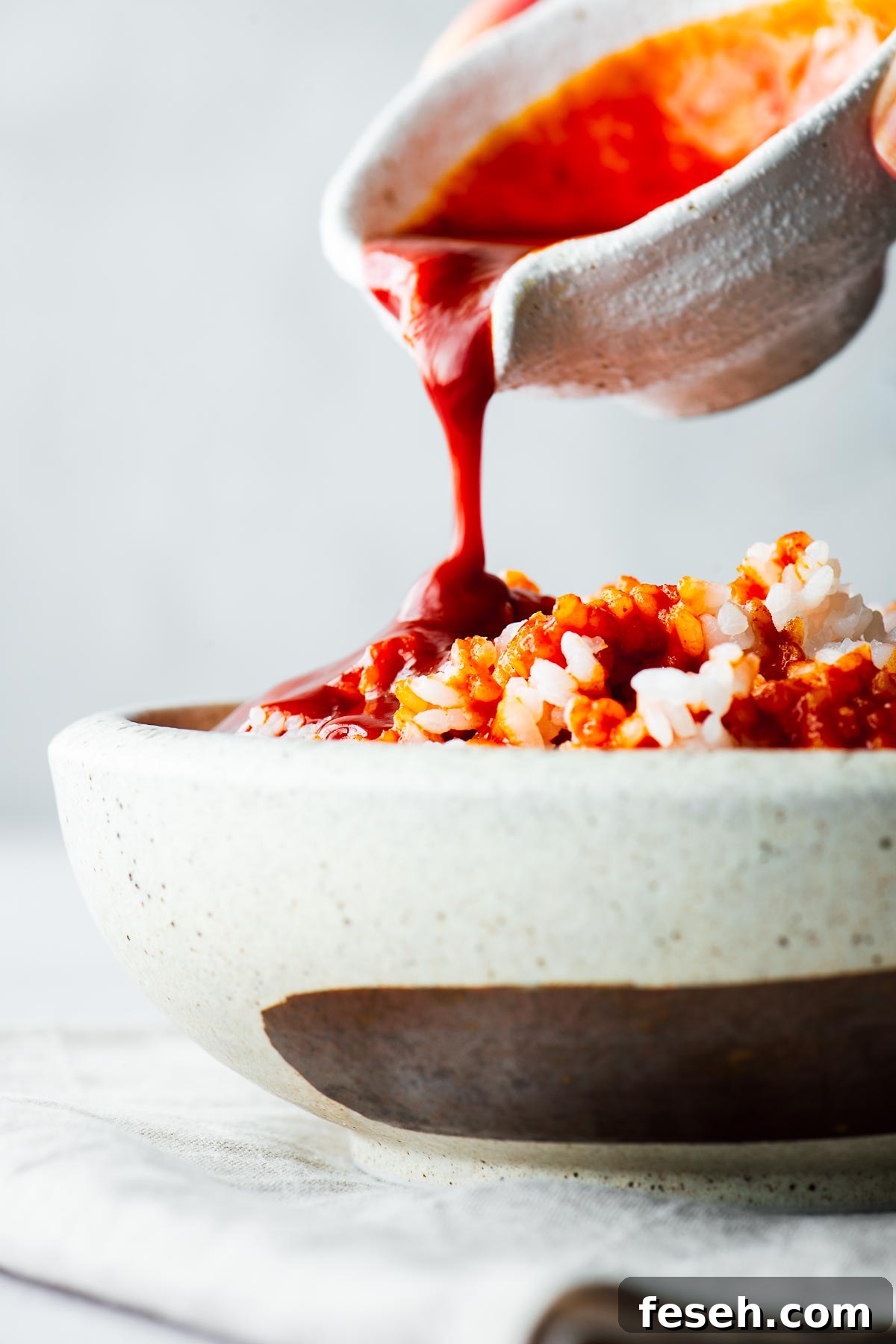
Traditional Korean bibimbap sauce combines heat, sweetness and a subtle nutty richness — the ideal topping to lift a simple bowl of rice.
I fell in love with Korean food the first time I tasted dolsot bibimbap topped with spicy gochujang sauce at a local Korean restaurant.
This bibimbap sauce recipe is straightforward and versatile. Use it for bibimbap (Korean rice bowls), drizzle it over Buddha bowls or noodles, serve it as a spicy dipping sauce, or use it as a finishing hot sauce for many meals.
In this post:
- Why you’ll love homemade bibimbap sauce
- What is bibimbap?
- Ingredients and substitutes
- How to make bibimbap
- Frequently asked questions
- Bibimbap sauce recipe card
Why I love this sauce
Store-bought gochujang sauce is widely available, often in red squeeze bottles. While convenient, many commercial versions include cane sugar, corn syrup, preservatives and stabilisers.
- Homemade gochujang sauce is quick to make and needs only a handful of ingredients.
- Homemade gives you control over sweetness, salt and spice so the sauce suits your taste.
For these reasons, making your own bibimbap sauce is an easy upgrade.
What is bibimbap?
Bibimbap (also spelled bi bim bap or bi bim bop) is a beloved Korean rice dish. At its core it’s a bowl of steamed rice topped with individually seasoned and sautéed vegetables, kimchi, and a flavourful sauce — most commonly a gochujang-based bibimbap sauce. Proteins like sliced meat, a fried egg or a raw yolk are common additions.
Bibim means “mixed” and bap means “rice”. Diners mix the rice, toppings and sauce just before eating.
Regional variations in Korea are numerous. One popular style, dolsot bibimbap, is served in a hot stone bowl that crisps the rice on the bottom, adding texture when mixed with the toppings and sauce.
What makes Korean bibimbap so delicious?
Much of the appeal comes from the bibimbap sauce. A gochujang- or doenjang-based sauce adds sweet, savoury and umami notes that tie the entire bowl together.
Traditional bibimbap sauces often start with either gochujang (Korean chilli paste) or doenjang (fermented bean paste) and include additions such as minced garlic, toasted sesame oil, a sweetener (honey, maple or sugar), rice vinegar, and soy sauce or salt.
I favour a gochujang-based sauce because gochujang already delivers deep umami and heat; with a few other ingredients it becomes a bold, balanced sauce that complements rice and vegetables perfectly.
Ingredients & substitutes
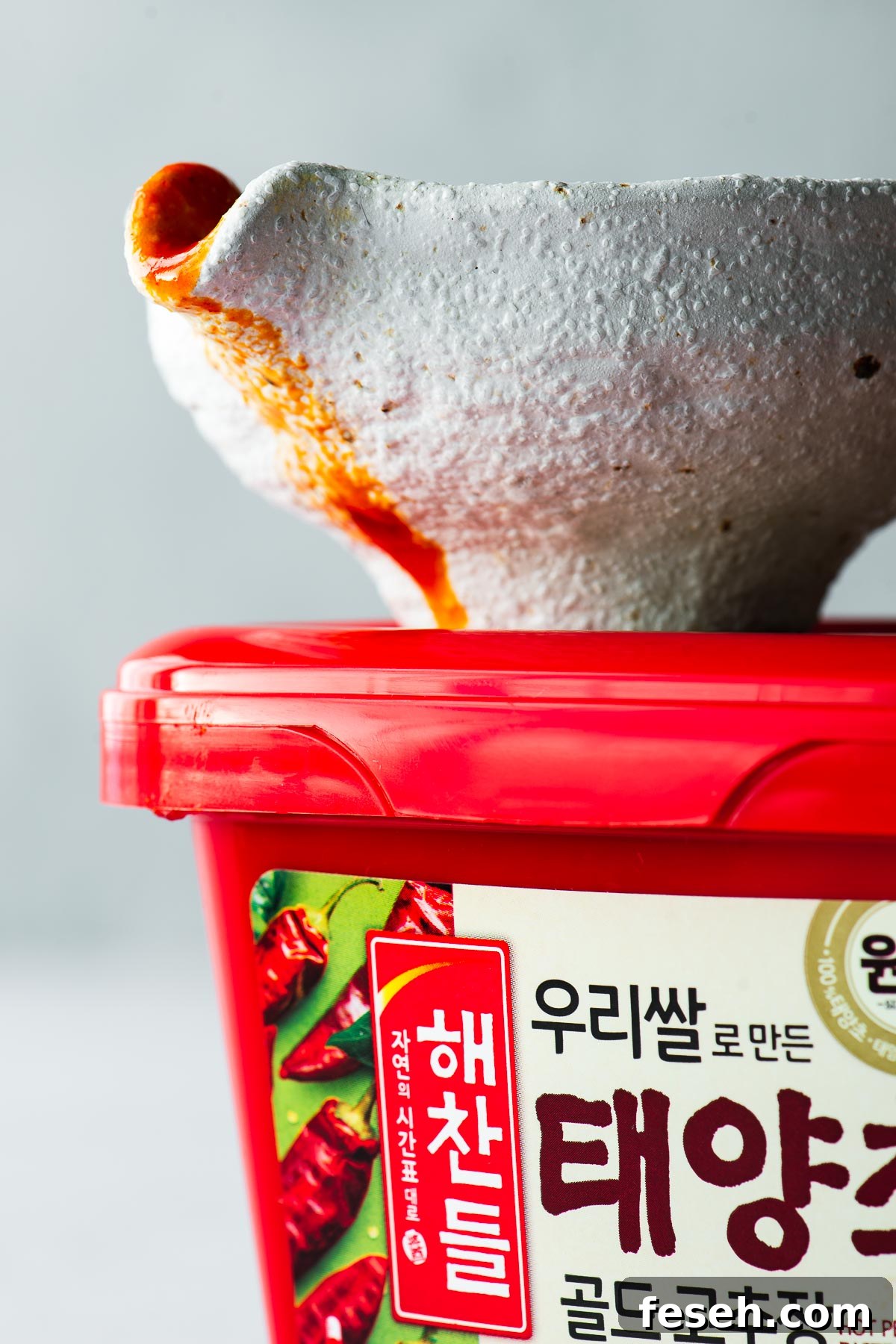
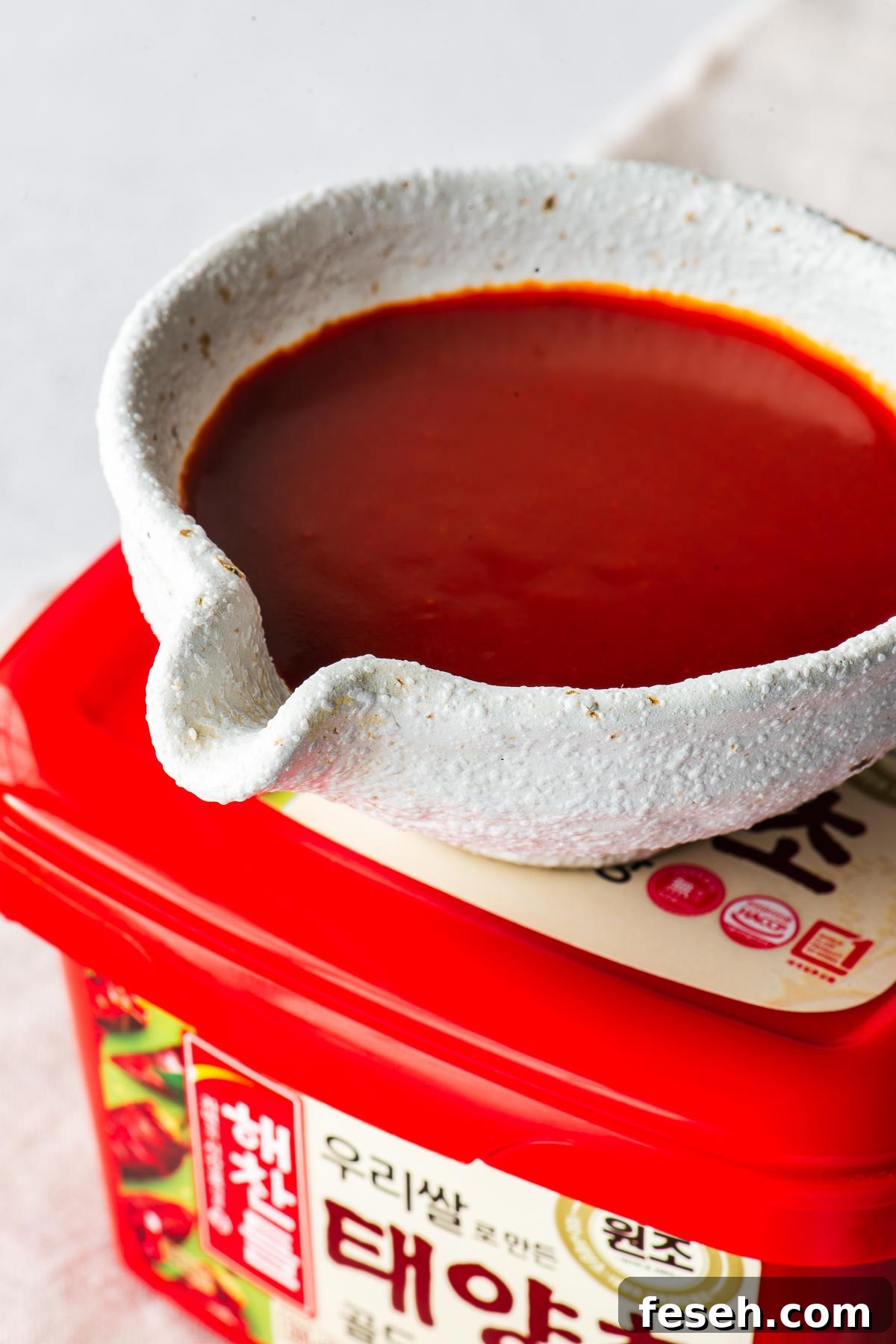
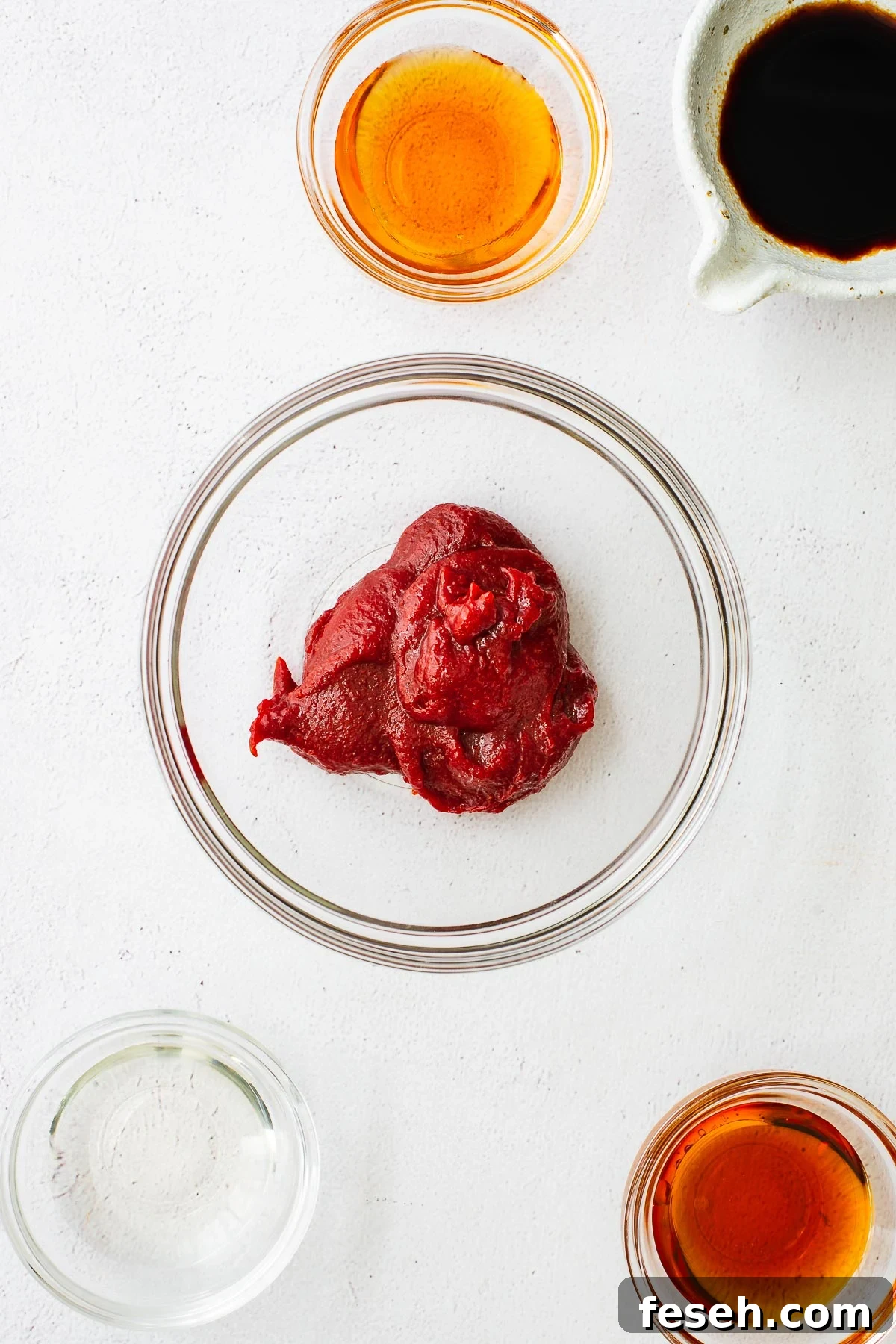
- Gochujang paste: The spicy red pepper paste is the base of the sauce. It’s rich in colour and umami. If you cannot find it, there are suitable substitutes based on miso, chili and sweeteners.
- Toasted sesame oil: Adds a warm, nutty aroma and silky texture.
- Rice vinegar: Brings brightness and balance. Plain rice vinegar or rice wine vinegar work; if you use seasoned rice vinegar reduce the sweetener.
- Soy sauce: Adds saltiness and depth. Alternatives include light soy sauce, tamari or coconut aminos. If you use a sweet soy sauce, reduce or omit additional sweetener.
- Maple syrup: Or use brown rice syrup, honey, or sugar to provide the sweet counterpoint to the chilli and vinegar.
For a non-spicy version
If you prefer no heat, substitute doenjang for gochujang and add a teaspoon of minced garlic. Doenjang is a fermented bean paste similar to miso; Japanese miso can be used as an alternative if needed.
How to make bibimbap sauce
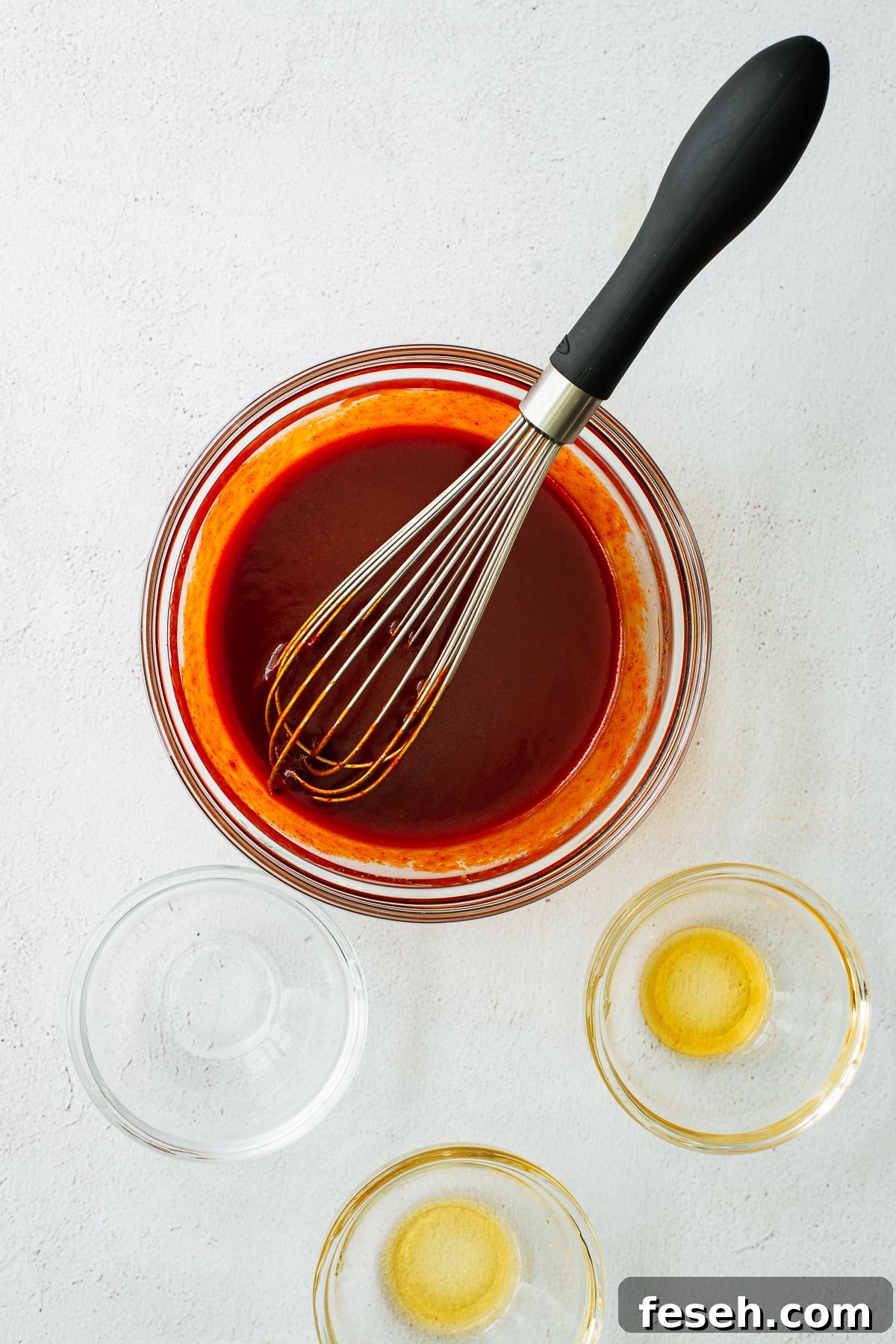
Making the sauce is effortless: combine gochujang, toasted sesame oil, rice vinegar, soy sauce and maple syrup in a small bowl and whisk until smooth. If the mixture is thick, add a splash of water to reach a pourable consistency.
How to store bibimbap sauce
Store the sauce in a clean airtight container in the refrigerator for up to two weeks. It may thicken when chilled; stir in a little water to loosen it before serving.
Serving suggestions
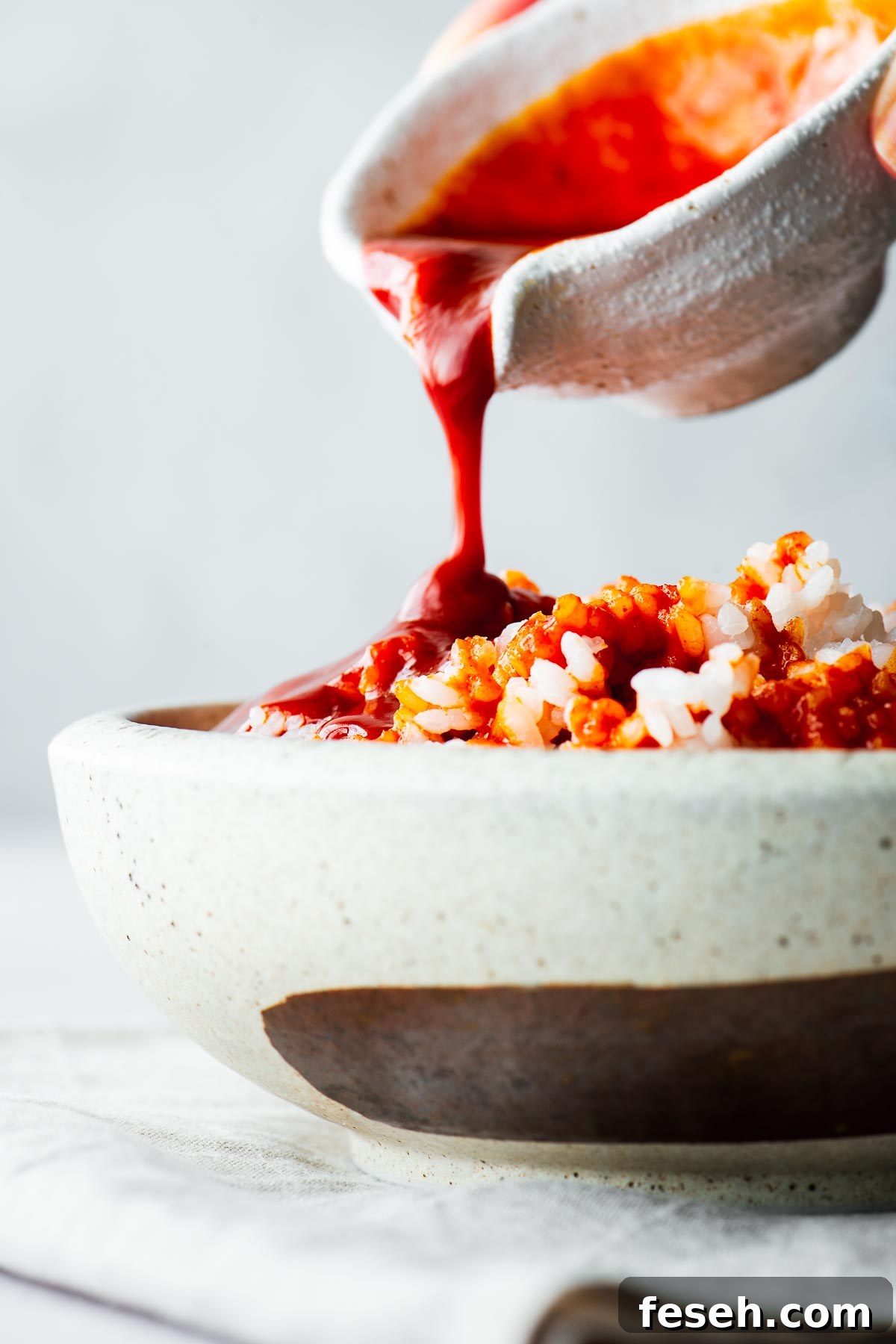
Use this gochujang sauce as a spicy dipping sauce, a topping for Buddha bowls, rice bowls, or noodles, or to spice up gyeran bap (Korean egg and rice). The classic use remains homemade bibimbap: rice, assorted toppings and the sauce mixed together at the table.
How to make a vegetarian bibimbap
Step 1: Start with a layer of steamed short-grain rice (sushi rice, glutinous rice, or other short-grain varieties).
Step 2: Add your toppings. Good choices include grilled sweetcorn, shiitake mushrooms, thinly sliced sautéed zucchini, roasted broccoli or cauliflower, mangetout, soybean sprouts, green onion, kimchi, and a fried egg. For a twist, avocado works well in veggie bowls.
Step 3: Finish with a generous drizzle of gochujang sauce and toasted sesame seeds. For a vegan bowl, omit the egg.
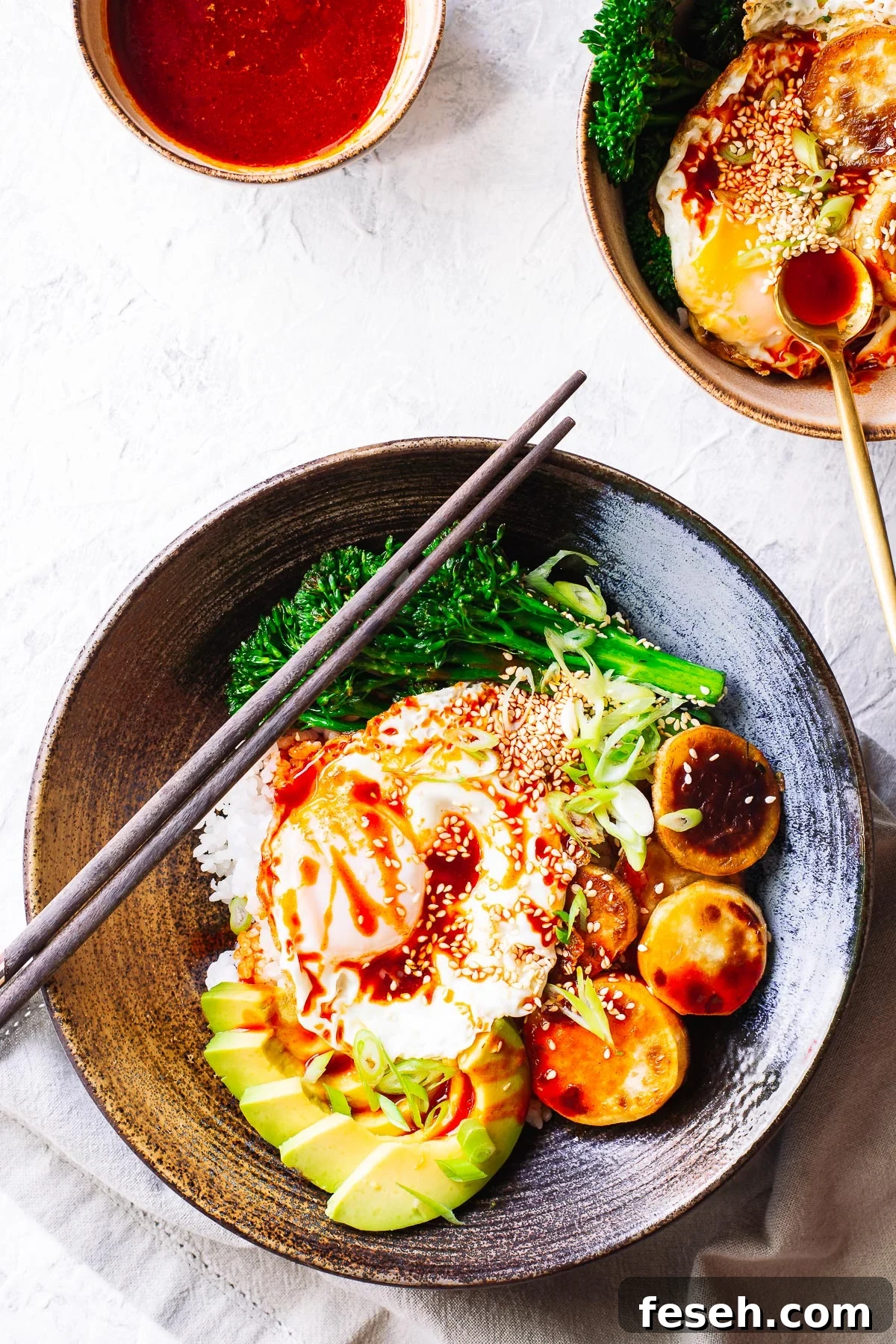
Make a large batch to use throughout the week — it’s great for work lunches and a smart way to use leftover vegetables and rice. Serve the bibimbap warm or at room temperature. Leftover sauce and rice also work well in fried rice dishes.
Frequently asked questions
Bibimbap sauce is commonly made from gochujang (fermented red chilli paste), sesame oil, a sweetener, vinegar and sometimes soy sauce and garlic.
Bibimbap is a bowl of warm rice topped with seasoned vegetables, protein (like beef or egg) and a spicy sauce. The components are mixed together before eating.
Gochujang is the fermented red chilli paste; bibimbap sauce usually uses gochujang as the base and adds sesame oil, vinegar and a sweetener to create a pourable sauce.
Gochujang paste is the concentrated fermented chilli paste. Gochujang sauce is a prepared mixture that dilutes and seasons the paste with oil, sweetener and acid to create a ready-to-use condiment.
Korean side dishes
Serve the bibimbap sauce alongside steamed rice and banchan (Korean side dishes) when assembling bowls. Typical accompaniments include spicy cucumber salad, broccoli sesame salad, soy-marinated eggs, braised potatoes and green onion salad.
Bibimbap Sauce Recipe
Ingredients
- ¼ cup gochujang paste
- 2 tablespoons toasted sesame oil
- 2 tablespoon maple syrup (or brown rice syrup, honey, or sugar)
- 1½ tablespoon rice vinegar
- 1 tablespoon soy sauce
Instructions
-
Place all ingredients in a small bowl and mix until smooth. Add a splash of water if the sauce is too thick; it should be pourable.
-
Transfer the sauce to an airtight container and refrigerate for up to two weeks, or use immediately.
Notes
- Different gochujang brands vary in heat and intensity — taste and adjust the sauce to your preference.
- Refer to the ingredients section for substitute ideas and tips.
- Serve over steamed short-grain rice for the best bibimbap experience.
Nutrition Information
Learn more about Korean ingredients:
- The best gochujang substitute (and what not to use)
- The best gochugaru substitute (for every use case)
Try more Korean recipes:
- Spicy Korean gochujang noodles
- Korean braised tofu (dubu jorim)
- Gyeran bap (Korean egg with rice breakfast)
- Mayak gyeran (Korean soy-marinated eggs)
- Spicy cucumber salad (oi michum)
- Korean sesame broccoli salad
- Gochujang mayonnaise
- Gochujang fried rice with kimchi
- Kimchi scrambled eggs