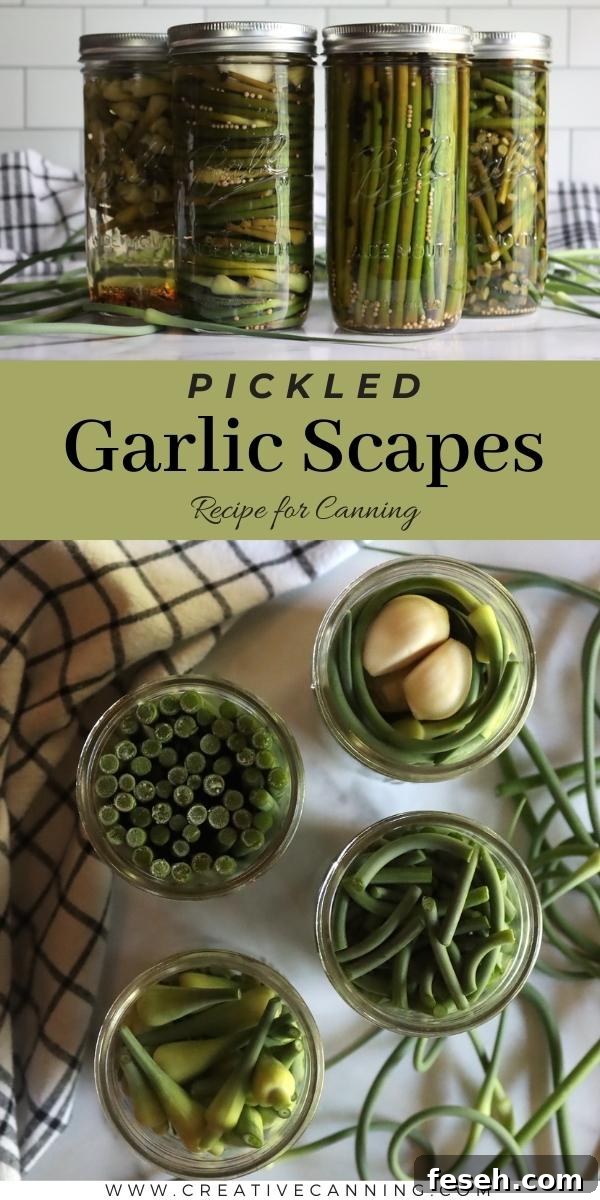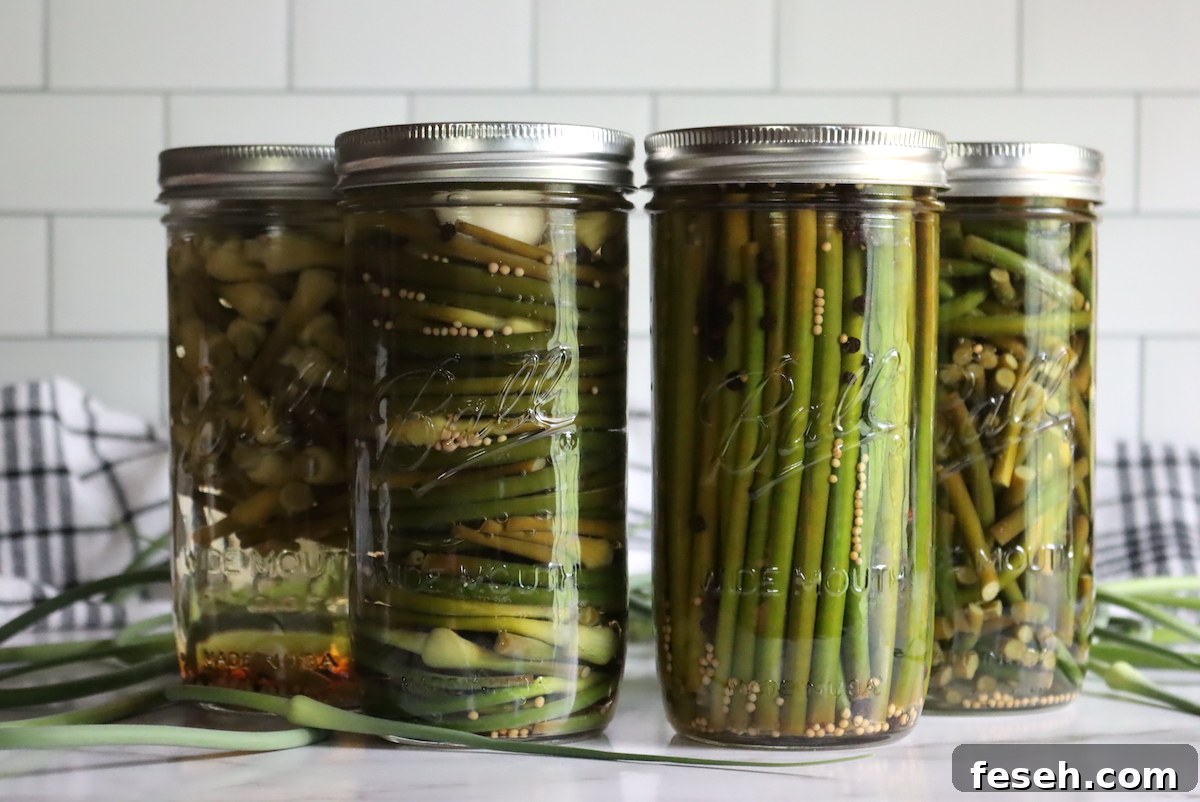
Pickled garlic scapes are a creative way to use garlic scapes and preserve the bright, garlicky flavor of this spring vegetable for year‑round enjoyment.
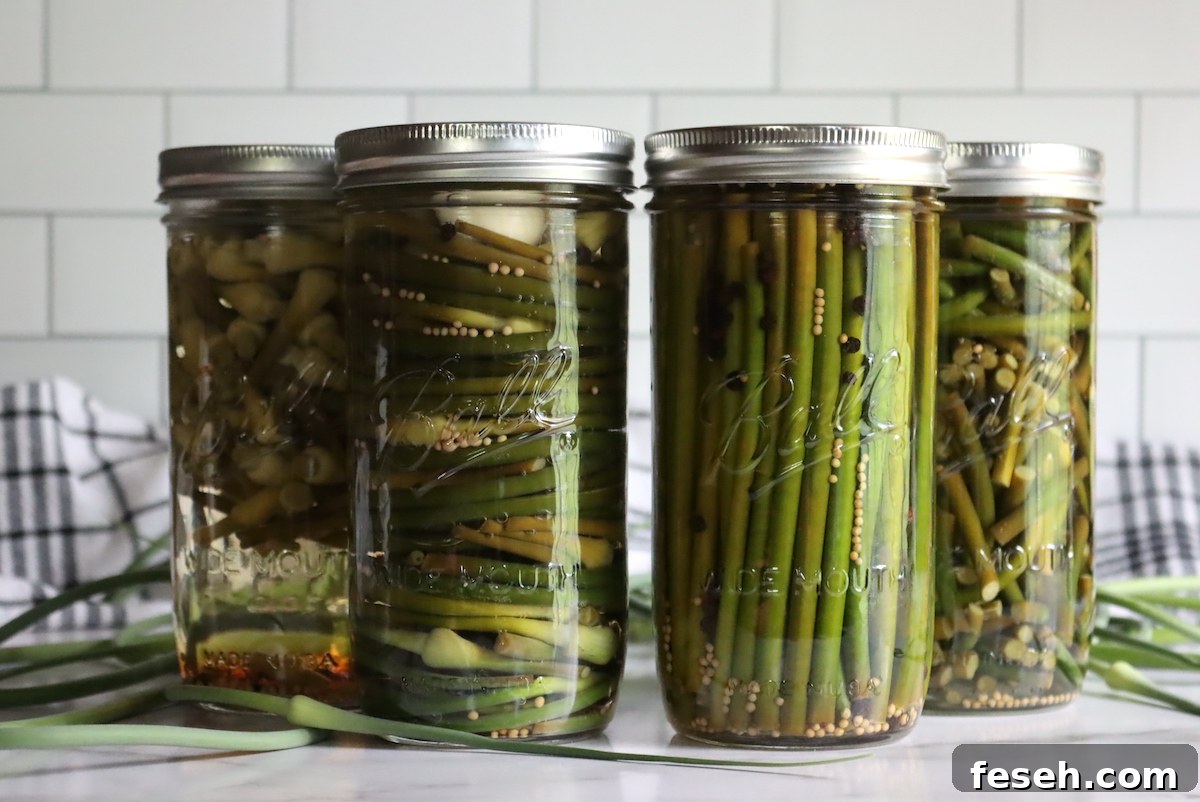
We grow a lot of garlic on our homestead, and with several dozen hardneck bulbs each season we harvest a generous crop of garlic scapes every spring. Hardneck varieties do best in our northern climate; they’re hardy and have a richer, more complex flavor than many store varieties. The scapes are an early, welcome bonus and make excellent pickles.
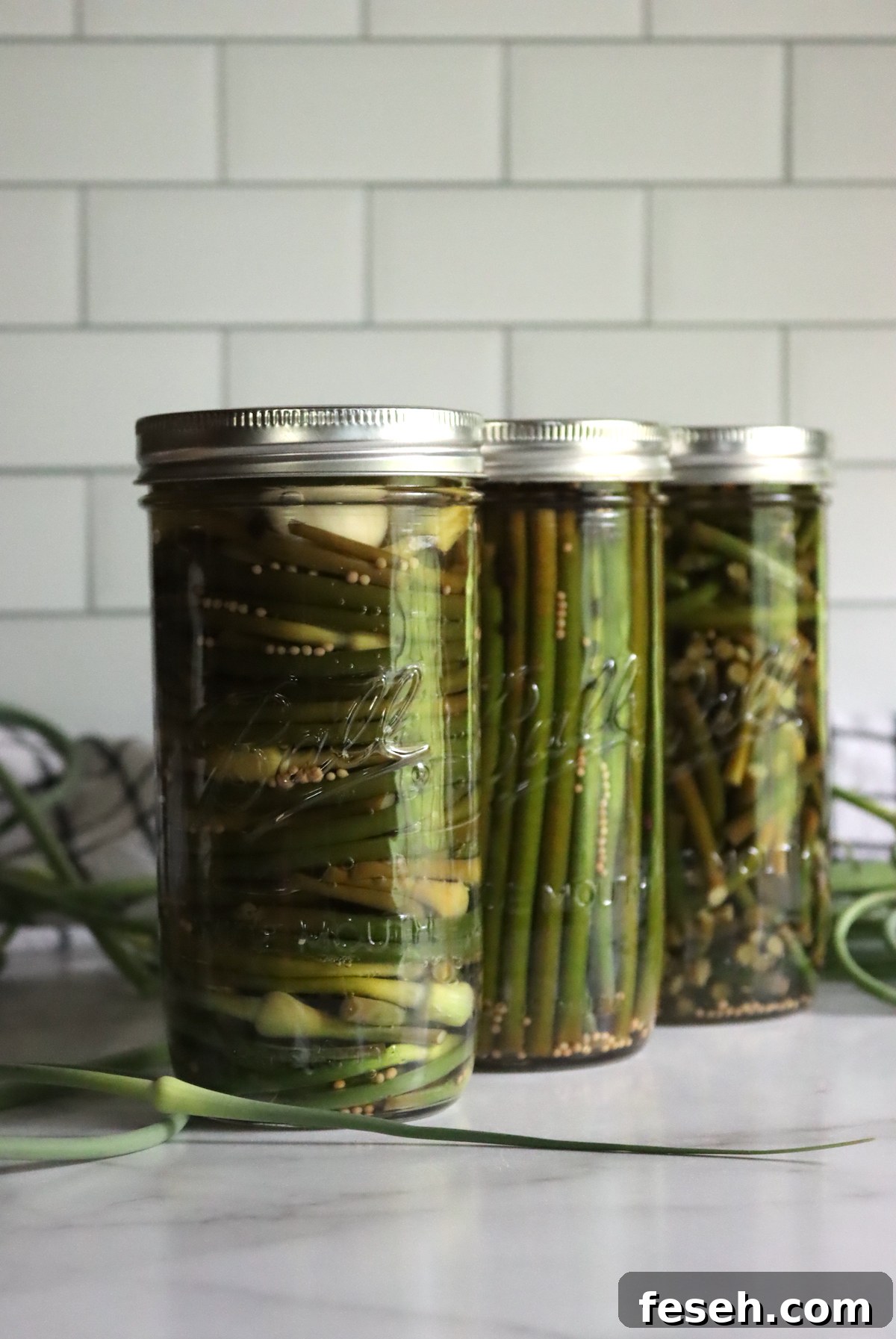
Pickled garlic scapes are simple to prepare and deliver a crisp, tangy result that’s similar to old‑fashioned dilly beans—only crunchier—and milder than straight pickled garlic. They add savory brightness to sandwiches, charcuterie boards, or a snack plate straight from the jar.
Choosing Garlic Scapes for Pickling
Harvest scapes early, when they’re just beginning to uncurl from the plant. If you wait until the flower opens, the scapes become tough and fibrous. Ideal length is under 12 inches, though slightly longer scapes can be fine if they remain tender after a cool spring.
At farmers markets, choose bright bunches with a tight curl. Straighter or longer scapes still make good pickles but may be a bit less tender. How you prepare them—short pieces, curls, straight sticks, or flower buds—will affect texture and presentation.
Preparing Garlic Scapes for Pickling
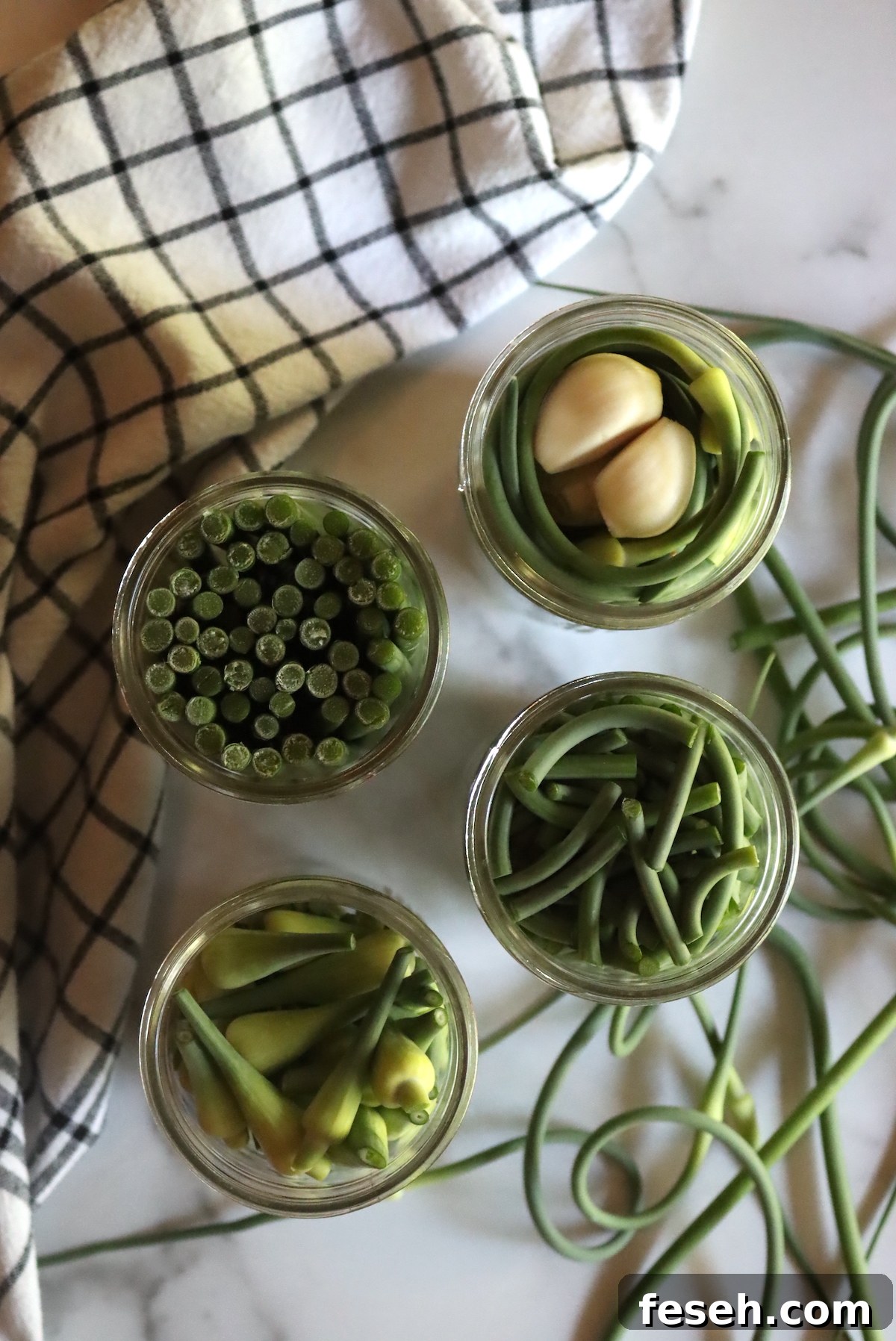
There are several attractive and practical ways to cut scapes for jars.
Small Pieces
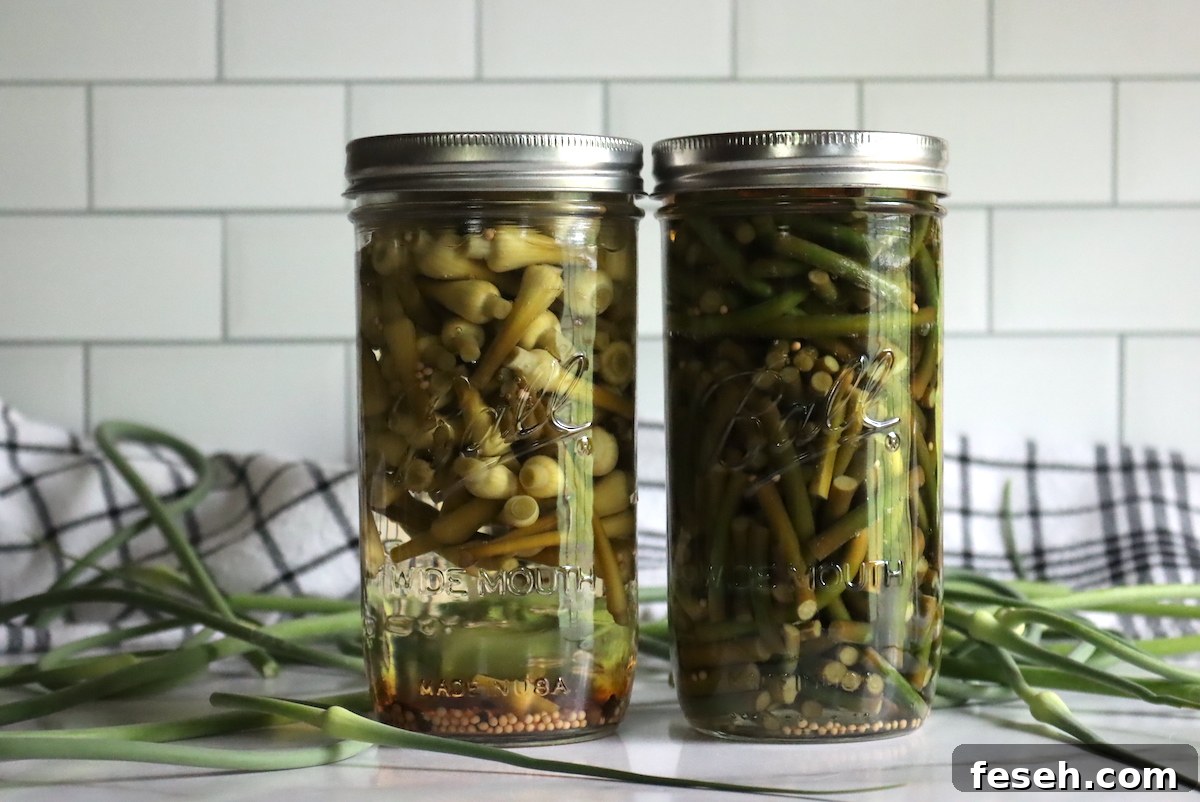
The quickest method is to cut scapes into 1–3 inch segments. Short pieces pack easily and make convenient snacking pickles that pair well with sandwiches. They’re efficient when you have a bumper crop.
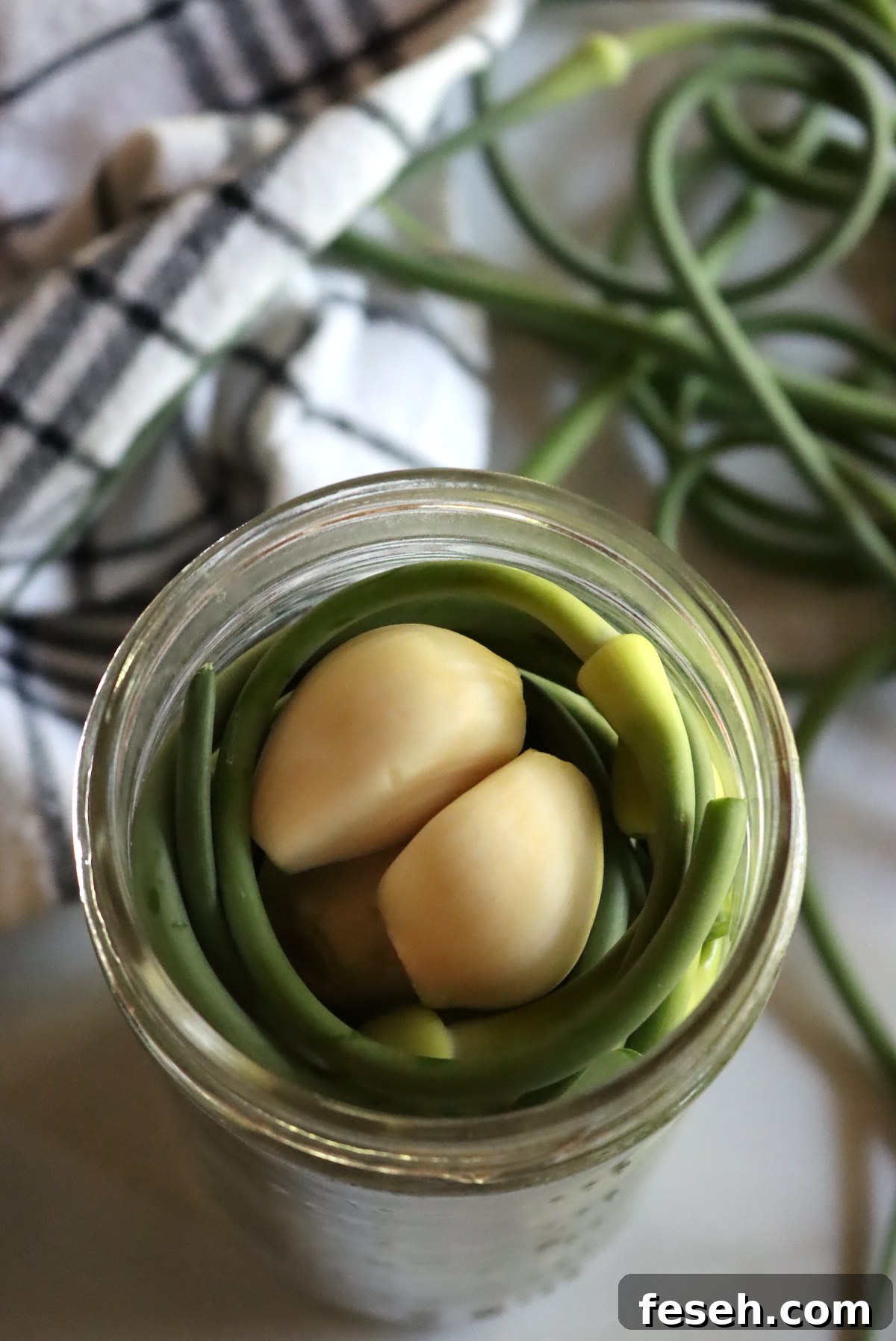
Curls: If you have very curly scapes, wind them into the jar for a decorative look. Curled scapes present nicely on a charcuterie plate and showcase the preserved shape. To fill gaps, add a few garlic cloves or small onion slices.
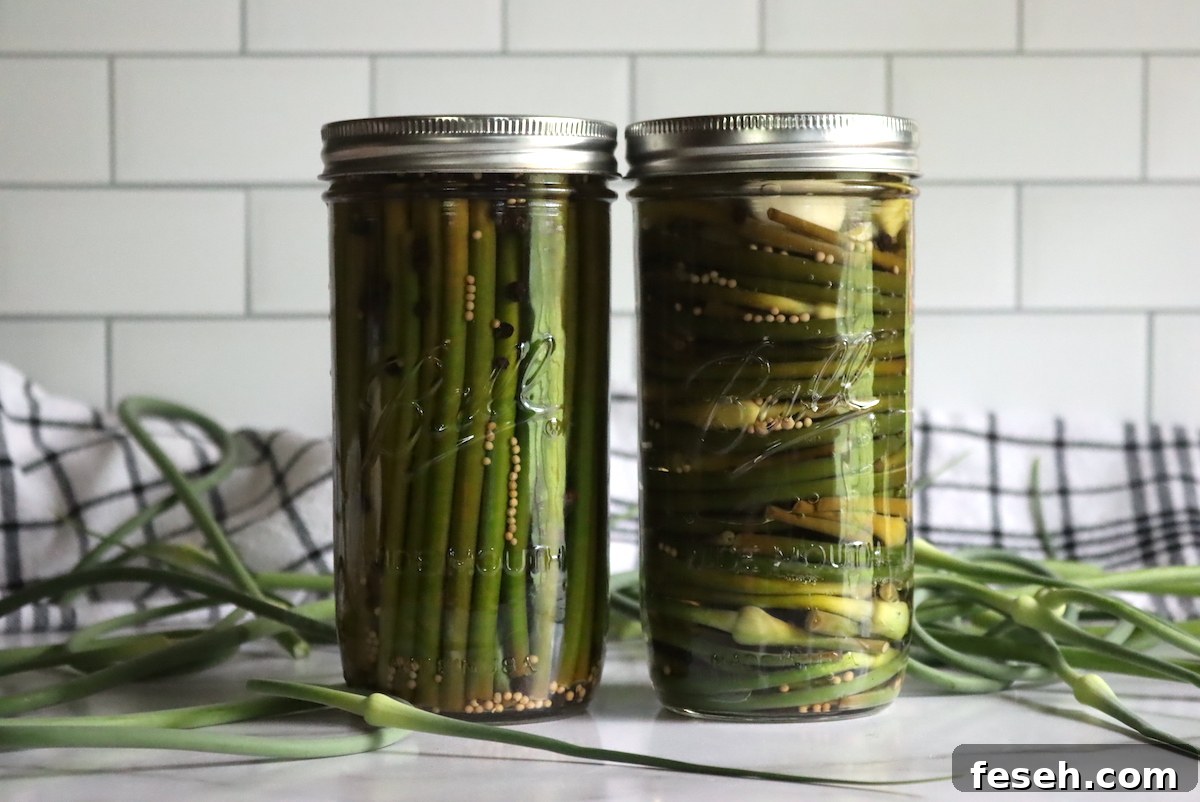
Straight Sticks
Allowing some scapes to grow longer yields straight stalks that resemble pickled asparagus. These are crisp, garlicky, and attractive in a jar.
Flower Blossoms
Removing and pickling the blossom buds separately makes an interesting, delicate pickle that’s great for special occasions. The buds contain air and will shrink during pickling, so expect a little empty space in jars. You can also pickle them attached to stems if you prefer.
For simplicity, chopping into short segments is the fastest approach. Fancy presentations like spirals or uniformly long sticks are attractive but require more time. I often separate blossoms and stem pieces because they offer different textures and uses.
Brine for Pickled Garlic Scapes
The method is the same for any shape: pack prepared scapes into jars, add spices, then pour hot brine over them. Below are four brine variations—basic, dill, bread‑and‑butter, and spicy—each scaled to pickle about 1/2 pound of scapes, which yields roughly two pint jars.
For each pint jar expect to use about 1/4 pound of scapes and a little over 1 cup of brine. Adjust the recipe proportionally for single pints or larger batches. If you run short of brine, add more vinegar rather than water to maintain acidity.
Basic Pickled Garlic Scapes
- 1 1/4 cup water
- 1 1/4 cups vinegar (white, cider, or any type standardized to 5% acidity)
- 1 1/2 Tbsp salt
- 1 Tbsp sugar
- 2 tsp mustard seeds (1/2 tsp per pint)
- 2 tsp black peppercorns (1/2 tsp per pint)
Dill Pickled Garlic Scapes
- 1 1/4 cup water
- 1 1/4 cups vinegar (standardized to 5% acidity)
- 2 Tbsp salt
- 2 tsp dill seeds (1/2 tsp per pint)
- 2 tsp black peppercorns (1/2 tsp per pint)
- A few fresh dill fronds (optional)
Bread and Butter Pickled Garlic Scapes
- 2 cups white vinegar
- 1 cup granulated sugar
- 1 Tbsp salt
- 2 Tbsp mustard seeds (1/2 Tbsp per jar)
- 1 tsp celery seed (1/4 tsp per jar)
- 1 tsp ground turmeric (1/4 tsp per jar)
Spicy Pickled Garlic Scapes
- 1 1/4 cup water
- 1 1/4 cups vinegar (standardized to 5% acidity)
- 1 Tbsp canning salt
- 1 Tbsp sugar
- 2–4 tsp red pepper flakes (1–2 tsp per pint)
- 4 tsp black peppercorns (about 1 tsp per pint)
Pack garlic scapes and dry spices into jars, then heat the brine (vinegar, water, salt, and sugar) until it boils and the salt and sugar dissolve. Pour the boiling brine over the scapes, keeping 1/2 inch headspace. For quick refrigerator pickles, let jars cool to room temperature then refrigerate; allow at least two days for flavors to meld.
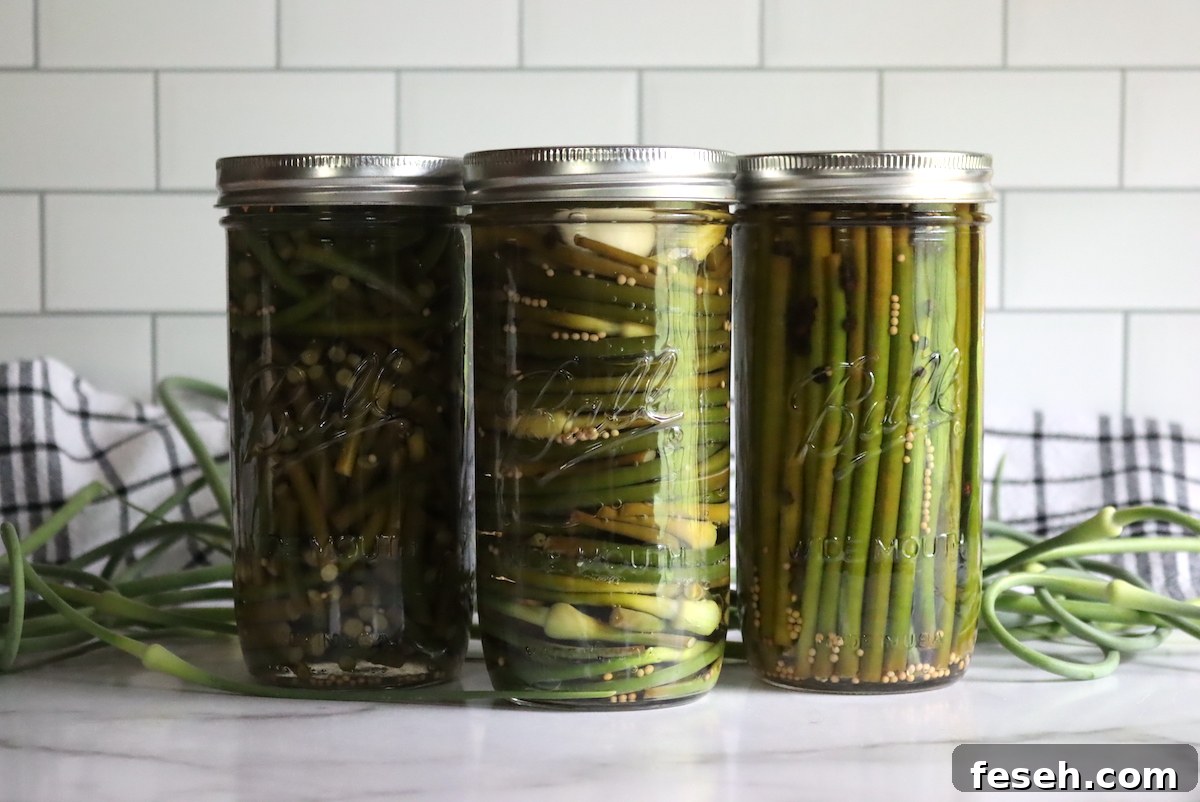
Canning Pickled Garlic Scapes
Water bath canning is optional. Refrigerator pickles will keep at least a month, but canning frees up fridge space and stores jars at room temperature. The canning steps mirror other pickled vegetables.
Fill jars with raw prepared scapes and dry spices, leaving 1/2 inch headspace. Bring the brine to a boil and pour it into the jars, then seal with two‑part lids. Process pint jars in a boiling water bath for 10 minutes (increase to 15 minutes above 6,000 feet elevation). Check seals; refrigerate any unsealed jars and use them first. Properly sealed jars keep their best quality for about 12 months; refrigerate after opening.
Garlic Scape Recipes
If you want more ways to use garlic scapes, they work wonderfully in tempura, pesto, hummus, compound butter, and many other recipes. Pickling is just one of several simple and delicious preservation methods.
Pickled Garlic Scapes
Ingredients
- 1/2 lb Garlic scapes (about 2–3 market bunches)
Basic Pickled Garlic Scapes
- 1 1/4 cup water
- 1 1/4 cups vinegar (5% acidity)
- 1 1/2 Tbsp salt
- 1 Tbsp sugar
- 2 tsp mustard seeds
- 2 tsp black peppercorns
Dill Pickled Garlic Scapes
- 1 1/4 cup water
- 1 1/4 cups vinegar (5% acidity)
- 2 Tbsp salt
- 2 tsp dill seeds
- 2 tsp black peppercorns
- Fresh dill fronds (optional)
Bread and Butter Pickled Garlic Scapes
- 2 cups white vinegar
- 1 cup granulated sugar
- 1 Tbsp salt
- 2 Tbsp mustard seeds
- 1 tsp celery seed
- 1 tsp ground turmeric
Spicy Pickled Garlic Scapes
- 1 1/4 cup water
- 1 1/4 cups vinegar (5% acidity)
- 1 Tbsp canning salt
- 1 Tbsp sugar
- 2–4 tsp red pepper flakes
- 4 tsp black peppercorns
Instructions
- Choose one brine variation above. Each makes enough brine for about 1/2 pound of scapes (two pints).
- Trim and cut scapes to the preferred shape: short segments, curls, long sticks, or blossom buds. Pack them into clean jars, leaving 1/2 inch headspace.
- Add dry spices or fresh dill to each jar.
- If canning, prepare a water bath canner now.
- Combine brine ingredients (water, vinegar, salt, sugar as applicable) in a saucepan and bring to a boil, stirring to dissolve salt and sugar.
- Pour boiling brine over packed scapes, maintaining 1/2 inch headspace. Seal jars with two‑part lids.
- For refrigerator pickles: cool to room temperature, then refrigerate. Let sit at least 2 days before eating; they keep at least a month.
- For canning: process pint jars in a boiling water bath for 10 minutes (15 minutes above 6,000 ft). Check seals; refrigerate any unsealed jars. Properly sealed jars keep best quality about 12 months. Refrigerate after opening.
Notes
Each brine listed is a separate variation; use only the ingredients for the brine you choose. Cut recipes in half for a single pint or scale up as needed. Pack scapes first so you know how much brine is required—about a cup per pint when well packed. If you lack scapes to fill a jar, add garlic cloves or sliced onion. For canning, only use canning‑approved vegetables.
Nutrition
Calories: 121 kcal; Carbohydrates: 23 g; Protein: 2 g; Fat: 1 g; Sodium: 2066 mg. Nutrition is approximate.
Pickling Recipes
If you enjoy pickling, there are many simple recipes to try with seasonal produce—pickled corn salad, three‑bean salad, green tomatoes, dilly beans, pickled jalapeños, and even fiddleheads make excellent preserves.