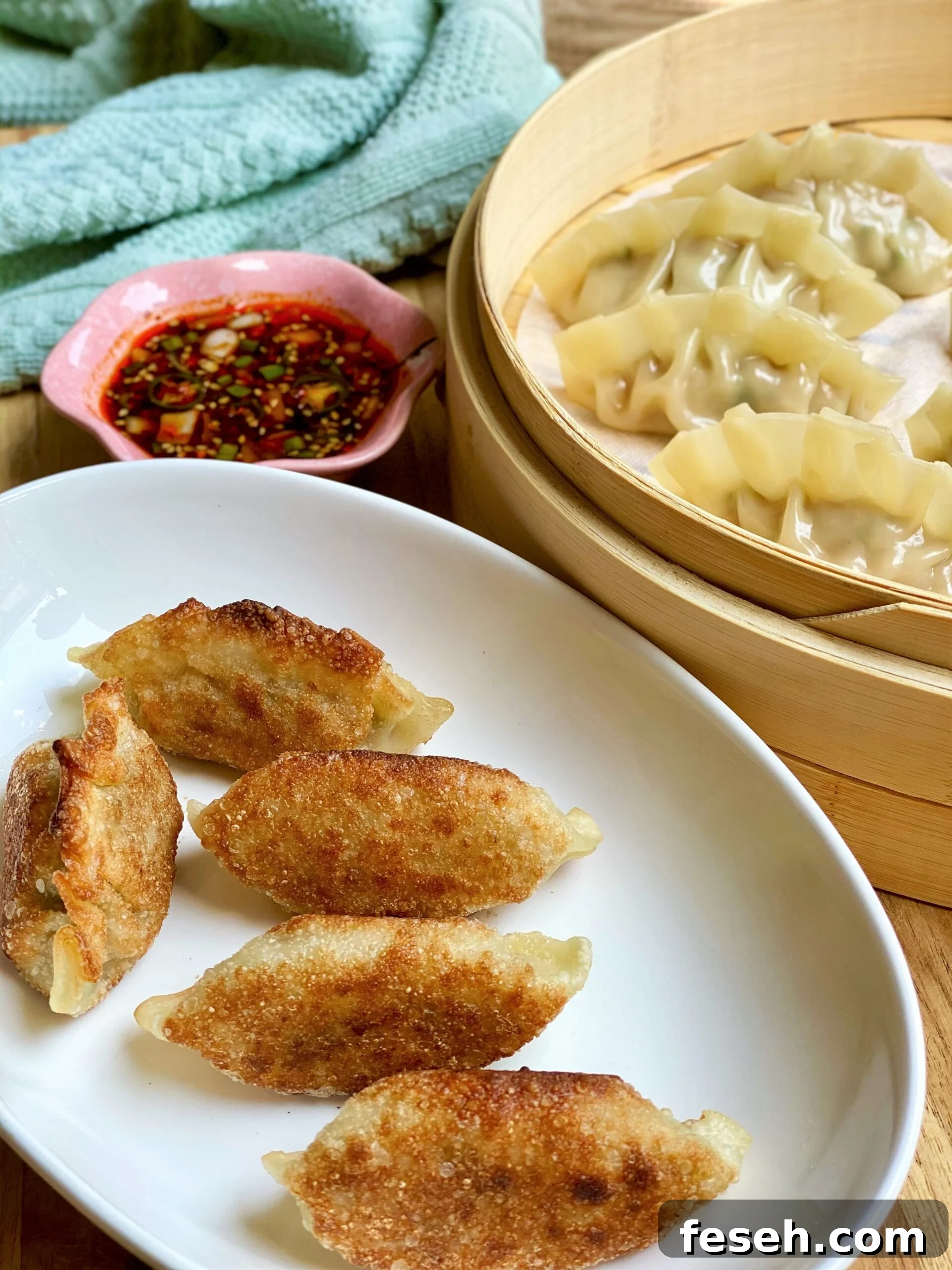
Want to learn how to make the best dumpling filling? In this recipe I share tips and techniques for juicy, flavorful mandu. The focus is the filling, but the dipping sauce and cooking options are included as well.
Mandu is the Korean name for dumplings, and there are many regional variations worldwide. My filling uses a combination of pork and shrimp for texture and depth: 1 lb ground pork and 1/2 lb ground shrimp. Using fattier ground pork (about 70% lean / 30% fat) is important—lean pork will produce dry, bland dumplings. The shrimp adds a pleasant bounce and extra flavor.
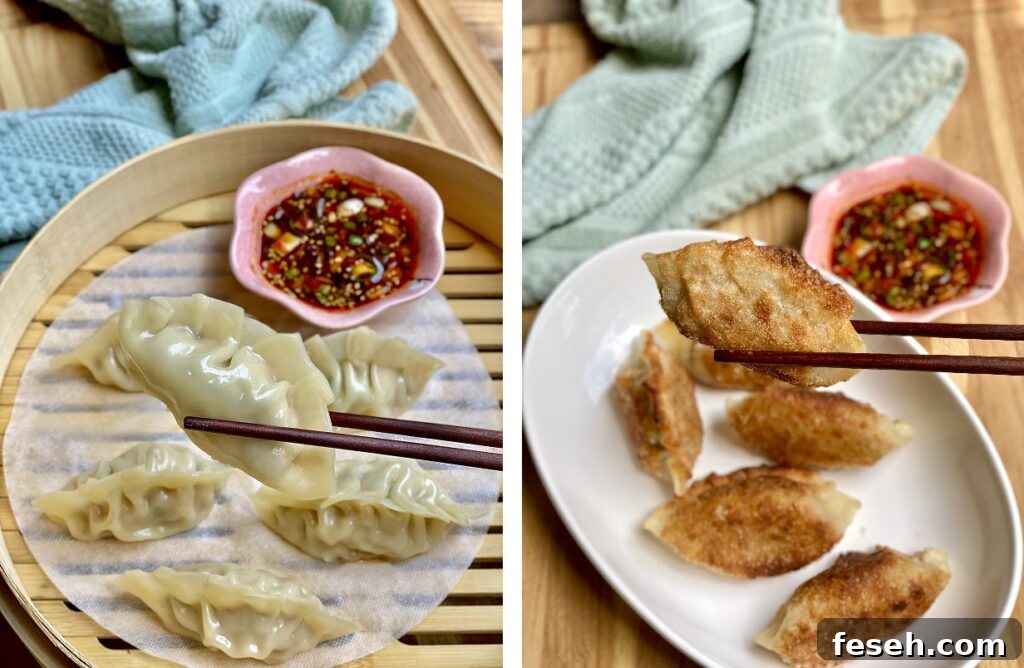
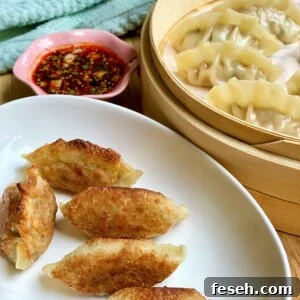
These dumplings can be pan-fried, steamed, or added to soups. You can also make the popular crispy “skirt” when pan-frying. Choose the cooking method you prefer.
How to make the BEST filling
- Precook the vegetables. You can technically salt and squeeze moisture from raw vegetables, but lightly cooking them first develops deeper flavor and a better texture in the filling.
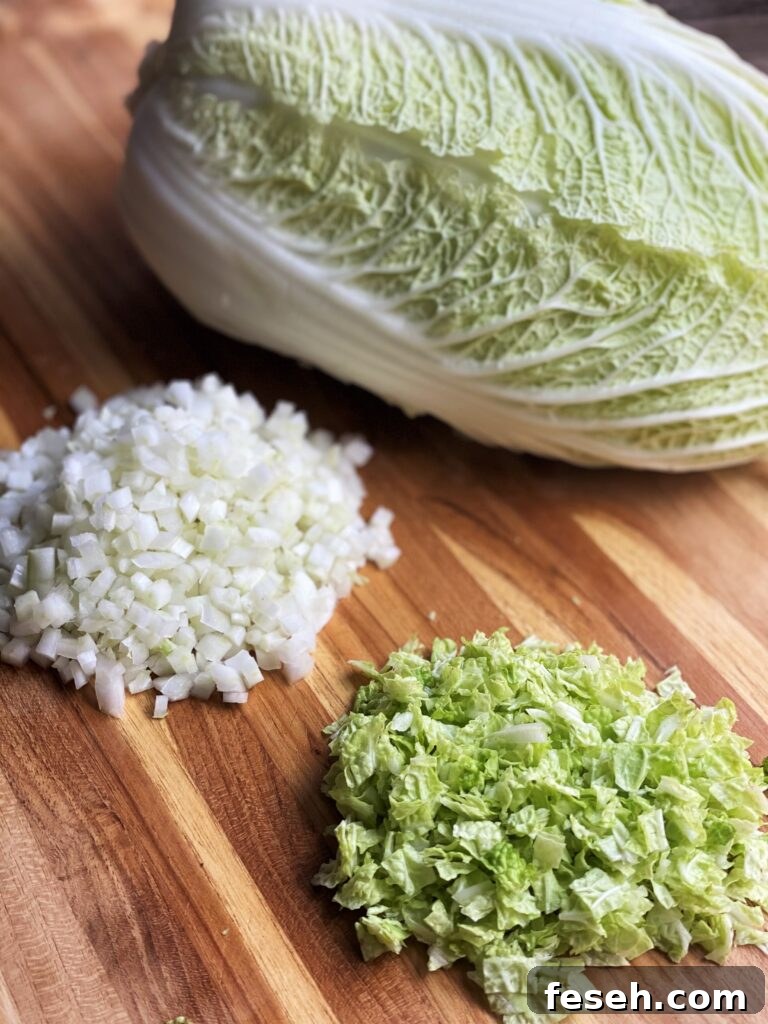
- Separate the crunchy and leafy parts of napa cabbage. The crunchy white ribs and the tender leafy parts cook at different rates and taste slightly different. Cook the crunchy bits first to soften them and build flavor, then add the leafy parts near the end.
- Add potato starch to lock in juices. A tablespoon of potato starch helps bind the filling and keeps it juicy—juicier meat equals more flavor and better texture when fried.
- Use dashida or a good seasoning. Dashida is a Korean beef bouillon powder that adds savory depth (it contains a small amount of MSG). Use salt if you prefer to avoid it, but dashida gives a robust umami boost.
- Rehydrate dried shiitake mushrooms. Chop rehydrated shiitake and add them to the filling for extra umami. Even mushroom skeptics often love the added depth in these dumplings.
- Taste the filling first. Microwave a small piece of the filling to test seasoning before you start wrapping. This lets you adjust salt, sugar, or soy sauce—once wrapped it’s hard to change.
Mandu skins & folding
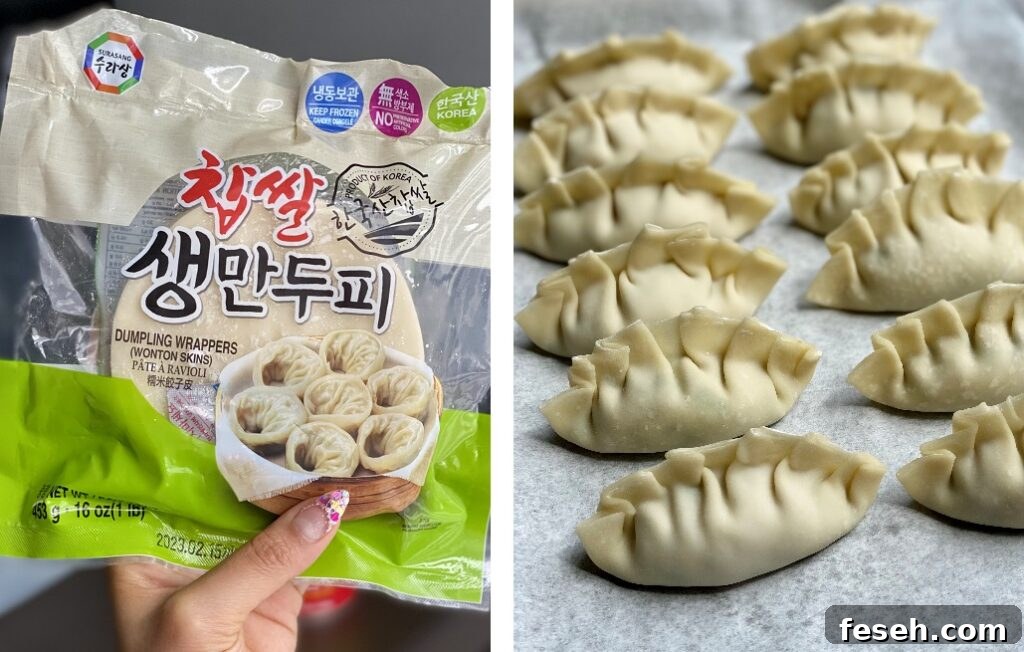
You don’t need to make wrappers from scratch. Store-bought mandu skins are convenient and widely available; I prefer slightly larger, thicker wrappers than gyoza skins. Any Korean brand works—my favorite is Surasang (수라상).
There are many folding styles. The method shown here is simple: seal the wrapper and pinch pleats from one side to the other. The recipe yields 30–45 dumplings depending on wrapper size; my wrappers produced about 30.
Dipping sauce
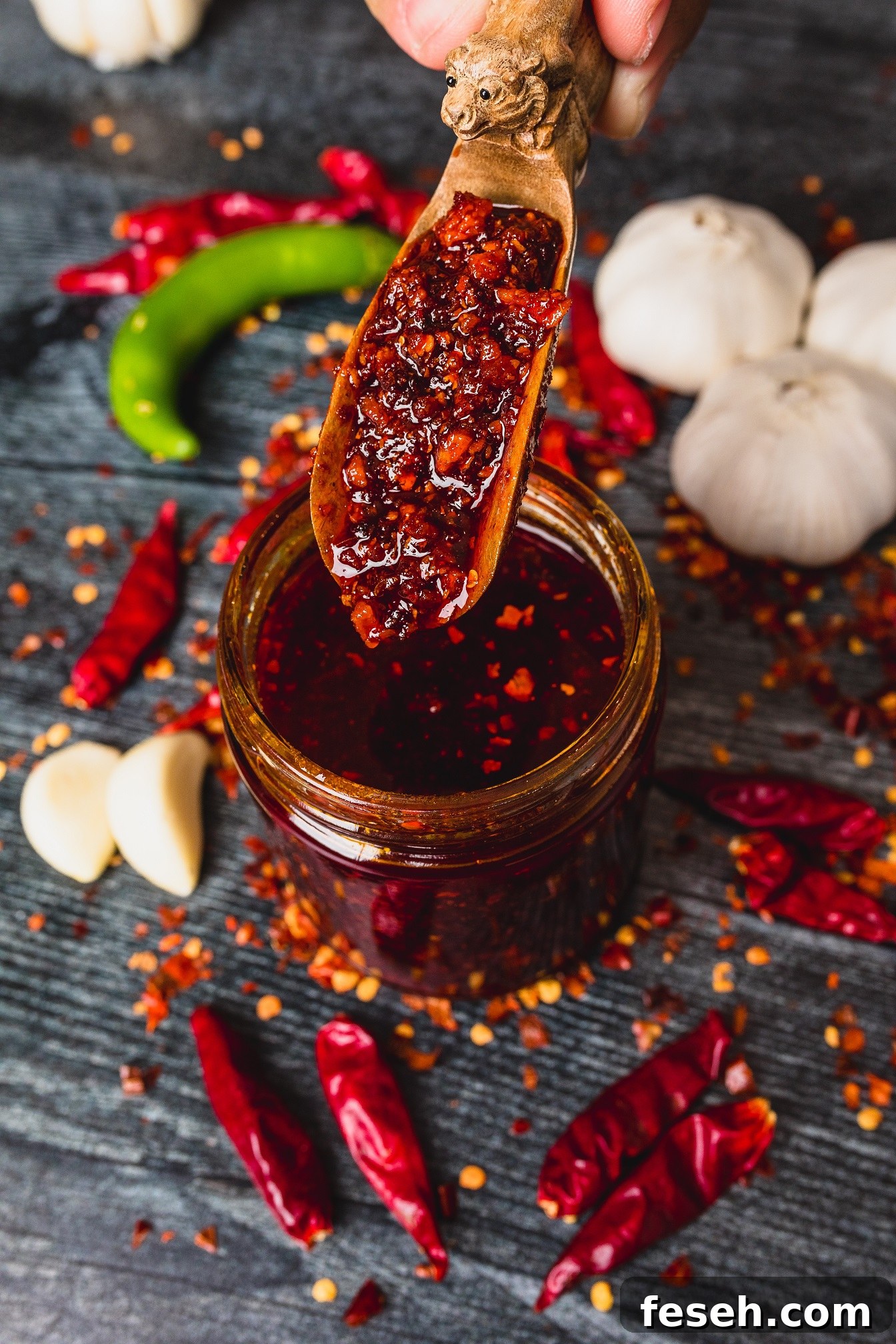
These dumplings are delicious on their own, but a dipping sauce completes the experience. My version combines soy sauce, sesame oil, rice vinegar, chili oil, green onion, garlic, serrano pepper, chopped onion, and sesame seeds. Mix everything together and adjust to taste.
The BEST Mandu (Korean Dumplings)
By Stella Navarro-Kim
Korean dumplings filled with pork, shrimp, and vegetables that can be pan-fried, steamed, or boiled in soups.
Yields
Prep: 15 mins • Cook: 20 mins • Folding: 20 mins • Total: 55 mins • Servings: ~40 dumplings
Ingredients
- 1 lb ground pork (70% lean / 30% fat)
- 1/2 lb ground shrimp
- 1 tbsp potato starch
- 2 tsp dashida (Korean beef bouillon) or salt to taste
- 3 tbsp soy sauce
- 1 tbsp brown sugar (or regular sugar)
- 1/4 tsp black pepper
- 2 oz Asian chive, chopped
- 1 package dumpling wrappers (Korean mandu skins)
Precooked fillings
- 5 oz napa cabbage (crunchy parts, chopped)
- 2 oz napa cabbage (leafy parts, chopped)
- 2 oz onion, chopped
- 5 garlic cloves, crushed
- 1 tsp ginger, crushed
- Pinch of salt
- 4 dried shiitake mushrooms, rehydrated and chopped
Dipping sauce
- 2 tbsp soy sauce
- 1 tsp sesame oil
- 2 tsp rice vinegar
- 1 tsp chili oil
- 1 tsp water
- 1 chopped green onion
- 1 minced garlic clove
- 1 chopped serrano pepper
- 1 tbsp chopped onion
- 1/2 tsp sesame seeds
Instructions
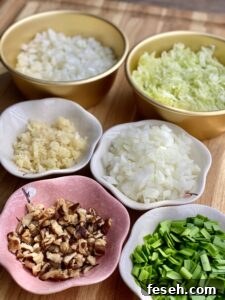
- Prepare the precooked filling: separate and chop the leafy and crunchy parts of the napa cabbage. Rehydrate shiitake mushrooms in warm water for about 30 minutes, squeeze out excess water and chop. Crush garlic and ginger, chop onion. Keep Asian chives raw and chopped.
- In a pan over medium-low heat, add a little oil and sauté the onion until fragrant. Add garlic and ginger and cook for about a minute. Add the crunchy napa cabbage pieces and shiitake mushrooms, season with a pinch of salt, and sauté for 3–4 minutes.
- Add the leafy napa cabbage and sauté for another 1–2 minutes until tender. Turn off the heat and allow the mixture to cool completely.
- In a bowl, mix the ground pork, ground shrimp, soy sauce, potato starch, dashida, and sugar. Mix for at least two minutes to develop a slightly elastic, bouncy texture.
- Add the cooled precooked vegetables and chopped Asian chives to the meat mixture. Stir until evenly combined.
- To assemble: wet the edges of a dumpling wrapper with water, place about 1 tablespoon filling in the center (adjust amount to wrapper size). Seal the edges and shape the dumplings as desired—pleats are optional but attractive.
- If freezing, arrange dumplings on parchment and freeze solid before transferring to a bag. Thaw 10–15 minutes at room temperature before cooking.
- To pan-fry: heat 2–3 tbsp oil in a pan over medium heat and fry dumplings about 2 minutes per side until golden. Tilt the pan to pool oil and cook any raw skin areas in the oil for an even color. For a crisp skirt, add a slurry of water and flour or cornstarch, cover, and cook until the liquid evaporates, then uncover to crisp.
- To steam: steam dumplings 7–8 minutes until cooked through.
- Serve with dipping sauce (mix all sauce ingredients) and enjoy.
Notes
- Using fattier pork is key for juicy dumplings. Avoid lean ground pork.
- Microwaving a small sample of the filling to test seasoning is a useful step before wrapping.
- Adjust filling and sauce seasonings to suit your taste—more soy for saltiness, more vinegar for acidity, more chili oil for heat.
Like this recipe? Leave a comment below!