Jump to the Recipe
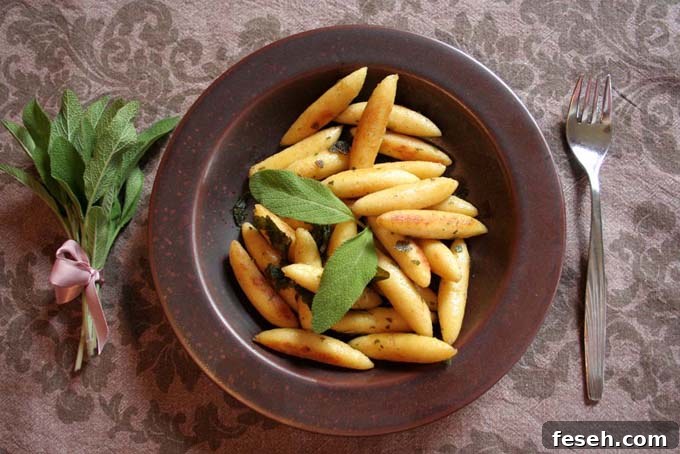
Few foods are as beloved in Germany as the humble potato. Potatoes appear across the country’s culinary landscape—in traditional dishes and modern interpretations, in both sweet and savory preparations, served as a main or a side. They are roasted, baked, fried, boiled, riced, grated, diced, mashed, and shaped into countless forms. One particularly charming form is the schupfnudeln: small, finger-shaped potato dumplings that pair well with a wide range of flavors.
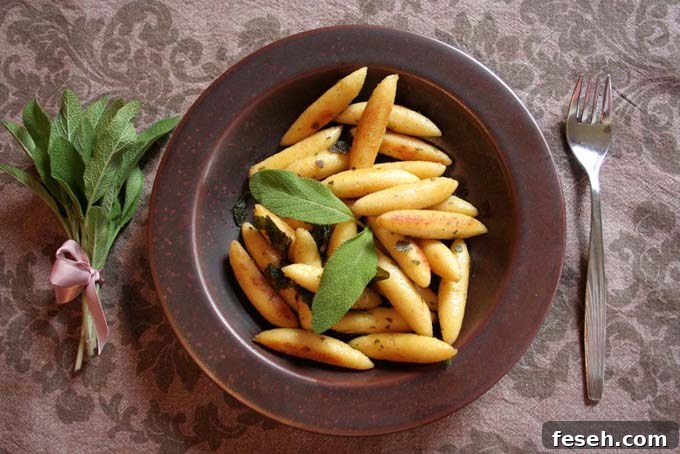
Schupfnudeln come from the Swabian region, the same area credited with spaetzle and other regional specialties. Swabia’s influence on German cuisine is significant, and schupfnudeln have long been a popular item in that culinary tradition. Across Germany, the dumplings go by many local names—sometimes amusing ones—such as schopperla or buwespitzle, reflecting regional dialects and traditions.
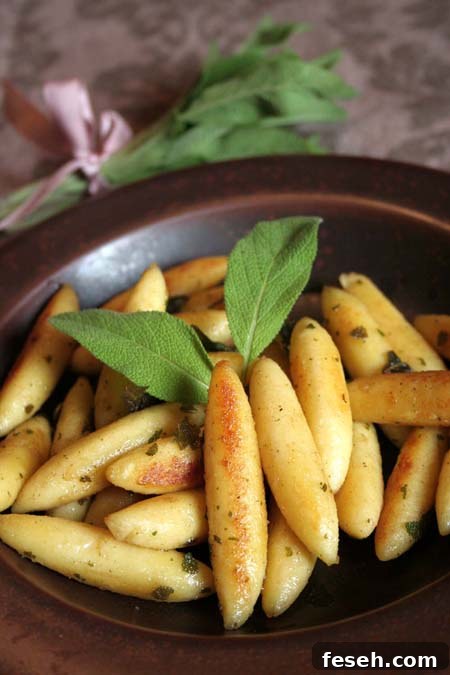
The most common name, schupfnudeln, hints at both the preparation and the shape. The word schupf relates to a rolling motion used when shaping the dumplings, while nudel traces back to words for dumpling-like shapes. Traditionally, these dumplings are formed by hand into small, tapered cylinders—easy to make and quick to cook.
Because the dumplings themselves have a mild, comforting flavor, they pair successfully with a wide variety of ingredients. Savory pairings include vegetables, roasted or braised meats, and fish, and the dumplings are especially tasty when pan-fried in the same pan used to cook the accompanying dish so they can absorb aromatic flavors. Schupfnudeln can also appear in sweet preparations, served with applesauce, stewed fruit, or custard—showing how versatile they can be.
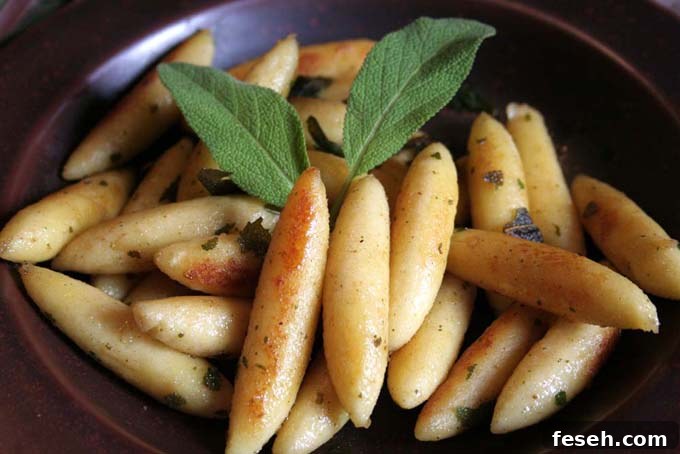
There is no single definitive recipe for schupfnudeln; different regions and families use slightly different techniques and ratios. When potatoes first arrived in Europe centuries ago, cooks began experimenting with potato-based dumplings as an alternative to flour-only doughs. Like Italian gnocchi, schupfnudeln rely on potato as a base but retain a distinct German regional character in their texture and shape.
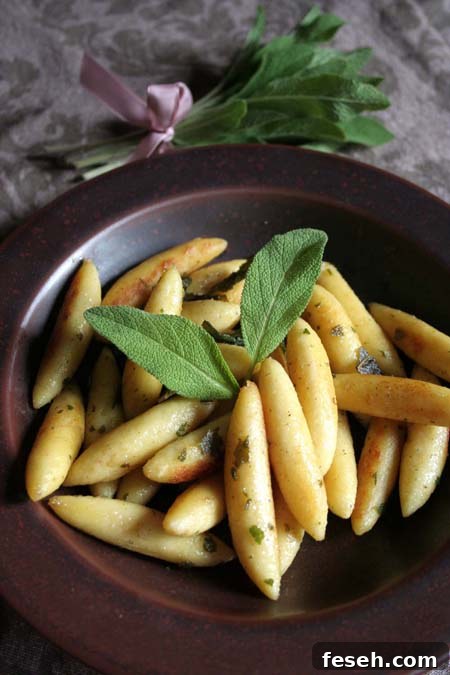
For best results, choose starchy potatoes. Their higher starch content helps create a smooth, cohesive dough that presses easily through a ricer and holds its shape when formed and cooked. The recipe below is a classic, straightforward version that finishes the dumplings in butter with crispy sage leaves, producing a fragrant, golden side dish that complements roasted meats or poultry. You can also turn this into a main by sautéing the dumplings with vegetables and a tomato or cream sauce for a comforting, pasta-like meal.
Freshly ground nutmeg adds a subtle, warm note to the dough. If you don’t have whole nutmeg, a small amount of pre-ground nutmeg will work, but freshly grated nutmeg gives the best aroma.
The Recipe
Roasted, finger-shaped potato dumplings finished in sage butter. Serves 4.
Ingredients
- 1 lb starchy potatoes
- 1 egg*
- 2/3 cup flour
- Pinch of salt
- Pinch of freshly ground nutmeg
- Knob of butter
- Handful of sage leaves
Instructions
- Wash the potatoes and simmer them whole in salted water until tender. While still warm, peel the potatoes and press them through a potato ricer or mash them very finely. Spread the riced potatoes out on a baking sheet and let them cool slightly so excess steam evaporates.
- When the potatoes are cool enough to handle, combine them with the egg and the flour. Season with salt and freshly ground nutmeg. Knead gently until a smooth, slightly sticky dough forms. Shape the dough into a long, thin roll.
- Cut the roll into roughly one-inch pieces. Using the palms of your hands, roll each piece into a small, tapered, finger-shaped dumpling.
- Bring a large pot of lightly salted water to a gentle boil. Cook the dumplings in batches until they float to the surface, then remove them with a slotted spoon and transfer to a plate to cool briefly.
- In a large skillet, melt the butter over medium heat. Add the sage leaves and cook until they become crisp and aromatic.
- Add the par-cooked dumplings to the pan and sauté for 5–10 minutes, turning occasionally, until the dumplings develop a golden-brown crust on several sides.
- Serve immediately, garnished with a few fresh sage leaves. These dumplings pair well with roasted meats, sautéed vegetables, or a simple tomato sauce if you prefer a heartier main course.
*If you have dietary restrictions, omit the egg and increase the flour slightly, or use a suitable binder according to preference; texture and handling may vary.
Don’t forget to Pin It!
Photos by Nina-Kristin Isensee, © Ask the Experts, LLC. ALL RIGHTS RESERVED.