Everyone appreciates flowers, and many cultures incorporate them into rituals and daily life. In Japan, that appreciation evolved into the refined practice of ikebana — a disciplined art of flower arrangement with roots stretching back centuries. Initially part of offerings to the gods, ikebana developed into a formalized craft passed down through families and taught in specialized schools. Today it remains a living tradition that blends aesthetic sensitivity, symbolism, and technique.
Ikebana differs from typical floral displays in several important ways. It’s not only about visual beauty but also about extending the life of stems and blossoms through thoughtful placement and care. Each flower and branch carries symbolic meaning, and their combinations convey deliberate messages. Many practitioners favor an odd number of stems — a choice considered auspicious and intentionally asymmetrical, since traditional ikebana prizes balance through contrast rather than mirror symmetry. The approach emphasizes line, shape, and negative space, often privileging minimalist composition over a riot of colors.
Minimalism is central to ikebana: a few well-chosen blooms, a simple vessel, and careful attention to proportion produce the greatest impact. Across different schools, styles and methods vary, but the underlying principles — respect for nature, seasonal awareness, and a sense of harmony — remain consistent. If you’re curious to try your hand at this timeless practice, the following curated tutorials offer accessible, inspiring projects to explore.
6 Simply Beautiful Ikebana Flower Arrangements
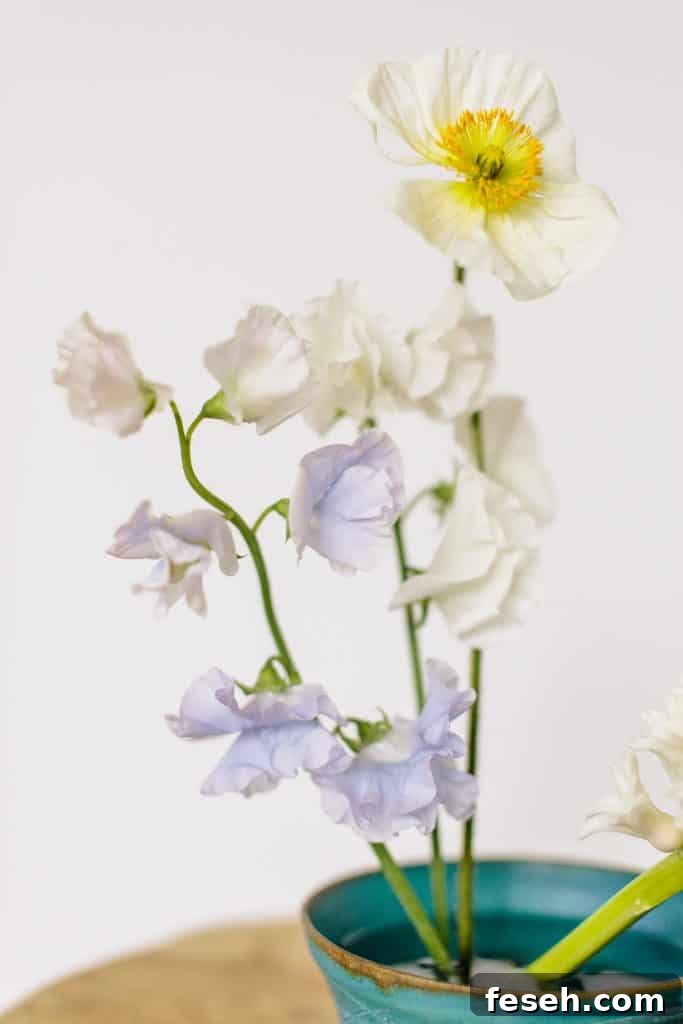
1. Minimalist Ikebana Flower Arrangement from Hello Nest
This modern interpretation highlights pale, seasonal blooms arranged in a simple bowl anchored with a flower frog. The restrained palette and clean lines showcase the natural beauty of each stem. It’s an approachable project for beginners and creates a calming focal point that evolves gracefully as the flowers age.
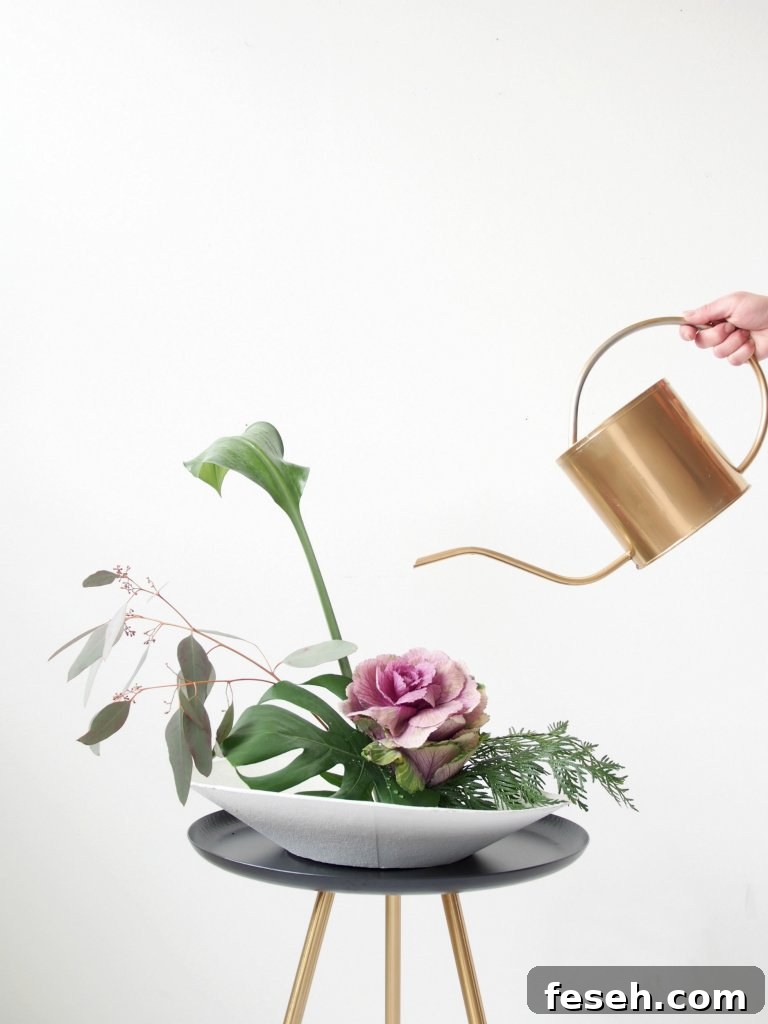
2. DIY Ikebana Decoration from Monster Circus
This design blends Japanese ikebana sensibilities with Scandinavian minimalism for an understated, elegant arrangement. Ikebana often makes use of leaves, stems and roots as much as blossoms, allowing you to feature the whole plant. The result is visually striking and economical, since foliage and structural elements do much of the work typically reserved for abundant flowers.
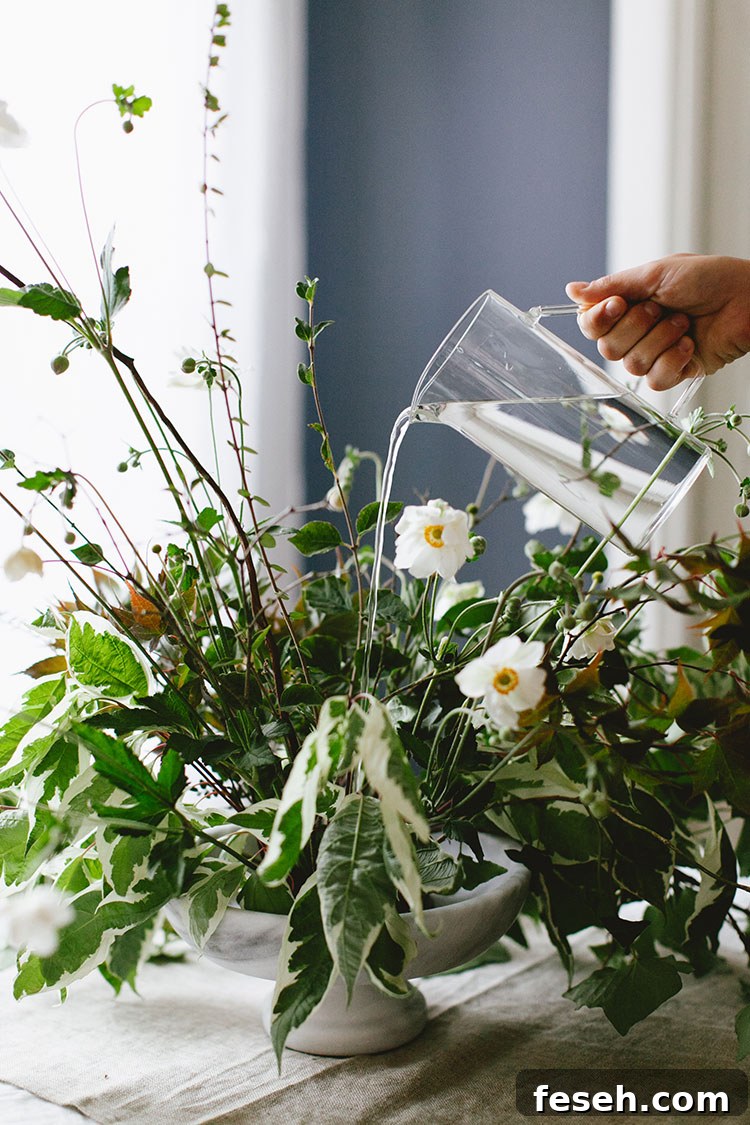
3. Ikebana-Inspired Foraged Centerpiece from Jojotastic
While ikebana often centers on a few key stems, you can also embrace a foraged look that feels lush yet intentional. Gather branches, wildflowers and seasonal foliage to craft a centerpiece that keeps the minimalist spirit through careful composition and attention to proportion.
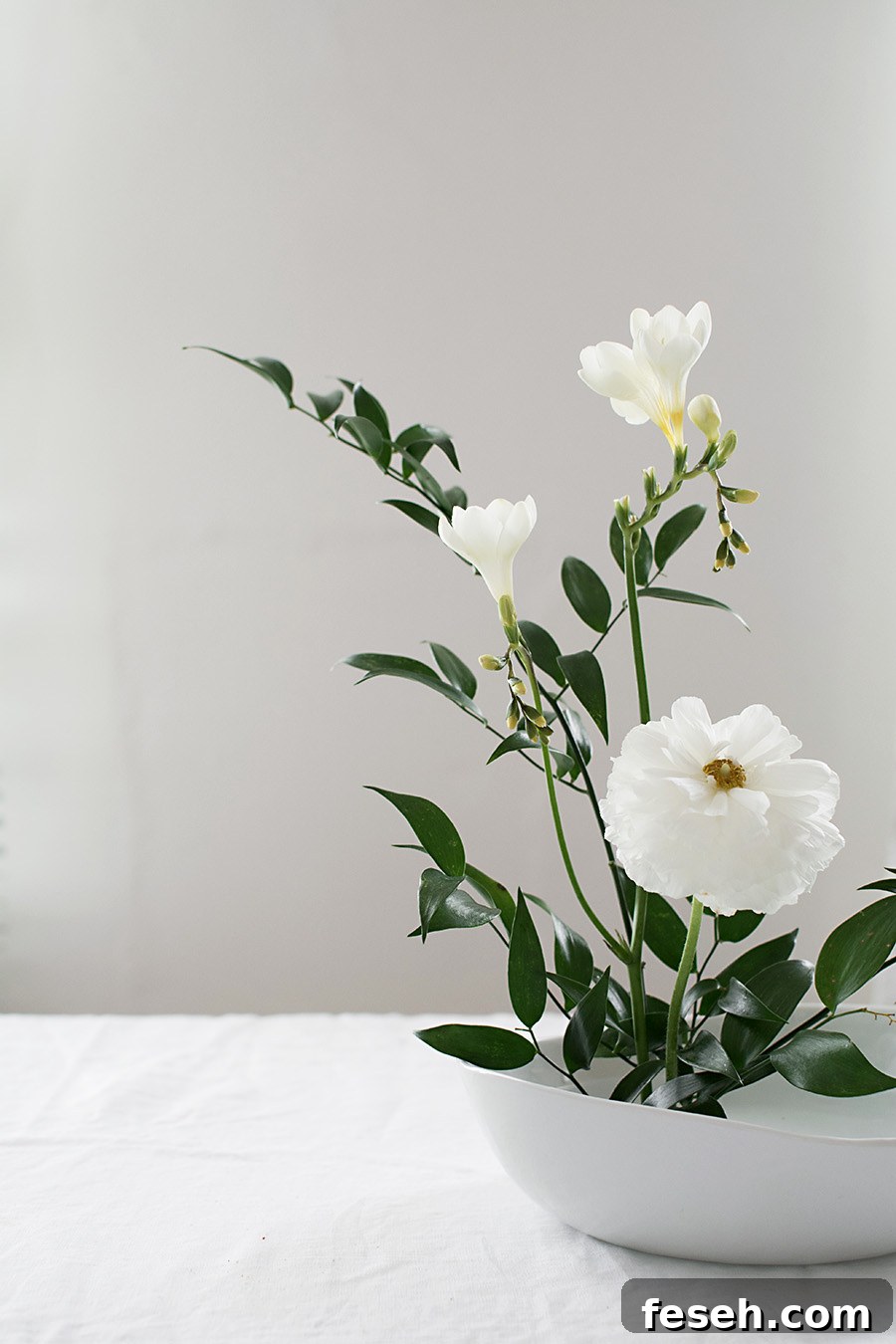
4. Basic Ikebana Flower Arrangement from Home Oh My
This white-and-green arrangement exemplifies the “less is more” ethos. Choosing stems thoughtfully and working with seasonal flowers helps you create a delicate yet expressive piece. Limiting options can spark creativity and encourage a stronger focus on line and negative space.
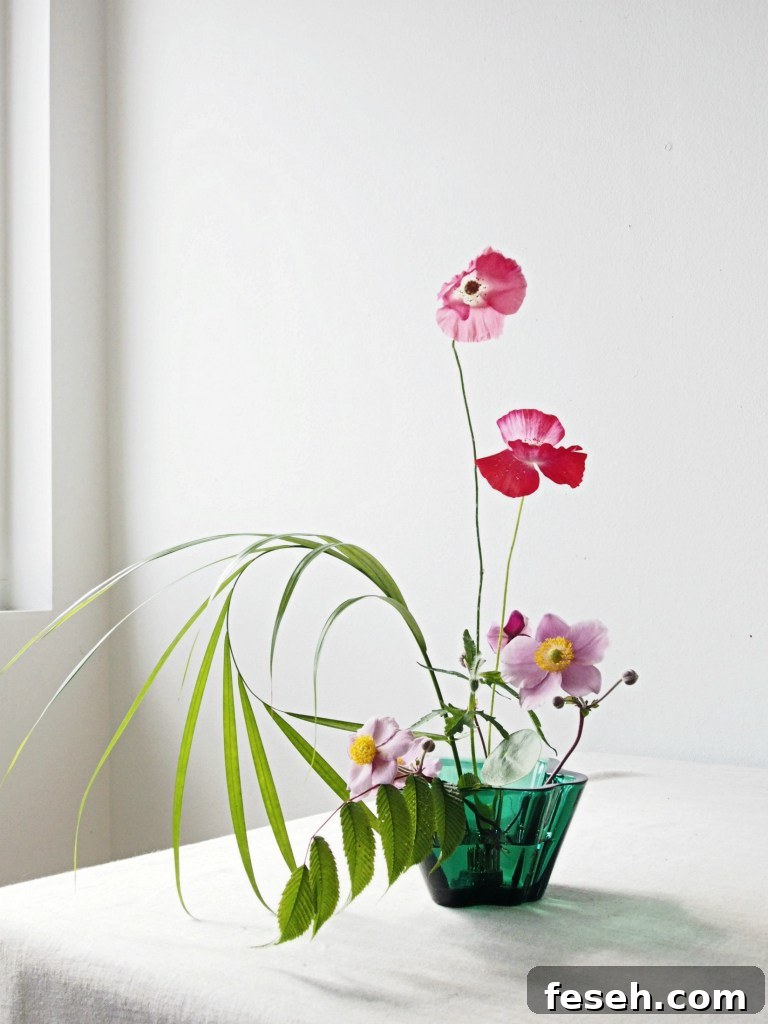
5. DIY Japandi Ikebana from Monster Circus
“Japandi” fuses Japanese and Scandinavian aesthetic principles — simplicity, functionality and natural materials. This trend suits ikebana particularly well, producing serene arrangements that complement modern interiors without overwhelming them.
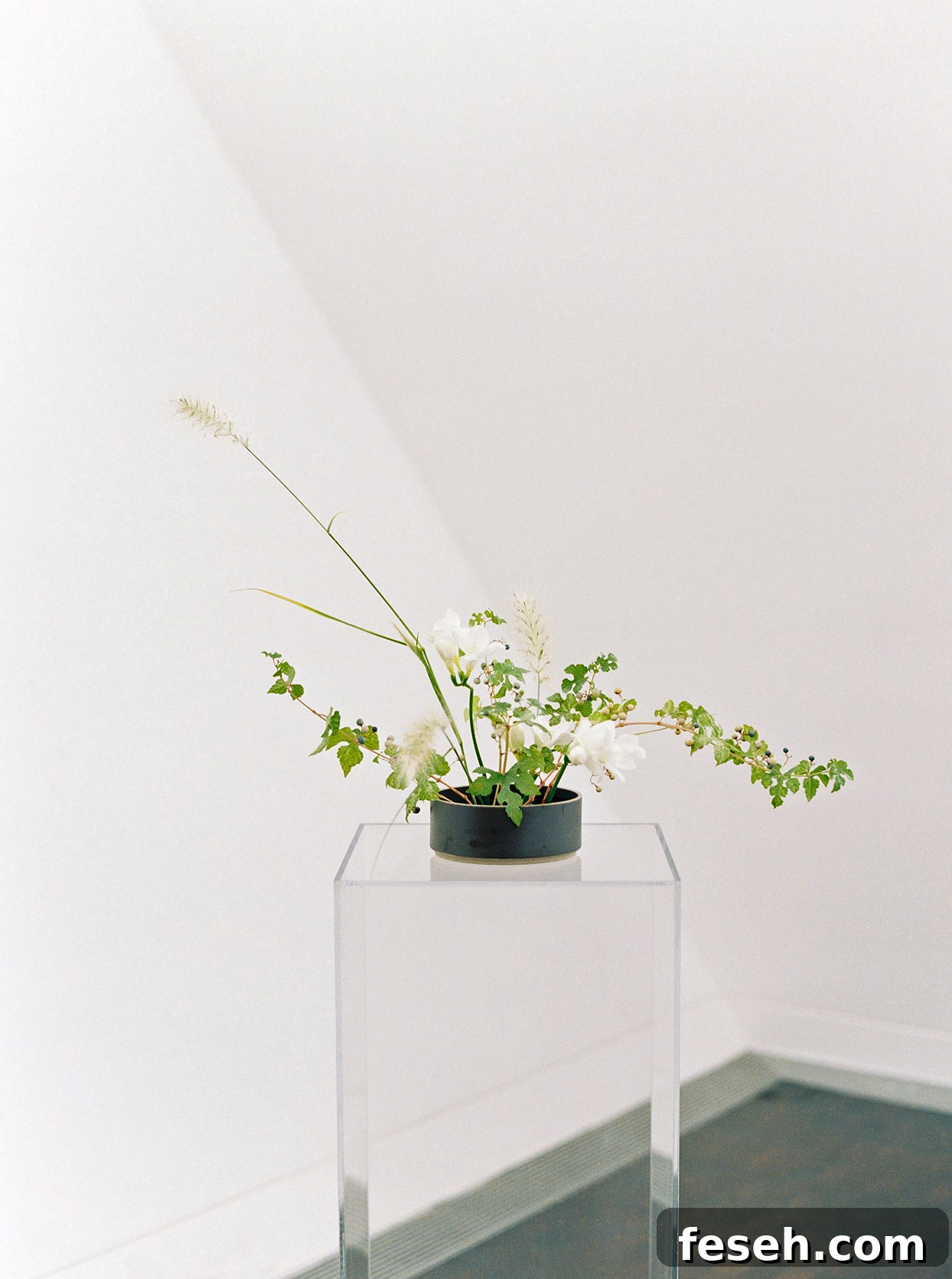
6. Ikebana-Inspired Wedding Flower Ideas from Martha Stewart
If you’re planning wedding florals, ikebana-inspired designs offer a way to reduce costs while maintaining elegance. Simple bouquets and centerpieces rooted in seasonal selection and careful composition can enhance the ceremony’s atmosphere without competing with other decor. Even a bridal bouquet can reflect ikebana principles, favoring meaningful stems and clean lines over extravagant abundance.
Whether you’re drawn to the spare geometry of a single branch or the composed abundance of a foraged centerpiece, ikebana encourages mindful selection and placement. Try experimenting with different vessels, a limited palette of blooms and attention to line, and you’ll discover how a few thoughtful choices can transform ordinary stems into lasting, expressive arrangements.