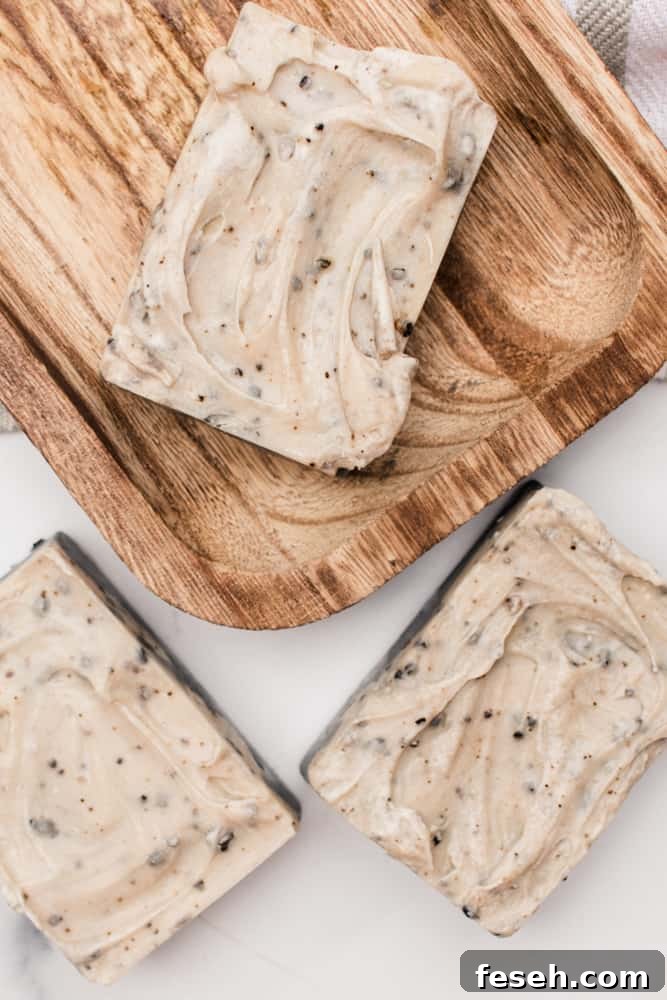
In this post, I’m sharing a simple and delightful coffee soap recipe you can make from scratch at home using a handful of ingredients.
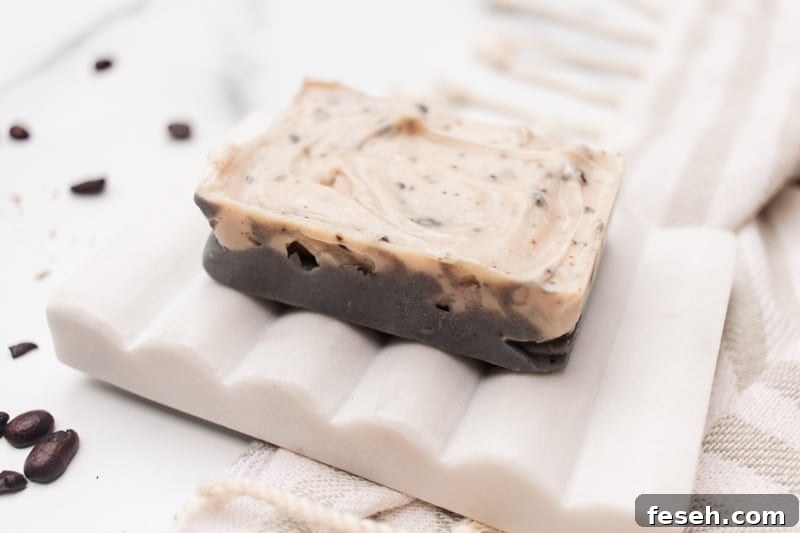
Fragrant and attractive in the bathroom, coffee soap is a lovely treat for your skin and an instant mood booster.
I’m a huge fan of coffee, especially its aroma. I use coffee as a fragrance around the home and in DIY skincare, such as homemade face scrubs.
Below you’ll find the benefits of coffee for skin, guidance on working safely with lye, and a clear cold-process coffee soap recipe.
Coffee benefits for skin
Coffee is a plant-based ingredient packed with antioxidants that help neutralize free radicals and can reduce signs of premature aging. It also contains caffeine, which can temporarily firm the skin and improve microcirculation, giving skin a brighter, healthier appearance.
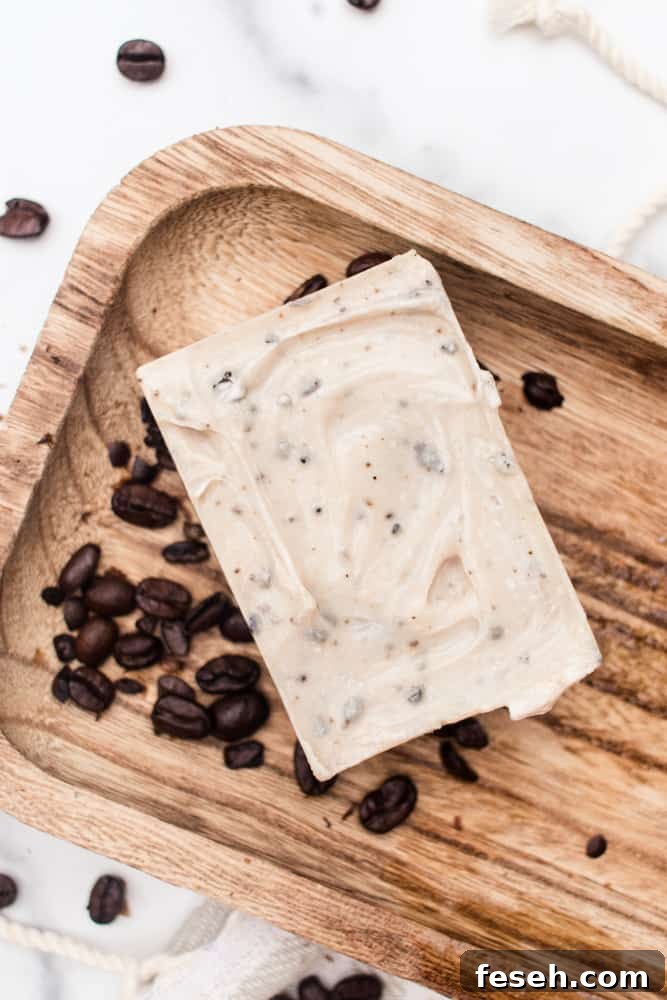
Exfoliating coffee soap
Coarse coffee grounds make an excellent, natural exfoliant. Their gently gritty texture removes dead skin cells and reveals fresher skin beneath without the harsh abrasion of some other scrubs. Coffee exfoliation is effective yet generally gentle, making it a nice option for face and body soap bars.
Making cold-process soap at home—like this coffee soap or a tallow soap—is fun and more environmentally friendly than many commercial bars.
Coffee soap recipe
Follow the instructions below for best results.
Ingredients
- 16 oz coconut oil
- 8 oz palm oil
- 3.8 oz lye (sodium hydroxide)
- 8.5 oz brewed coffee (room temperature)
- 2 tsp vanilla extract
- 1 tsp cinnamon powder
- 1 tbsp coarse coffee grounds (for exfoliation)
- 2 tsp black mica powder (for coloring)
How to make coffee soap
Instructions
Weigh the brewed coffee with a digital scale and pour it into a heat-resistant container.
Carefully add the lye to the coffee in small amounts, stirring until fully dissolved. The mixture will heat up due to the chemical reaction—set it aside to cool to about 120–130°F (49–54°C).
Melt the coconut and palm oils together over low to medium heat, then let them cool slightly before transferring to a mixing bowl.
Slowly add a portion of the cooled lye-and-coffee mixture to the oils while blending with an immersion blender. Continue adding the lye mixture in stages and blend between additions until the batter reaches a light to medium trace (when drizzled on the surface it leaves a slight trail).
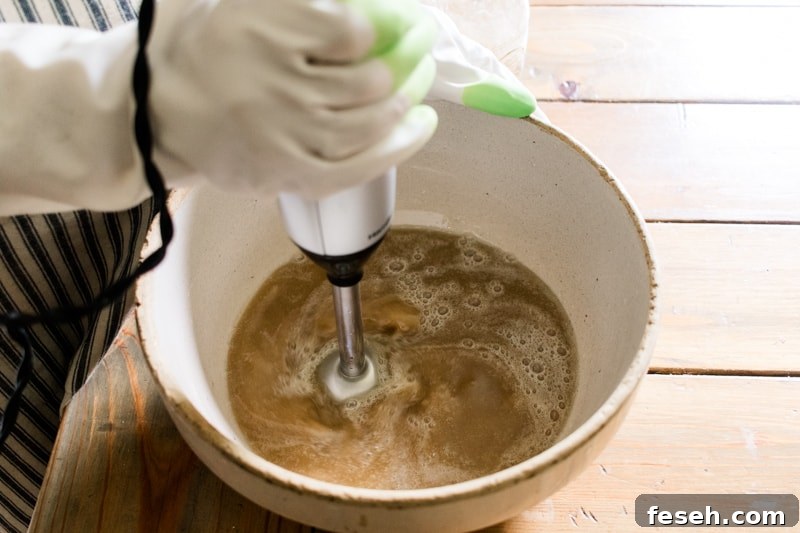
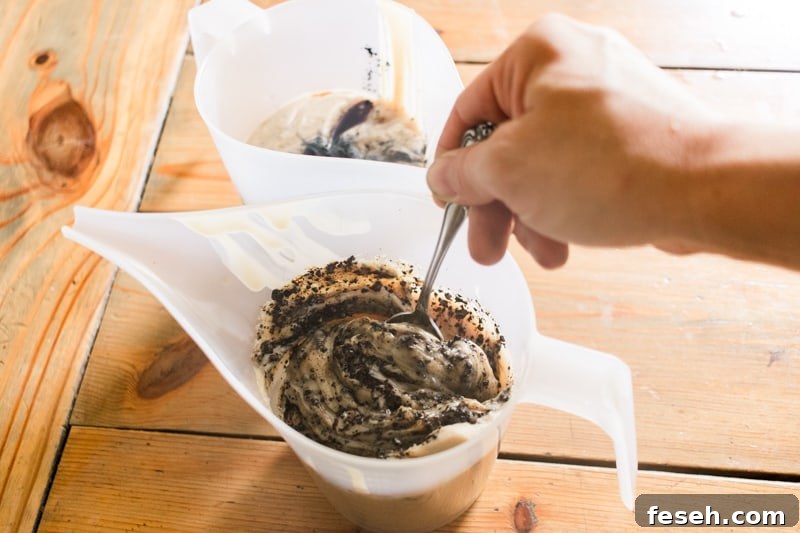
Stir in the vanilla and cinnamon. Divide the soap batter into two bowls: add black mica to one bowl and the coffee grounds to the other. Mix each until evenly incorporated.
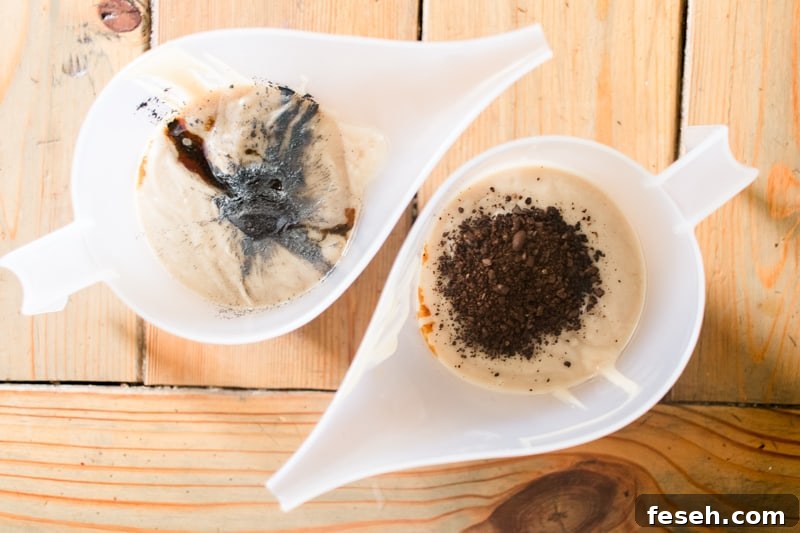
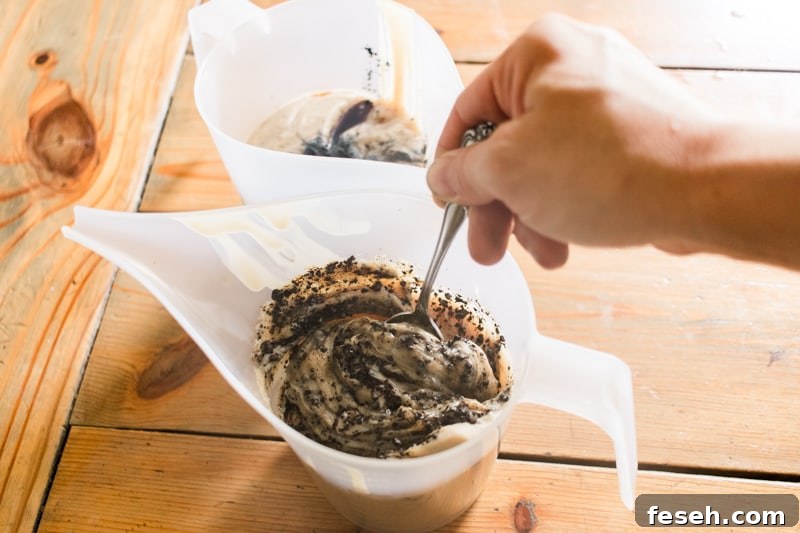
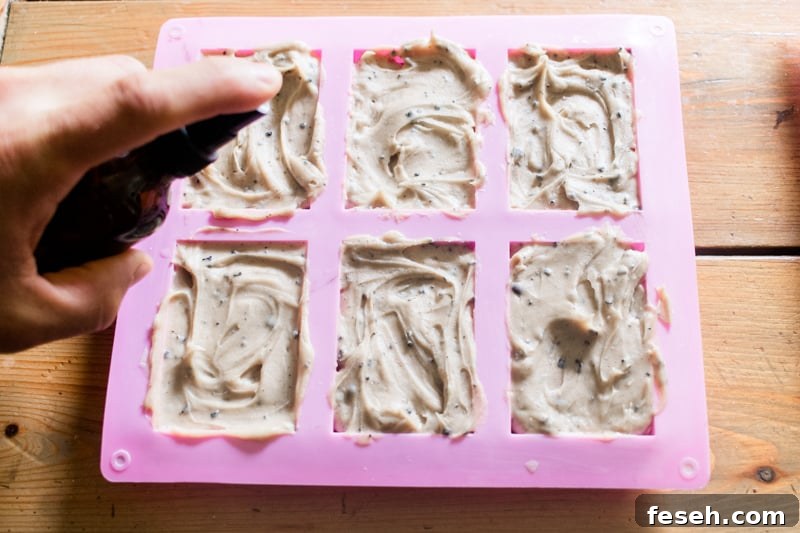
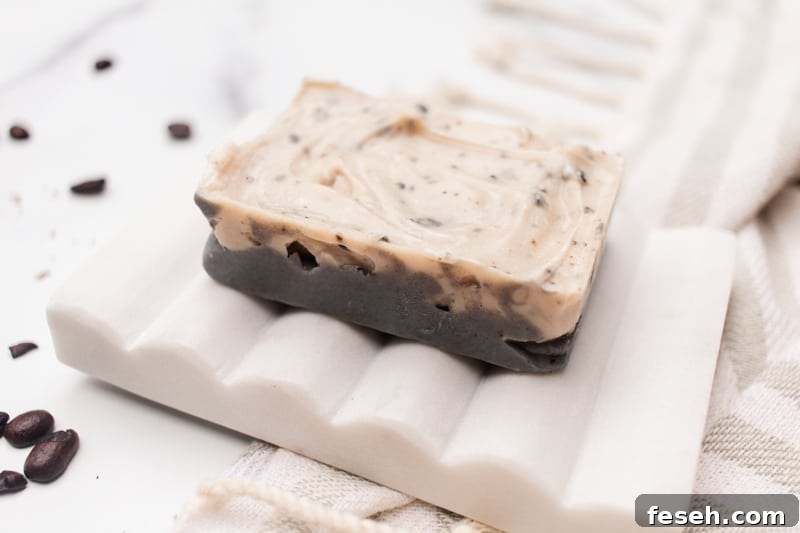
To create a layered look, fill your mold halfway with the mica-colored batter, then top with the coffee-ground batter.
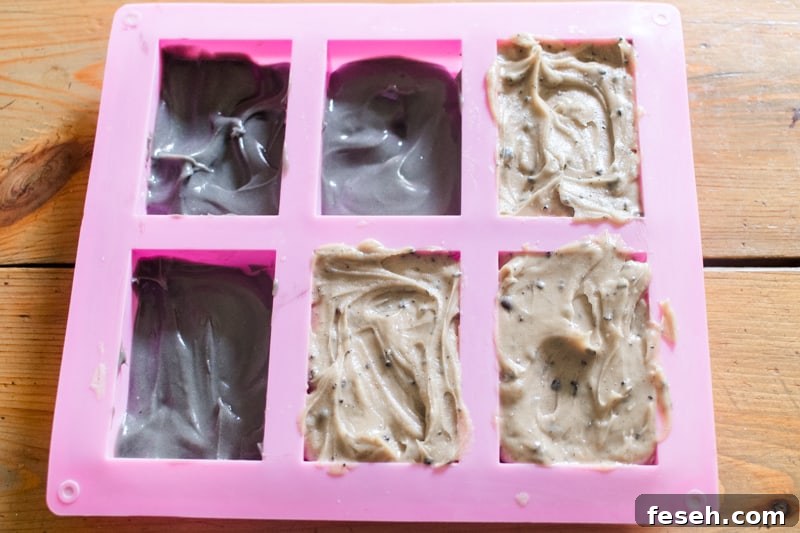
Spritz the tops of the filled molds with isopropyl alcohol to help prevent soda ash. Allow the soap to harden in the molds for about 48 hours before unmolding.
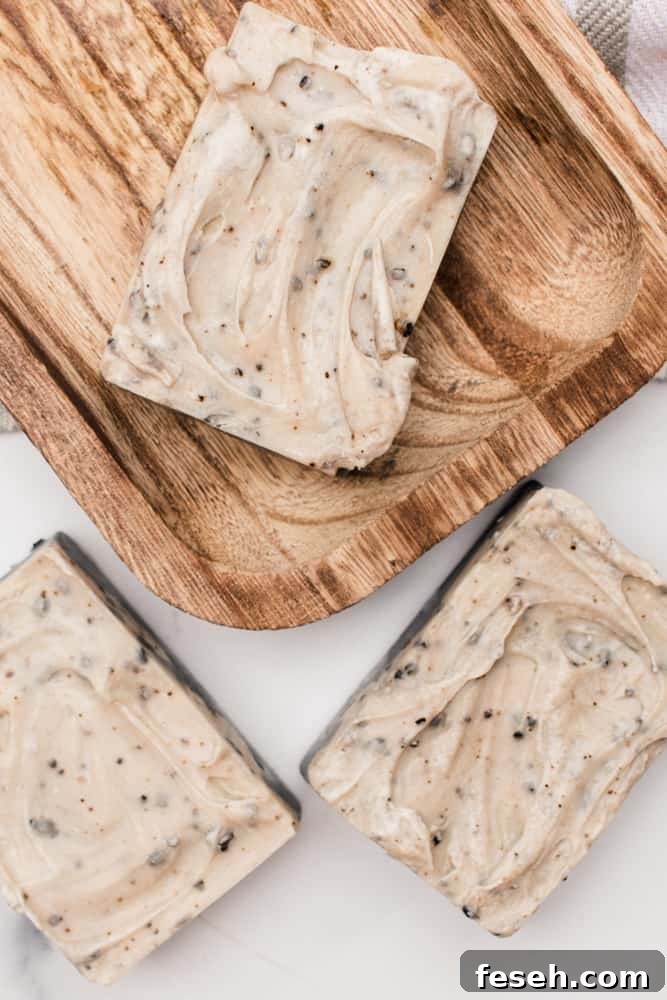
After unmolding, the bars need to cure for 5–6 weeks in a cool, dry place. Store bars on their sides with air circulation so excess water can evaporate and the bars harden properly.
If you prefer to avoid working with lye, consider melt-and-pour alternatives or pre-made bases that allow for similar coffee-scented and exfoliating bars without cold-process chemistry.
Soap making 101
Using lye safely
When using lye, wear long sleeves, chemical-resistant gloves, an apron, and goggles. Work in a very well-ventilated area—ideally outdoors—because mixing lye and liquids releases fumes. Keep children and pets away while you’re working with lye.
Why soap needs to cure
Cold-process soap requires time for saponification, the chemical reaction between lye and fats that creates soap. Curing also allows moisture to evaporate and the bar to harden, making it milder and longer-lasting.
Is coffee good for your skin?
While debate continues about coffee as a beverage, topically it’s a helpful ingredient. Coffee revitalizes skin with antioxidants and nutrients, and caffeine can temporarily firm and brighten the appearance. Many people enjoy using coffee soap in the shower for a morning wake-up effect.
How to cure soap
To cure soap properly, be patient. Leave the bars undisturbed for at least 4–6 weeks in a cool, dry area. During that time they will harden and lose excess moisture. Small edge shrinkage is normal after curing.
If you don’t want to wait, a hot-process soap method produces a usable bar faster, though the texture and finish will differ from cold-process results.
I hope you enjoy making this coffee soap. If you try it, save your notes and share your experience. After this recipe, you might also like other homemade soap variations such as loofah soap, olive oil swirl bars, activated charcoal soap, or beeswax-enhanced bars.
This recipe is for informational purposes only. Perform your own testing and research before making any product at home.