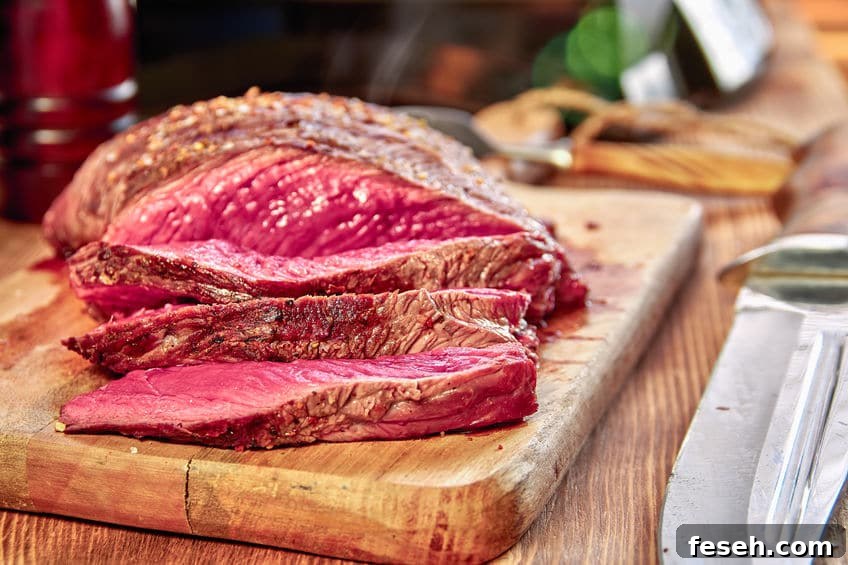
The question “can you overcook with sous vide” isn’t a simple yes-or-no answer. Sous vide, which means “under vacuum” in French, has gained popularity among professional chefs and home cooks for its precise temperature control. Food is sealed in a plastic bag, submerged in a preheated water bath, and cooked slowly and gently with a circulator that maintains an exact temperature.
Because sous vide holds food at a controlled temperature, it prevents overcooking in terms of doneness. However, if food remains at that temperature for too long, its proteins and connective tissues continue to change, and the texture can suffer. How and why does this occur?
The science behind a tender steak
A typical steak contains roughly 20% protein, with the remainder made up of fat, water, and collagen—the connective tissue that holds muscle fibers together. Proteins such as actin and myosin begin to denature when heated, and this process starts at relatively low temperatures. As temperature increases, the muscle fibers contract and expel moisture, which can result in a drier, tougher piece of meat.
This is why most sous vide temperatures for steak and other proteins stay below 140°F (60°C). Cooking at these temperatures allows the proteins to denature enough for proper doneness while minimizing moisture loss, so the meat remains juicy rather than becoming overcooked and dry.
Protein vs. collagen
Sous vide also efficiently converts collagen into gelatin at temperatures commonly around 130–140°F (54–60°C) when held long enough. Collagen is responsible for toughness, so breaking it down makes meat tender. This same principle explains why braised dishes and slow-cooked roasts become melt-in-your-mouth tender after extended, low-temperature cooking.
Traditional cooking methods lose much more heat to the environment, while water baths transfer heat far more efficiently and evenly. A good immersion circulator keeps the bath at a precise temperature, making it easier to hit consistent results and tender textures without risking uneven overcooking.
Why are cook times so vague?
Many sous vide recipes provide a wide time range because the temperature controls the final doneness while time influences texture. For example, a medium-rare steak cooked at 130°F (54°C) may be listed with a recommended range of 1–4 hours. The steak’s internal temperature will not rise beyond the set bath temperature, so it won’t become more “done” in the conventional sense. But the longer it remains in the bath, the more the proteins and collagen continue to transform.
Extended cooking can lead to desirable results for tougher cuts that benefit from long, low cooks—think chuck roast, pork shoulder, or brisket—where extended time breaks down collagen into gelatin, producing tenderness. Conversely, leaving a tender, high-quality cut in the bath for too long can cause it to become stringy or even mushy, a texture many find unappealing.
The takeaway is that sous vide offers a reliable way to achieve precise doneness and retain juices, but “longer” isn’t always better. Choose time and temperature based on the cut and desired texture: short cooks at precise temperatures for tender cuts, and longer cooks for tough cuts that need collagen breakdown. When used thoughtfully, sous vide delivers consistently juicy, perfectly cooked results.
Contributor:
This article was written by Stephanie Searor, MS RD LDN
Reference:
- Hughes J. Science meets food. The science behind sous vide cooking- and how to explain it to your friends. Updated 3 August 2019. Accessed December 22, 2019.