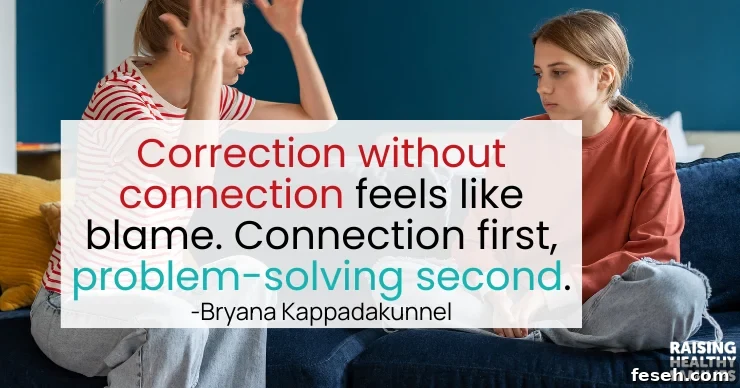
Have you ever lost your temper with your child during a meltdown?
Wanted the behavior to stop immediately because you felt like a failure as a parent if it didn’t?
Promised yourself you’d parent differently than your own caregivers, yet notice patterns repeating that you don’t like?
My guest today is a Licensed Marriage and Family Therapist who has worked with families for over a decade. She brings some of the clearest, most practical scripts I’ve heard to help parents respond calmly and stay connected.
In this episode we address common challenges such as:
- When your teen says everyone else gets to do X and it feels unfair
- A preschooler who throws an extended, intense tantrum
- Time-outs that seem to escalate the situation
- Child behavior that triggers anger or resentment in you
- Feeling torn between being warm and connected and enforcing chores and boundaries
Plus, Bryana shares two powerful phrases you can use with teens that really work.
I expect many parents will shift their mindset after listening, and I’m excited to hear what you think.
Find all episodes of the Healthy Parenting Handbook podcast here or wherever you get your podcasts:
Don’t forget to leave us a review on Apple Podcasts. Thank you!
Can’t see the video? Watch on YouTube.
No time for the video? Here are the episode notes.
What “Parent Yourself First” Really Means
03:26 – Bryana explains how her own difficult childhood led her into therapy work and inspired her book Parent Yourself First.
05:39 – She defines “parent yourself first” as learning to become the parent you needed: responding first to the child within you, and then to the child in front of you.
Your child’s tantrum is not proof you are a bad parent. It is an invitation to heal old stories about not being enough. – Bryana Kappadakunnel
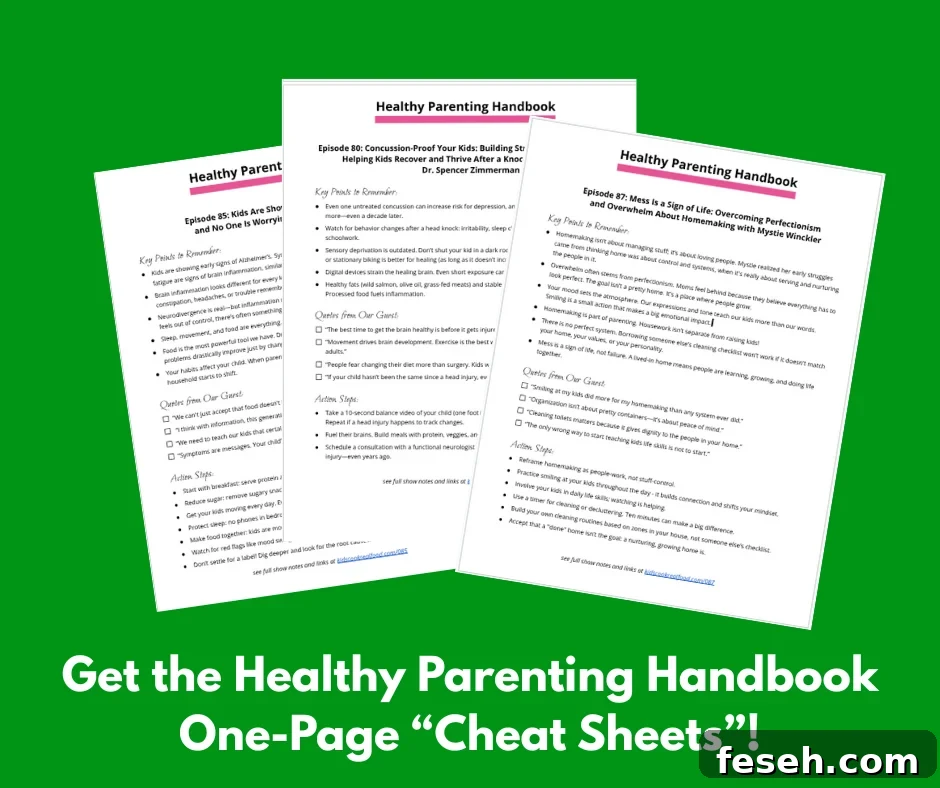
Turn expert advice into a handbook you can actually use.
I’ve interviewed hundreds of experts on the Healthy Parenting Handbook podcast. Short on time? These one-page summaries give you the episode highlights so you can find what you need when you need it.
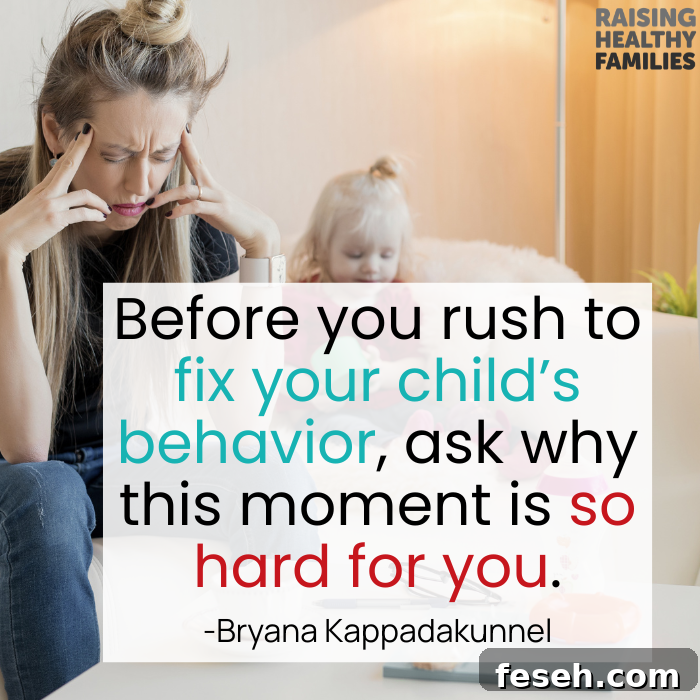
06:58 – Instead of immediately trying to stop a tantrum or disrespectful behavior, Bryana invites parents to ask, “Why is this so triggering for me right here, right now?”
A Real-Life Example of Breaking Generational Patterns
07:23 – Bryana shares a client case: “Alicia” had a strong-willed child who would tantrum for 45 minutes and left Alicia feeling defeated.
08:41 – They discovered Alicia’s childhood experience with caregivers who dismissed emotion. Bryana explains that children who trigger us often mirror parts of ourselves we were taught to dismiss, like big feelings and strong opinions.
11:03 – As Alicia began to validate her own emotions and see herself as enough, she reframed her daughter’s strong will as perseverance and healthy boundaries. That inner shift shortened tantrums, increased cooperation, and made the relationship feel safer.
Parenting from a Place of Connection (Toddlers through Teens)
12:55 – Bryana describes parenting from connection as looking beneath behavior to the child’s underlying needs rather than merely managing surface behavior.
13:43 – Her “connection garden” metaphor encourages curiosity, emotional safety, and seeing the whole child. Connected kids often develop stronger self-esteem, empathy, problem solving, communication, and critical thinking.
The traits you call “strong willed” in your child might grow into perseverance, healthy boundaries, and courage. – Bryana Kappadakunnel
14:30 – For little children, connection shows up as affection, rocking, and play. For older children and teens, connection looks like presence: putting your phone down, joining their activities, asking about their world, and genuinely caring about their thoughts and feelings.
15:37 – Connection means tending not only to a child’s schedule and body, but also to their inner life.

Tantrums, Triggers, and How to Respond without Exploding
16:54 – Bryana normalizes how threatening tantrums can feel and why our nervous system goes on alert when kids scream, slam doors, or say hurtful things.
18:12 – She reframes tantrums as opportunities to restore connection and cautions against ignoring, shaming, or automatic punishment. Bryana outlines a practical three-step response to tantrums and highlights the power of pausing.
Pause is a parenting superpower. Ten seconds of noticing yourself can save ten minutes of yelling. – Bryana Kappadakunnel
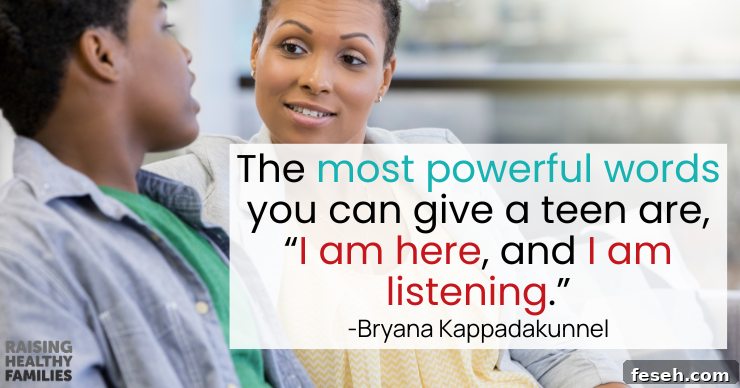
20:41 – For toddlers, connection often looks like mirroring feelings. For older kids and teens, a helpful script can be: “I hear that you’re frustrated with me. Would you be open to talking about it another way?” followed by working together on alternatives to express big emotions.
Is It Too Late for Teens, and How Do Limits Fit with Connection?
22:49 – Bryana reassures parents it’s never too late to change patterns, though it may be harder when behaviors are long-standing or mental health concerns are present. She warns against “giving up” on teens by withdrawing boundaries and encourages parents to remain engaged while respecting teens’ need for autonomy.
25:12 – She offers a script for when teens say, “Everyone else gets to do this. Why do you hate me?” The response frames freedom as a goal you share with your teen but explains that independence expands gradually, with responsibility.
27:50 – Warm, connected parenting still includes clear boundaries, standards, and life skills that prepare kids for adulthood.
28:57 – Bryana recommends weekly family meetings to plan schedules, troubleshoot what isn’t working, adjust chores, and give kids practice negotiating and problem solving so they feel they belong and contribute.
Picky Eating, Modeling, and Neurodiversity in the Family
31:14 – Parents who worry about passing on habits like picky eating are encouraged to explore deeper causes such as shame, sensory differences, scarcity, or disordered eating patterns.
33:15 – The core work is healing yourself first, because children learn far more from what you do with food than from what you say about it.
34:43 – In neurodivergent families, autistic and ADHD brains require individualized approaches. The priority is creating an environment where everyone’s needs can be met without shame.

37:07 – For children with ADHD, Bryana highlights how often they are criticized or misunderstood. She encourages parents to notice and specifically praise genuine effort, which helps boost dopamine and motivation.
One Small Step to Start Parenting Yourself First
41:18 – Bryana’s first, simplest step is to pause before reacting and notice your own feelings. That brief awareness of your inner child and nervous system is the gateway to different, more helpful responses.
Resources Mentioned for Calm Connection
- Bryana’s book Parent Yourself First
- How to diagnose the root cause of meltdowns and calm tantrums
- TEDx talk on teaching critical thinking to kids
- The family chores system that works
- How to create a family meeting “Power Hour”
- Interviews about ADHD and emotional regulation
 Bryana Kappadakunnel is a Licensed Marriage and Family Therapist and the founder of Conscious Mommy. She is the author of Parent Yourself First: Raise Confident, Compassionate Kids By Becoming the Parent You Wish You’d Had. Bryana supports parents and new families through compassion, guidance, and community. She leads an online membership where parents can heal their inner-child wounds and parent with more intention and confidence. She lives in Southern California with her spouse and two children.