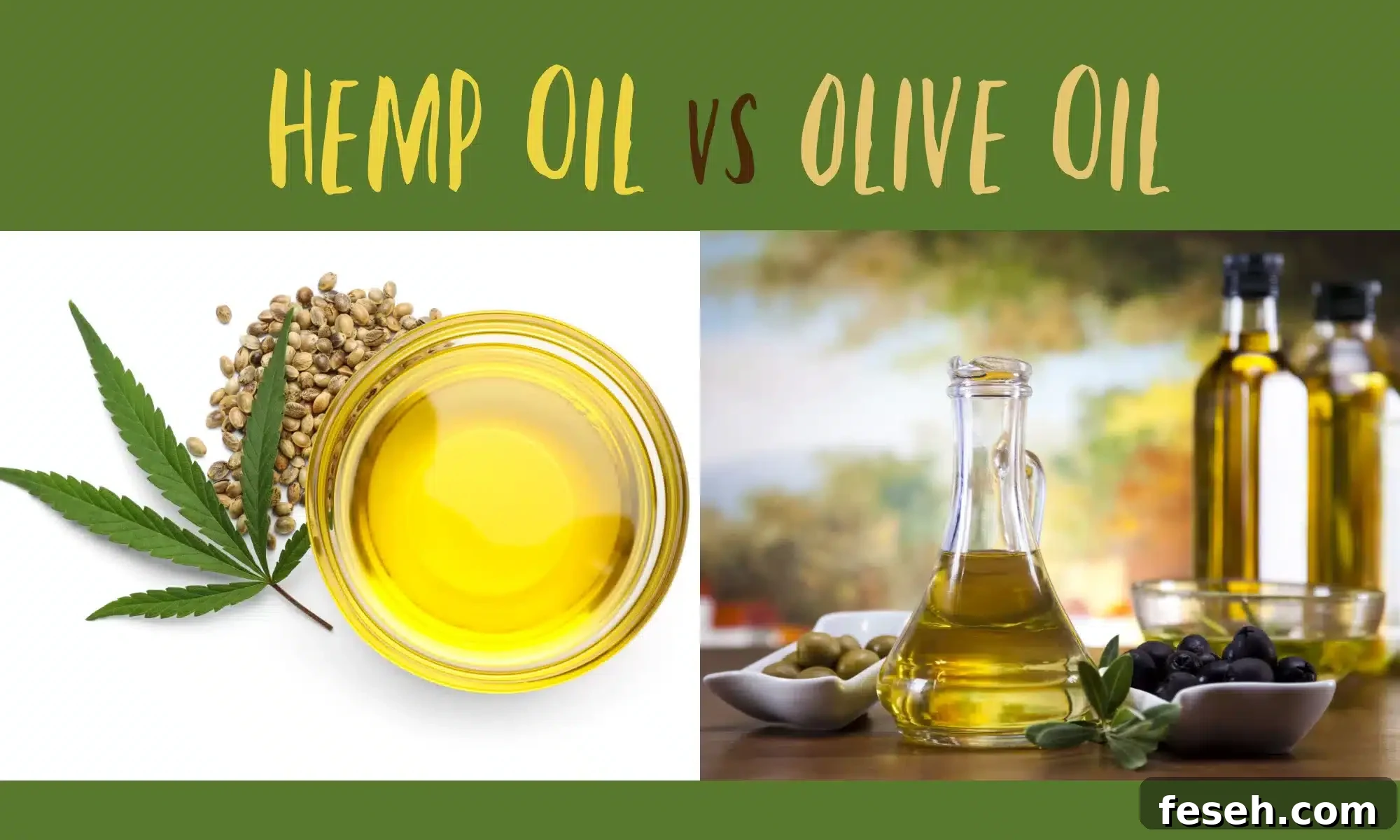
Hemp oil and olive oil are both popular healthy oils, but which one should you choose? This article compares their differences, culinary uses, nutrition, storage, and helps you decide which fits your needs best.
Below I break down how hemp oil and olive oil differ, when to use each, their nutritional strengths, and practical tips for storing them.
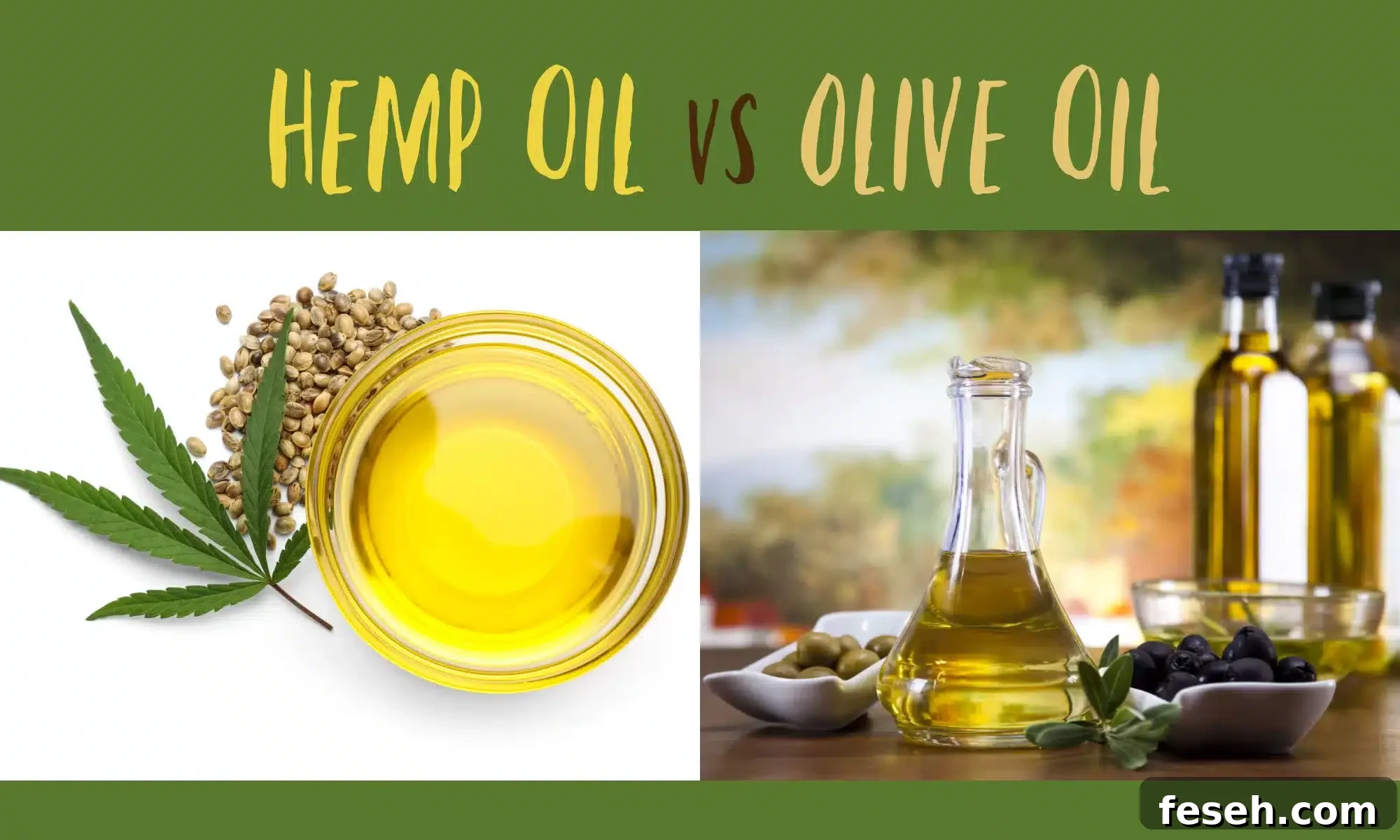
Comparing hemp oil vs olive oil
| Hemp oil/hemp seed oil | Olive Oil (Extra Virgin) | Olive Oil (Light/Pure/Regular) | Olive Oil (Virgin oil) | |
| Solid or Liquid? | Liquid | Liquid | Liquid | Liquid |
| Smoke Point (Fahrenheit) | 330°F | 350°F | 390–470°F | 350°F |
| Primary Fat | Polyunsaturated | Monounsaturated | Monounsaturated | Monounsaturated |
| Taste | Nutty, grassy | Fruity to peppery | Neutral | Mildly grassy |
| Good for Cooking… | Raw, low heat | Raw, low heat | Raw, low, moderate, and high heat | Raw, light to moderate heat |
| Allergens | Hemp seed | Olive | Olive | Olive |
| Gluten-free? | Yes | Yes | Yes | Yes |
| Keto? | Yes | Yes | Yes | Yes |
| Paleo? | Yes | Yes | If unrefined | Yes |
| Vegan? | Yes | Yes | Yes | Yes |
Differences between hemp oil and olive oil
Hemp oil and olive oil come from different plant sources and offer distinct flavors and culinary roles. Hemp oil is pressed from hemp seeds and has a nutty, slightly grassy flavor. Olive oil is made from olives and ranges from mild and buttery to fruity and peppery, depending on variety and processing.
Culinary applications differ: olive oil is central to Mediterranean cooking—used for sautéing, roasting, dressings, and finishing dishes—while hemp oil is mainly used cold in dressings, dips, smoothies, and as a supplement due to its delicate profile and lower smoke point.
Extra virgin vs regular vs virgin olive oil
Extra virgin olive oil is produced from the first cold pressing of olives and offers superior flavor and more antioxidants. It’s ideal for dressings, finishing dishes, and low-heat cooking. Regular or light olive oil is refined and has a milder taste and higher smoke point, making it better suited for higher-heat cooking. Virgin olive oil falls between extra virgin and refined varieties, balancing flavor and cost.
Baking and cooking with hemp oil vs olive oil
Hemp oil is best used raw or with gentle heat. Its flavor enhances dressings, pestos, dips, and smoothies, but it can degrade if exposed to high temperatures. Olive oil—especially regular or light for high heat—works well for sautéing, roasting, grilling, and many baked goods. Extra virgin olive oil contributes flavor and moisture to cakes, quick breads, and savory bakes.
When substituting, consider taste and smoke point: hemp oil will add a nutty note and is limited to low-heat uses, whereas olive oil brings a broader range of heat tolerance and a different flavor profile.
Can hemp oil and olive oil be substituted for each other?
Yes, in some recipes, but use care. Hemp oil can replace olive oil in cold dishes and dressings for a nuttier flavor, but it’s not suitable for high-heat cooking. Olive oil can replace hemp oil when a milder flavor or higher heat stability is needed. Expect differences in taste and texture when switching between them.
Nutrition: Hemp oil vs olive oil
Both oils provide healthy fats but differ in types. Hemp oil is rich in polyunsaturated fats, including omega-3 and omega-6 fatty acids, and contains gamma-linolenic acid (GLA), which may have anti-inflammatory effects. Olive oil is high in monounsaturated fats and contains antioxidants and polyphenols that support heart health and reduce oxidative stress.
| Per tablespoon (15 mL) | Hemp oil/hemp seed oil | Olive Oil (Extra Virgin) | Olive Oil (Light/Pure/Regular) | Olive Oil (Virgin oil) |
| Calories | 125 | 120 | 120 | 120 |
| Polyunsaturated | 11 g | 1.5 g | 1.5 g | 1.5 g |
| Monounsaturated | 2 g | 10 g | 10 g | 10 g |
| Saturated | 1 g | 2 g | 2 g | 2 g |
| Trans | 0 g | 0 g | 0 g | 0 g |
| Total Fat | 14 g | 14 g | 14 g | 14 g |
| Cholesterol | 0 mg | 0 mg | 0 mg | 0 mg |
Hemp oil stands out for its higher polyunsaturated fat content and omega fatty acids, while olive oil is notable for monounsaturated fats and antioxidant compounds.
How to store hemp oil and olive oil
Proper storage extends shelf life and preserves flavor. Hemp oil, rich in polyunsaturated fats, oxidizes quickly and benefits from refrigeration in a sealed container to slow rancidity. Olive oil should be kept in a cool, dark place away from heat and light; a tightly sealed bottle stored in a pantry or cupboard is ideal. Avoid prolonged exposure to air, as oxidation reduces quality.
Hemp oil vs olive oil: Which is better
There’s no single “better” oil—choice depends on your goals and cooking needs. Extra virgin olive oil is versatile, flavorful, widely available, and suitable for many culinary uses, plus it contains antioxidants. Hemp oil is an excellent source of omega-3 and omega-6 fatty acids and works well as a dietary supplement or finishing oil in cold preparations.
If you want an all-purpose cooking and finishing oil with proven heart-health benefits, olive oil is usually the preferred option. If your priority is increasing essential fatty acid intake or adding a nutty flavor to cold dishes and smoothies, hemp oil is a solid choice.
FAQs
They have different nutritional strengths: hemp oil is rich in omega-3 and omega-6 fatty acids, while olive oil is high in monounsaturated fats and antioxidants. Both can be part of a healthy diet depending on your needs.
Hemp seed oil can replace olive oil in cold dishes and dressings for a nuttier flavor, but it’s not suitable for high-heat cooking and will change the flavor profile.
Hemp oil’s main limitations are a low smoke point—which limits high-heat cooking—and a stronger grassy flavor that may not suit every recipe. Some people may also have hemp seed allergies.