According to my Shorter Oxford English Dictionary, the word “chit” comes from Middle English chithe, meaning to shoot or sprout, and corresponds to the Old Saxon kith. Its origins stretch back some 1,200 years, so the concept of pre-sprouting seeds is far from new.
Chitting is a simple method of pre-sprouting seeds before planting them in compost or soil. Gardeners commonly use it with seed potatoes (tubers), but it works well for many other seeds too.
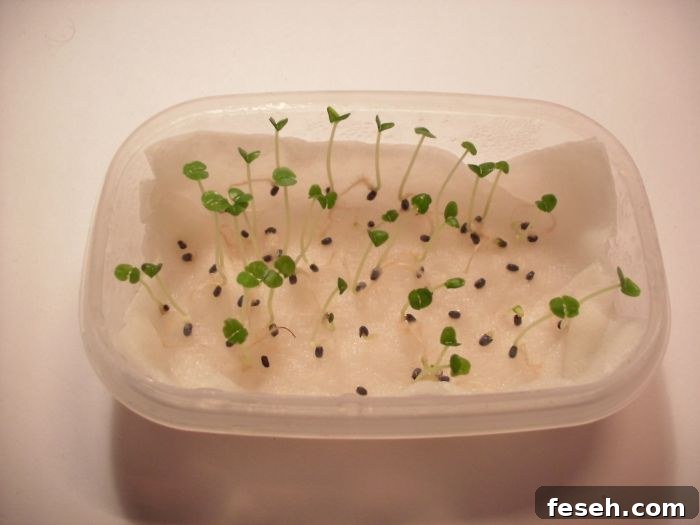
We first tried chitting on other seeds when we had trouble getting parsley to germinate in pots and in the ground. We started germinating seeds on kitchen paper towels so we could monitor which ones produced shoots and get a feel for germination rates. That allowed us to tell whether poor results were due to bad seed or loss later in the process. To our surprise, germination approached 100%. The photo above shows a tray of chitted basil seeds 12 days after “sowing.”
One advantage of chitting is visibility: you can see the radicle emerge and decide when to plant the seedlings into compost. This method often eliminates the need for later thinning. The downside is fragility—sprouted seeds are delicate and can be easily damaged. If left too long, their tiny roots can grow into the paper towel and become difficult to remove intact. In the basil tray pictured, some had grown a little too far.
This morning I planted on chitted seeds of lettuce-leaf basil, coriander, and both curly and flat parsley. We started chitting earlier this year because we want to increase our self-sufficiency for annual herbs like basil and coriander. We did well in the summer of 2009 and ended up buying less from shops, but I still prefer to grow herbs locally rather than buying ones transported long distances.
One constraint here is latitude and available daylight. We are at about 52°N and currently have roughly 6.5 hours of daylight. That low light level will test whether these herbs can thrive at this time of year.
I planted the basil into three 90mm (3.5″) square pots similar to supermarket pots, though slightly sturdier. I placed nine seedlings in each pot—fewer than the typical supermarket arrangement, so each plant should grow stronger. To plant, I made a small hole with a pen, gently lifted each sprouted seed from the paper, and eased it into the compost, firming the soil around the seedling.
As an extra measure, I used outdoor compost that was around 6°C. To avoid shocking the seedlings, I warmed the pots briefly on a radiator before planting, then covered each pot with a plastic bag to help retain a little warmth.
Here are the sprouted coriander seeds: standard coriander on the left and the ‘Confetti’ variety on the right.
As you can see, many of these coriander seedlings have become leggy; they should have been planted about four or five days earlier. That made removing some a little tricky without causing damage. The ones that had only just sprouted were easy to handle.
After lifting them from the paper, I potted the coriander into 25mm (1″) modules in a tray and covered the tray with an incubator lid to maintain humidity and warmth.
I used the same process for the parsley seeds.
Now it’s a matter of waiting and monitoring. Watching those tiny shoots turn into full-flavored herbs is always rewarding. I’ll post updates as the plants develop and we start using them in the kitchen.