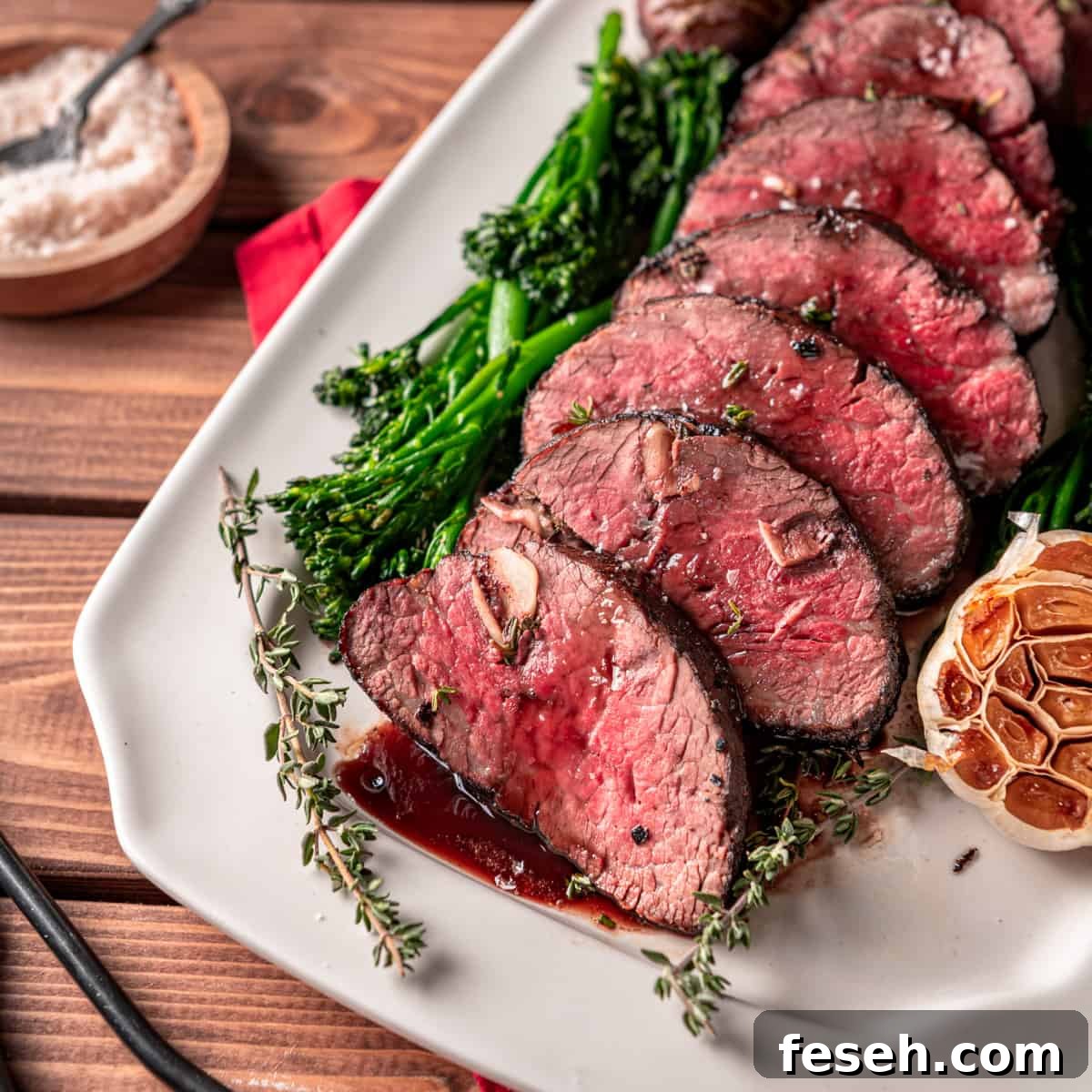
The holiday season is the perfect time to prepare a stunning roast with a rich red wine sauce. This Garlic Thyme Studded Beef Tenderloin Roast with Red Wine Sauce is a favorite for Christmas Eve, Christmas dinner, New Year’s, or any special gathering. It’s elegant, flavorful, and designed to feed a crowd while delivering restaurant-quality results at home.
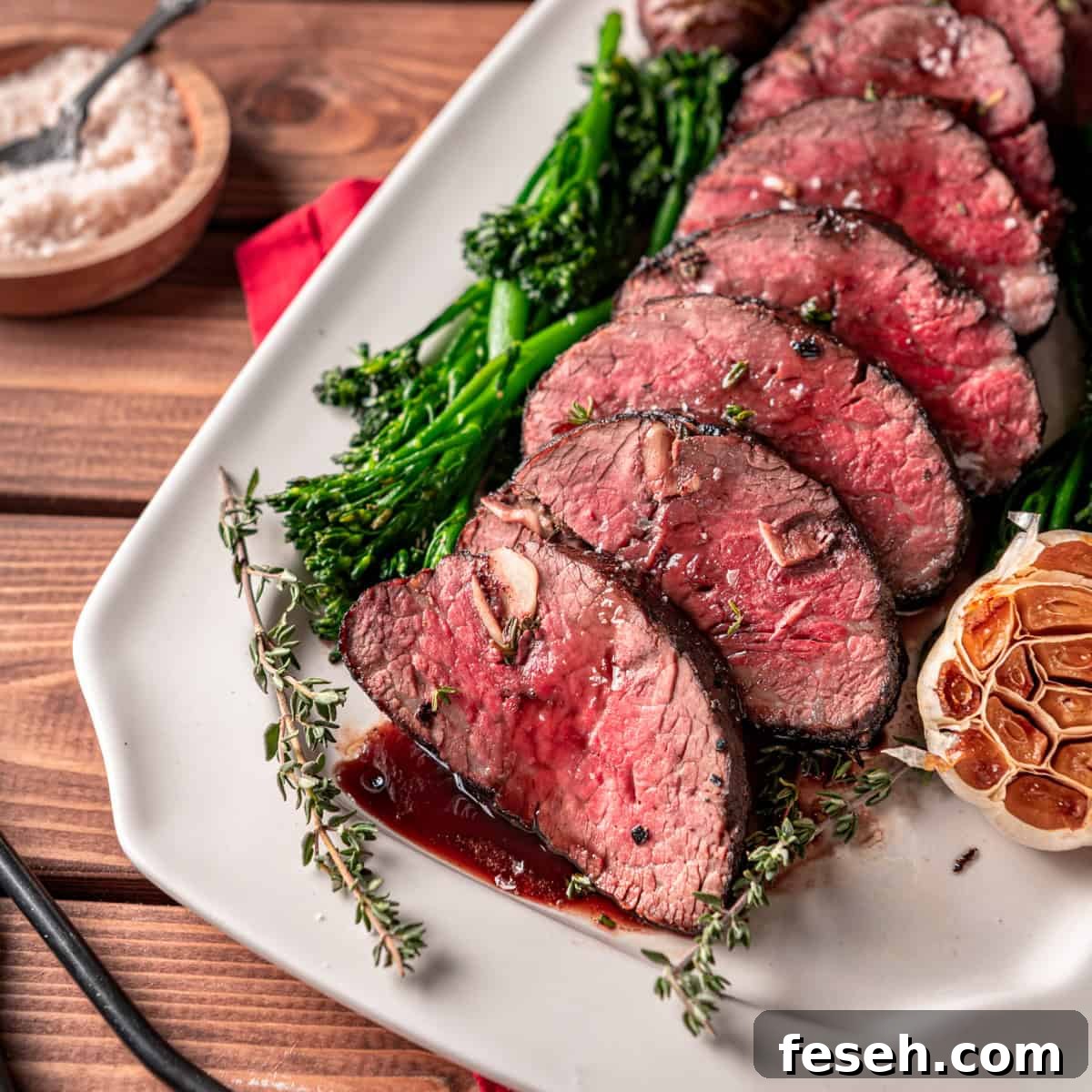
Beef tenderloin is a classic special-occasion cut. When roasted low and slow and finished with a quick sear, it produces even doneness and a beautiful crust. Paired with a bordelaise-style red wine sauce, this dish becomes an unforgettable centerpiece.
Roasting a Beef Tenderloin
Roasting at a lower oven temperature ensures the tenderloin warms through evenly. A 300°F roast brings the meat to temperature gradually and minimizes aggressive carryover cooking after it’s removed from the oven. Expect about 7–10°F of carryover at this temperature, which makes it easier to hit your target doneness.
We recommend pulling the roast when the internal temperature is slightly below your final goal, then searing it quickly in a very hot skillet to develop a crust. The sear should take no more than 30–60 seconds per side to avoid further cooking the interior.
What does “Studded” mean?
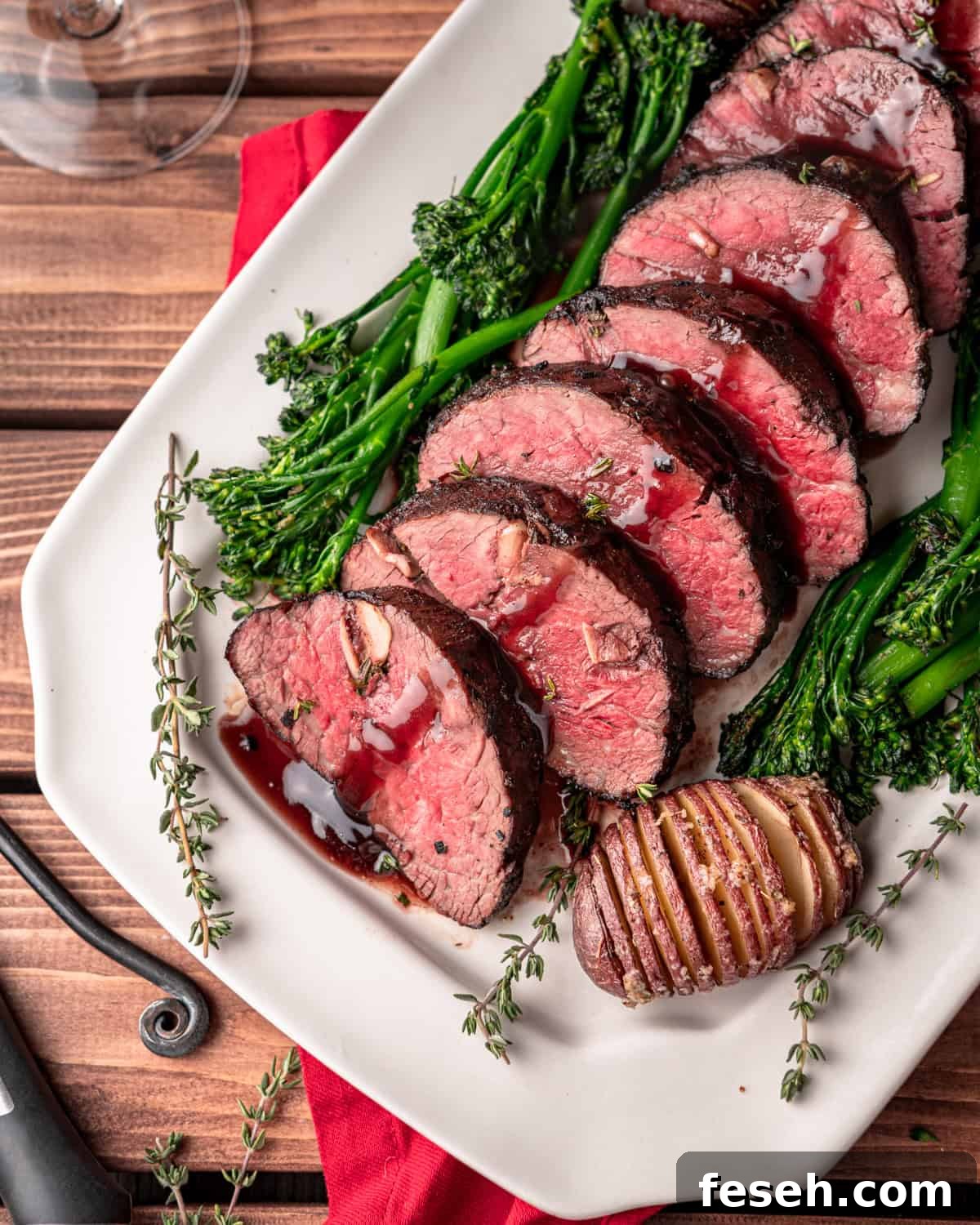
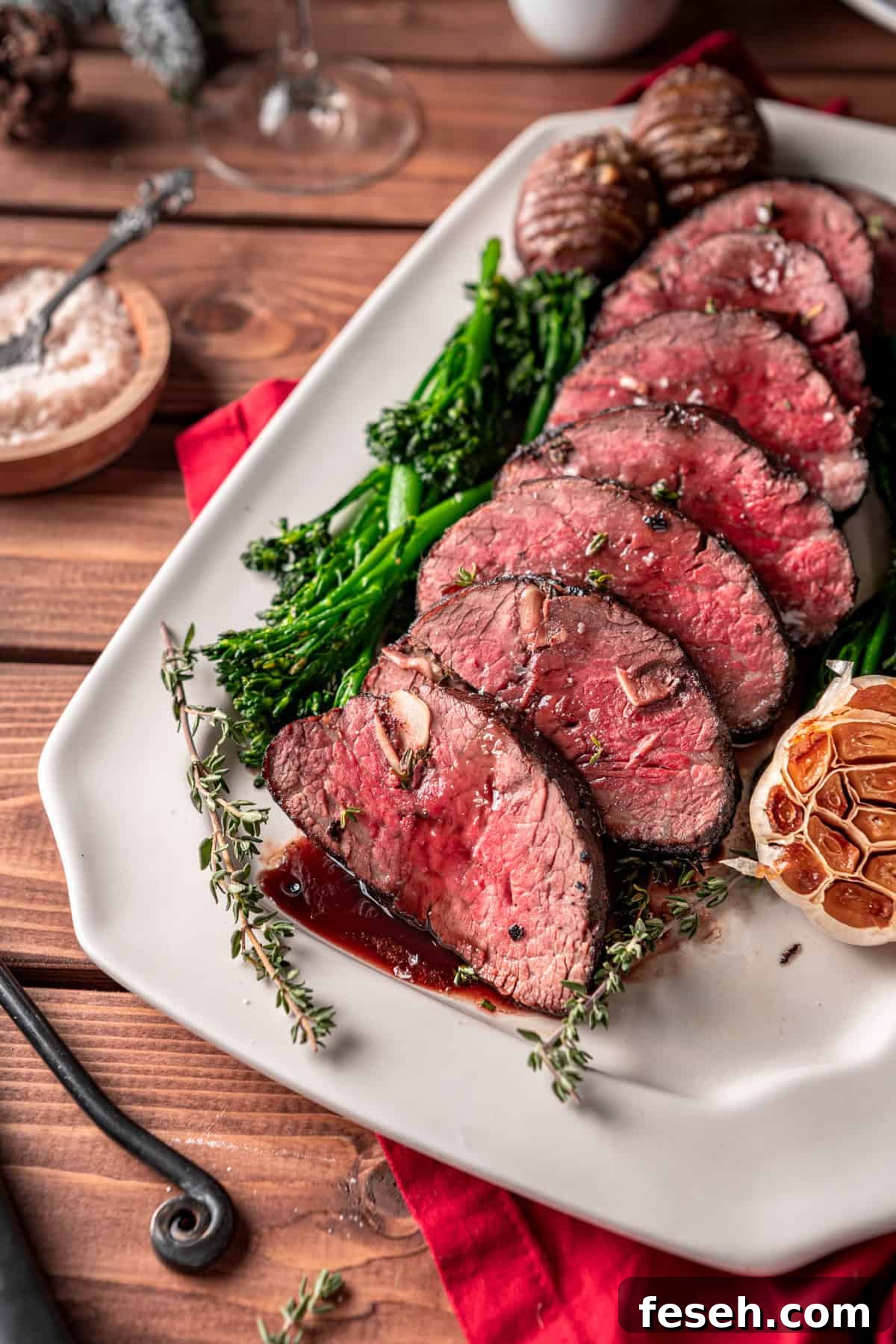
“Studding” means inserting small slivers of garlic and the tender tips of thyme into shallow slits cut through the raw tenderloin. Before inserting, thinly sliced garlic is briefly sautéed in butter so it softens and loses any raw bite. The studded aromatics infuse the meat as it cooks and create an attractive presentation when the roast is sliced.
Ingredients
These ingredients are easy to find at most grocery stores.
- Beef Tenderloin: About 2–3 lbs for 4–6 servings. Choose the best grade you can find (USDA Prime or Choice preferred).
- Garlic cloves: Fresh, thinly sliced and briefly sautéed.
- Unsalted butter: For the compound butter and finishing the sauce.
- Thyme: Use tender thyme tips for studding and chopped leaves for the compound butter.
- Shallot: Finely diced for the compound butter and sauce.
- Salt and black pepper
- Clarified butter or ghee: Best for high-heat searing without burning.
Sauce Ingredients:
- Beef stock: Low-sodium preferred for control over seasoning.
- Unsalted butter
- Shallot
- Dry red wine: Use a drinkable full-bodied red such as Cabernet Sauvignon, Merlot, or Zinfandel.
- Whole black peppercorns and a bay leaf to infuse flavor (strained out before serving).
- Red wine vinegar for brightness.
See the recipe card below for exact quantities.
Substitutions
- Clarified butter or ghee: Replace with olive oil or avocado oil if needed.
- Shallot: Sweet yellow onion works in a pinch.
- Beef stock: Use a robust vegetable or chicken stock if necessary, though beef stock complements beef best.
- Red wine vinegar: Substitute with white wine vinegar or sherry vinegar.
Equipment
Helpful items: a roasting pan with a rack, kitchen twine, a medium saucepan, and a heavy skillet (cast iron is ideal). A reliable meat thermometer is strongly recommended to ensure accurate doneness.
Instructions
This roast is straightforward but requires some planning for resting and cooking times.
Prepare your Beef Tenderloin
Pat the tenderloin dry, trim excess fat and silver skin, and tie it in 3–5 places with kitchen twine so the roast cooks evenly.
Stud the Beef with Garlic and Thyme
Thinly slice the garlic and sauté briefly in butter for a minute or two to remove raw sharpness. Using a sharp knife, make small slits around the roast and push a slice of garlic and a thyme tip into each hole. For deeper flavor, place the studded roast uncovered on a rack in the refrigerator for a few hours or up to two days to air dry and age. If short on time, you can skip this refrigeration step.
Roasting the Beef
Remove the roast from the refrigerator about 30 minutes before cooking. Preheat the oven to 300°F. Mix softened butter with chopped thyme leaves and diced shallot to make a compound butter, then season the roast with salt and pepper and spread the butter all over. Roast on a rack in the center of the oven until an instant-read thermometer reads 125°F for medium-rare (accounting for 7–10°F carryover). This generally takes 45–60 minutes depending on the roast size. Begin checking the temperature after about 40 minutes. Make the sauce while the roast cooks.
Beef Doneness Guide:
- Rare: 120–130°F
- Medium-rare: 130–135°F
- Medium: 135–145°F
Remove the roast from the oven before it reaches the final target temperature to allow for carryover.
Make the Sauce
While the tenderloin roasts, reduce 2 cups of beef stock over medium heat until concentrated to roughly 2/3 cup and set aside. In a saucepan, melt 1 tablespoon butter and sauté the shallot until it softens and just begins to brown. Add the red wine, whole peppercorns, and bay leaf and reduce the wine until about 1/4 cup remains. Strain out solids, return the liquid to the pan, add red wine vinegar and the reduced beef stock, and simmer until slightly thickened. Finish by whisking in the remaining butter off heat and season to taste. Keep warm without boiling after adding the butter.
Sear the Beef
After roasting, heat a cast-iron skillet over very high heat and add clarified butter. Sear the roast on all sides for 30–60 seconds per side to form a crust. Transfer the roast to a cutting board and rest for 8–10 minutes.
Finish the Sauce, Slice the Beef and Serve
Whisk the sauce off the heat, taste and adjust seasoning, then gently reheat if needed before serving. Slice the tenderloin into portions and serve with the red wine sauce.
Variations
- Change the herbs: Substitute or combine thyme with rosemary or sage.
- Try different sauces: A brandy-peppercorn cream, a fruit-and-wine reduction, or other red wine reductions all pair beautifully with tenderloin.
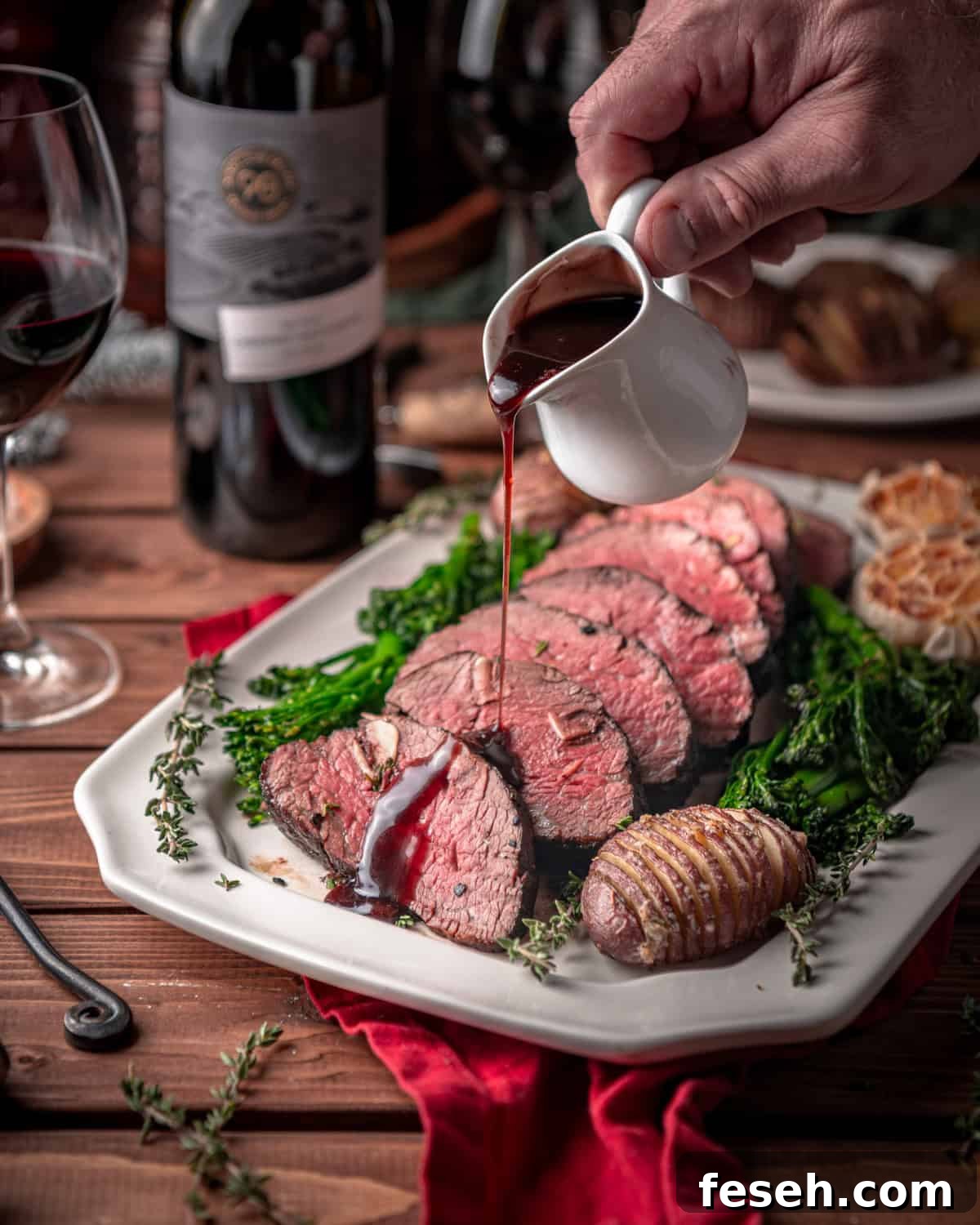
Don’t skip the red wine sauce!
This sauce is based on a bordelaise-style reduction and complements the beef rather than masking it. It adds depth and a glossy finish that elevates the roast to a restaurant-quality dish.
Why coat your tenderloin with compound butter?
Compound butter melts into the studded slits and onto the roast, enhancing flavor and juiciness during roasting. It contributes both taste and improved texture, even if some butter melts away in the oven.
Storage
Best enjoyed immediately, but leftovers can be refrigerated.
- Fridge: Store sliced roast in an airtight container for up to 5 days. Store the sauce separately.
- Reheat: Rewarm the roast wrapped in foil in a 350°F oven until heated through. Gently reheat the sauce over low heat.
Top tip: Aging Your Beef Tenderloin Prior to Roasting
Air-drying the studded roast uncovered on a rack in the refrigerator for several hours or up to two days concentrates flavor and improves texture. If you have the time, prep the tenderloin the night before and let it dry overnight for best results.
What to Serve with Beef Tenderloin
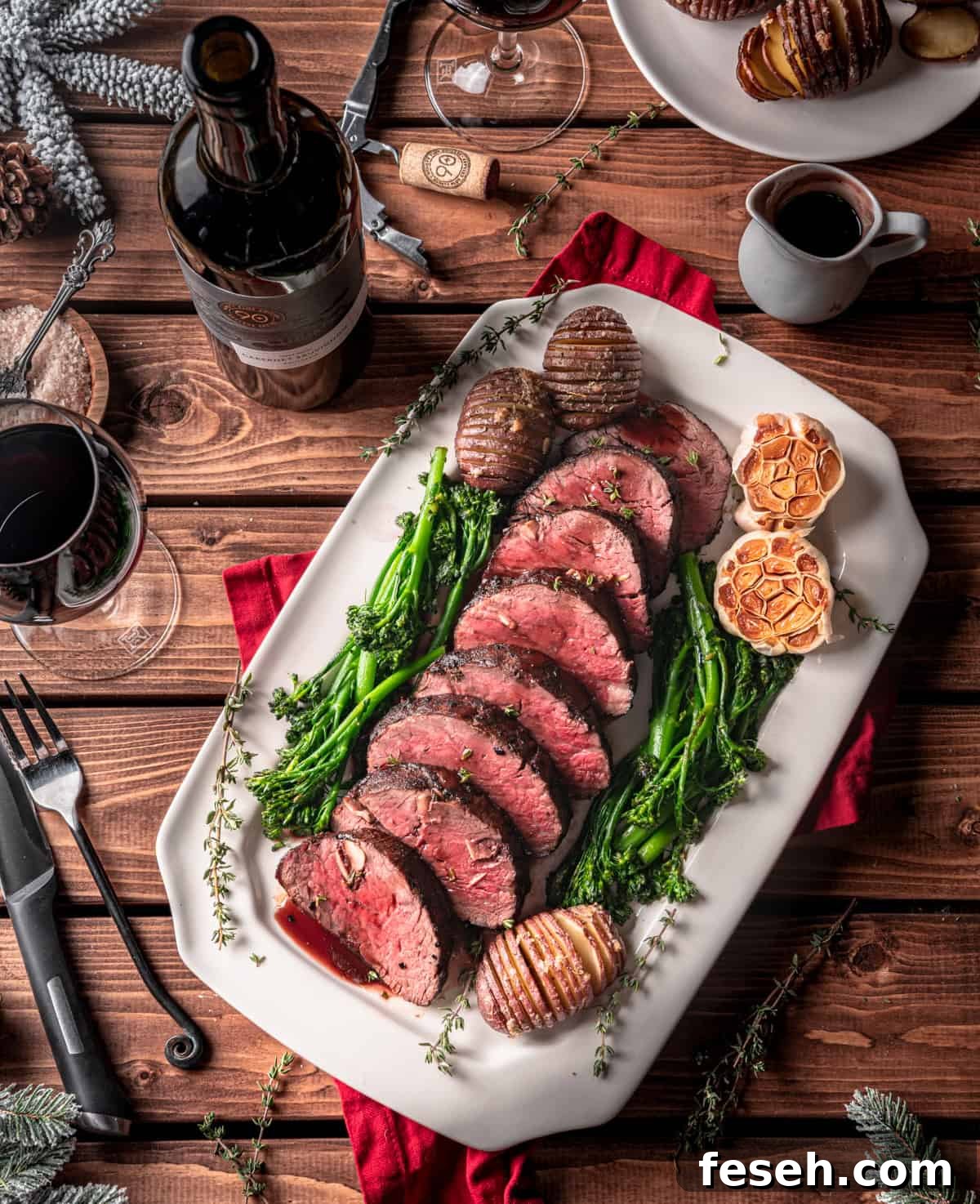
Classic side pairings include roasted or hasselback potatoes, broccolini, or creamy mashed potatoes. For a brighter salad accompaniment, try grilled romaine with pear. For a heartier plate, serve polenta or a simple pasta side. Choose sides that complement the rich beef and garlic-thyme flavors without overwhelming them.
Beef Tenderloin Roast Wine Pairings
Full-bodied red wines pair best with this roast. A Cabernet Sauvignon is a natural match, but Bordeaux blends, French Burgundy-style Pinot Noir, Brunello, or Barolo also work beautifully depending on your preference.
FAQ
Roasting at 300°F for roughly 45–60 minutes is reliable and produces a juicy, evenly cooked tenderloin. Use a thermometer to confirm doneness.
Trim excess fat and remove the silver skin before roasting. Save the trimmed tail or trimmings for stews or other recipes.
Low and slow is preferred for more uniform doneness throughout the roast.
No. Tenderloin yields filet mignon and is lean and compact. Prime rib (rib roast) contains more fat and marbling and produces ribeye steaks when portioned.
Enjoy!
We hope this Garlic Thyme Studded Beef Tenderloin Roast with Red Wine Sauce becomes a holiday favorite. If you try it, share your experience or photos to celebrate the result. This recipe pairs beautifully with bold reds and classic sides for a memorable holiday meal.
Food safety
- Avoid using the same utensils on cooked food that touched raw meat.
- Wash hands thoroughly after handling raw meat.
- Don’t leave perishable food at room temperature for extended periods.
- Never leave cooking food unattended.
- Use oils with a high smoke point for high-heat searing.
- Ensure good ventilation when using a gas stove.