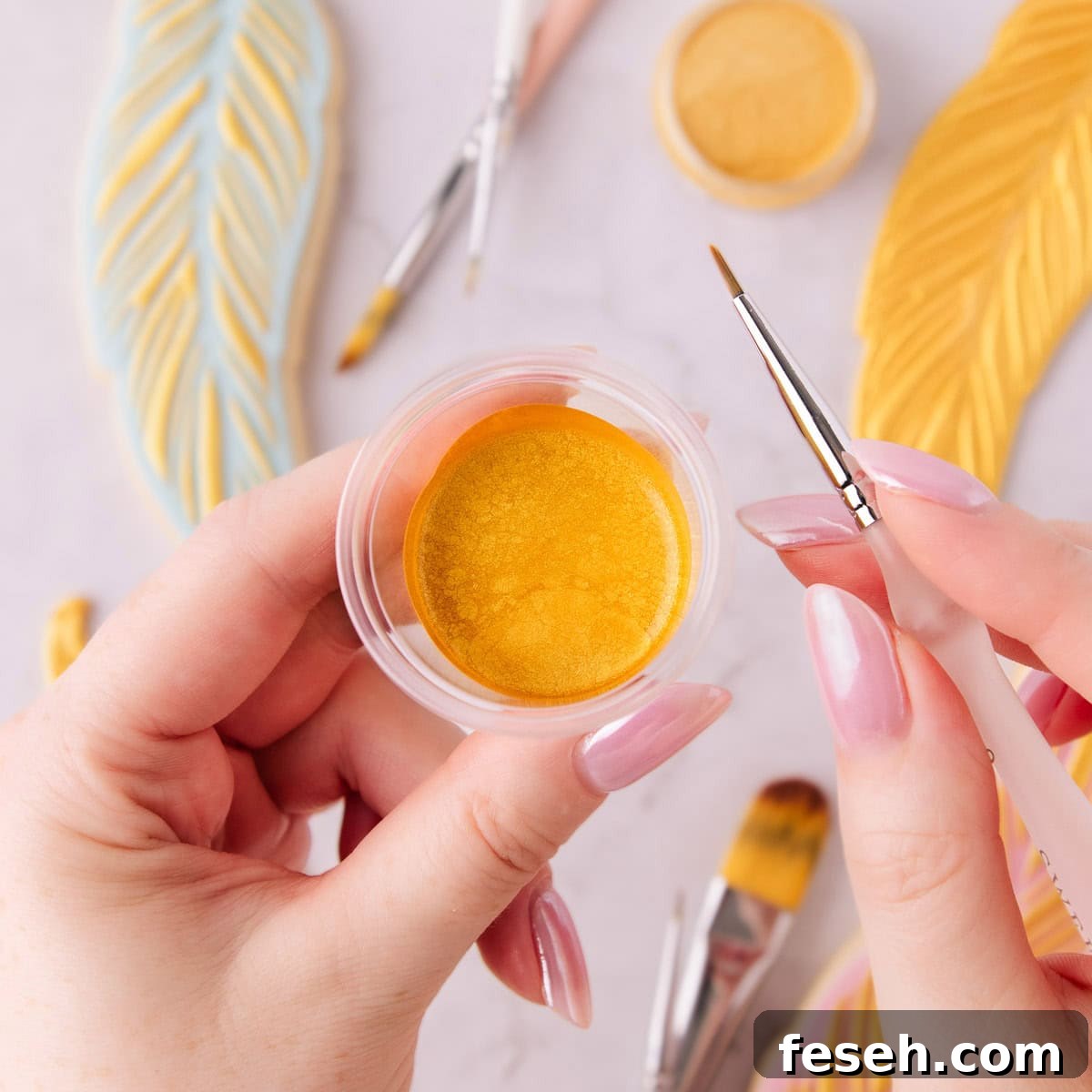
Learn how to make the shiniest edible gold paint that won’t smudge or rub off. This glaze-based recipe can be adapted to create metallic edible paints in other colours too.
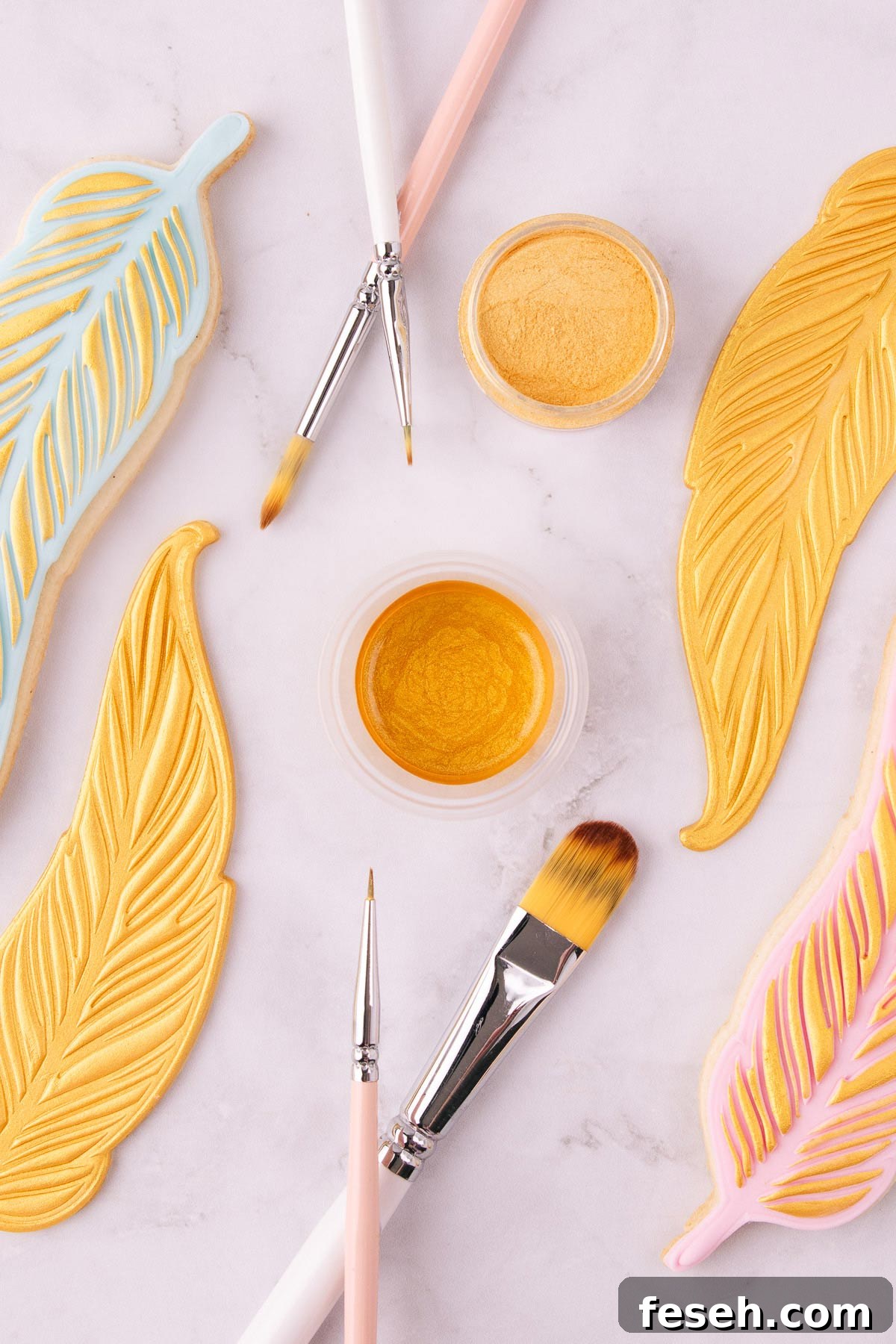
Making high-shine edible gold paint at home is simple and uses only a few ingredients. Unlike alcohol-and-powder mixes that can leave a powdery, smudge-prone finish, this glaze-based paint dries to a glossy, transfer-proof surface.
While store-bought edible metallic paints are convenient, making your own gives you control over pigment strength, opacity and custom shades—handy when you need to match invitations, decorations or a specific finish.
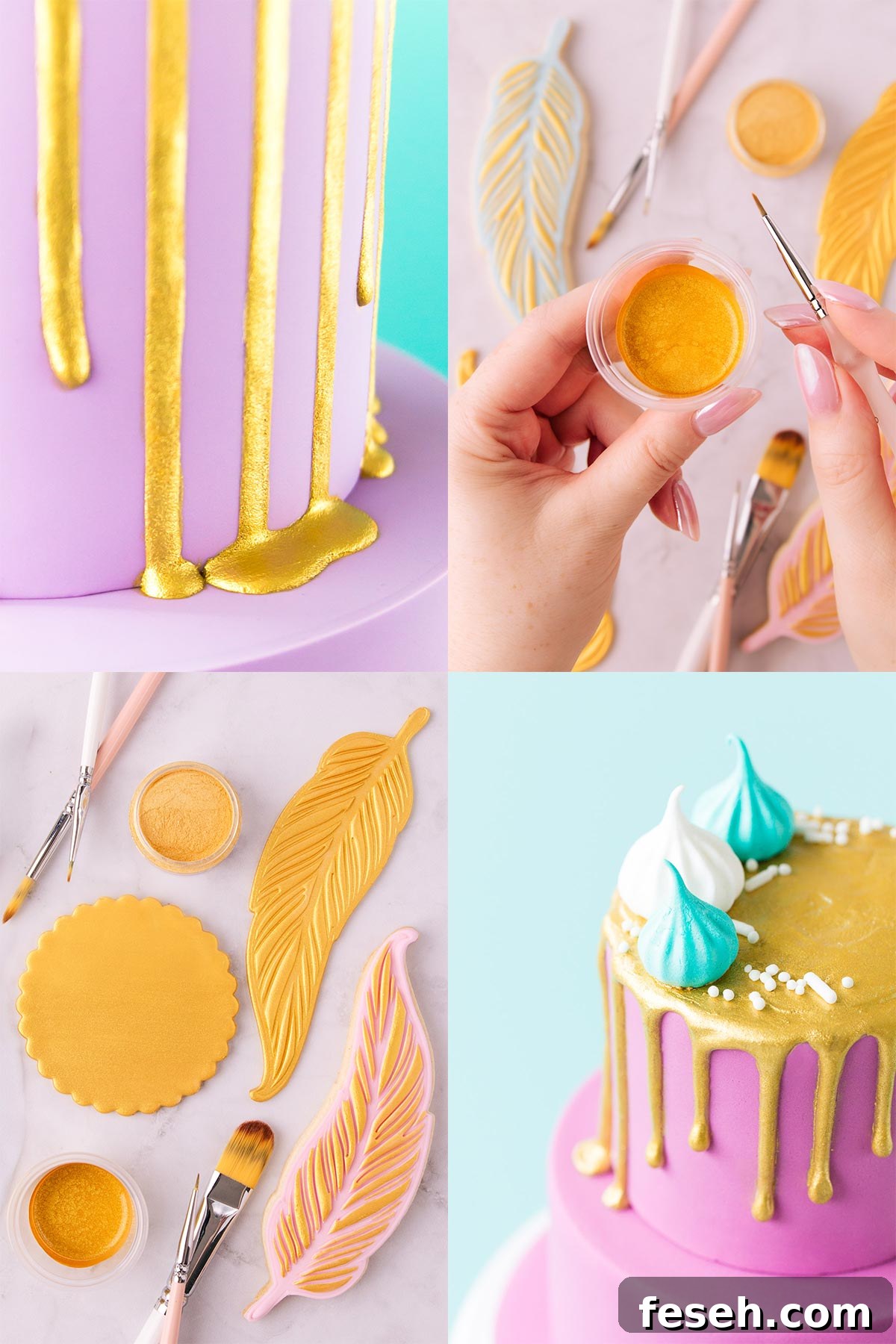
Although this post focuses on gold, you can use the same method with different metallic lustre powders or powdered food colours to create copper, rose gold, silver or coloured metallic paints. The paint adheres well to fondant, ganache, chocolate, modelling chocolate, royal icing and macarons.
Gold Paint Ingredients
These are the three essential components for a glossy, transfer-proof edible gold paint.
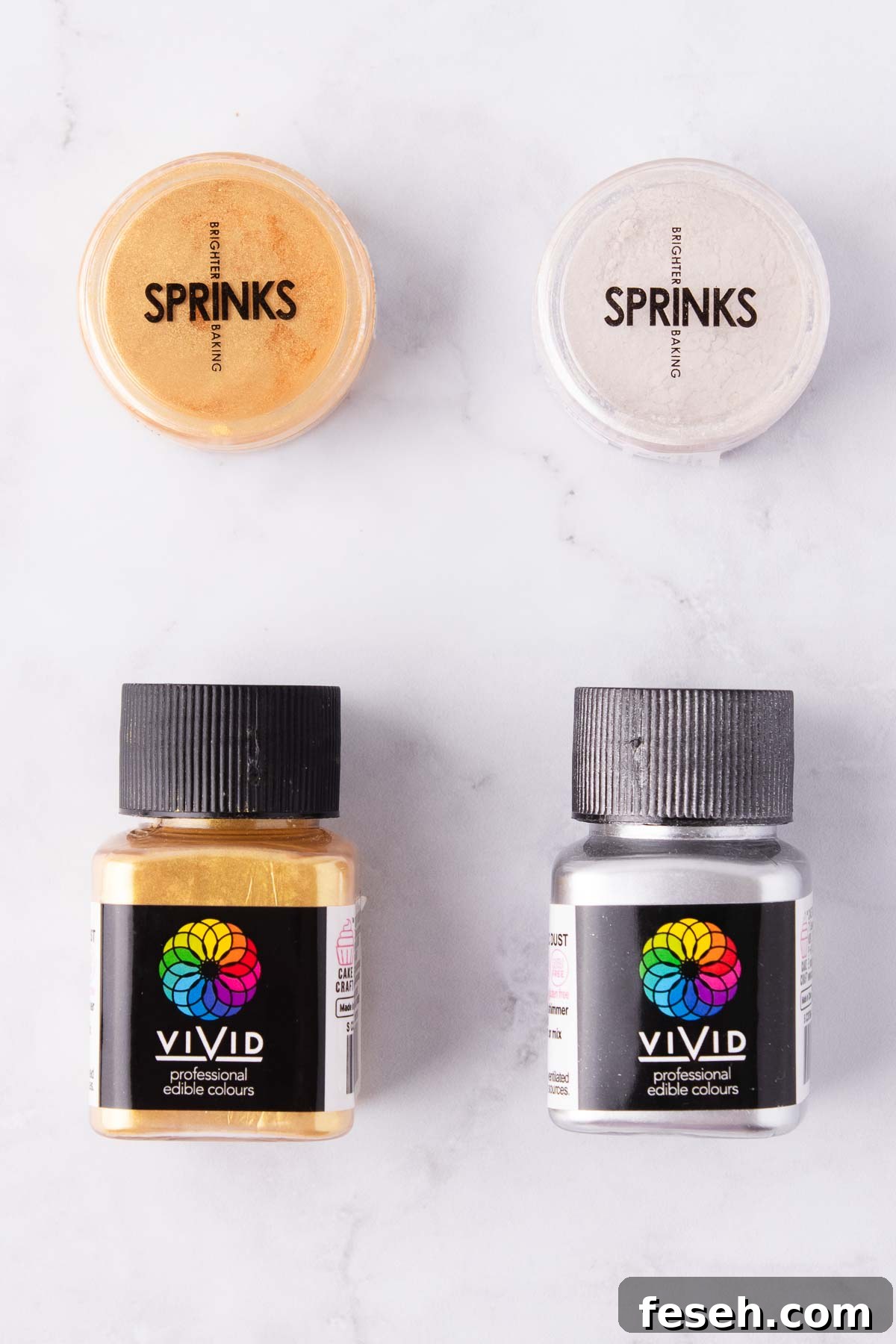
Edible Gold Dust
Choose a metallic lustre that is explicitly approved for consumption in your country. Some products are labelled “non-toxic” but not edible; those should only be used on inedible decorations. Brands and shades vary, so you may need to test a couple to find the shade and opacity you prefer.
If you have a favourite edible gold dust brand, please leave a comment and tell us which one you use and where you buy it.
Confectioner’s Glaze & High-Proof Alcohol
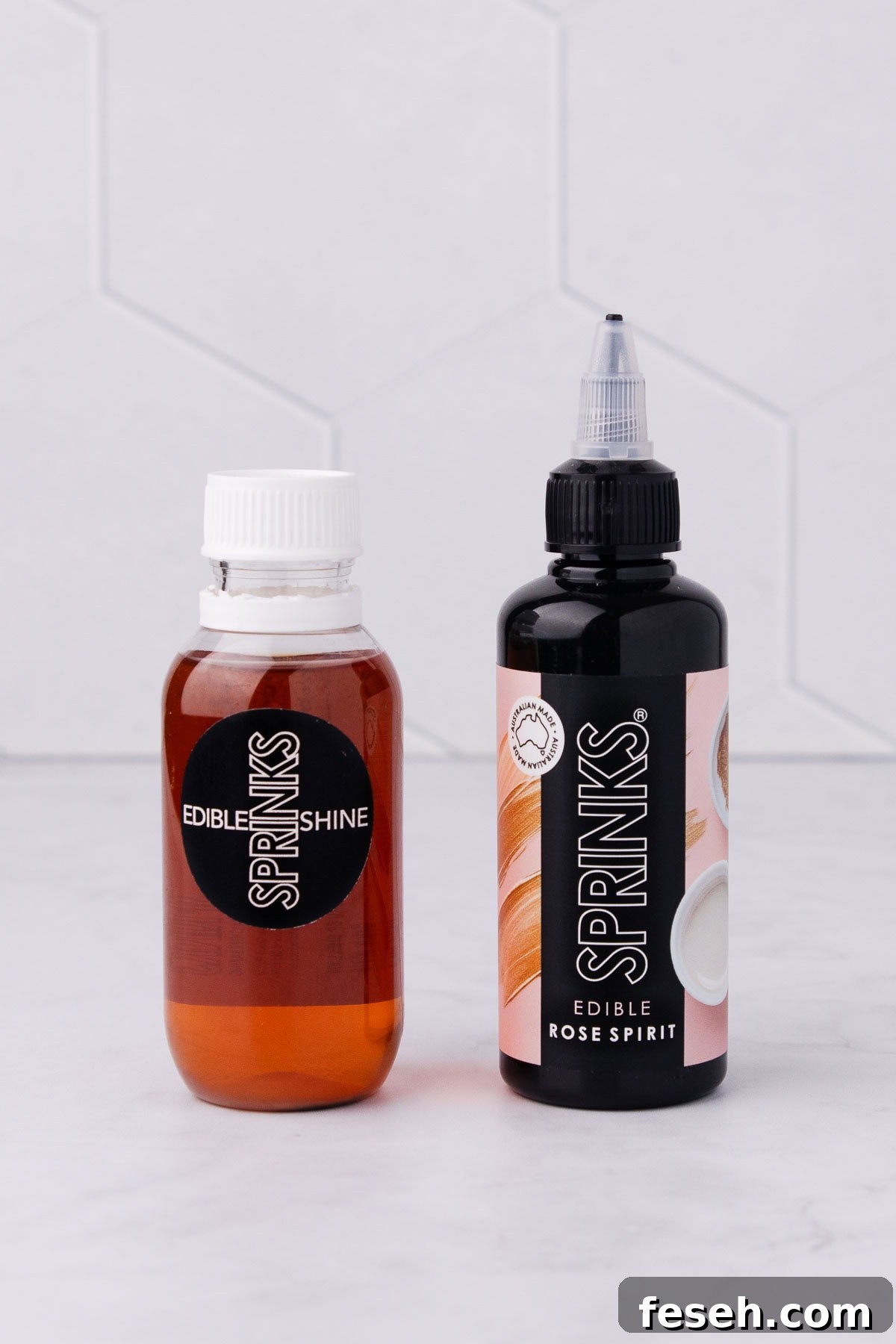
Confectioner’s glaze (food glaze) is the key to a transfer-proof, glossy finish. It seals the pigment as it dries and gives that reflective sheen. It’s commonly used on candies and some pharmaceuticals.
Note: confectioner’s glaze typically contains food-grade shellac and alcohol, so it’s not vegan and may not be suitable for people avoiding alcohol. If you need a vegan or alcohol-free option, choose a water-based edible paint instead.
Because the glaze contains shellac and alcohol, it’s not vegan and may contain enough alcohol to be a concern for some people. In those cases, a water-based edible paint is the better choice.
The glaze needs a high-proof alcohol to thin the paint and clean brushes—use cake decorator’s alcohol (rose spirit) or Everclear. Vodka is usually too weak. Both glaze and high-proof alcohol are available from cake supply stores. Choose the highest alcohol percentage you can find for best results.
Optional: Gold Gel Food Colouring
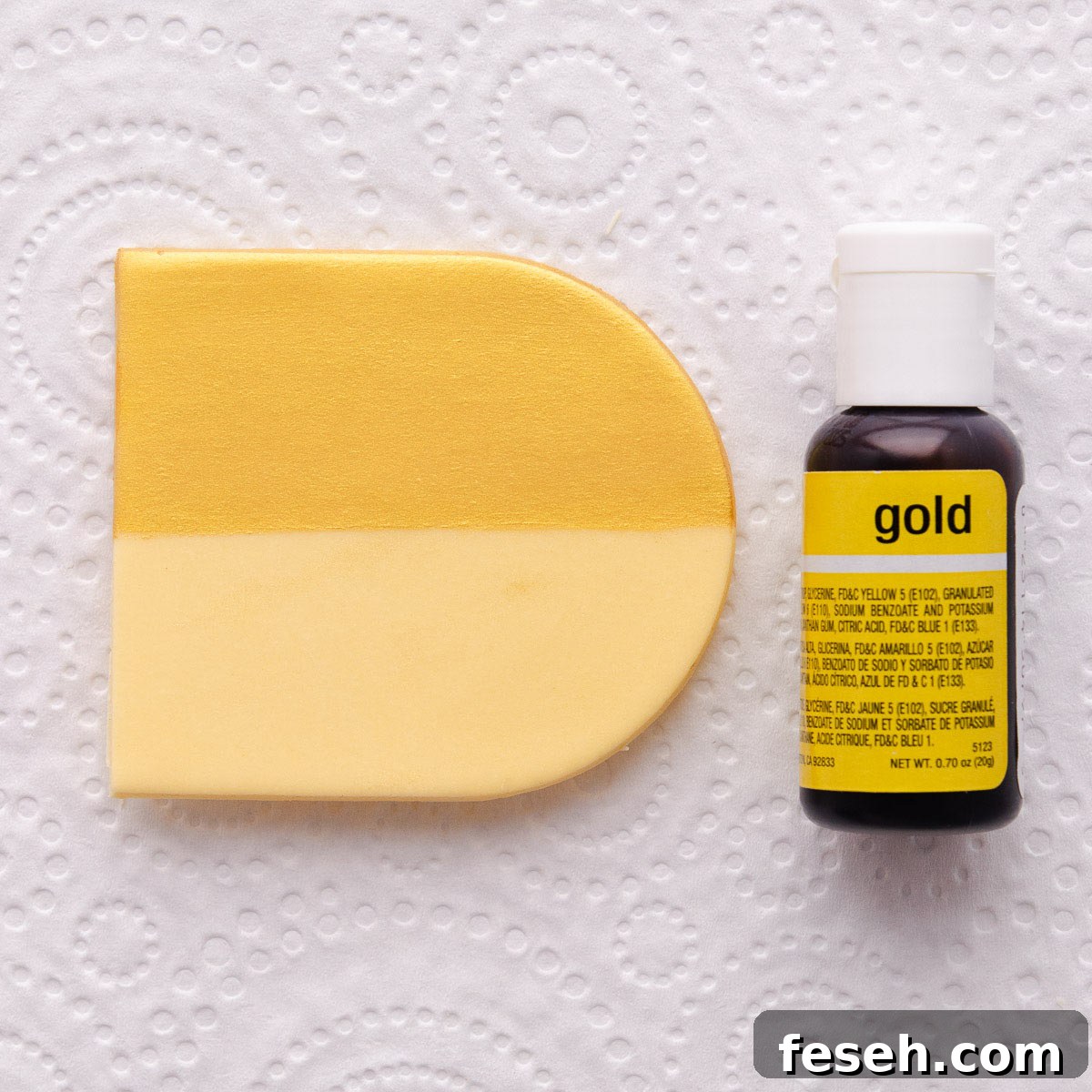
If you plan to paint a large area such as a ganache drip or a whole tier of fondant, tinting the base (ganache or fondant) with gold gel food colouring first helps reduce the number of paint layers needed for full metallic opacity. If gold gel isn’t available, mix yellow with a tiny dab of brown.
Gold Ganache Drip
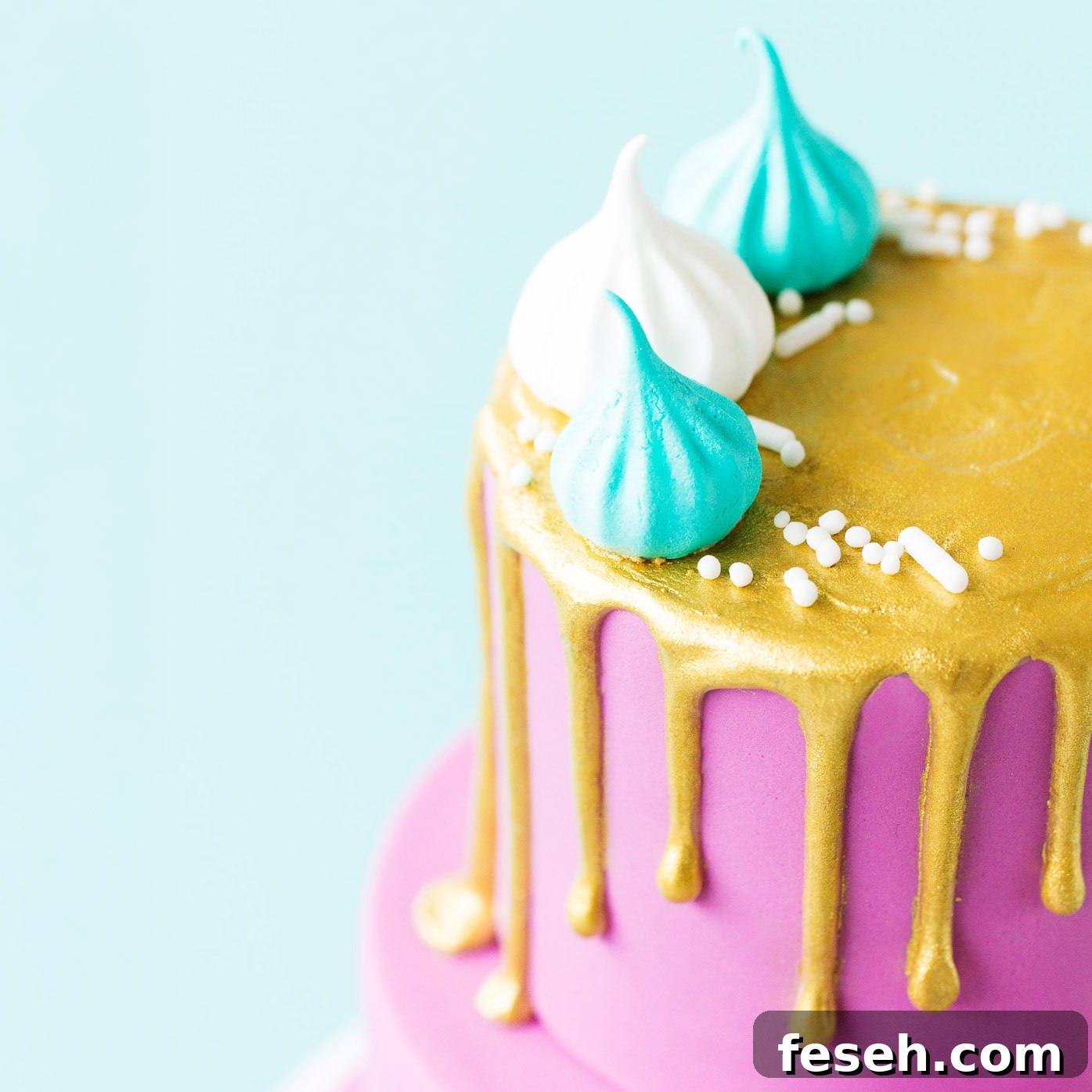
To create a gold ganache drip, colour the ganache with gold gel, let it set fully, then paint over it with the metallic glaze-based paint for a rich, glossy finish.
Tools and Supplies
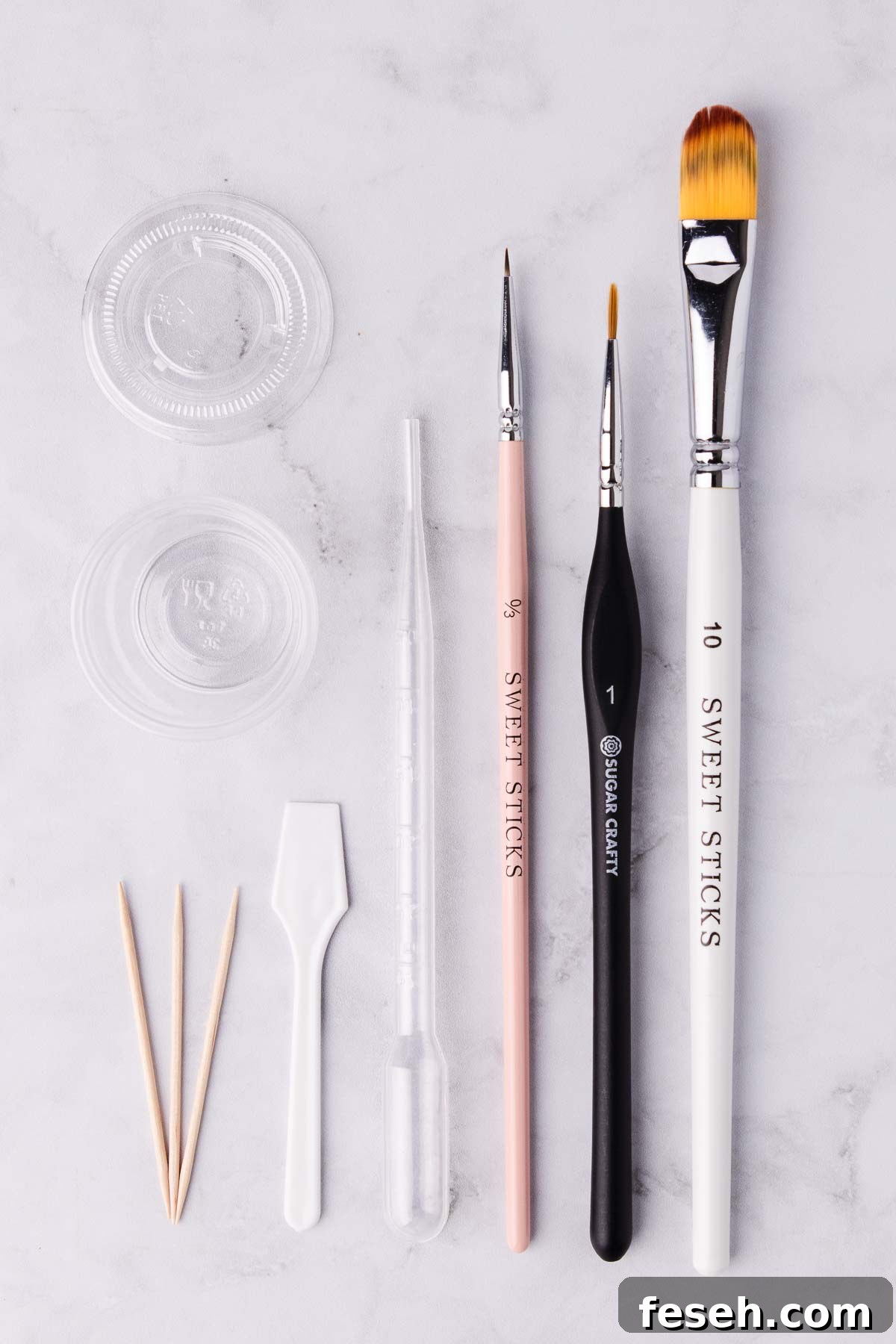
- Paintbrushes: Use good-quality brushes. Fine pointed brushes are best for details and lettering; wide flat brushes work well for larger areas.
- Mixing tools: Toothpicks, small spatulas or flat-edged plastic spoons are useful for stirring.
- Droppers/pipettes: Helpful for adding glaze and alcohol a few drops at a time to reach the right consistency.
- Small container with lid: Mix and store paint in a lidded container to keep it usable between sessions. If you don’t have one, mix small amounts at a time on a palette or lid.
How to Make Edible Gold Paint
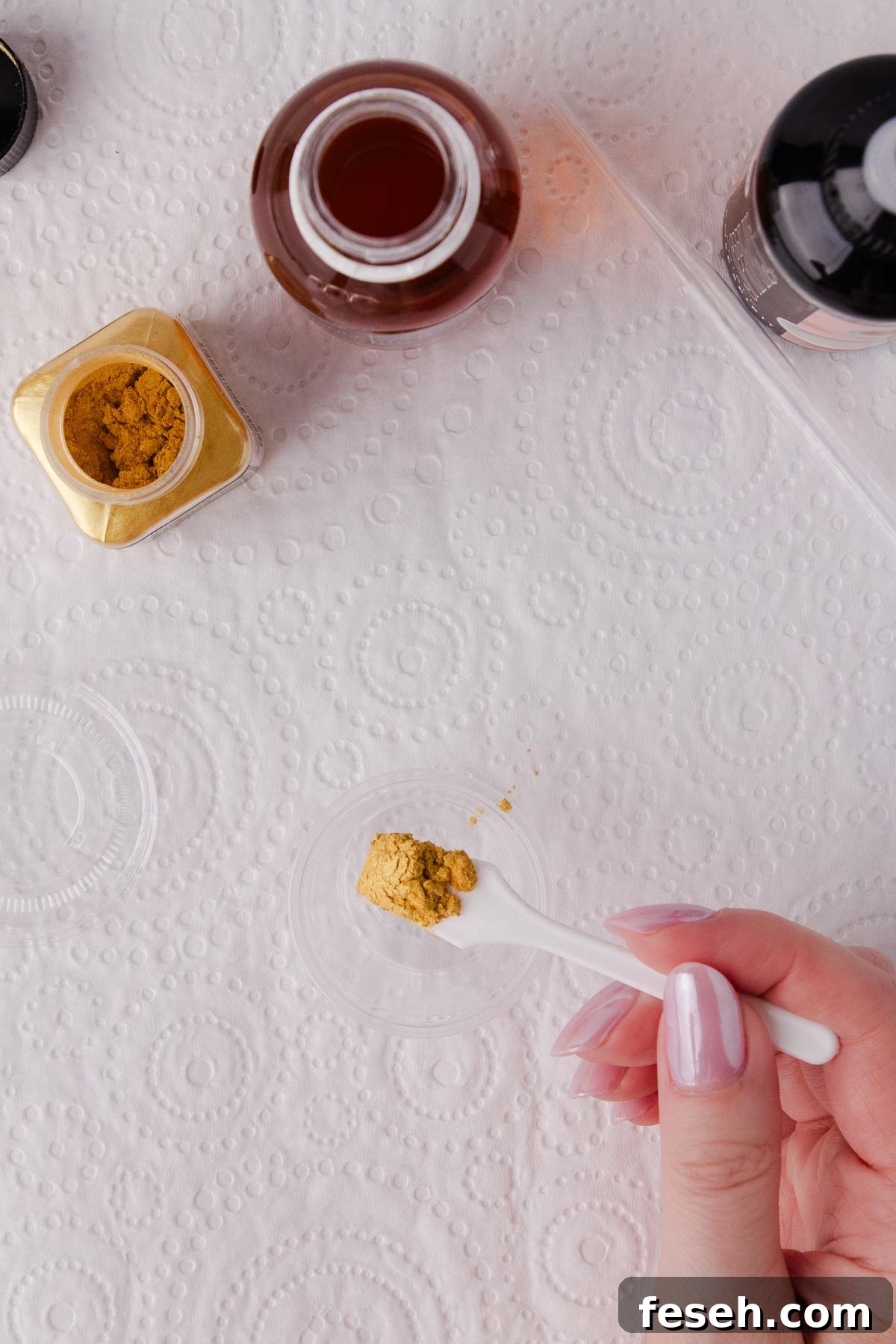
1. Add your gold lustre powder to a small container. For fine details use about 1/4 teaspoon; increase the amount for larger areas.
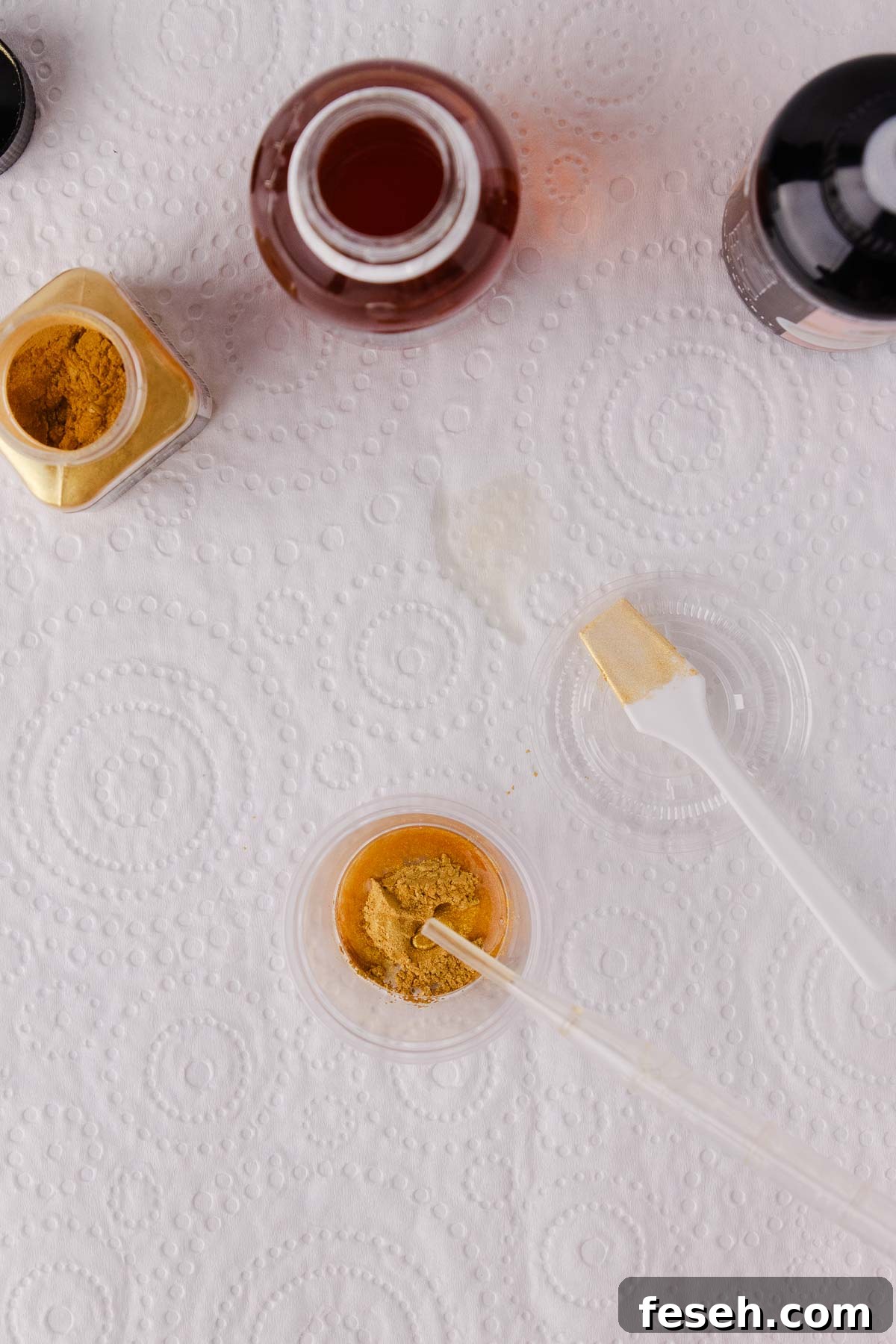
2. Add confectioner’s glaze a few drops at a time. The desired consistency depends on the job: thicker for fine lines and lettering, slightly thinner for broader coverage.
Always test the paint on a scrap of fondant or a spare cookie to check colour and consistency before applying to your finished piece.
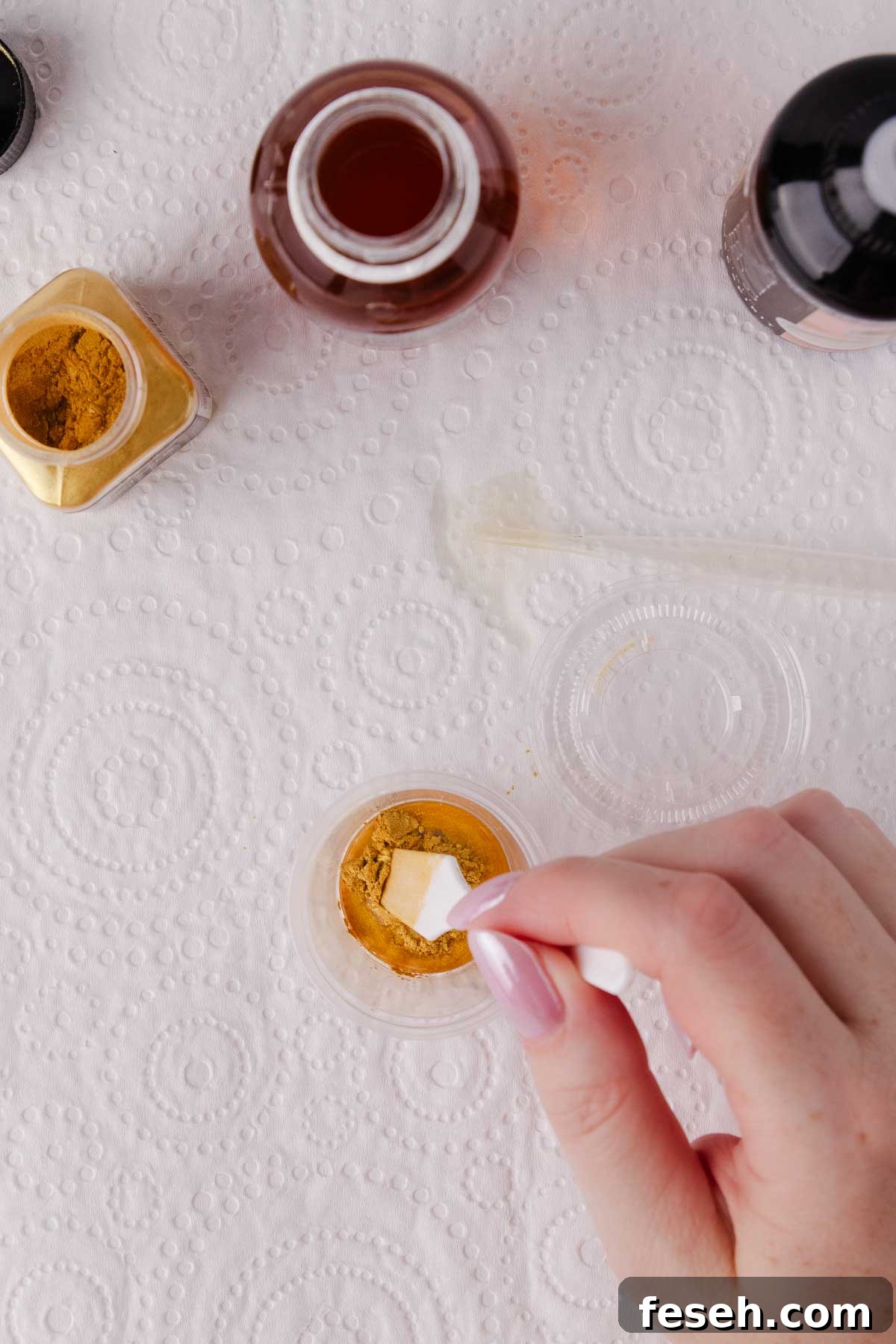
3. Stir gently until the lustre dust and glaze are well combined. You can add a drop or two of high-proof alcohol if you need to thin the mixture further.
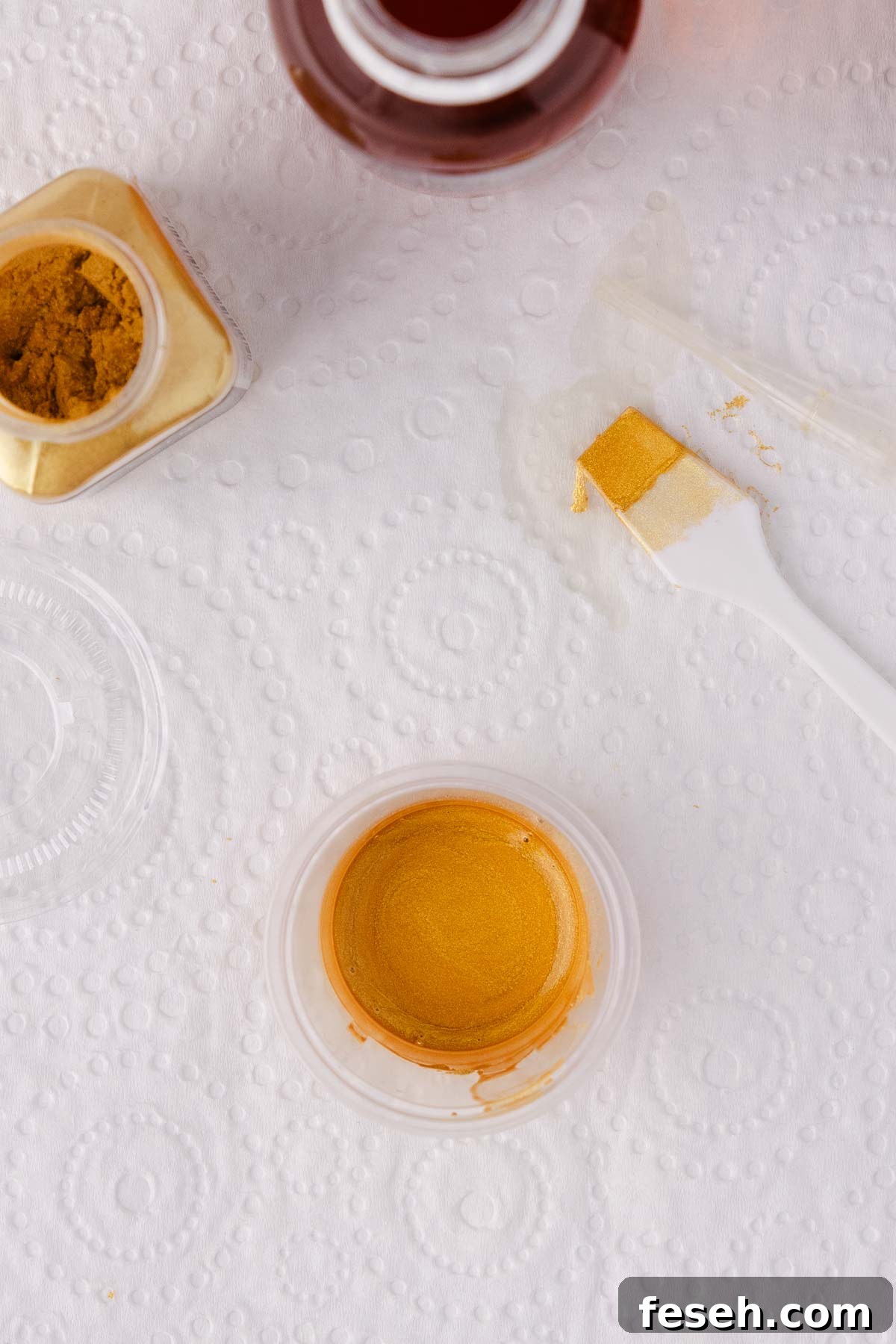
4. Seal the container with the lid until you’re ready to use the paint.
Tips for Painting With Metallic Edible Paint
- Stir regularly: Pigments tend to settle, so mix the paint often while working.
- Adjust consistency: If the paint dries too thick or you want a wash, add a little more glaze or a few drops of alcohol.
- Layering: Allow each layer to dry completely before applying another for best coverage.
- Brush cleaning: Clean brushes in a small container of high-proof alcohol, then wash with warm soapy water, reshape the bristles and let dry.
Examples below show this paint used on drips, stencilling, stamped fondant and cookies for a variety of effects.
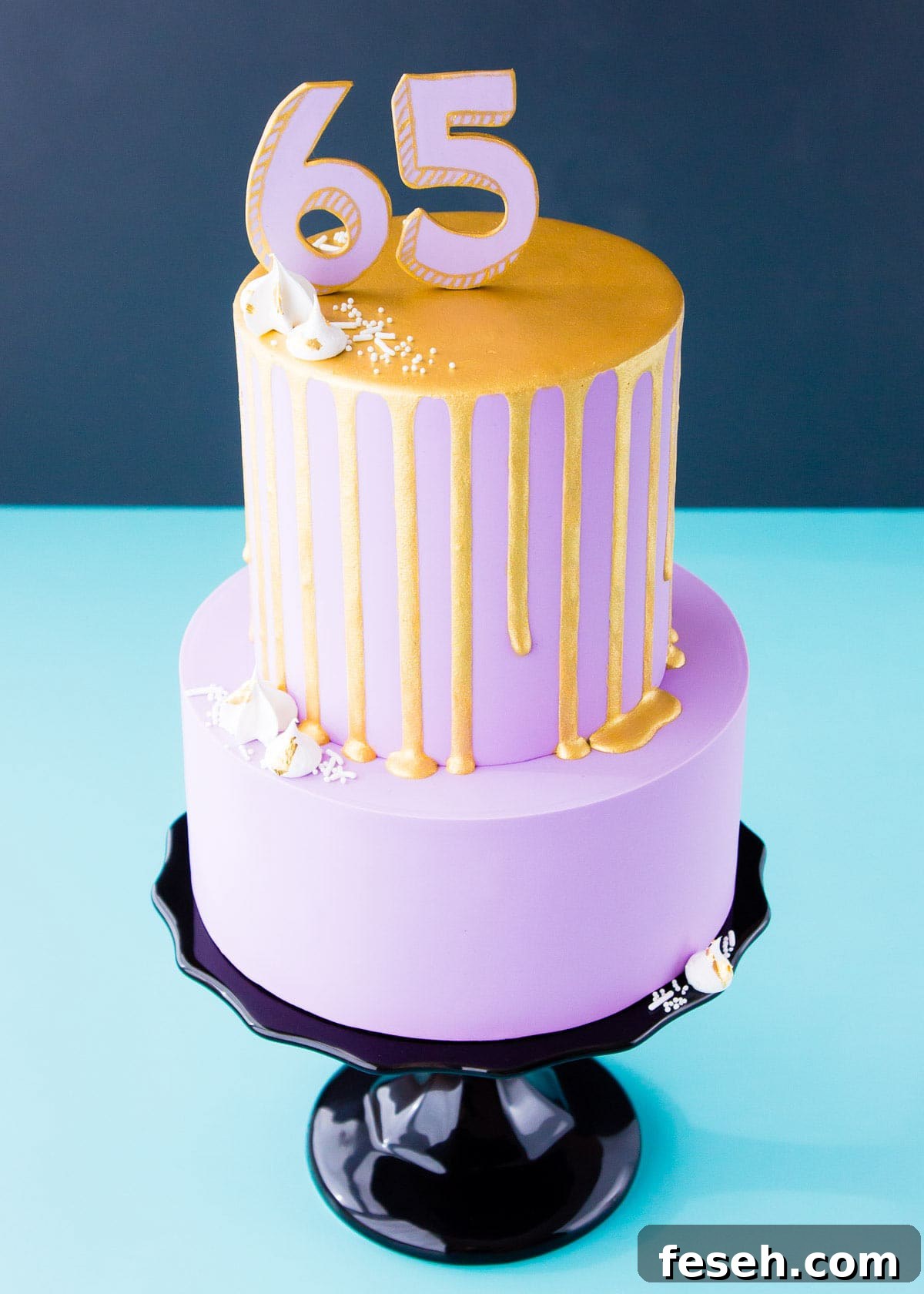
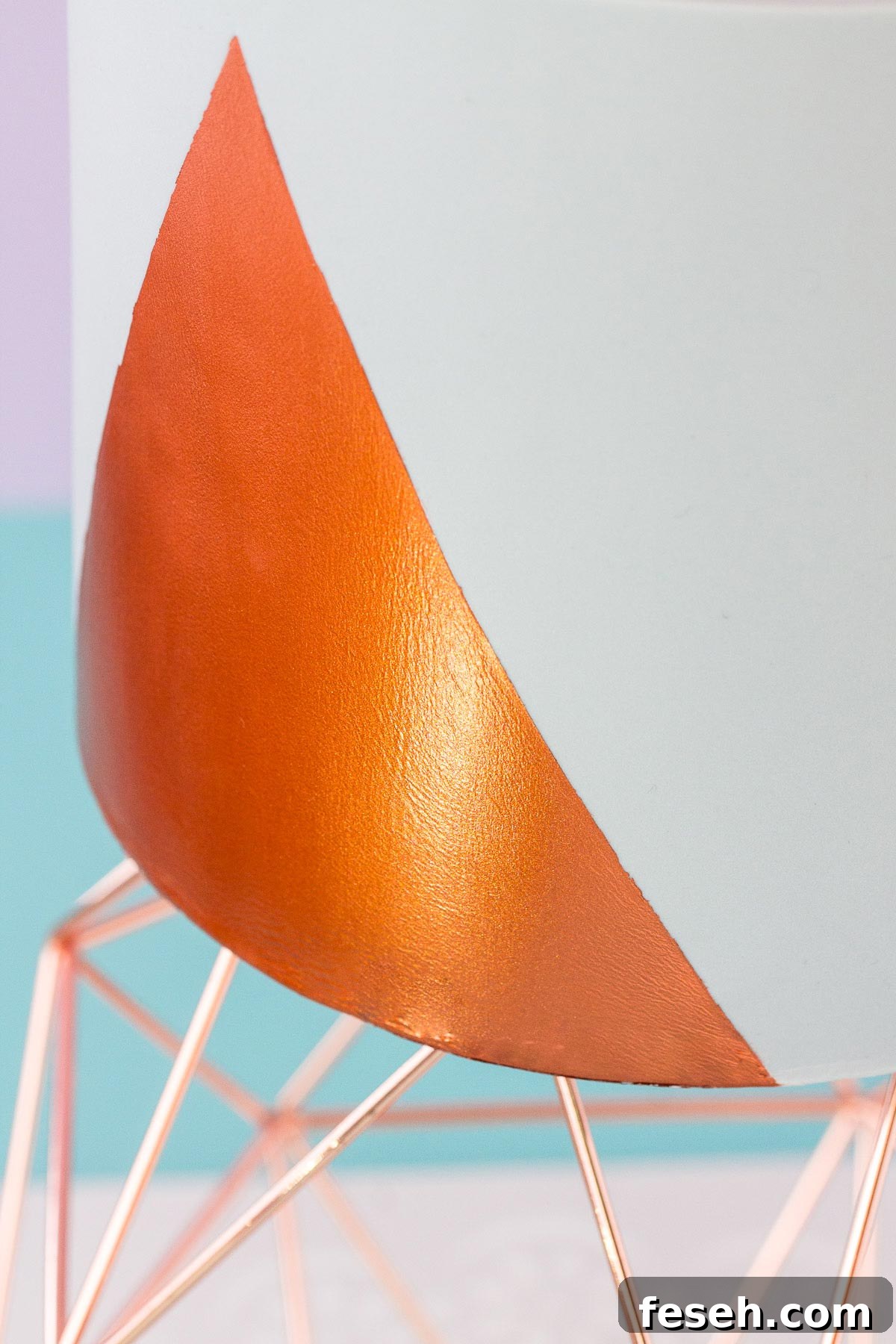
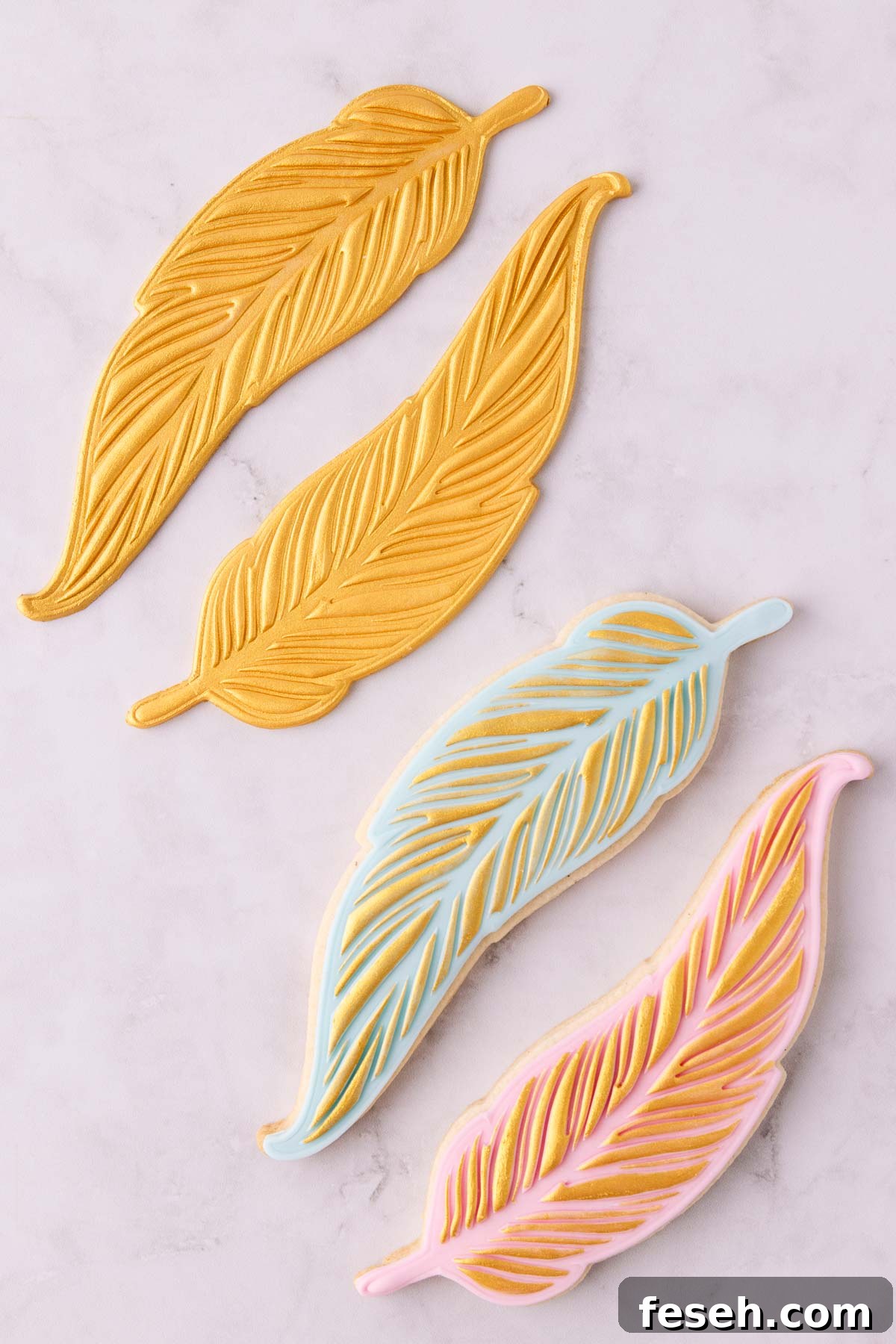
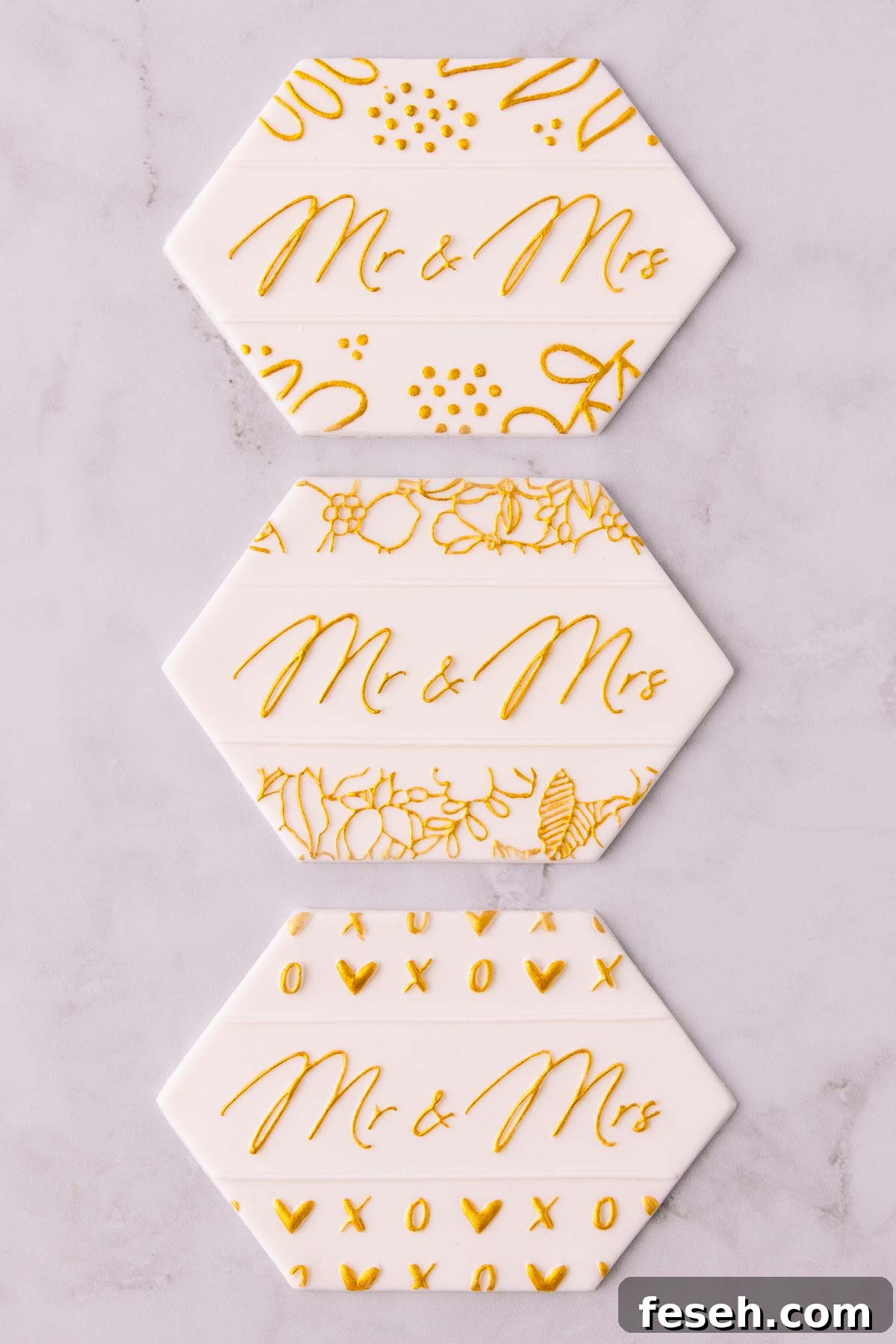
I developed this glaze-mixed paint years ago while trying to recreate a glossy metallic finish on a cake topper. Mixing glaze into the paint allowed multiple coats without patchiness and produced a long-lasting, high-shine result.
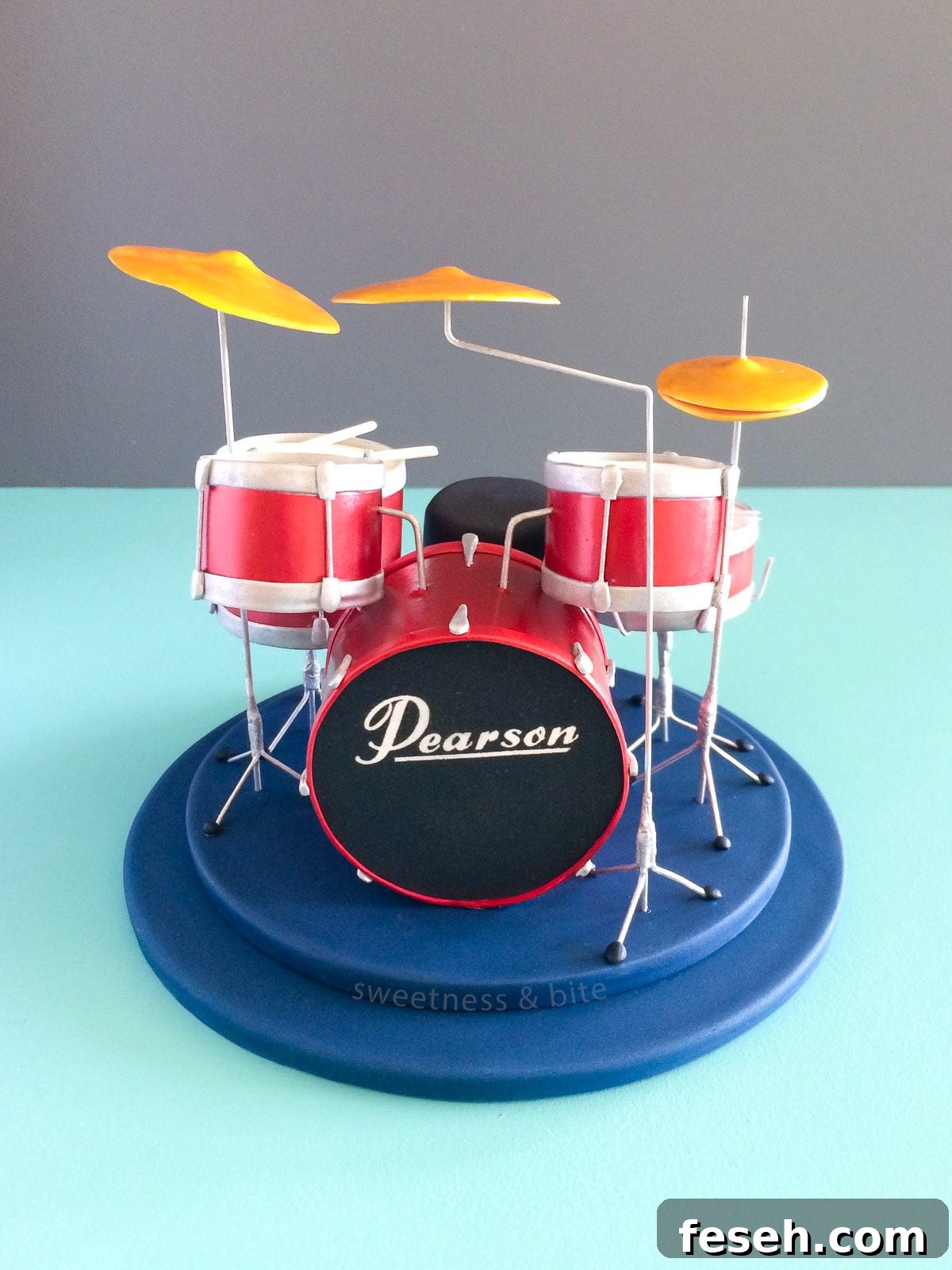
The finished piece has remained glossy and intact for years, which shows how well this method preserves metallic finishes when the proper edible products are used.
More Cake and Cookie Decorating Posts You May Like
Related tutorials to explore next:
- How to Make Edible Glue – Two ways to make edible glue for attaching fondant and gumpaste decorations.
- How to Make Edible Sand – An easy golden edible sand for sea-themed cakes and cookies.
- Watercolour Cookies – Techniques for painting cookies with a watercolour effect.