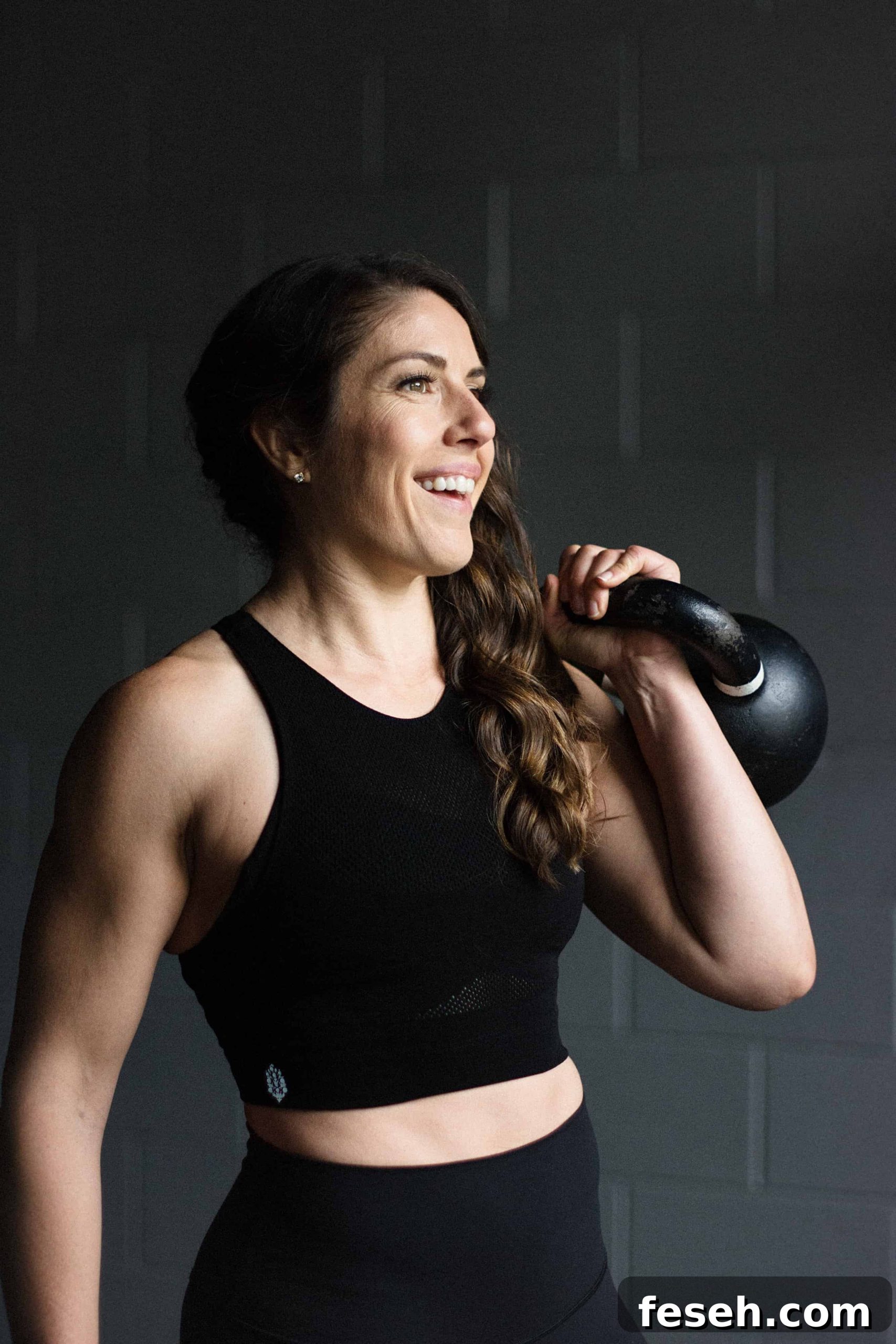
There are six common questions I hear all the time about lifting weights. I collected them into one episode with clear, practical answers so you have a resource you can return to whenever you need guidance.
If you’re searching for straightforward answers to common strength-training questions, this episode is for you.
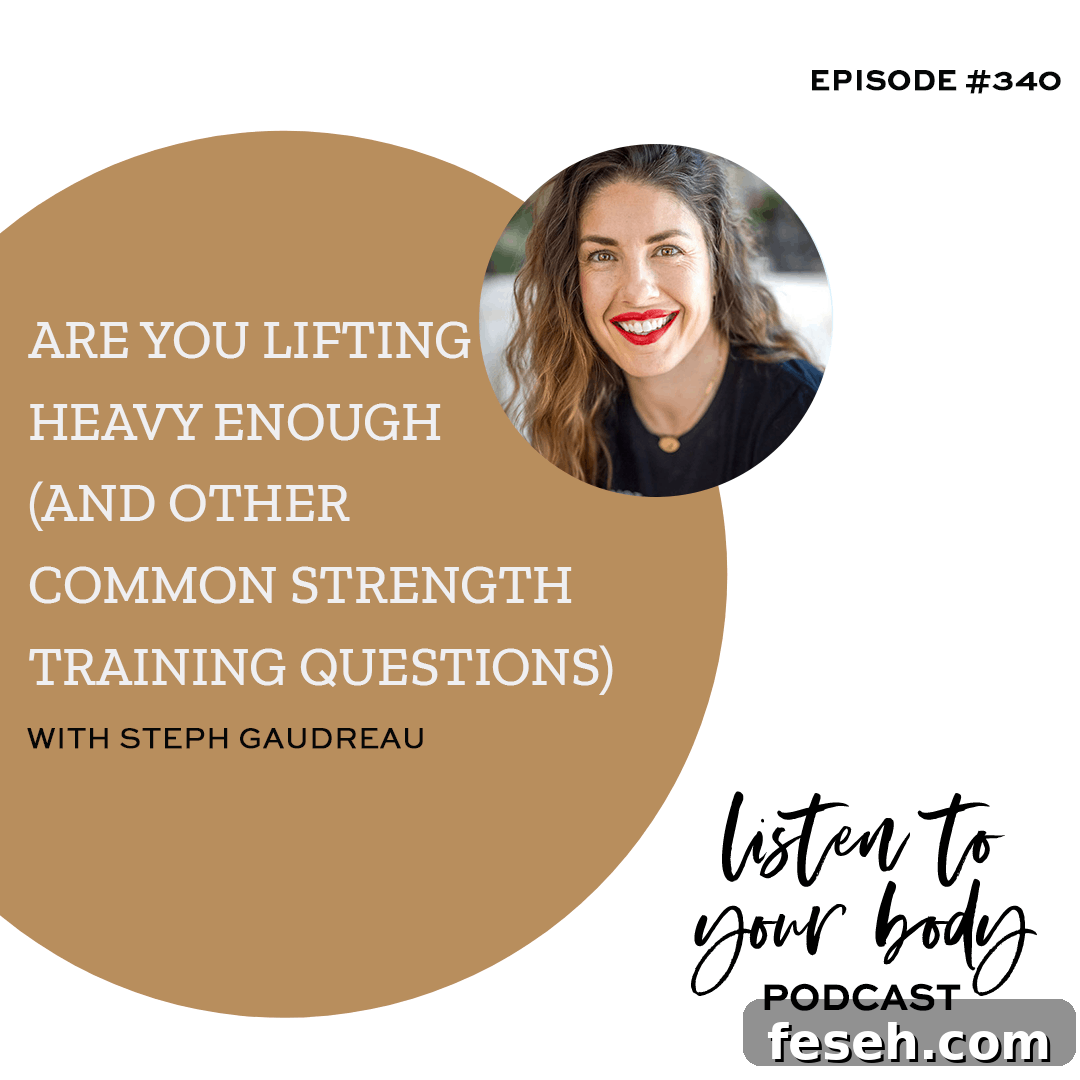
Click play to listen right on this page, no app needed:
Or listen on your favorite app: iTunes (Apple Podcasts) | Spotify | Stitcher
Key Takeaways
If you want to embrace the benefits of strength training, keep these principles in mind:
- Understand that “heavy” is relative—choose a load that challenges you.
- Set goals based on what your body can do, not only on the scale.
- Prioritize recovery and include non-weighted movement to support overall health.
It’s All Relative
Questions like “Am I lifting heavy enough?” or “Am I too old to start?” don’t have one-size-fits-all answers. Everyone’s body responds differently even when doing the same exercises. The key is finding the right mix of strength training and other movement for your unique needs. What feels heavy today may change over time. Consistency plus progressive overload—the gradual increase of stress placed on muscles—are the foundations of long-term progress.
The Many Benefits of Strength Training for Women
Strength training offers more than aesthetic change. When we focus solely on the number on the scale, progress is often unsustainable. Lifting builds healthy muscle mass, supports bone density, raises metabolic rate, and gives you a performance-based focus that isn’t tied to body size. These outcomes improve overall health and help you reconnect with what your body can do.
If any of the topics below resonate with you, share your experience in the comments. I’d love to hear how these answers compare to what you’ve heard before.
In This Episode
- How to know if you are lifting heavy enough (3:40)
- How often you should be lifting every week (7:29)
- How to know if lifting weights will help you feel better about yourself (9:53)
- Why you should still consider lifting weights even if you do other sports (14:17)
- Why it is never too late to start lifting weights (17:52)
- How long it will take for you to experience results (22:20)
Quotes
“Generally speaking, you want to think about grooving in the main functional movement patterns, which are push, pull, hinge, squat, and weighted carries; those are what the Made Strong program is built off of.” (8:24)
“Lifting weights gives you something besides shrinking your body, or the bathroom scale, to focus on.” (11:59)
“If you lift weights two or three times a week, it will make you better at that sport, period.” (15:07)
“To efficiently build and maintain your muscle and bones and keep your metabolism humming along… the answer is lift weights.” (21:52)
“Please focus on some kind of goal that goes beyond what you weigh or exactly having some kind of aesthetic look. It’s far easier to sustain progress when you pursue skills, strength, or performance goals.” (26:26)
Featured on the Show
Sign up for private coaching with Steph Gaudreau for personalized strength and nutrition support.
Follow Steph on social channels for updates and community support.
Please consider leaving a rating and review if you enjoy the podcast—it helps others find the show.
Related Episodes
Ep 332: 3 Mistakes Keeping You From Getting Stronger In The Gym
Ep 331: Strength Training & Your Relationship with Exercise
Ep 327: Getting Back to Exercise Without Feeling Wrecked
Are You Lifting Heavy Enough (and Other Common Strength Training Questions) FULL TRANSCRIPT
Steph Gaudreau
There are six questions I hear most often about lifting weights. This episode compiles those questions with practical answers so you can return to them again and again. I’m Steph Gaudreau, a certified intuitive eating counselor, nutritional therapy practitioner, and strength coach. On this podcast, we explore the intersection of body, mind, and movement, and I share tools to help you eat and move with more confidence and intuition.
Welcome to the show—whether you’re new or a returning listener. Today I’ll answer six common strength-training questions. I’ll keep the focus on lifting and programming; nutrition to support lifting is a separate topic I’ll cover in another episode.
If you want one-on-one coaching, visit my website and apply through the private coaching page. I’m also launching a group program this summer focused on strength, nutrition, recovery, and practical fueling without rigid tracking—join the waitlist on my site for early access and bonuses.
1. How do I know if I’m lifting heavy enough?
“Heavy” is relative. Choose a load that makes the last few reps of a set feel challenging but still performable with good form. If the first reps crush you and you can’t finish the set, the weight is too heavy. If you breeze through the set while chatting, it’s too light. Adjust weight, reps, or exercise variations over time to maintain progressive overload so your body continues to adapt.
2. How often should I lift each week?
Consistency matters more than perfection. Aim to practice the main movement patterns—push, pull, hinge, squat, and loaded carries—about two to three times per week. That frequency, combined with progressive overload, produces meaningful strength and performance gains for most people and is sustainable for long-term progress.
3. Will lifting weights help me feel better about myself?
For many people, strength training provides a new focus beyond appearance or scale weight. Lifting can build confidence, skill, physical capability, and a sense of worth tied to function rather than aesthetics. It’s powerful and liberating for lots of women. That said, exercise is not a replacement for therapy when deeper emotional work is needed—both can be valuable.
4. I do other sports—do I still need to lift?
Yes. Two to three strength sessions per week will make you better at your sport. Strength training supports performance and resilience, especially for endurance athletes who risk muscle loss from long-duration training. Properly programmed resistance work can improve power, speed, and durability without slowing you down.
5. Is it too late to start if I’m in my 40s or older?
Never too late. Strength training at any age helps preserve and build muscle and bone density—two key factors that decline with age. Even modest, appropriately loaded resistance training can reverse or improve bone mineral density and combat sarcopenia (age-related muscle loss). Work with a coach if you have injuries or special concerns, but please start: the benefits are substantial.
6. How long until I see results?
It depends, but newcomers often notice rapid improvements (novice gains) if they lift consistently and progress the work. Long-term results require consistent training, adequate recovery, and appropriate fueling. Common obstacles to progress include under-eating for activity level, inadequate recovery, excessive unrelated high-intensity activity, or not progressively overloading. Two strength sessions per week are superior to one for hypertrophy, and realistic, performance-based goals (skill, strength, lift targets) help maintain motivation over the long term.
In summary: choose loads that challenge you, train two to three times a week focusing on core movement patterns, prioritize recovery and proper fueling, and set goals beyond the number on the scale. Strength training is effective for performance, health, and longevity—start where you are and build from there.
To join the group coaching waitlist, visit StephGaudreau.com and select the work-with-me menu, then group coaching. Being on the waitlist is obligation-free and gets you early access and bonuses when the program launches.
Thanks for listening. I hope these six answers gave you useful direction. Next week I’ll bring an interview I think you’ll appreciate. Until then, have a strong and badass week.