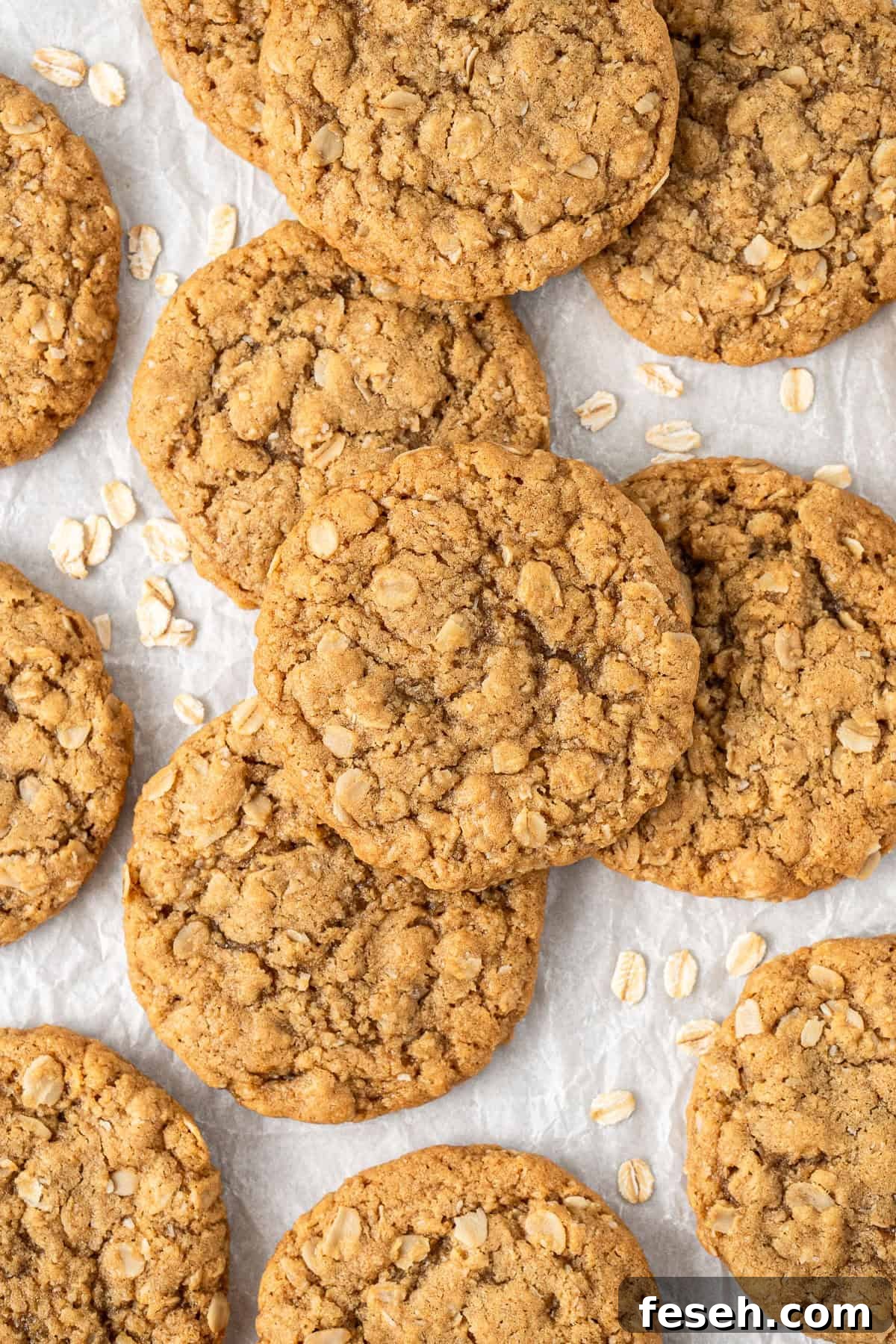
A beloved tradition in Australian and New Zealand kitchens, chewy ANZAC biscuits date back to World War I. Made from oats, desiccated coconut and golden syrup, these simple biscuits are quick to prepare and perfect with a cup of tea or coffee. This version uses a small swap to make them dairy-free and vegan without changing the classic flavour and texture.
Love ANZAC biscuits but want something even easier? Try this chewy ANZAC slice!
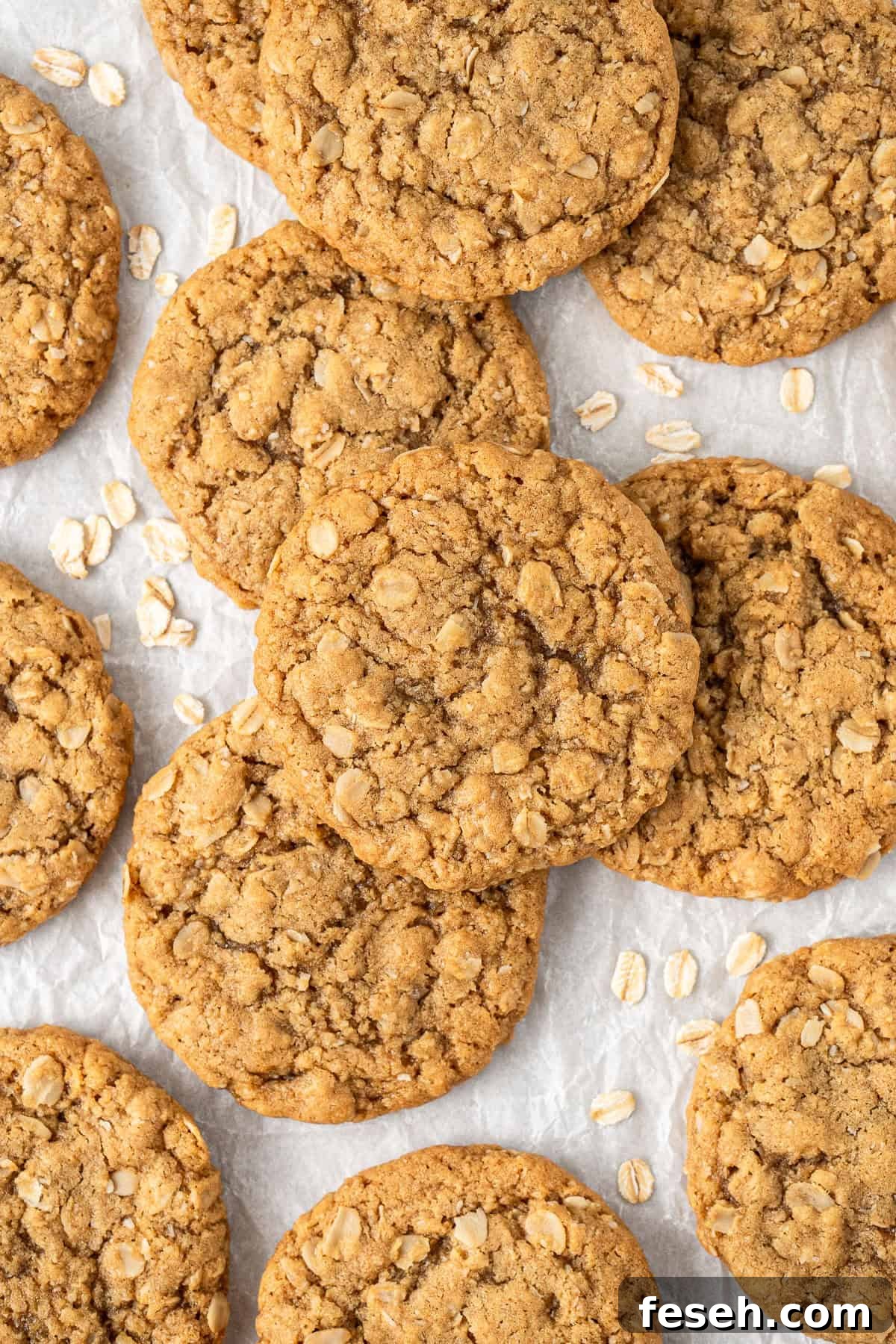
ANZAC biscuits transform a handful of pantry staples into a chewy, caramel-scented treat. Born from necessity during WWI, they were created to travel well: no eggs, simple ingredients and long shelf life made them suitable to send overseas to the Australian and New Zealand Army Corps. Even today, ANZAC-related bake sales and fundraising help support returned service personnel.
In Australia the name ANZAC is protected and its use is regulated. As tradition dictates, these biscuits should remain close to the original recipe and shape. This recipe honours that tradition while swapping regular butter for a dairy-free alternative to create a dairy-free, accidentally vegan biscuit that keeps the authentic taste.
Key Ingredients
This is a straightforward recipe that relies on a few essential ingredients. Each one contributes to the classic flavour and the chewy texture you expect from an ANZAC biscuit.
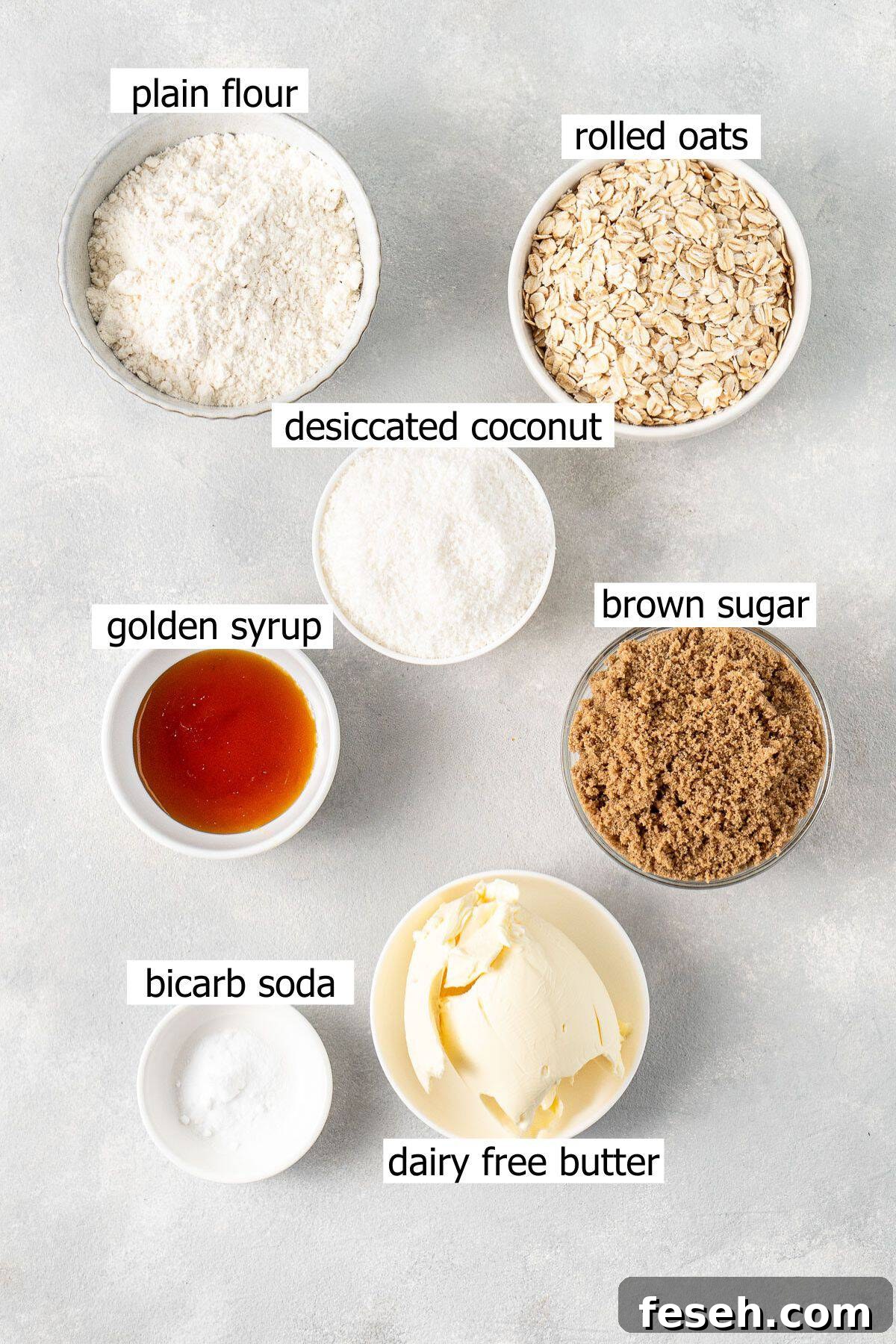
Quantities are listed in the recipe card below.
- Rolled oats – use old-fashioned rolled oats for texture; avoid quick-cooking oats.
- Plain (all-purpose) flour – provides structure.
- Brown sugar – gives caramel notes and a soft chew. White sugar can be used for a crisper biscuit.
- Desiccated coconut – use desiccated, not shredded coconut, to avoid extra moisture.
- Golden syrup – key to the classic ANZAC flavour. If unavailable, light molasses or honey can substitute, though honey affects the recipe’s status and texture.
- Dairy-free butter – a plant-based butter keeps these biscuits dairy-free and vegan; choose a brand with a buttery flavour and low greasiness.
- Bicarbonate of soda (baking soda) – reacts with hot water to help the biscuits spread and develop texture.
Step-By-Step Instructions
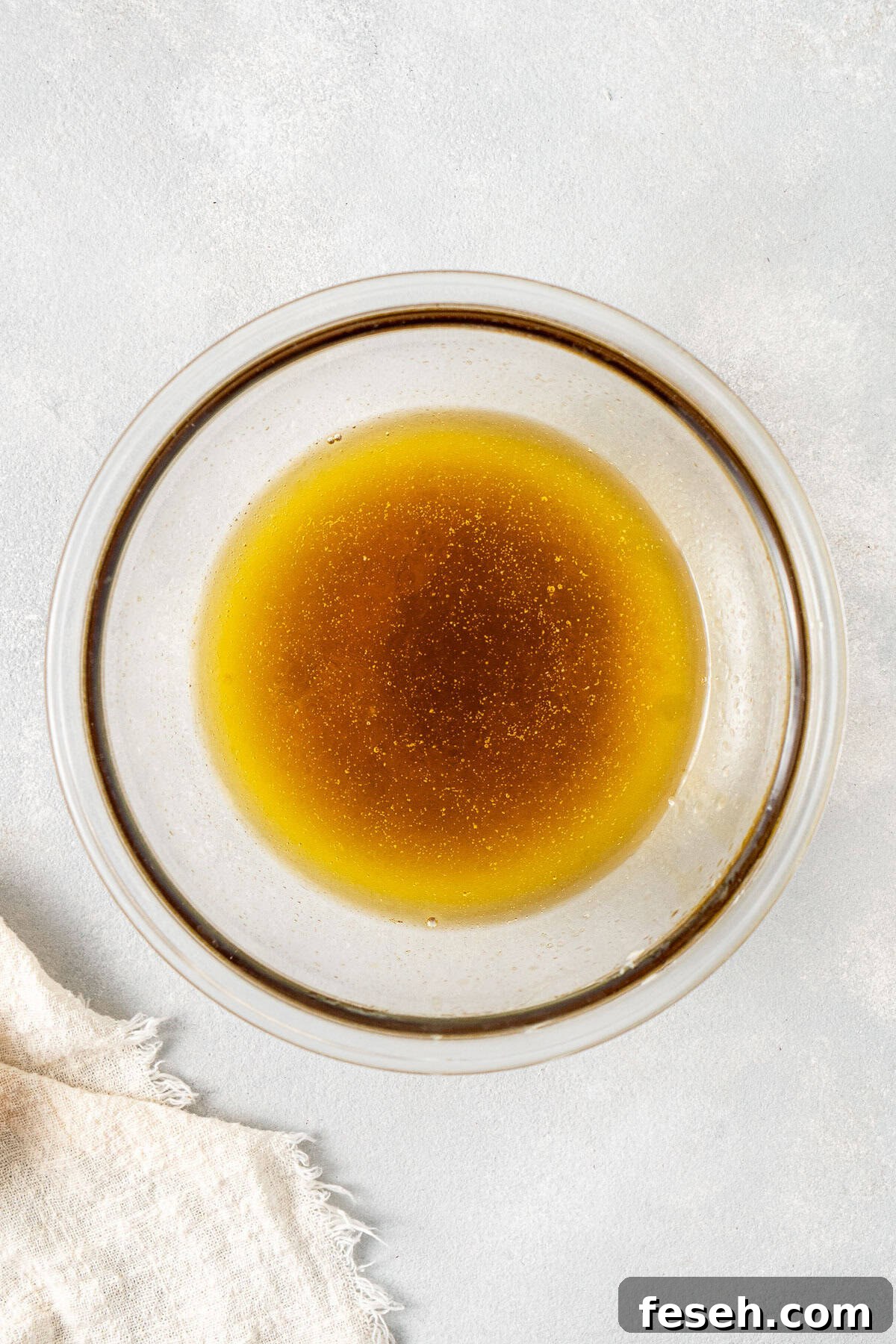
Step 1: Melt the dairy-free butter and golden syrup together over low heat on the stove or in short bursts in the microwave. Stir until smooth, then set aside to cool to room temperature.
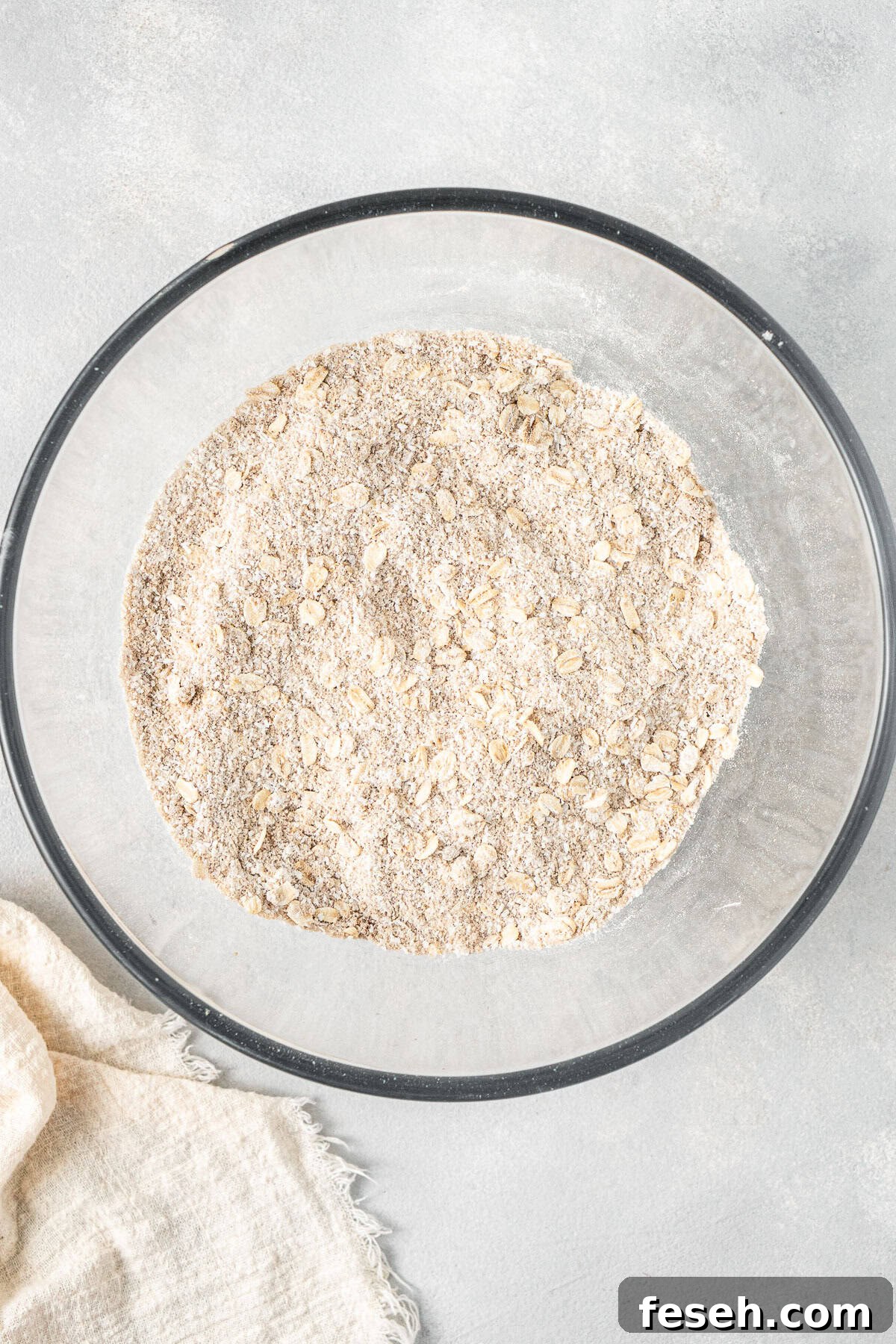
Step 2: In a large bowl combine the rolled oats, plain flour, brown sugar and desiccated coconut. Mix well so there are no lumps and make a well in the centre.
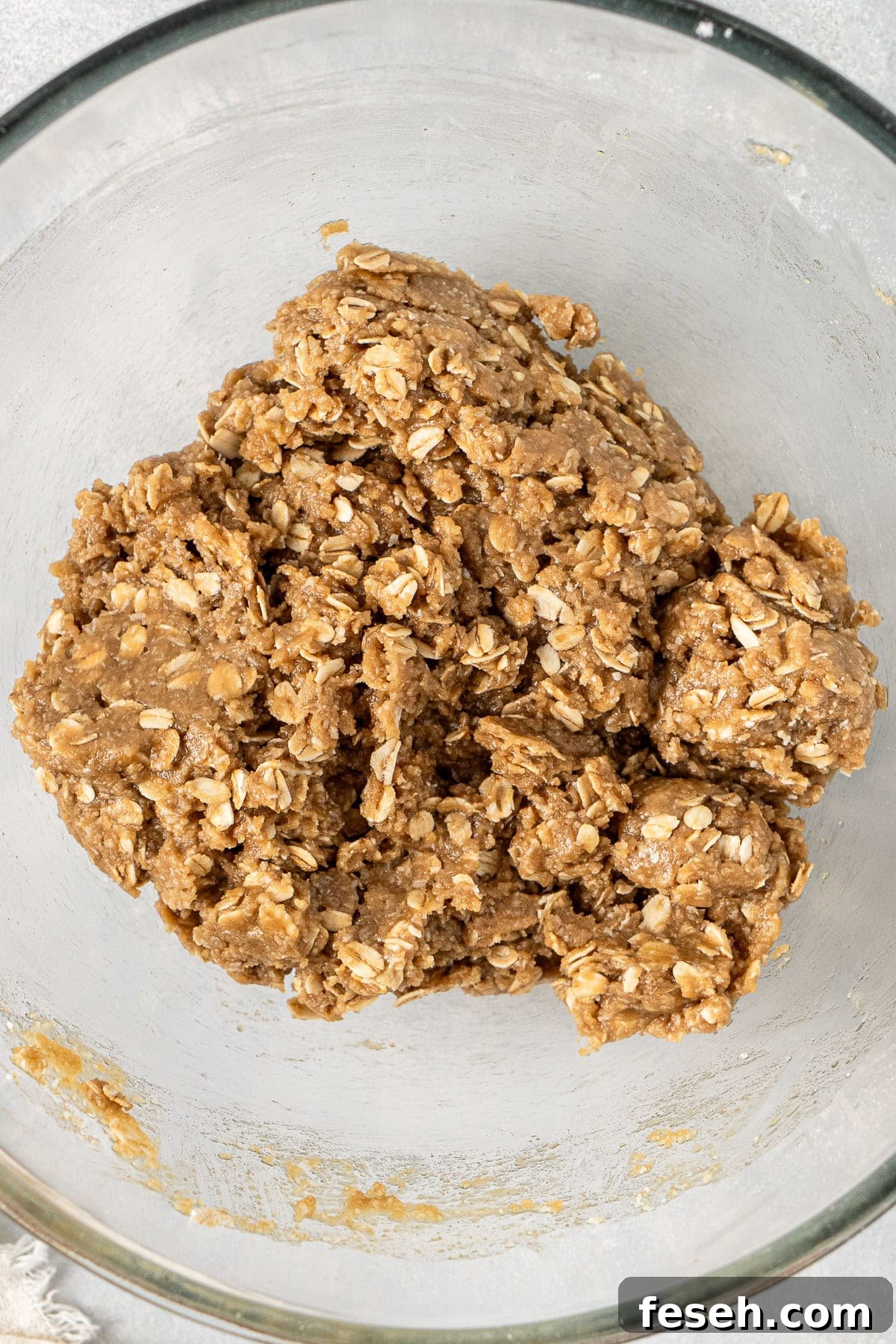
Step 3: Dissolve the bicarbonate of soda in hot water, then add it to the cooled butter-and-syrup mixture. Pour this into the dry ingredients and stir with a spatula until a cohesive dough forms.
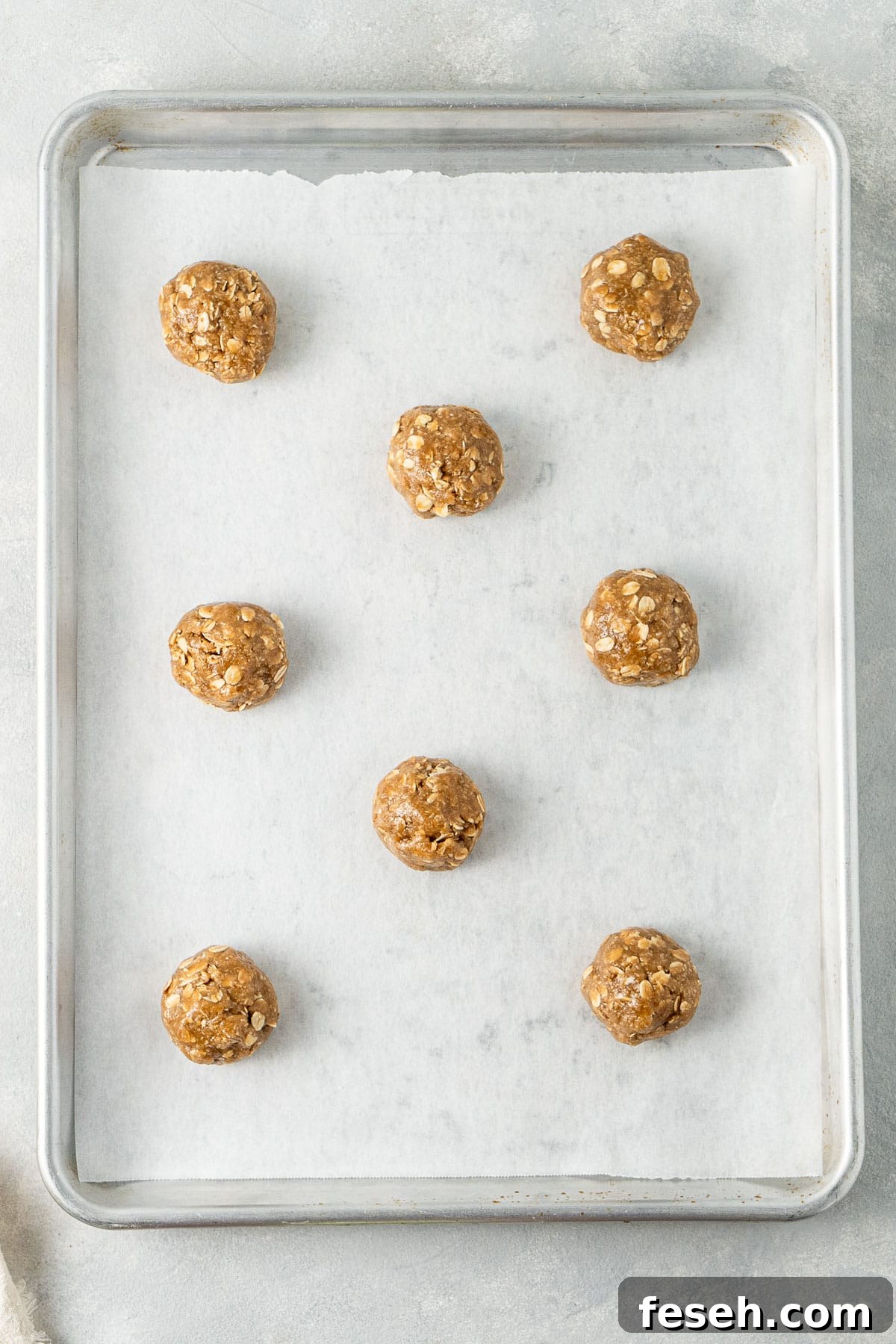
Step 4: Roll heaped tablespoons of dough into balls and space them a few centimetres apart on a lined baking tray to allow for spreading.
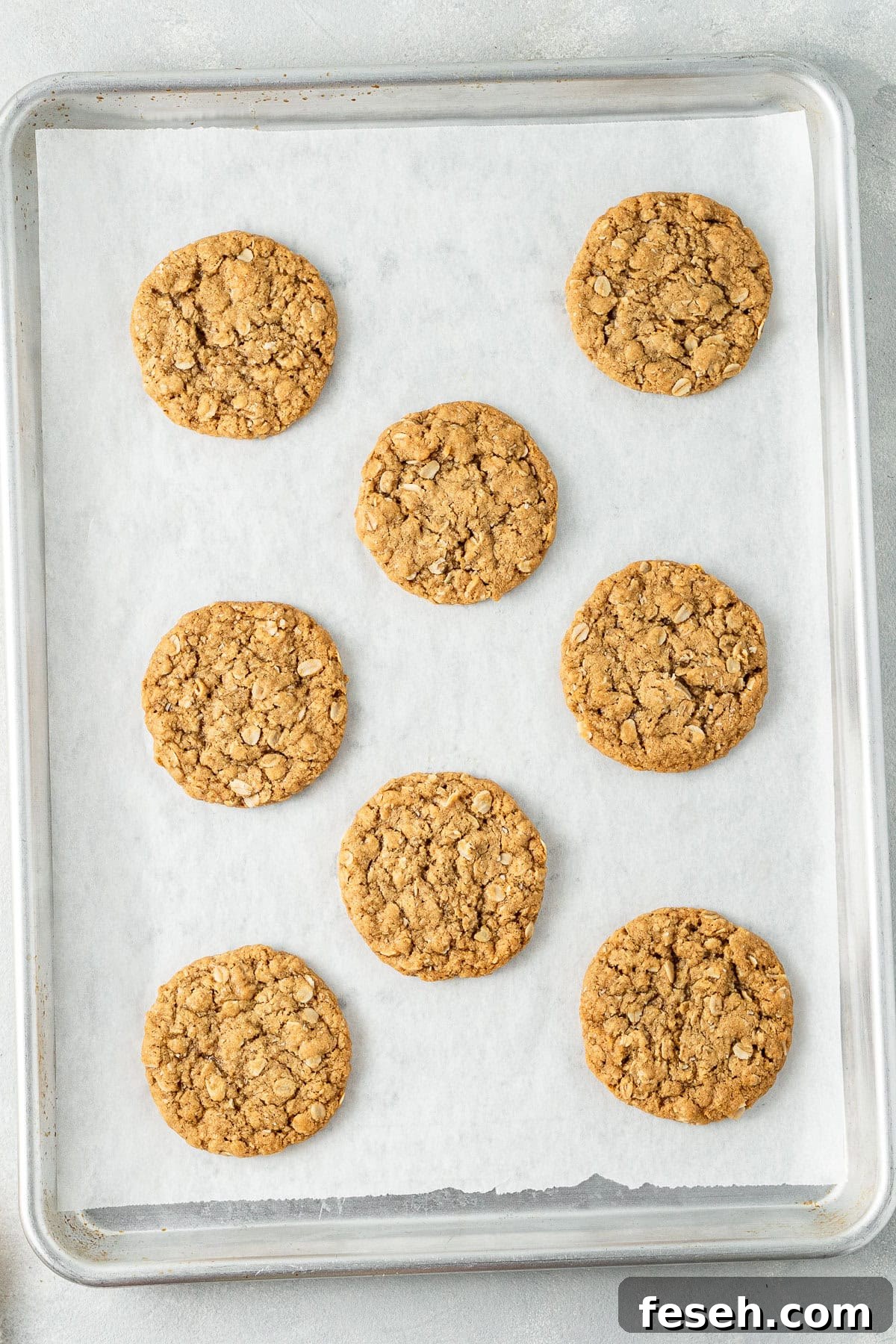
Step 5: Bake at 160°C (320°F) for 15–20 minutes or until the tops are golden. The biscuits will feel soft when removed but will firm up as they cool. For crisper biscuits, bake a further 5–10 minutes.
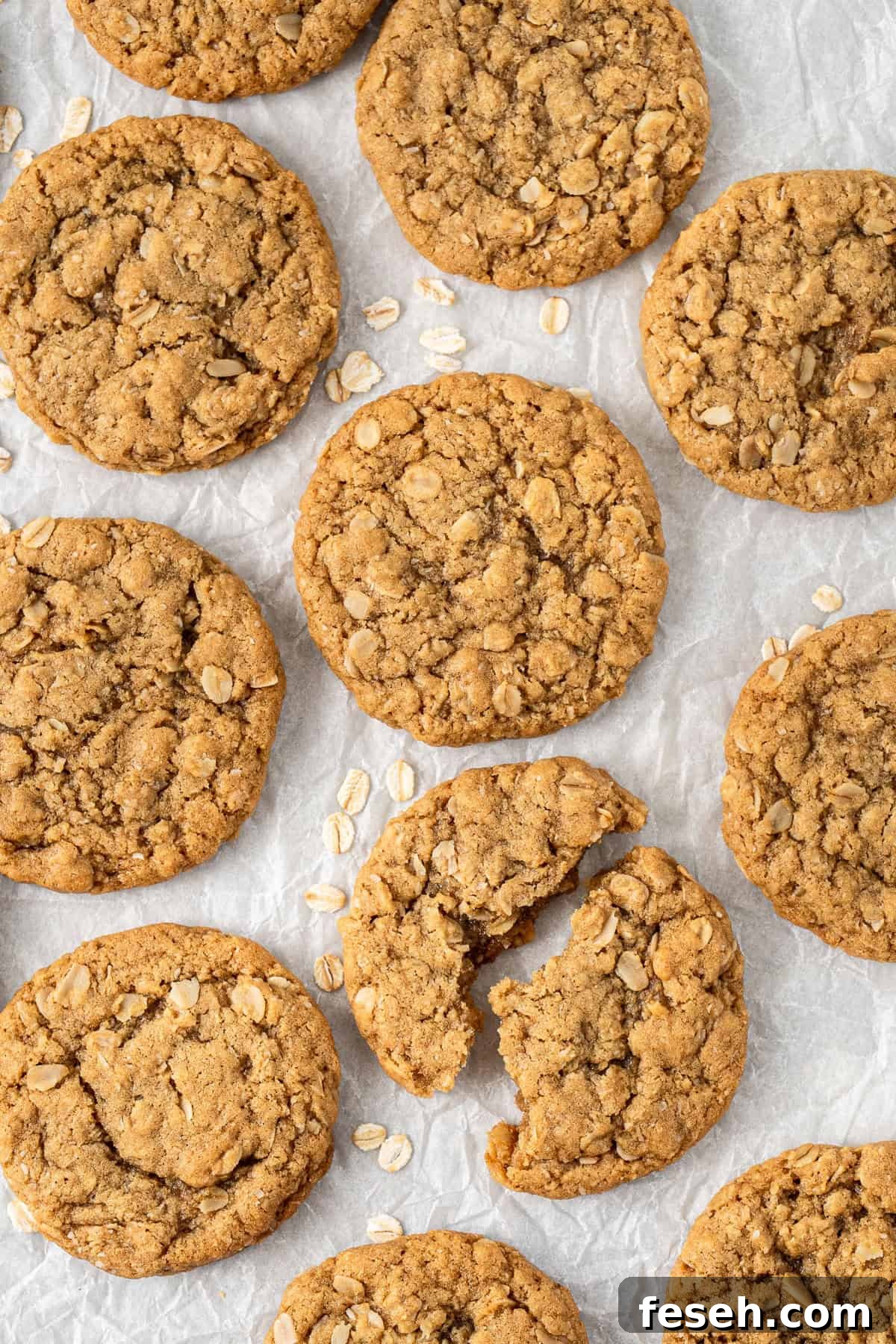
Step 6: Let the biscuits rest on the tray for 10 minutes, then transfer to a wire rack to cool completely or enjoy warm.
👉Tip! To neaten the shape, while the biscuits are still soft remove the tray from the oven and gently shape each biscuit with the back of a spoon or a round cutter. This is easiest immediately after baking, before the biscuits cool and firm.
Storage Instructions
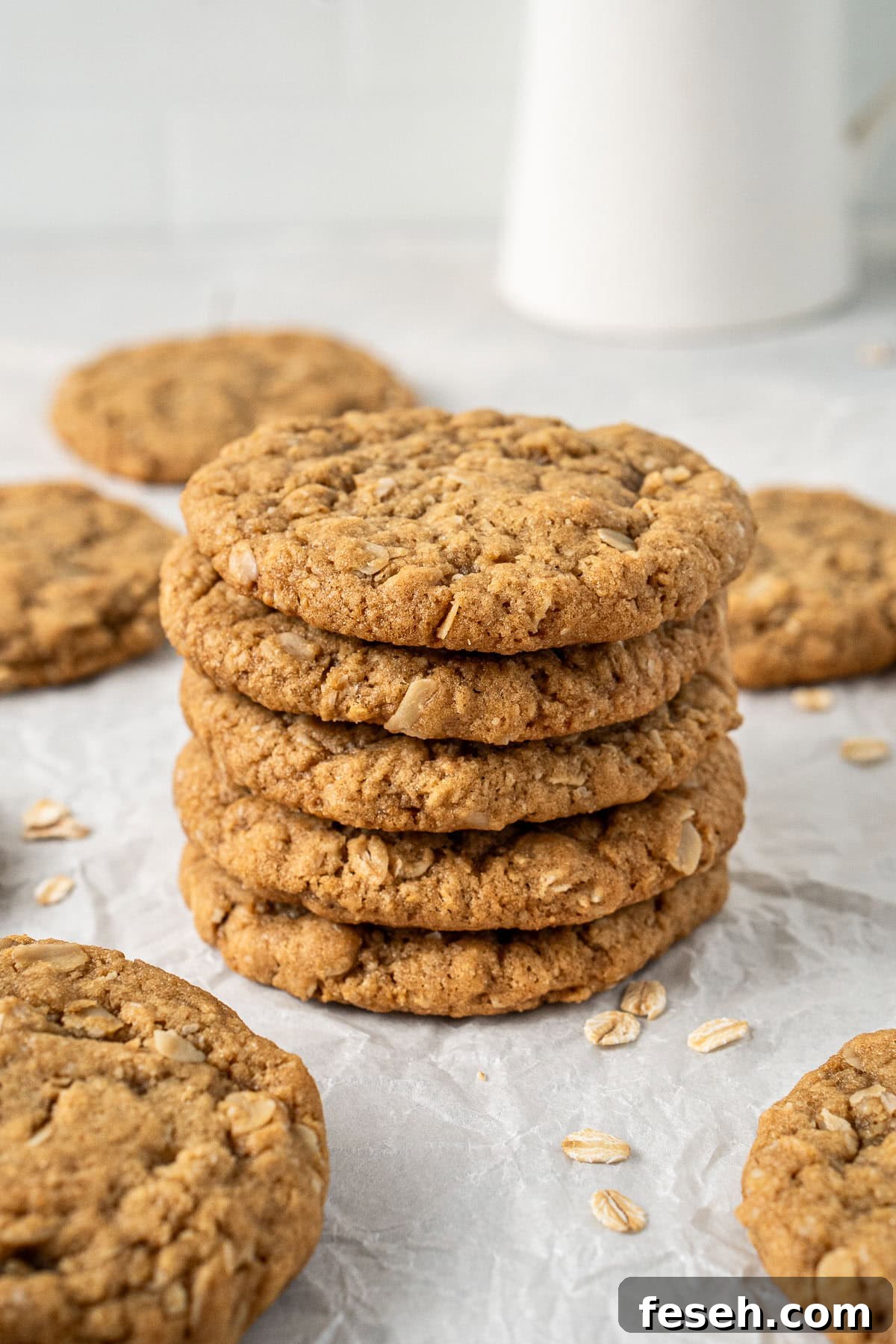
Once fully cooled, keep the biscuits in an airtight container at room temperature for up to one week.
For longer storage, layer biscuits between sheets of baking paper in an airtight container and freeze for up to three months. Thaw at room temperature for about 30 minutes before serving.
ANZAC Day
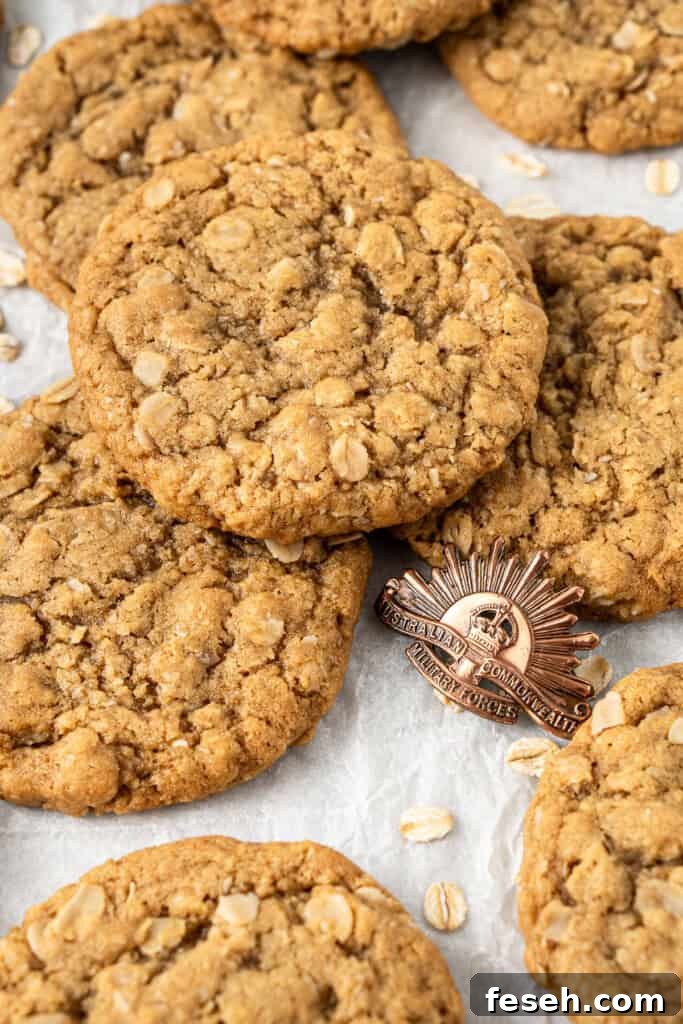
ANZAC Day is a significant day of remembrance and community. For many families it includes a morning service followed by shared food and conversation. These biscuits are part of that tradition—simple, comforting and deeply connected to history.
They are commonly made on 25 April but are delicious any time of year. If you visit sites such as Gallipoli, the emotional resonance of ANZAC Day stays with you—these biscuits are a small edible link to those memories and to Australian and New Zealand cultural heritage.

Recipe FAQs
Yes—if golden syrup is unavailable you can use honey, but honey is thinner and may change the texture and flavour. If you use honey, you might need a touch more flour to achieve the right consistency. For the most authentic ANZAC flavour, golden syrup is preferred.
Stored in an airtight container at room temperature, these biscuits remain fresh for about a week. They can also be refrigerated or frozen to extend shelf life—bring them back to room temperature before serving.
Yes. You can chill the shaped dough or the unshaped mixture in the fridge overnight. Wrap it tightly and store in the fridge or freezer; when ready, bring to room temperature if frozen, shape and bake as directed.
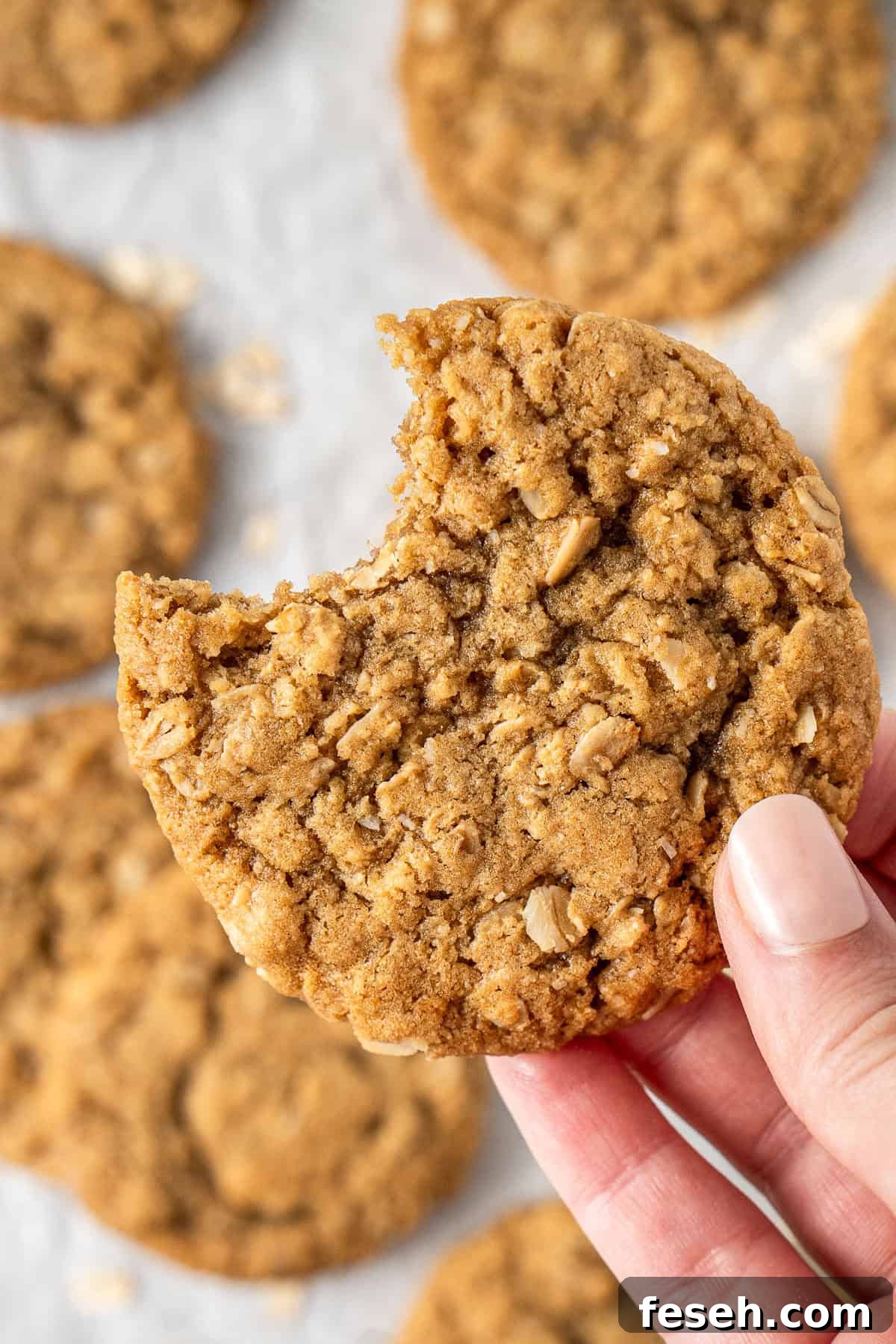
If you make this recipe, please leave a comment and a rating below! I’d love to see your creations.
More classic Australian recipes:
Classic Lamingtons
Melting Moments
Easy Milo Biscuits (Dairy Free)
Homemade Tim Tams (Vegan)
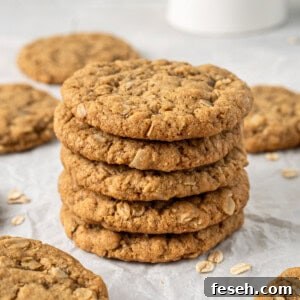
ANZAC Biscuits
Ingredients
- 90 grams (1 cup) rolled oats
- 150 grams (1 cup) plain/all-purpose flour
- 165 grams (3/4 cup) brown sugar
- 64 grams (3/4 cup) desiccated coconut
- 2 tablespoons golden syrup
- 125 grams (1/2 cup) dairy-free butter
- 1/2 teaspoon bicarbonate of soda (baking soda)
- 1 tablespoon hot water
Instructions
- Preheat oven to 160°C (320°F) and line a baking tray with parchment paper.
- Melt dairy-free butter and golden syrup together, then allow to cool to room temperature.
- In a large bowl combine oats, flour, brown sugar and desiccated coconut. Make a well in the centre.
- Dissolve bicarbonate of soda in hot water and add immediately to the butter-and-syrup mixture. Combine with the dry ingredients until a dough forms.
- Roll tablespoons of mixture into balls, place on the tray a few centimetres apart and bake 15–20 minutes until the tops are golden. Allow to cool slightly on the tray before transferring to a wire rack.
Notes
Nutrition
Nutritional information is a guide only and may vary based on exact ingredients used.
This recipe was originally published in April 2023 and updated in 2026 with new photos and helpful details. The recipe itself remains the same.