Last December, during a dinner at a small trattoria, we sketched the studio project on a sheet of yellow paper. We weren’t focused on the food or the surrounding chatter; we were sketching a dream. The plan included measurements, estimated costs, a rough timeline and an overflowing Pinterest board. At the centre of the project we placed a striking appliance: a red, 90 cm, six-burner Bertazzoni stove with an electric oven that would become the modern heart of the studio.
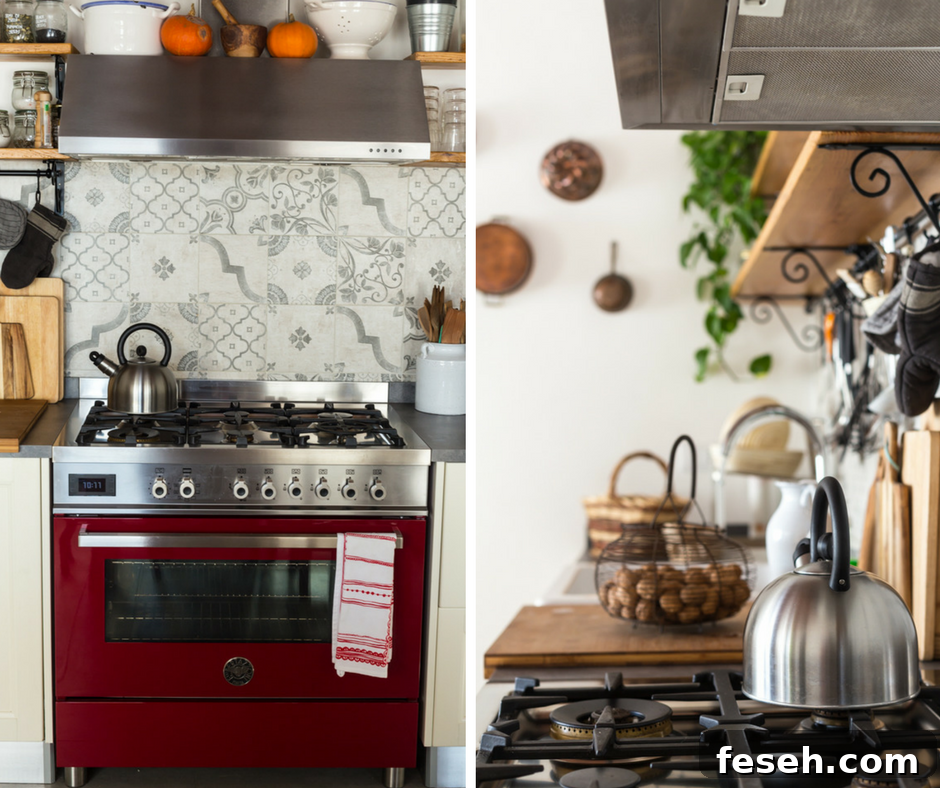
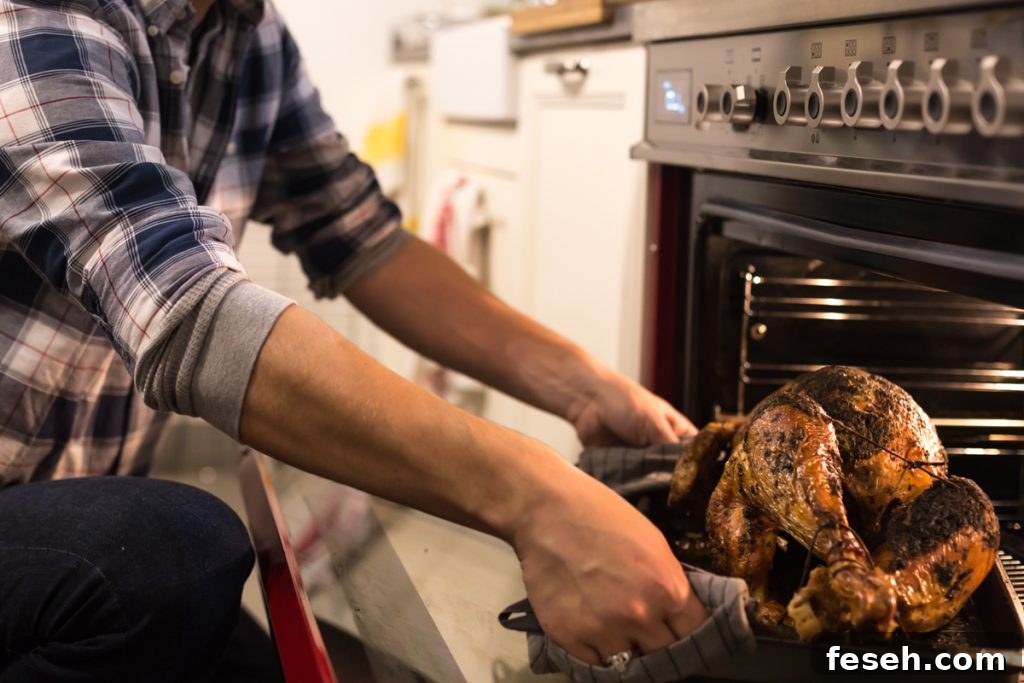
Bertazzoni, our first sponsor, let us choose the model that best suited our needs. We chose a large oven for roasting a Thanksgiving turkey for friends and six burners so I could effortlessly run multiple pots and pans during my cooking classes. After debating oven type and burner count, Tommaso and I agreed immediately on the colour: a deep, warm burgundy red. The finish uses a durable double-layer coating developed with techniques from the automotive industry—Tommaso loves to point out that the stove is painted the same way as a sports car.
The stove became the studio’s focal point. We framed it with white wooden cabinets and rustic open shelves so that it truly draws the eye and anchors the space.
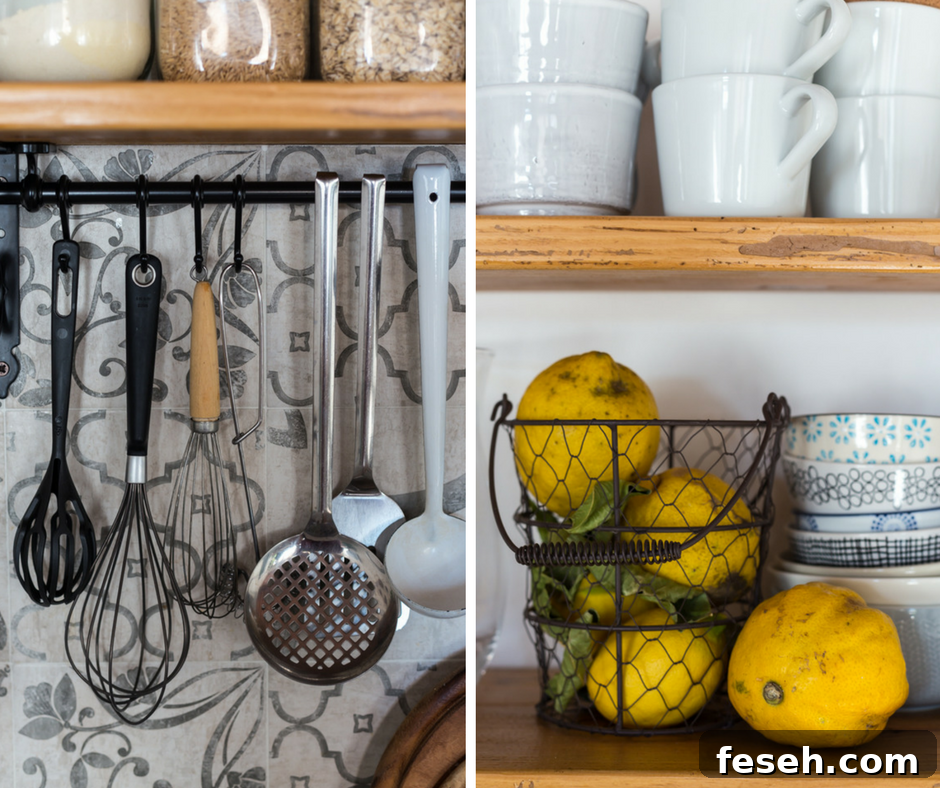
Initially we imagined a clean, minimal look—just a few jars and bowls. But my style slowly took over. I’m not naturally minimal: I prefer warmth and practicality. The kitchen is now tidy yet full of personality: props, jars, stacks of cups, wooden boards, baskets of nuts and fruit, and a collection of cookbooks.
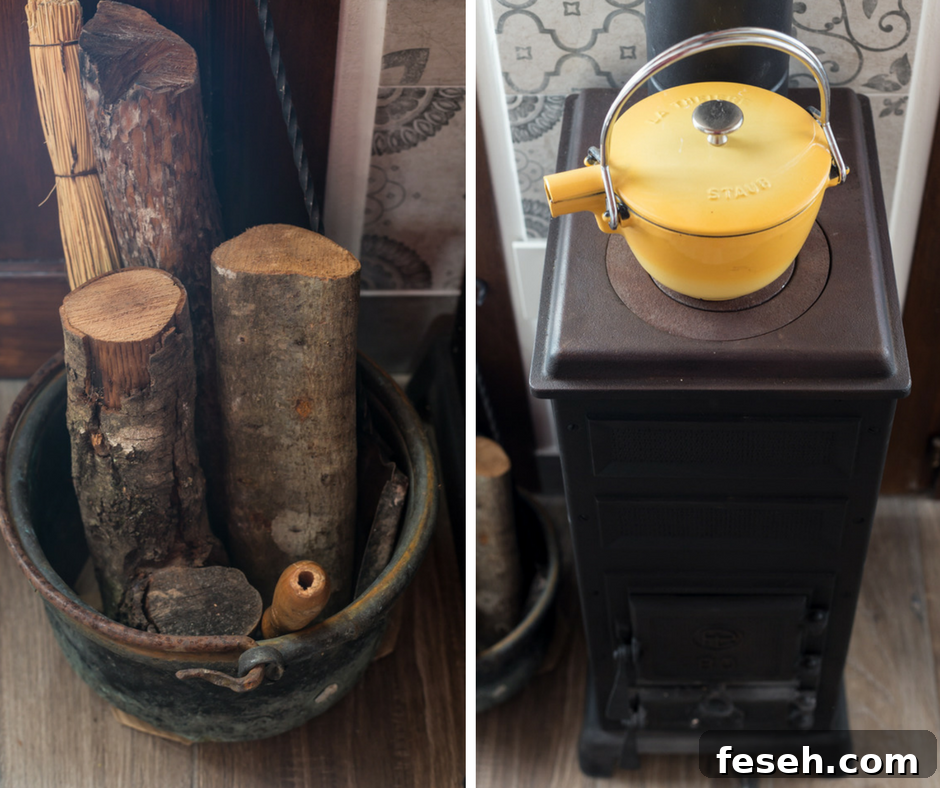
Facing the modern Bertazzoni, I placed my grandmother’s old cast-iron stove—the studio’s ancient heart. It’s a fixture from my childhood: small, heavy, black and capable of generating an intense heat that once came from burning basketfuls of wood. Today it complements the Bertazzoni by heating the room, keeping a pot of water warm for tea and giving me a cozy backrest while I write.
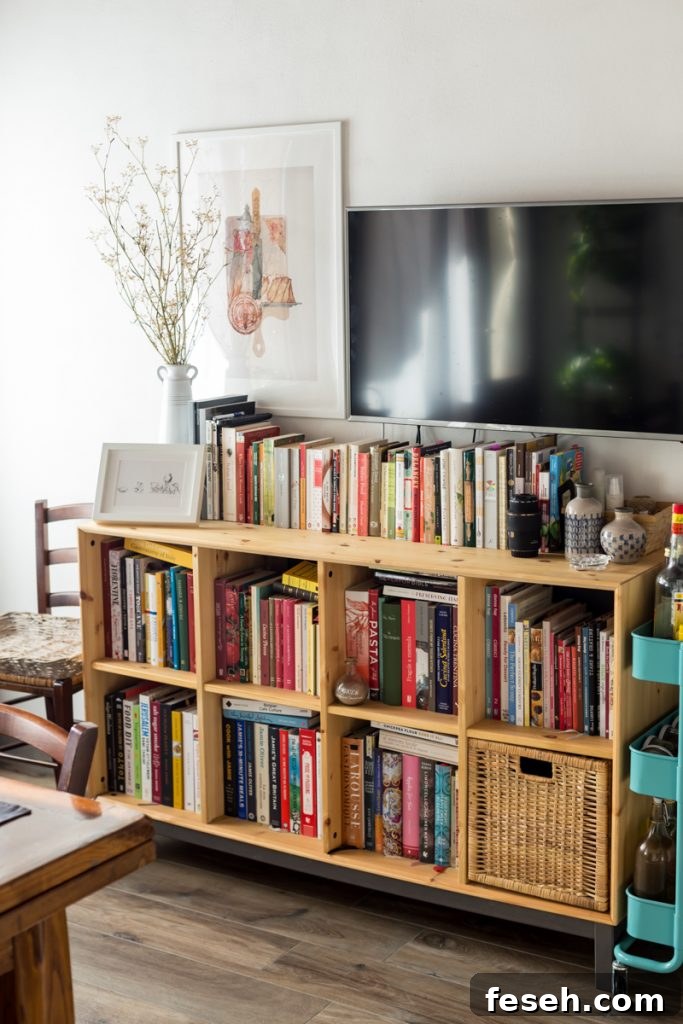
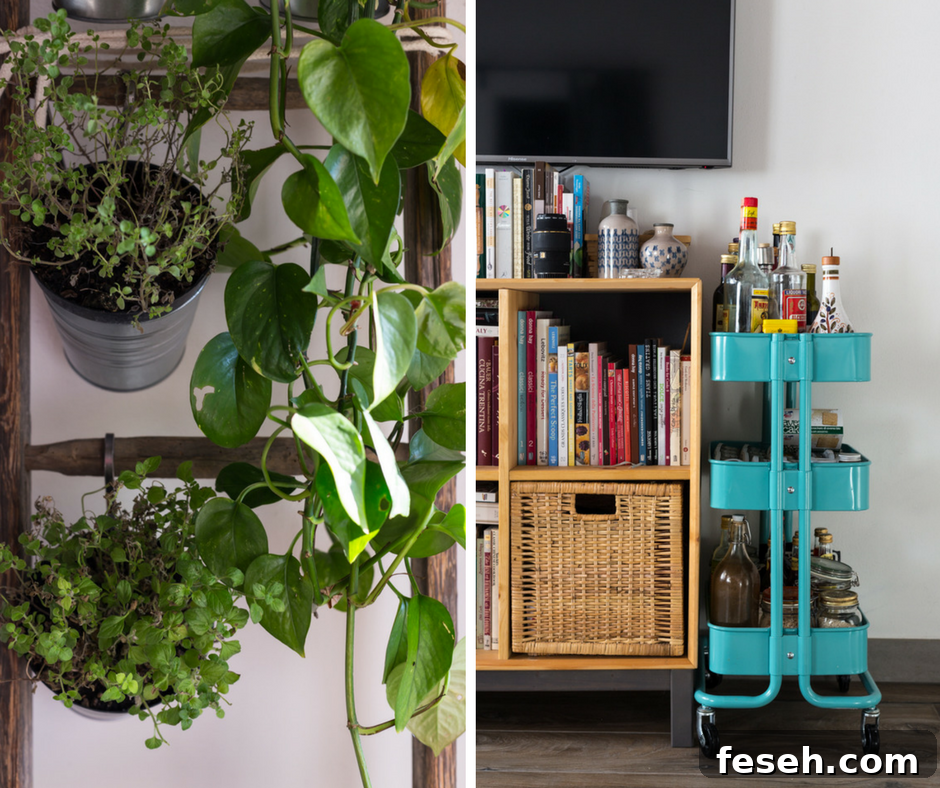
A simple bookcase, placed where daylight washes the room, holds my favourite cookbooks. At every meal, whether with friends or guests, conversations inevitably drift to cookbooks; we browse titles and exchange recommendations. Beside the bookcase sits a turquoise cart stocked with spices, olive oil, vinegars, homemade liqueurs and jars of grains.
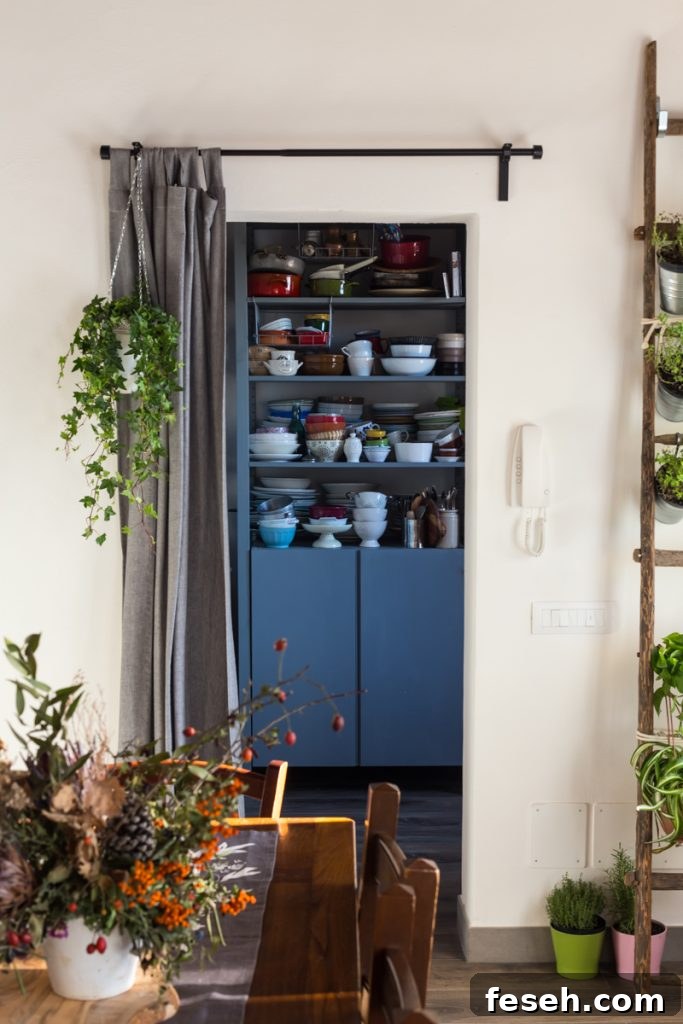
Large French windows open the studio to the farmyard. I insisted on that: I wanted a continuous dialogue with the garden and the changing light. Nature is my constant source of inspiration—watching the colours shift and the sun move across the trees feeds my creativity. Pots of herbs and plants reinforce that connection, blurring the line between inside and outside.
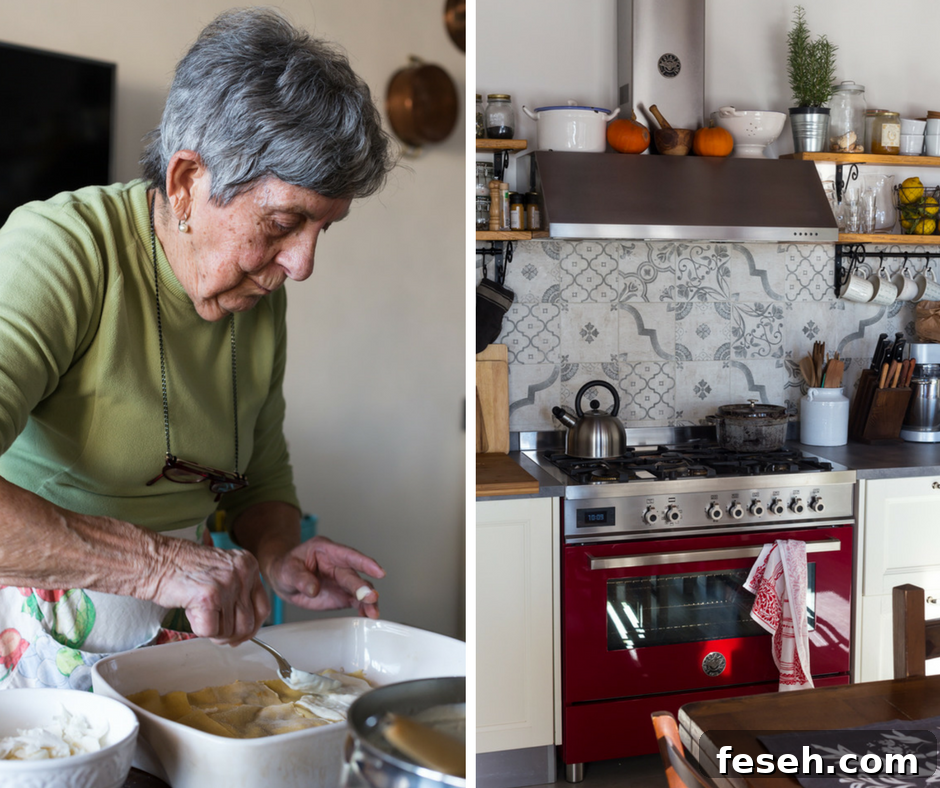
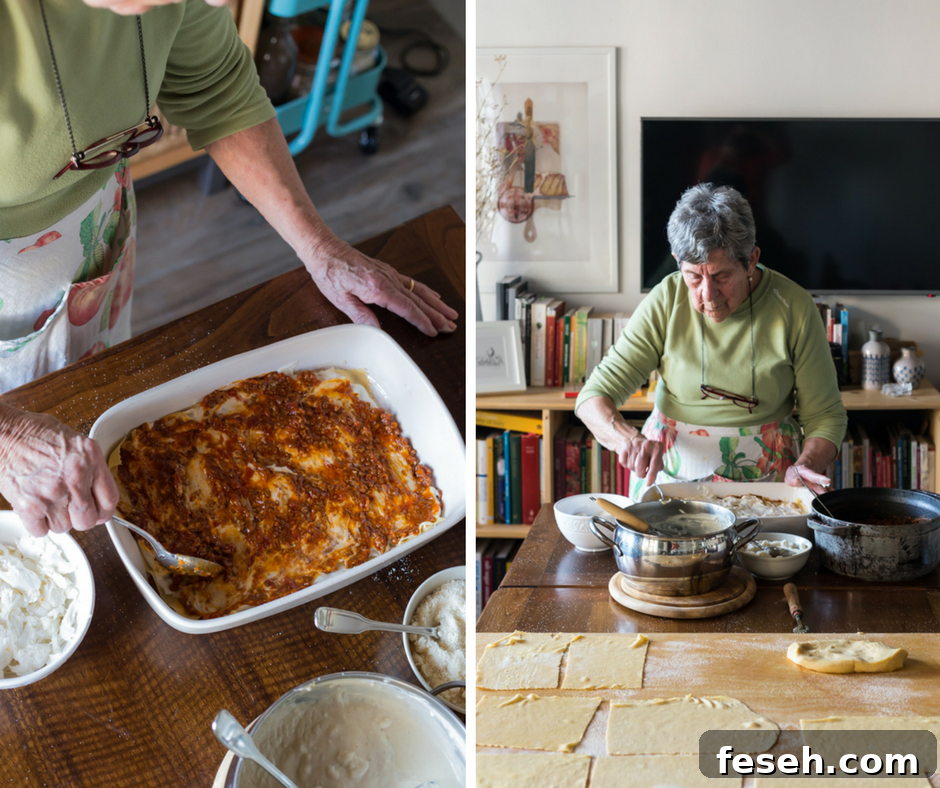
The studio is also a place to gather with friends and family. When I’m buried in recipe testing, I call my mother or my nonna and soon we’re all around the table, chatting and cooking. Those timeless moments are both comforting and reassuring.
This is where I asked Nonna to teach me a special cooking class. After she taught me fresh pasta, choux pastry and ragù, it was time to learn the secrets behind her lasagne. Her version is a family favourite—sacred for holiday meals and birthdays.
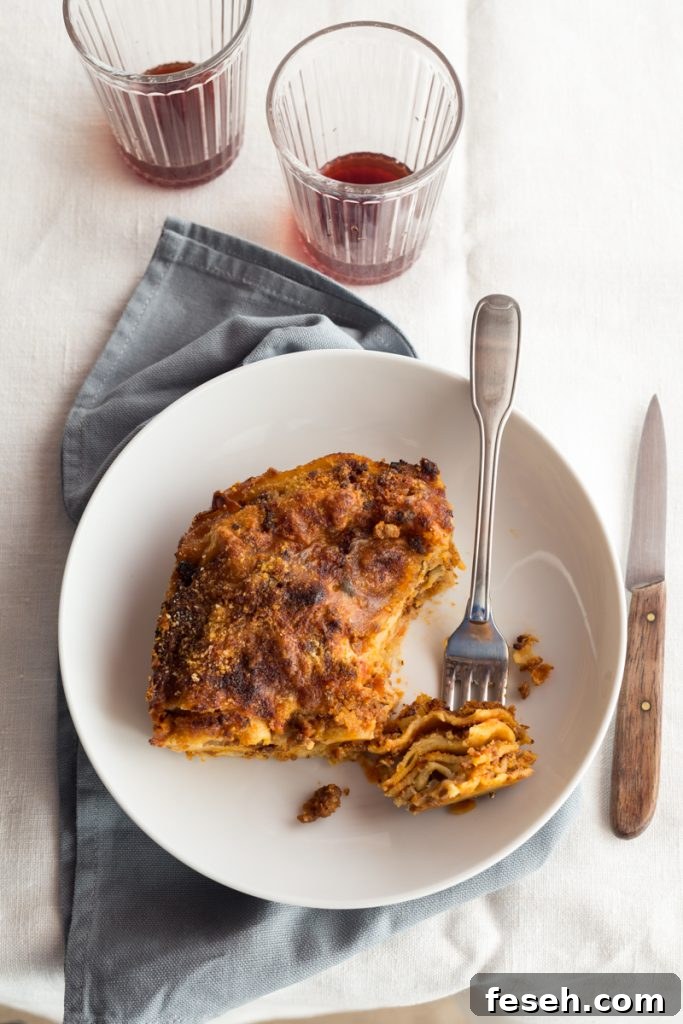
Grandma’s Tuscan lasagne
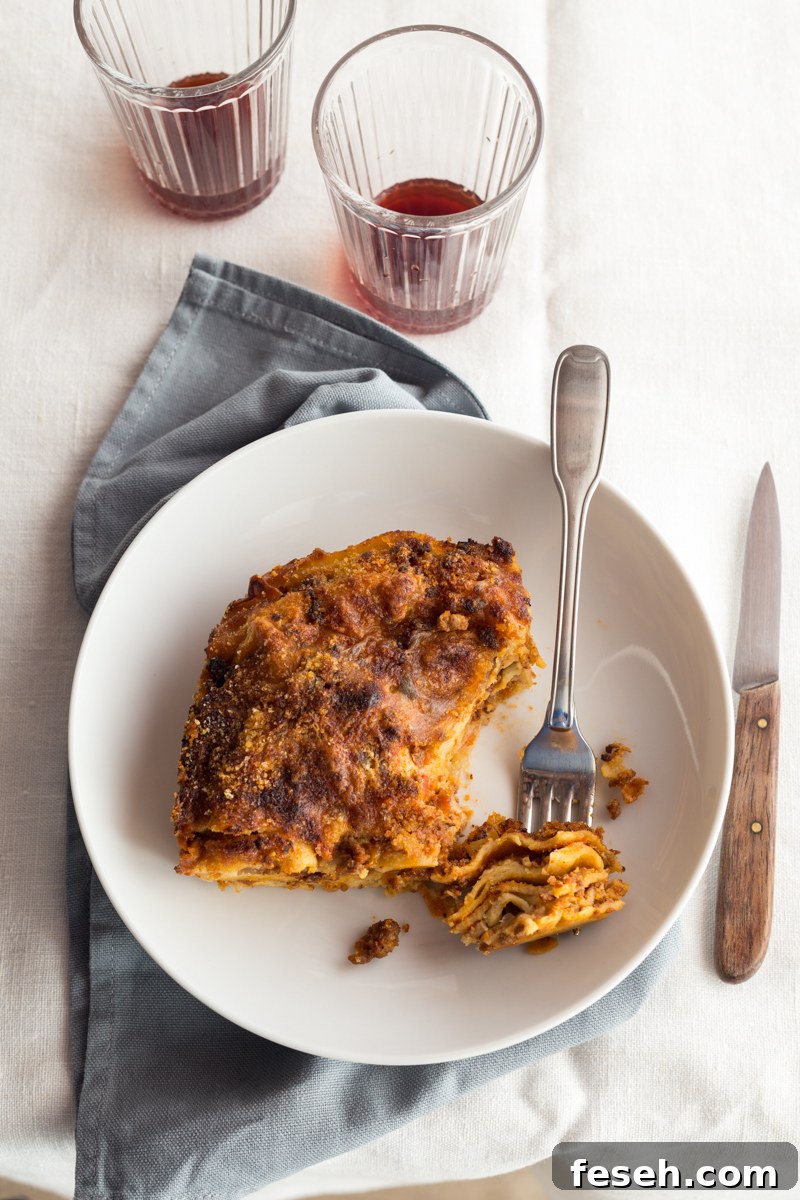
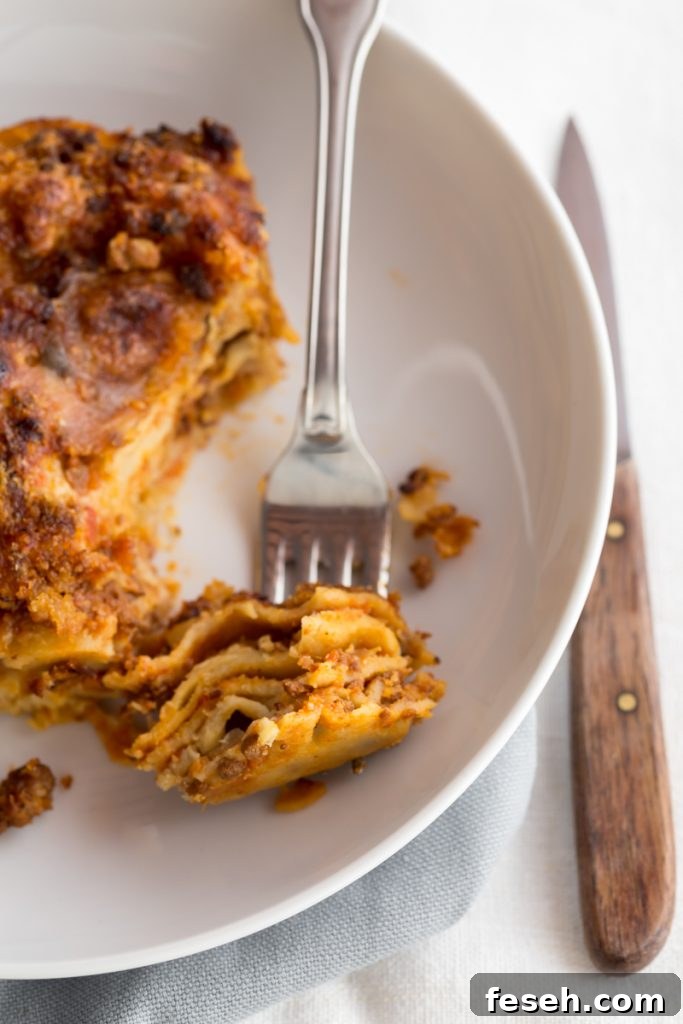
Nonna’s lasagne is not a traditional Bolognese; it’s her Tuscan version, layered with béchamel, ragù, mozzarella and paper-thin fresh pasta sheets.
I followed her step by step, learning how to balance each layer: spreading béchamel and ragù evenly with a wooden spoon so every sheet is lightly coated without overloading the dish. With the holidays approaching, this is an ideal recipe to bookmark for a special Tuscan Christmas meal.
For the ragù used in the lasagne, follow the linked recipe on my site. You can include or leave out dried mushrooms according to taste. For this lasagne, halve the ragù quantity or make a full batch and freeze the remainder for an easy Sunday feast later on.
Grandma’s lasagne
Giulia
Ingredients
Fresh pasta
- 150 g all-purpose flour
- 150 g durum wheat semolina flour
- 1 pinch of salt
- 1 tablespoon extra virgin olive oil
- 3 medium eggs
Béchamel sauce
- 50 g butter
- 60 g flour
- 800 ml milk
- 1 pinch of salt
- Grated nutmeg
Lasagne
- Cooked meat sauce (ragù)
- 400 g fresh mozzarella
- 80 g grated Parmigiano Reggiano
- Breadcrumbs
- Butter
Instructions
Prepare fresh pasta
- Sift both flours, pile them on a wooden board and make a well in the center.
- Break the eggs into the well, add a pinch of salt and the olive oil.
- Mix with a fork until crumbly, then knead, adding cold water if necessary, until the dough is smooth, velvety and no longer sticky.
- Wrap in plastic film and rest for 30 minutes at room temperature.
Prepare the béchamel sauce
- Melt the butter in a saucepan. Add the flour and whisk for a few minutes until golden.
- Pour in cold milk in a thin stream, stirring constantly to prevent lumps.
- Cook until the sauce thickens, then season with salt and grated nutmeg.
Assemble and bake the lasagne
- Preheat the oven to 200°C.
- Roll the dough into paper-thin sheets and lay them on a cloth dusted with semolina. Have all ingredients ready.
- Put some meat sauce on the bottom of a large baking tray and line it with pasta sheets. Spread béchamel evenly, then add meat sauce and sprinkle with Parmigiano. Tear mozzarella into pieces and scatter over the layer. Repeat to create about seven layers.
- Finish with béchamel, meat sauce, mozzarella, a generous dusting of Parmigiano and breadcrumbs. Add a few slivers of butter and bake for about 30 minutes, until golden and bubbling.
- Serve immediately, or let it rest and reheat for a slightly firmer texture.