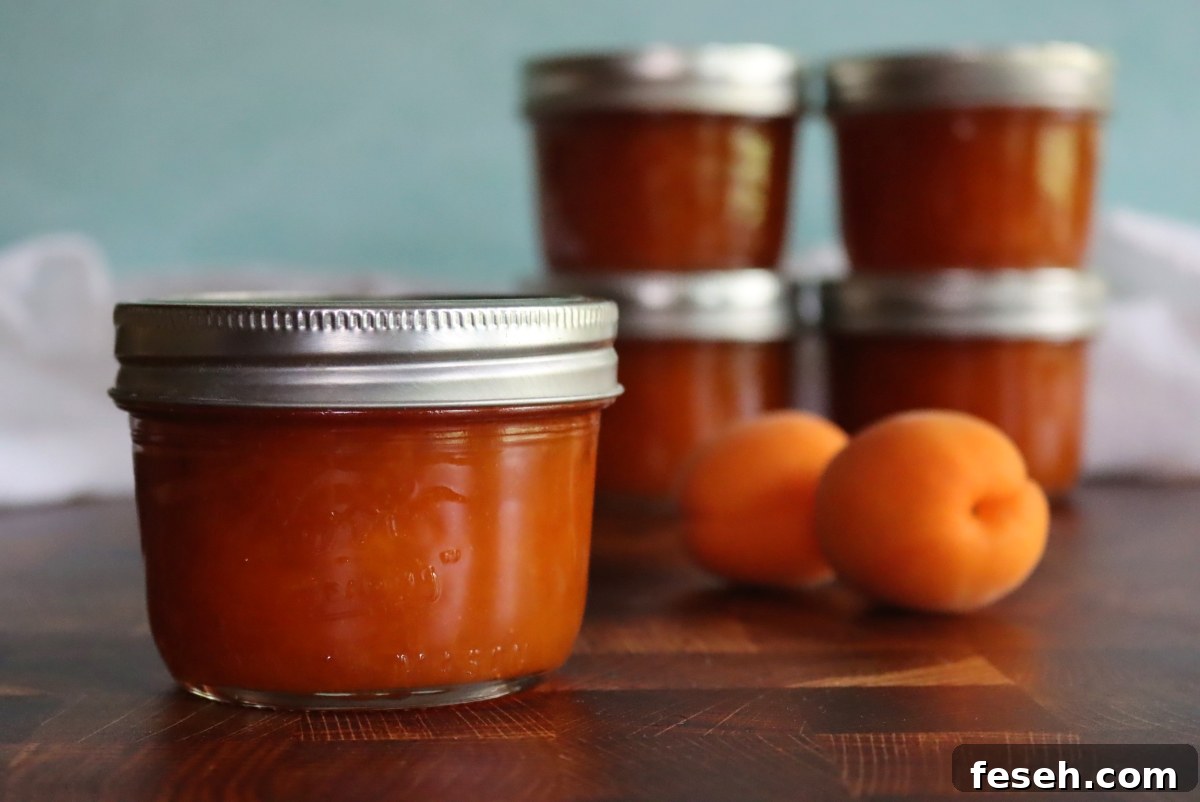
Apricot jam is a wonderful way to preserve a fleeting summer harvest.
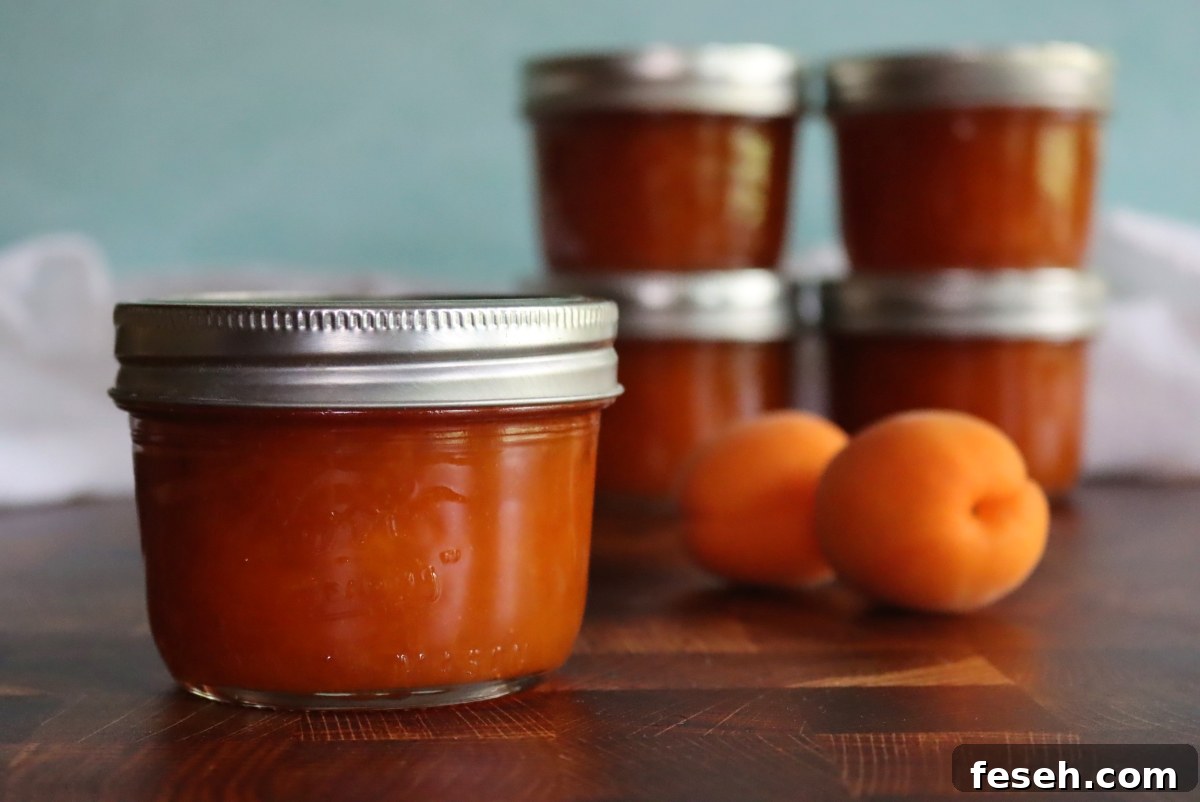
If you have an apricot tree, you know how extreme their yields can be: one year they drown you in fruit, the next they produce hardly anything. When they do produce, it’s often in overwhelming abundance, leaving you scrambling for ways to use or preserve the harvest.
My mom lives in California and her apricot tree once delivered so many fruit that she called me while pitting and bagging apricots for the freezer. She had already filled more than half her chest freezer and was unsure what to do next. Freezing buys time and prevents rot, but it doesn’t provide that same fresh apricot flavor you crave in winter.
She loves apricot jam, but had never made it herself. Since I test jam recipes professionally, I decided to perfect a straightforward, excellent apricot jam she could make easily. After many test batches and technique tweaks, I landed on a recipe that highlights apricot flavor while remaining simple and reliable.
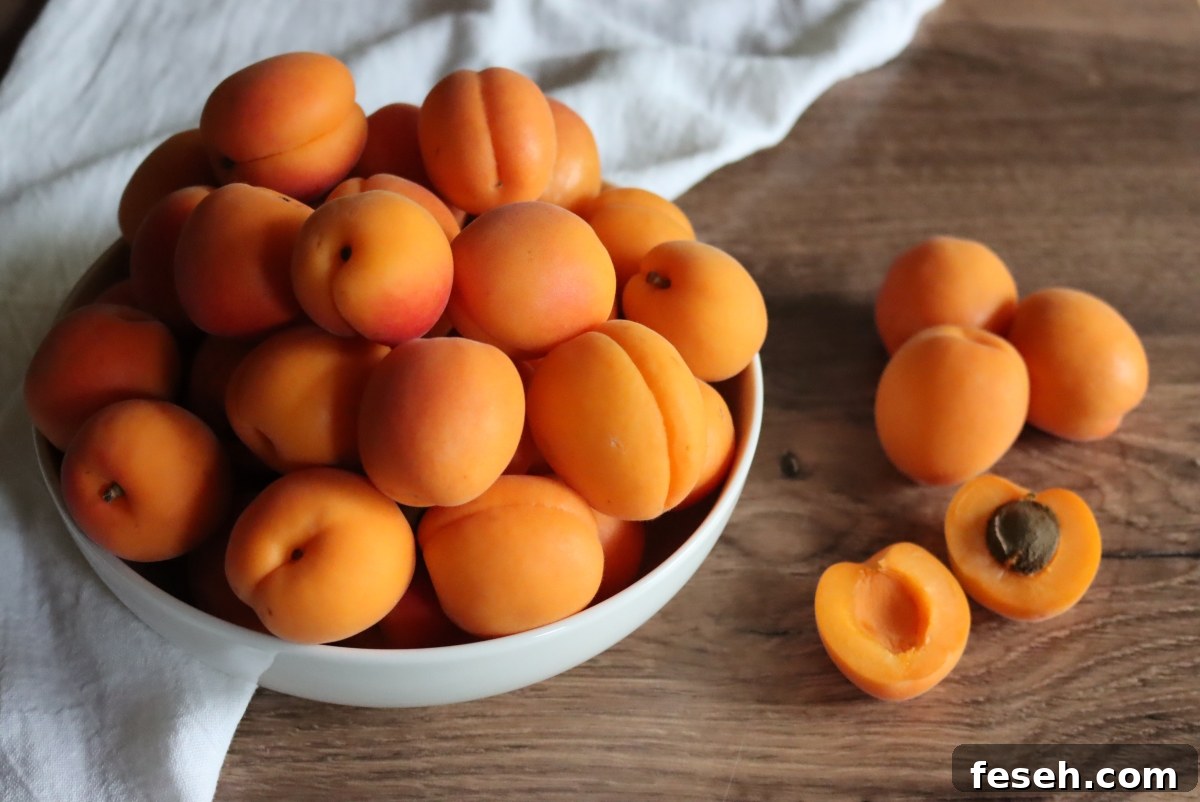
How to Make Apricot Jam
There are several approaches to apricot jam depending on taste and time:
- With or without added pectin
- Full-sugar or reduced-sugar
- Peeled or unpeeled apricots
- Chunky or smooth texture
For the fullest apricot flavor, I recommend the traditional method without commercial pectin. Slow cooking concentrates the fruit and creates a rich, aromatic jam. If you need a quicker method, pectin shortcuts are available and described below.
Apricot Jam without Pectin
Most classic canning guides recommend making apricot jam without added pectin. A common guideline is a 2:1 fruit-to-sugar ratio by weight (about 3:1 by volume). You can reduce sugar further for a low-sugar jam—some cooks use 4 parts fruit to 1 part sugar by weight—but that will require a longer cooking time and yield less jam.
Recipes also call for 1 to 2 tablespoons of lemon juice per pound of fruit. The lemon balances sweetness and helps the jam set by contributing natural pectin and acidity.
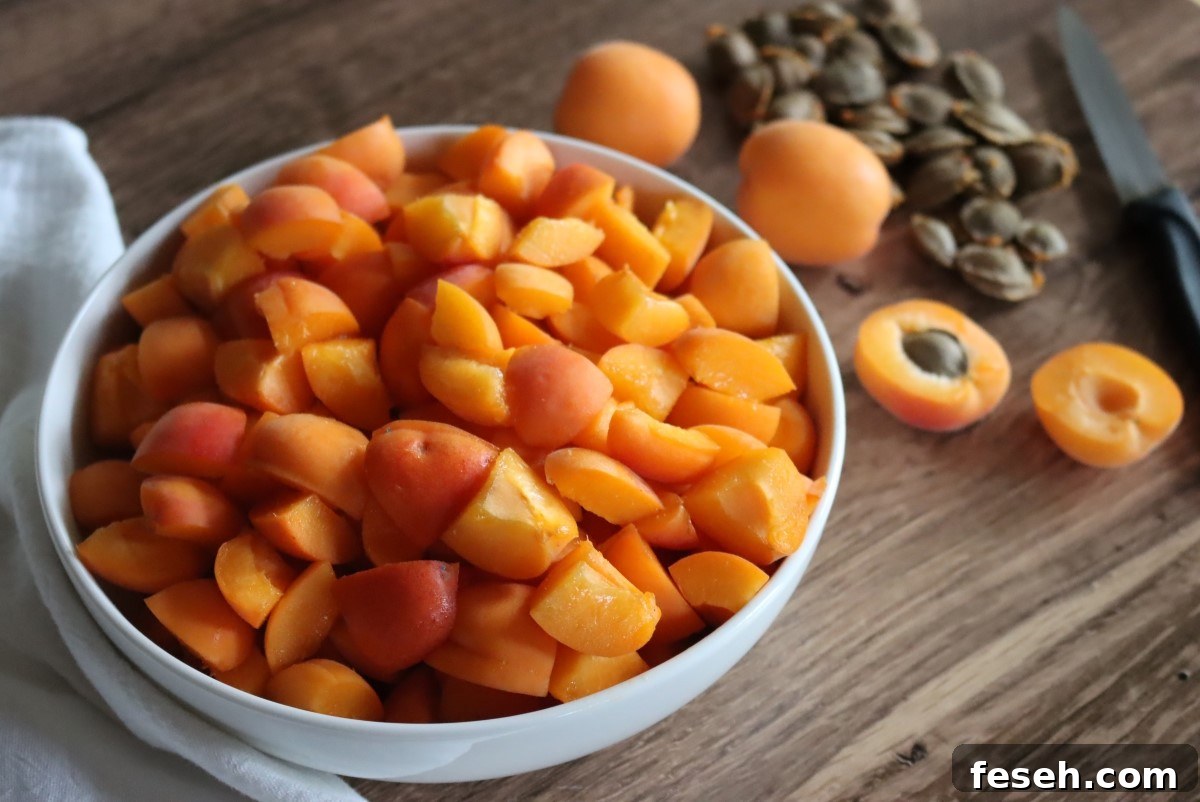
The Best Apricot Jam Recipe
This version balances simplicity and flavor. Use this ratio by volume:
- 3 cups apricots, coarsely chopped (about 1 lb)
- 1 cup sugar (about 1/2 lb)
- 1 tablespoon lemon juice
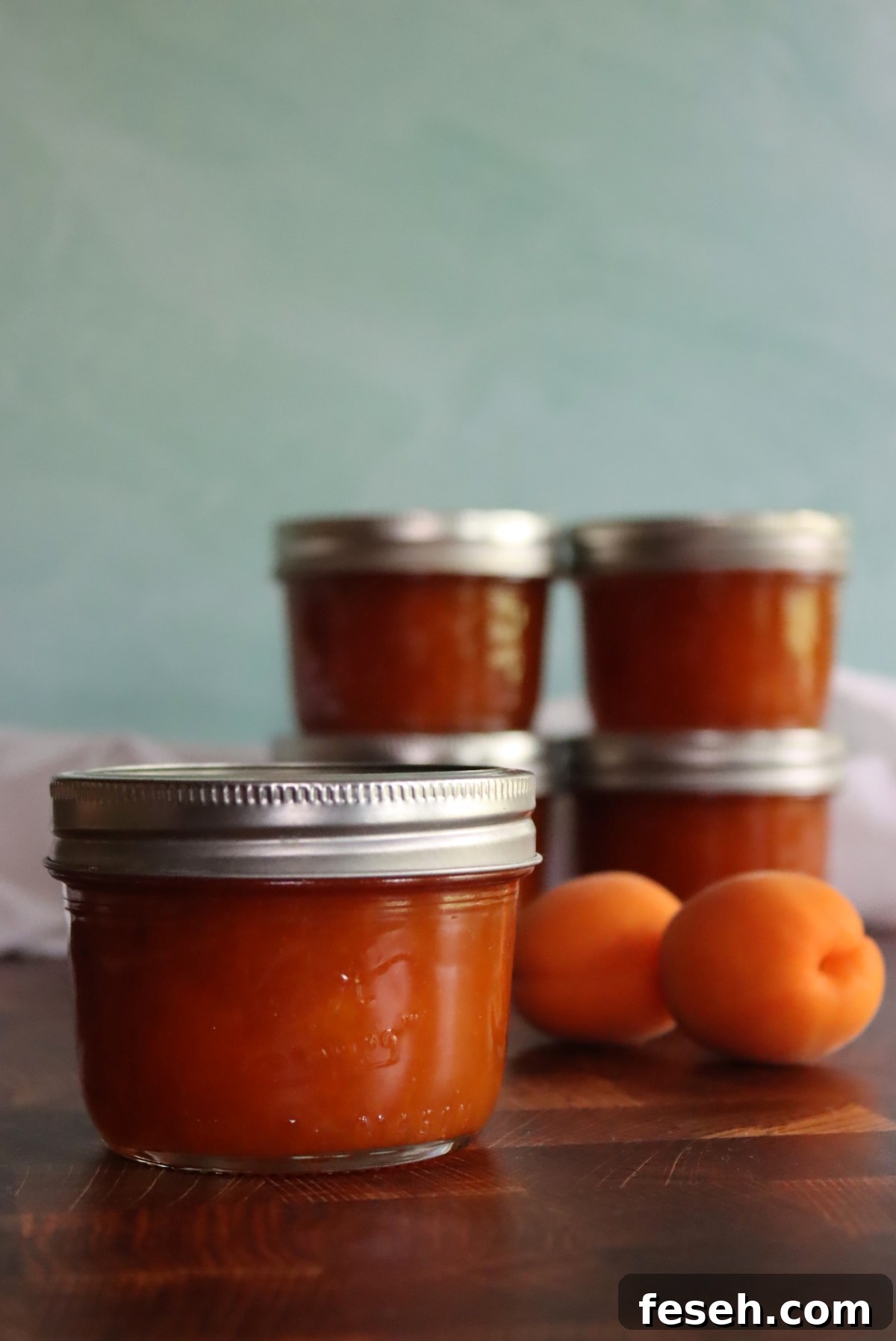
A typical batch I prepare uses 12 cups chopped apricots, 4 cups sugar, and 1/4 cup lemon juice, which yields about five half-pint jars. Do not exceed roughly 12 cups chopped apricots per batch, as larger volumes can cook unevenly and struggle to set.
This is considered a moderate- to low-sugar jam compared with many modern recipes that use equal weights of fruit and sugar. A 3:1 volume ratio preserves bright fruit flavor without excessive sweetness. If you prefer an even lower-sugar jam, you can reduce sugar to 1/2 cup per 3 cups fruit, but below that a low-sugar pectin will usually be necessary to achieve a reliable set.
Should I Peel Apricots To Make Jam?
Leave the skins on. Apricot skins are delicate and mostly disintegrate during cooking, contributing texture and pectin. Removing the skins can reduce natural pectin and make it harder for the jam to set. Peaches, by contrast, have tougher skins and often benefit from peeling, but apricots are best cooked with peels intact.
How Long Does it Take to Make Apricot Jam?
Cooking time varies with fruit moisture and heat, but plan on 30 to 45 minutes of cooking at a hard boil until the jam reaches gel stage. Some batches may finish closer to 30 minutes; others may need 45. Stir frequently and increase to continuous stirring as the jam thickens to avoid scorching.
Two reliable tests for doneness:
- Thermometer method: Jam typically reaches gel stage at 220°F (104°C) at sea level. Subtract 1°F for every 500 feet of elevation.
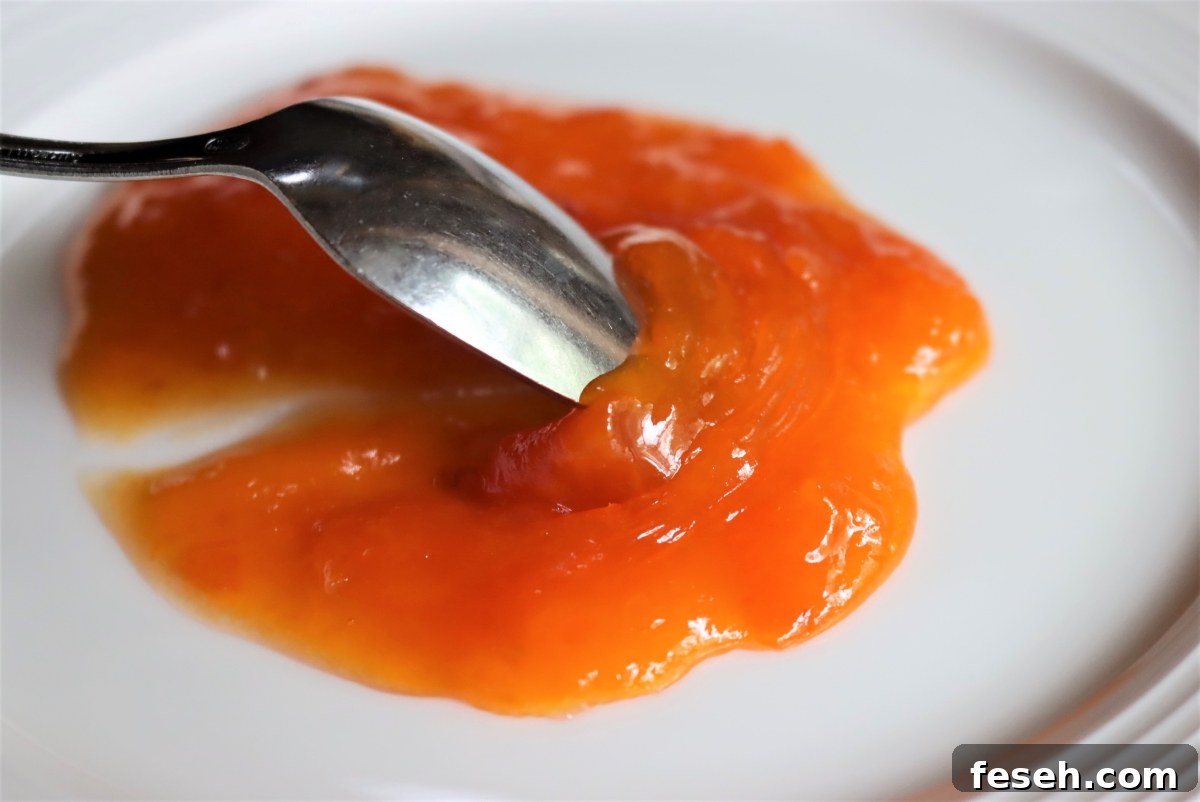
- Frozen plate test: Chill small plates in the freezer. Spoon a bit of jam onto a frozen plate; if it wrinkles when pushed with your finger or spoon after cooling briefly, it has set.
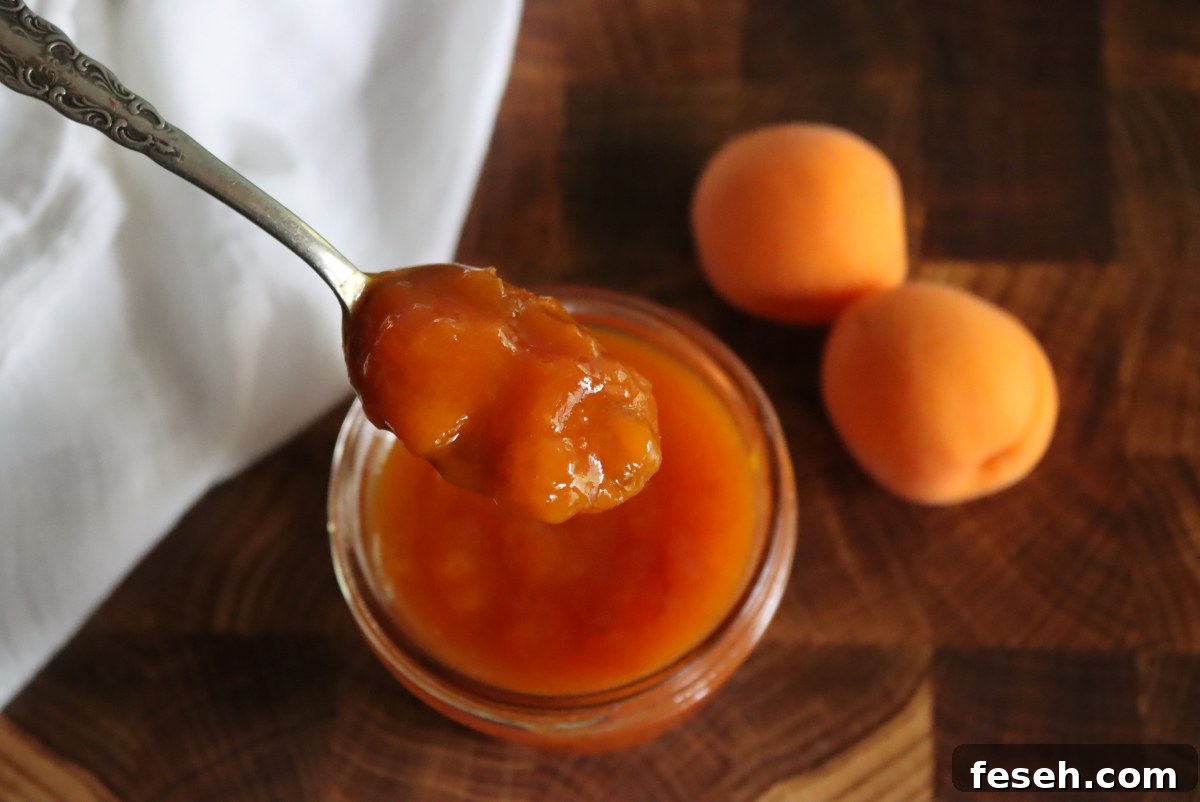
The jam should finish with a loose, spreadable set and an intense apricot aroma.
Apricot Jam Variations
Try additions to diversify your jam:
- Honey and vanilla: roast apricots with honey and vanilla bean then reduce quickly for a richer flavor.
- Herbs and spice: rosemary, thyme, or a pinch of red pepper flakes pair nicely with apricot’s sweetness for savory-sweet preserves.
Canning Apricot Jam
You can store apricot jam in the refrigerator for several weeks or in the freezer for up to six months. For shelf-stable storage, process jars in a boiling water bath. I prefer water bath canning because jars can be kept on the pantry shelf for 12–18 months and don’t require refrigeration until opened.
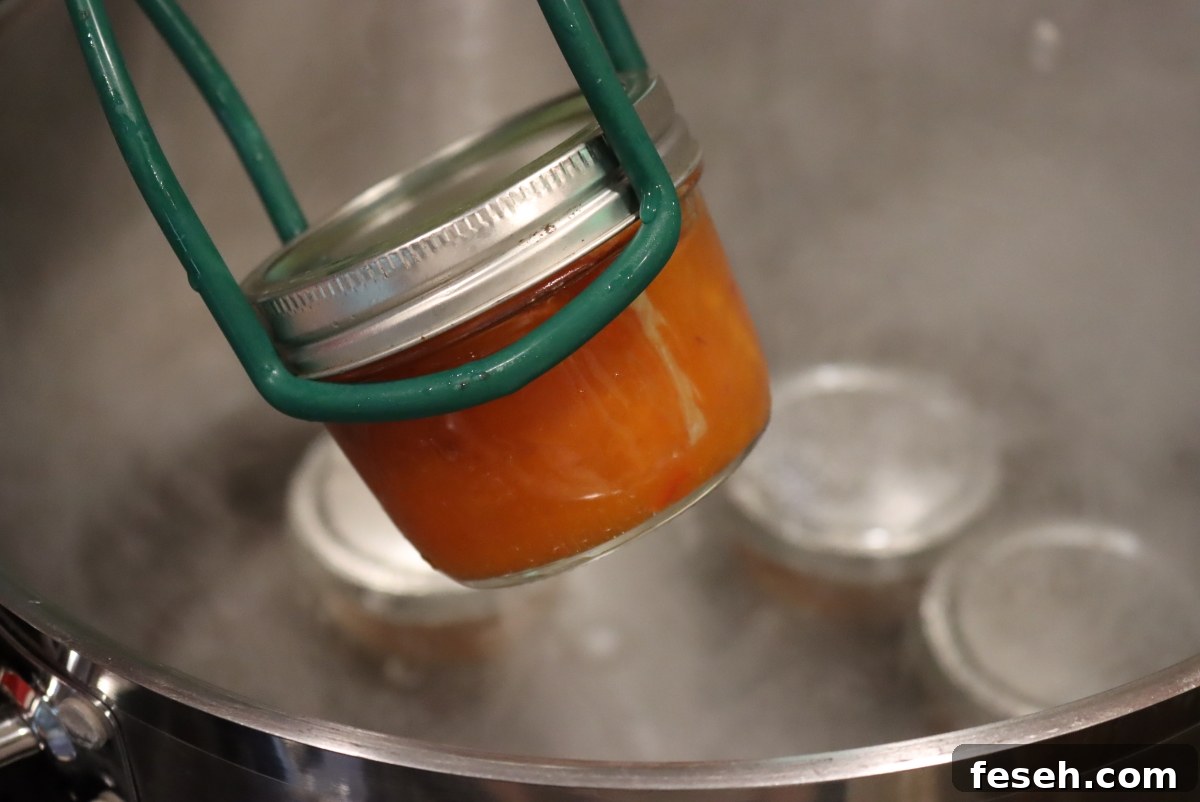
If canning, use bottled lemon juice for consistent acidity—apricots are borderline in acidity and the lemon helps safely preserve the jam. Prepare jars and lids while you cook. When the jam reaches gel stage, ladle it into jars leaving 1/4 inch headspace, apply lids, and process in a water bath canner for 10 minutes (increase to 15 minutes above 6,000 feet elevation). After canning, let jars cool on a towel and check seals after 24 hours. Any unsealed jars should be refrigerated and used first.
Below are summarized options for using pectin if you prefer a faster set or lower-sugar recipes. Note that pectin shortcuts typically result in higher yield but less concentrated fruit flavor.
Apricot Jam with Pectin
Different pectins require different approaches:
Regular Powdered Pectin
Regular powdered pectin (such as Sure-Jell) needs higher sugar to gel. A common recipe is 5 cups chopped apricots, 6 cups sugar, 1/4 cup lemon juice, and one box (about 1.75 oz) powdered pectin. Cook the fruit and lemon juice until soft, add pectin and boil 1 minute, then add sugar and boil 1 minute more before removing from heat and jarring.
Low-Sugar Powdered Pectin
Low-sugar powdered pectin lets you reduce sugar significantly while still achieving a set. The order of operations mirrors regular pectin: cook fruit, add pectin, then add sugar as directed by the pectin manufacturer.
Pomona’s Pectin
Pomona’s Universal Pectin uses calcium to set and allows very low-sugar preserves. Typical guidance: mash fruit to about 4 cups, add 1/4 cup lemon juice and the calcium water, then add a sugar/pectin mixture and bring to a boil for 1 minute. Pomona’s book provides precise measurements and variations depending on desired sweetness.
Apricot Jam with Liquid Pectin
Liquid pectin (like Certo) usually requires large amounts of sugar and often contains additives some cooks prefer to avoid. It can rescue a batch that otherwise won’t set, since the pectin is added at the end after the sugar.
Example proportions: 3 cups fruit, 6 cups sugar, and 2 tablespoons lemon juice; cook fruit and sugar until soft, stir in liquid pectin for 1 minute, then jar.
More Apricot Preserving Ideas
If you want other ways to preserve apricots, consider canning halves, making pie filling, fruit butter, dehydrating, fruit leather, or simple freezing for later use.
Stone Fruit Preserves
Apricots join peaches, plums, and cherries as excellent candidates for jam, preserves, and canned fruit. Use similar techniques adapted for each fruit’s texture and pectin content.
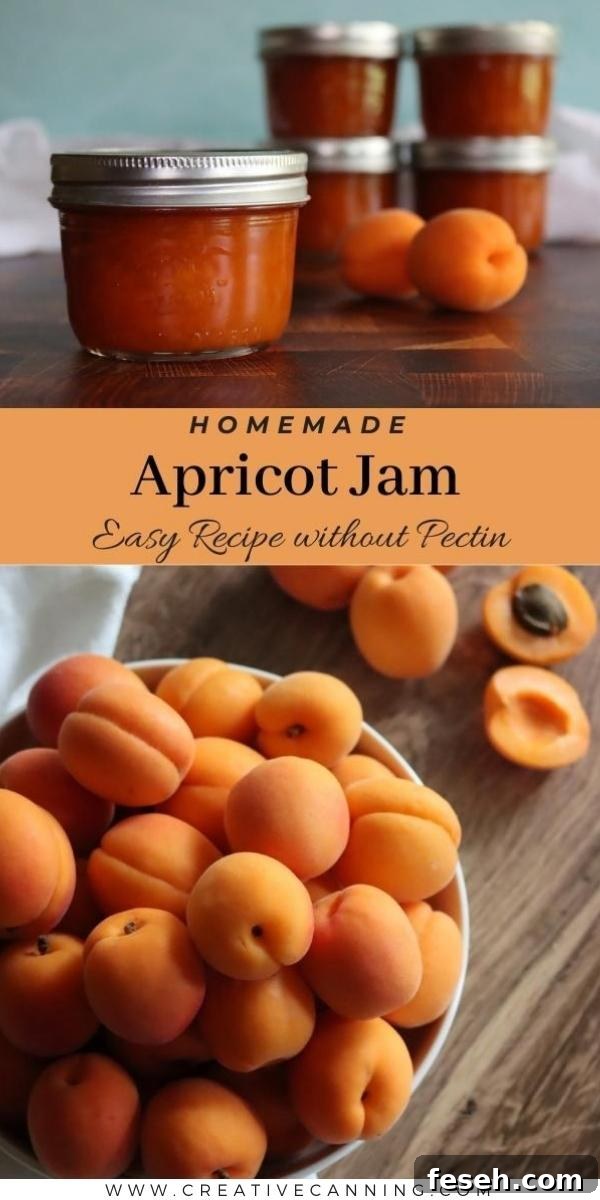
With a few simple ingredients—apricots, sugar, and lemon juice—you can make bright, flavorful apricot jam that captures summer in a jar. Whether you choose the slow-cooked traditional method or a pectin shortcut, the result is a delicious way to enjoy apricots long after the season ends.