
Since people discovered apple cider vinegar’s useful properties, it has been used across generations as a natural antibacterial remedy.
Apple cider vinegar (ACV) is a common ingredient in many home remedies and is often recommended in detox drinks. As foot soaks and foot detox trends gained popularity, naturopathic practitioners frequently suggested ACV for foot care too.
An apple cider vinegar foot soak can offer several benefits, which we’ll outline below. But does it truly detox your feet?
Table of Contents
- What Is An Apple Cider Vinegar Detox For Your Feet?
- Potential Benefits of Soaking Feet In Apple Cider Vinegar
- 1. Dry and Cracked Skin
- 2. Athlete’s Foot and Toe Fungal Infections
- 3. Warts and Calluses
- 4. Neutralize Foot Odor
- 5. Stress Relief & Self Care
- Steps to Prepare a Foot Detox with Apple Cider Vinegar
- Can an Apple Cider Vinegar Foot Soak Detox Your Whole Body?
- A Few More FAQs & Considerations
- Who should not try to detox feet with ACV?
- What does soaking your feet in apple cider vinegar do?
- How long does it take for apple cider vinegar to improve toenail fungus?
- Can you put apple cider vinegar on feet overnight?
- Can apple cider vinegar help with foot pain?
- Benefits of soaking feet in regular vinegar versus apple cider vinegar
What Is An Apple Cider Vinegar Detox For Your Feet?
“Foot detox” typically refers to a soak intended to clean the skin, reduce odor, and address common issues such as athlete’s foot or warts. This is different from claims of a “full body detox,” which are discussed later.
Regular washing will usually keep feet clean, but an ACV soak provides a mild acidic rinse that can target microorganisms more effectively than water alone. Apple cider vinegar is generally safe for most people and can be gentler than some topical medications.
Potential Benefits of Soaking Feet In Apple Cider Vinegar
1. Dry and Cracked Skin
Cracked heels and dry skin are common, especially for people who stand a lot. A foot soak and gentle exfoliation remove calluses and dead skin cells, leaving feet feeling smoother and less irritated.
Apple cider vinegar has mild antiseptic and exfoliating qualities, which can support the healing process and help soften rough skin.
2. Athlete’s Foot and Toe Fungal Infections
Athlete’s foot can affect anyone who regularly wears closed shoes, fails to change socks, or walks barefoot in communal areas. Early signs like dry, cracked skin between toes can be easy to miss.
Because ACV has antifungal properties, soaking can make the environment less hospitable to fungi and support recovery. However, persistent or severe infections should be evaluated and treated by a healthcare professional.
3. Warts and Calluses
Doctors often recommend stronger peeling agents like salicylic acid for warts, but ACV can be a gentler alternative due to its acidic components. Malic acid in ACV can help soften and exfoliate the outer layer of skin, which may reduce the size of warts or calluses over time.
For stubborn warts, some people apply ACV directly to the spot with a cotton ball and cover it overnight, repeating until improvement occurs. Monitor skin closely and stop if irritation develops.
4. Neutralize Foot Odor
Foot odor (bromodosis) often stems from excess bacteria. ACV has natural antibacterial activity and can help rebalance the skin’s surface without eliminating beneficial microbes entirely.
Using an ACV soak may reduce odor by limiting bacterial overgrowth while remaining milder than many chemical treatments.
5. Stress Relief & Self Care
Even if a foot soak doesn’t remove systemic toxins, it still offers relaxation benefits. Warm foot baths soothe tired feet, reduce stress, and can help promote better sleep. These calming effects may also indirectly support blood pressure regulation, reduce fatigue, and assist in maintaining healthy cortisol patterns.

Steps to Prepare a Foot Detox with Apple Cider Vinegar
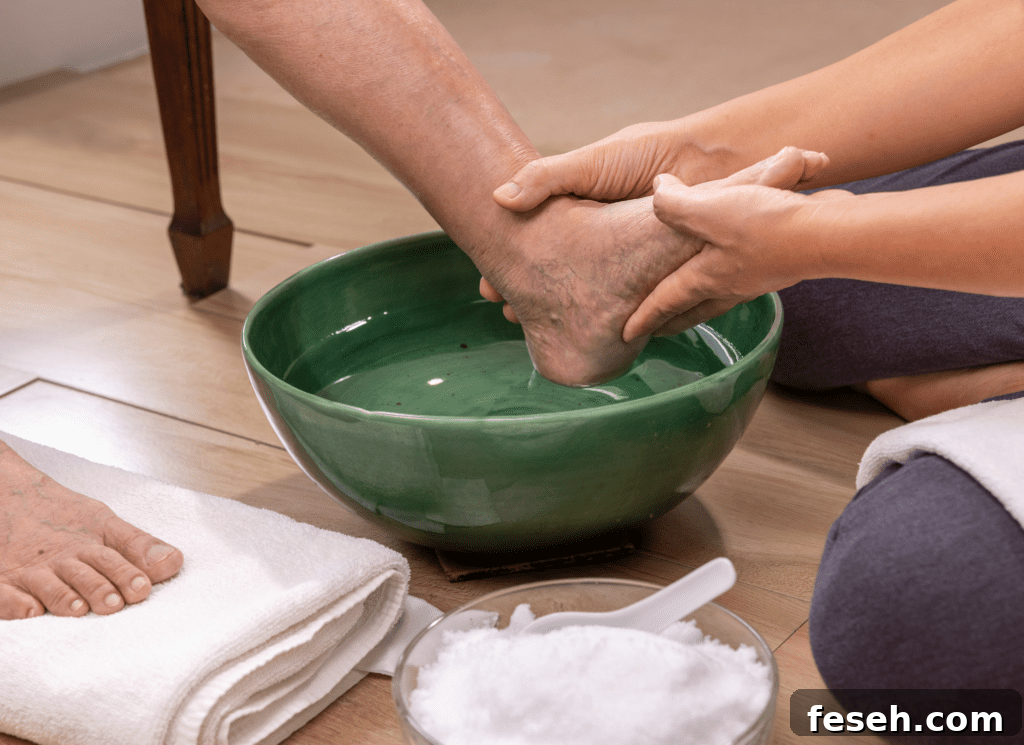
If you want to try an ACV foot soak at home, follow these simple steps:
- Fill a tub or large basin about 70% with lukewarm water and add enough apple cider vinegar to make up the remaining 30%.
- Optional: add a few drops of essential oil or a small amount of Epsom salt for extra comfort.
- Soak your feet for 10 to 20 minutes, or until the water cools.
- Gently exfoliate with a pumice stone or another tool, then rinse with plain water.
- Dry your feet thoroughly.
- Apply a non-toxic moisturizer to seal in hydration.
- Repeat as needed, but start slowly to ensure your skin tolerates the vinegar.
Use unfiltered ACV that contains “the mother” for the most benefits and shake gently before use. If the soak stings or burns, stop and consult a healthcare provider. In that case, a mild Epsom salt footbath may be a gentler alternative that still relieves discomfort and can help inhibit fungal growth.
Can an Apple Cider Vinegar Foot Soak Detox Your Whole Body?
The word “detox” is used loosely and can mean different things. Some people believe foot soaks can draw toxins out of the entire body, an idea with roots in traditional practices like reflexology and certain folk medicine systems.
Modern scientific evidence does not support the claim that a foot soak can remove systemic toxins through the feet. Studies examining ionic footbaths and similar methods have not confirmed whole-body detox effects.
Apple cider vinegar foot soaks can help detox the feet in practical ways—reducing odor, treating surface fungal infections, and improving skin condition—but they should not be expected to pull impurities from distant organs or tissues.

A Few More FAQs & Considerations
Who should not try to detox feet with ACV?
Although ACV is natural, people with very sensitive skin or those with open wounds, allergies, or existing skin conditions should consult a doctor before trying a vinegar soak. There are reports of adverse reactions in sensitive individuals, so test a small area first and seek medical advice for concerns.
What does soaking your feet in apple cider vinegar do?
Soaking feet in ACV can help reduce odor, soften cracked skin, exfoliate calluses, shrink or soften some warts, and create an environment less favorable to fungi and certain bacteria.
How long does it take for apple cider vinegar to improve toenail fungus?
Results vary by the type and severity of the infection. Many people notice improvement after 2–3 weeks of daily 10–20 minute soaks, but complete resolution can take longer. Start with shorter, less frequent soaks and consult your doctor or dermatologist for personalized guidance.
Can you put apple cider vinegar on feet overnight?
For persistent warts or fungus, some people apply ACV to the affected spot with a cotton ball and cover it overnight. Only do this if shorter soaks caused no irritation. Apply the vinegar locally, not to the entire foot, and discontinue if irritation or pain occurs.
Can apple cider vinegar help with foot pain?
ACV is unlikely to help internal or structural foot injuries. However, if pain is caused by surface conditions like cracked skin, calluses, warts, or mild fungal infections, warm ACV soaks combined with exfoliation and moisturization may ease discomfort.
Benefits of soaking feet in regular vinegar versus apple cider vinegar
White distilled vinegar also has antimicrobial properties, so it can be used as an alternative to ACV for odor control and to help manage surface fungal issues. ACV’s additional organic compounds and “the mother” are often preferred for their perceived added benefits, but both vinegars can be effective for basic foot soaks.
PIN IT: