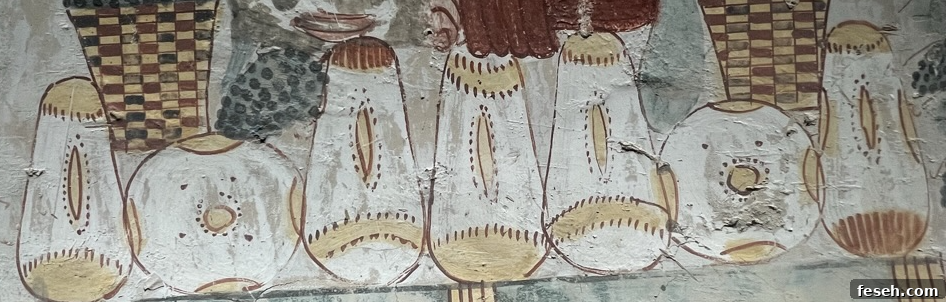
This exquisite row of breads is a close-up from a painted offering scene in Theban Tomb TT3. The composition captures a moment that feels almost contemporary: a carefully arranged display of loaves, each with its own shape and surface design. The painting’s clarity and attention to detail make it easy to imagine stepping into an ancient bakery and seeing a similar presentation—an image that still resonates today.
Modern bakeries, particularly in Paris, stage their loaves in much the same way, showcasing the tops and crusts where color, texture, and scoring are most visible. Behind the counter you’ll often find long baguettes beside shorter batards; though the shapes differ, the same dough and baking method can produce both. That visual interplay between form and surface is central to how bakers display their craft, then and now.
In Pharaonic Egypt, surface decoration on bread appears to have been an important element of presentation. In this grouping of seven loaves, five are oblong, yet none is identical. Each loaf features its own pattern or scoring, suggesting that variety in surface treatment was intentional. Whether these differences signified distinct recipes, regional techniques, or purely decorative choices cannot be confirmed from the painting alone, but the deliberate diversity is clear.
The artist emphasizes contrast by using white and brown tones to define form and texture. Those colors are not arbitrary artistic choices: archaeological finds show that some breads interred in tombs were whitened or painted, making light tones a real part of the visual vocabulary of ancient bread presentation. This practice highlights an aesthetic that differs from modern expectations, yet it communicates a refined sense of display and symbolism in food offerings.
Beyond its visual appeal, the painted arrangement reflects cultural values. In funerary contexts, food offerings served a ritual purpose, conveying sustenance and care for the deceased in the afterlife. The care given to shaping and decorating each loaf in the painting suggests that even everyday items like bread could be invested with meaning and treated as objects of beauty.
Seeing these painted loaves side by side, we are reminded how closely linked art and daily life were in ancient Egypt. The image bridges past and present: it records technical skill in baking and decorating, and it preserves a taste for visual variety. Whether for ritual offering or for display on a baker’s shelf, these breads demonstrate that attention to surface, shape, and contrast has long been an essential part of how people present food.
The painting from TT3 therefore offers more than historical curiosity. It provides insight into aesthetic preferences, craft traditions, and the role of food in social and ritual contexts. Looking at this row of breads, we can appreciate how decorative detail and thoughtful arrangement transformed humble loaves into objects that communicated care, skill, and cultural meaning.