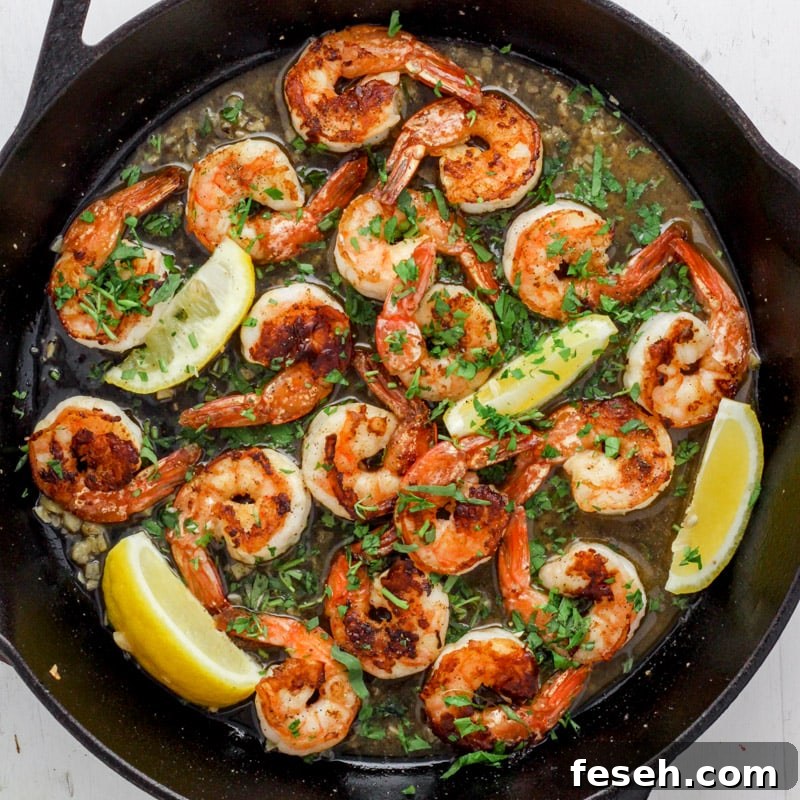
Seared shrimp is our favorite quick weeknight meal when we want something a bit special. This recipe balances rich, satisfying flavor with speed and simplicity—perfect when you need dinner on the table fast.
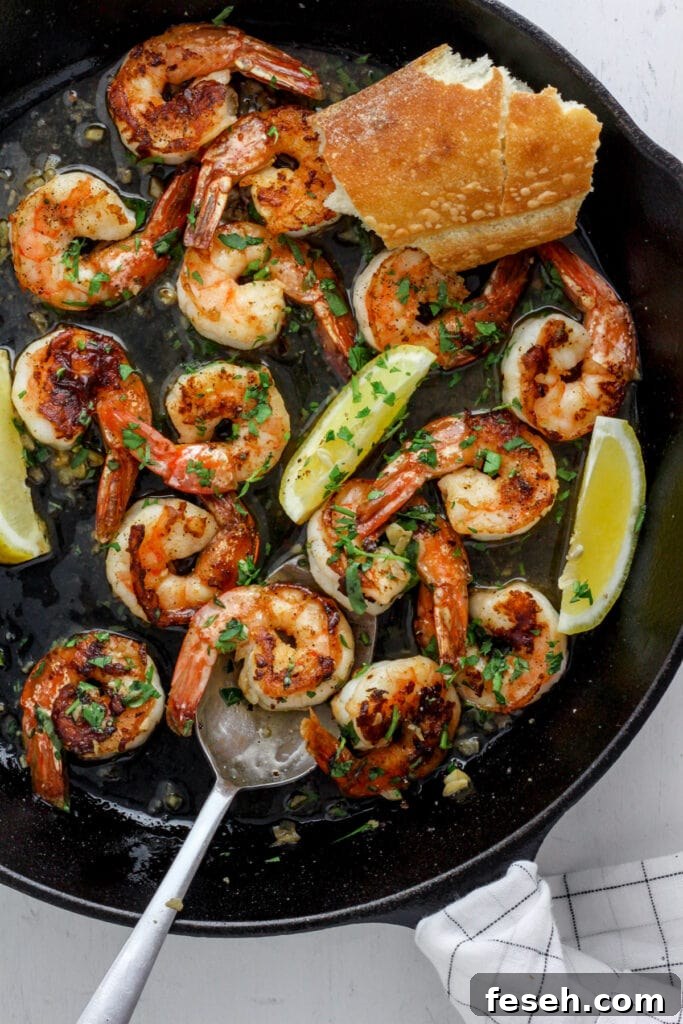
Shrimp are an excellent choice whether you’re entertaining friends or cooking for family. They cook quickly, have a meaty, satisfying texture, and thaw in minutes if you forgot to plan ahead. This seared shrimp with garlic and herbs comes together in about 20 minutes, delivering restaurant-worthy flavor with minimal fuss.
Ingredients that Matter
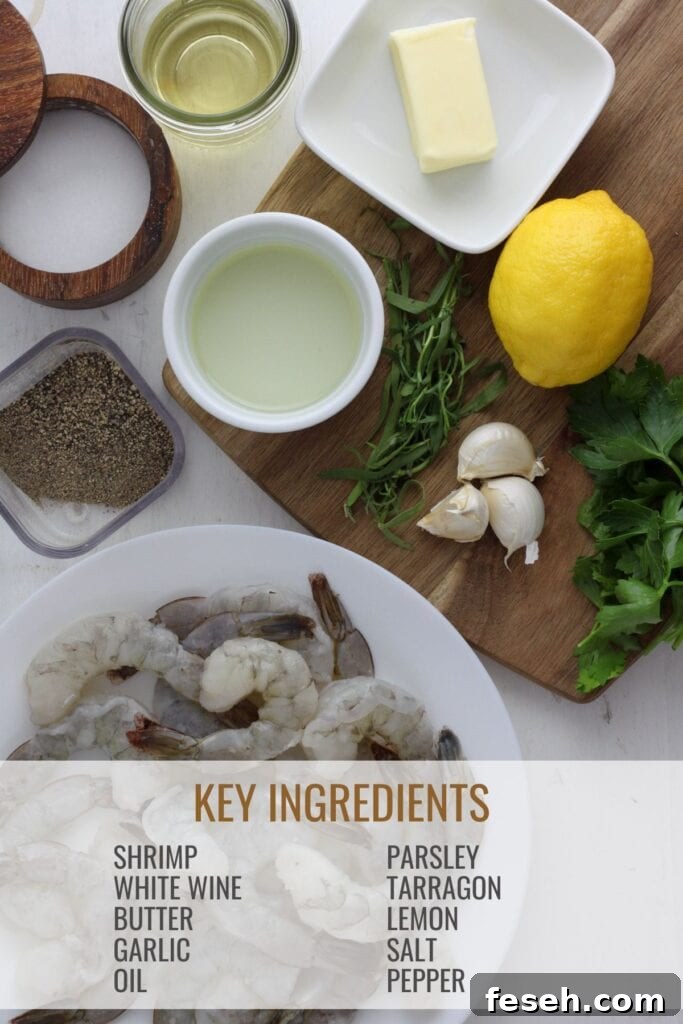
Shrimp are the star, but a few other ingredients shape the final dish:
- Shrimp. Use colossal (16–20 count per pound) peeled and deveined shrimp. Larger shrimp sear better; medium or small shrimp tend to dry out before they develop a good crust. Buy frozen shrimp rather than the “fresh” shrimp on ice—most so-called fresh shrimp were previously frozen anyway. Most importantly, choose untreated shrimp with no additives listed so they can sear properly. Treated shrimp absorb extra water and won’t form a proper crust.
- Dry white wine. The sauce relies on a dry white wine for depth and acidity. Use a wine you enjoy—an unoaked chardonnay, pinot gris, or dry riesling works well. Cooking won’t improve a poor-quality wine, so start with something tasty.
- Unsalted butter. Cold unsalted butter, whisked in at the end, gives the sauce a silky texture. Use unsalted so you can control seasoning.
- Fresh herbs. About 3 tablespoons of chopped fresh herbs brighten the dish. Tarragon and parsley are a favorite combo, but chives or dill work too. Avoid woody herbs that can overpower the delicate shrimp.
Treated vs. untreated shrimp
Many shrimp sold in the U.S. are treated with tripolyphosphate and other additives to retain moisture. That retained water prevents proper searing and leads to rubbery, watery shrimp that never develop a golden crust. From a cooking standpoint, untreated shrimp sear better and taste fresher. Check labels and look for shrimp listed with no added ingredients. If you have access to responsibly farmed U.S. shrimp, that is often a good option.
How to Thaw Shrimp Fast
If you forgot to thaw your shrimp, place the frozen shrimp in a bowl and run cold water over them for about five minutes. A one-pound bag will thaw quickly this way and be ready to pat dry and cook.
How to make seared shrimp
Beyond choosing untreated shrimp, these tips ensure juicy, well-seared shrimp every time:
- Start with dry shrimp. After thawing, pat shrimp thoroughly dry with paper towels. Moist shrimp steam rather than sear, preventing a crust from forming.
- Salt and oil the shrimp. Season shrimp with a little salt and let them rest at room temperature for 10 minutes to enhance flavor. Toss the shrimp with oil so they won’t stick and so you can start the skillet at a lower temperature without losing contact.
- Start low, then crank the heat. Begin with shrimp in a room-temperature cast-iron skillet, then turn the heat to medium-high. Cook in a single layer without overcrowding—about 1–2 minutes per side until golden. Work in batches, turning the heat off briefly between batches if needed, then reheat for the next batch. This helps prevent overcooking while ensuring a good sear.
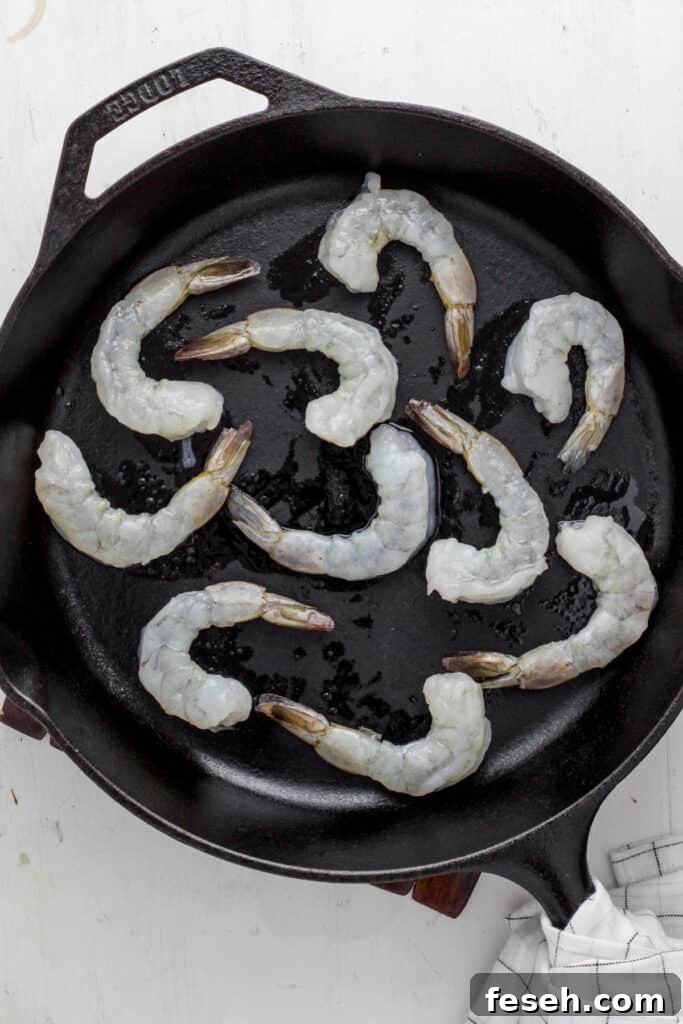
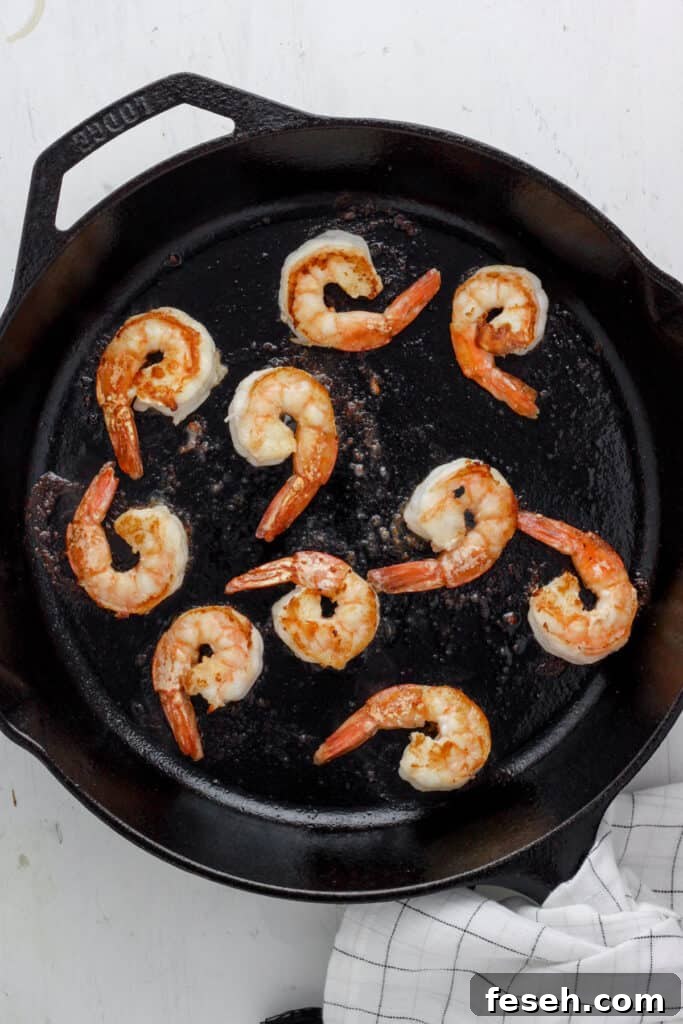
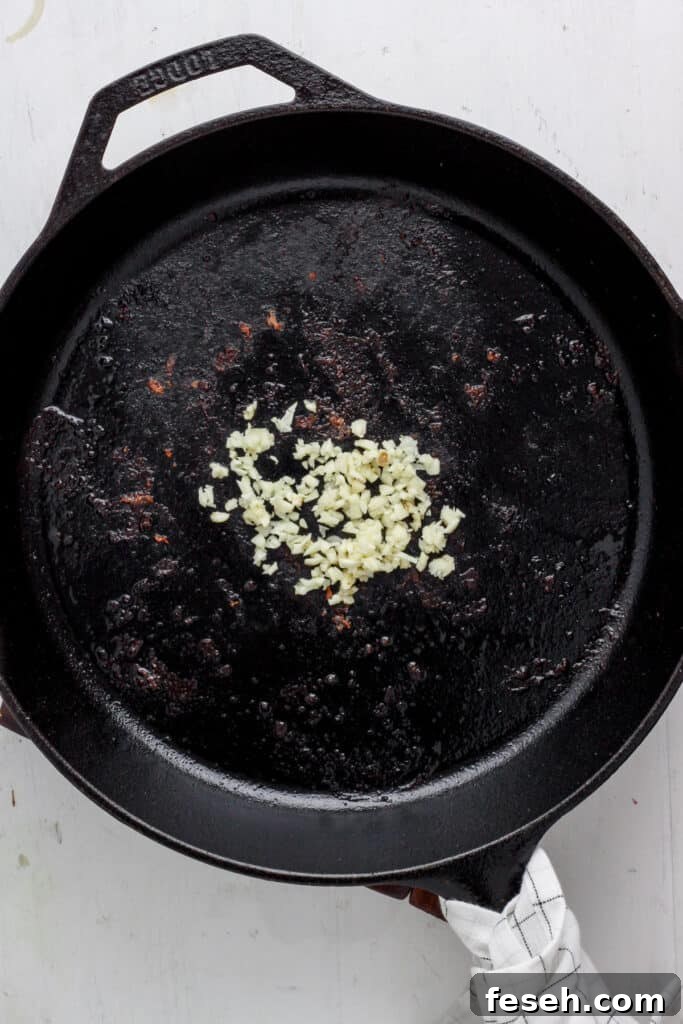
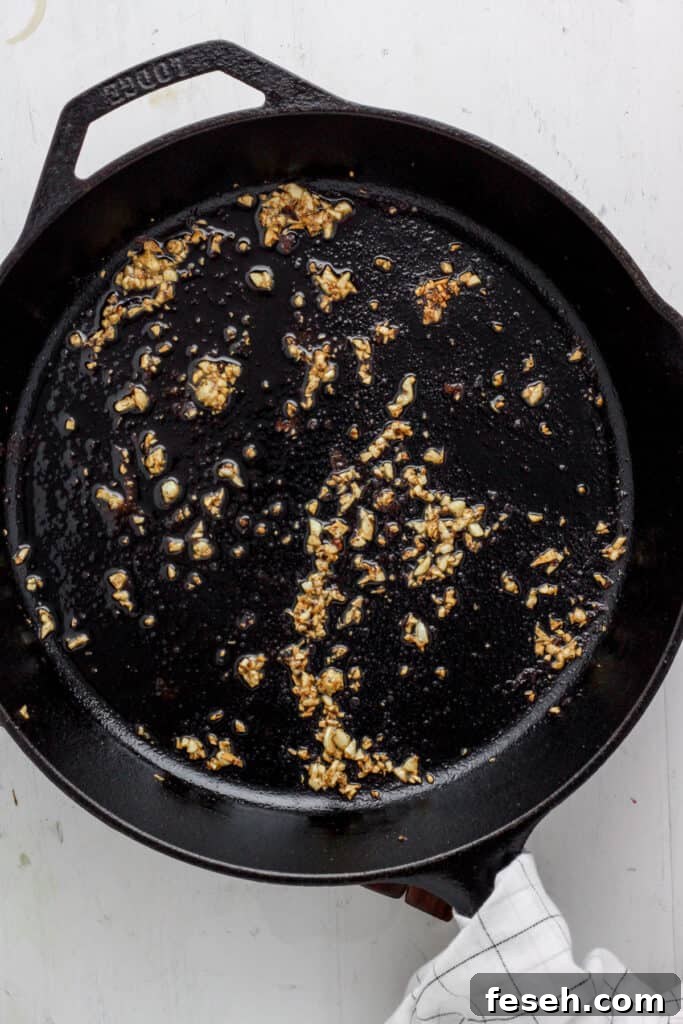
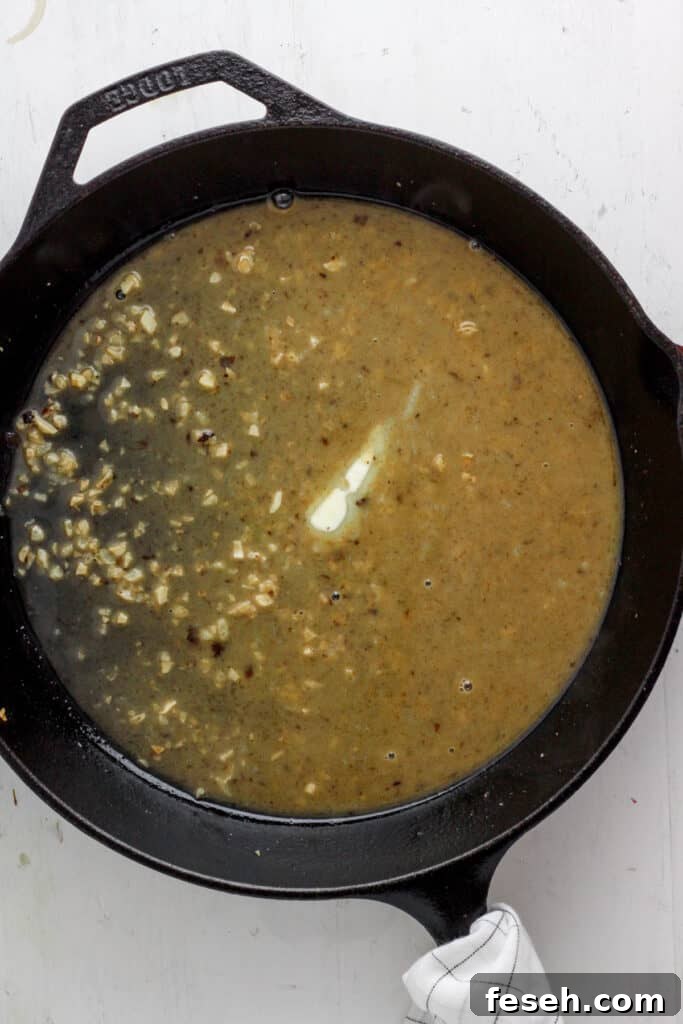
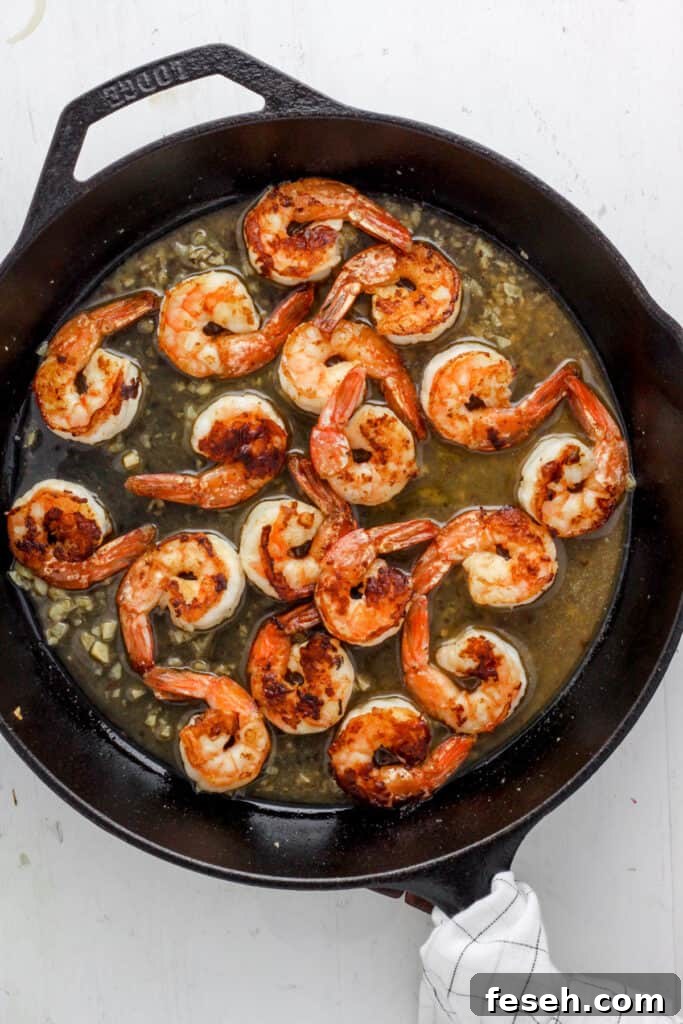
- Control the heat when starting the sauce. After searing, the pan will be too hot for garlic; it will burn immediately. Remove the pan from direct heat, wait 30 seconds, then add garlic and stir until fragrant (about 45 seconds). Add the wine and return to medium heat, scraping browned bits from the pan. Reduce the wine by about half.
- Turn off the heat before adding butter. When the wine has reduced, remove the pan from heat and slowly whisk in cold butter so it emulsifies into a silky sauce rather than separating into greasy droplets.
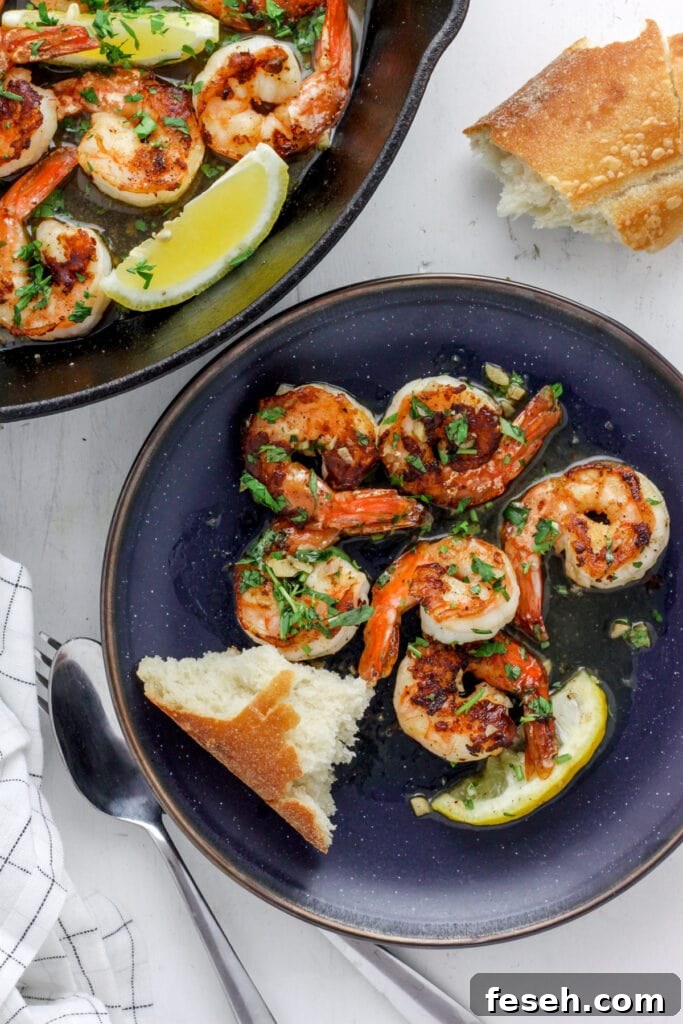
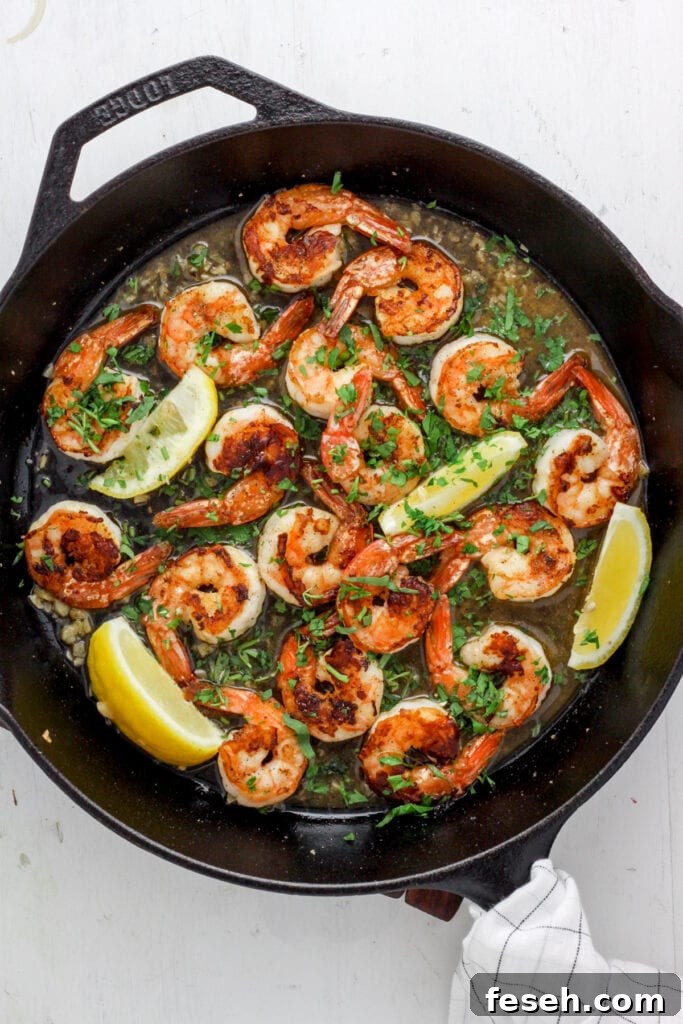
- Add herbs just before serving. Stir in the chopped fresh herbs at the end to preserve their color and brightness. Finish with a pinch of black pepper, lemon wedges, and crusty bread for dipping. A final sprinkle of herbs and a glass of the same dry white wine you used in the sauce make a lovely pairing.
Recipe

Perfect Seared Shrimp with Butter and Herbs
- Total Time: 20 min.
- Yield: 20 shrimp
Description
Seared shrimp is a quick, flavorful meal that feels special without a lot of effort. This garlic-and-herb version delivers a silky wine-butter sauce and bright herbs in under 20 minutes.
Ingredients
- 1 pound colossal (16–20 count) peeled and deveined shrimp, thawed
- ¼ teaspoon salt, plus more to taste
- 2 Tbsp olive oil, divided
- 3 garlic cloves, minced
- ½ cup dry white wine
- 3 Tbsp unsalted butter, cold
- 3 Tbsp chopped fresh herbs (parsley, tarragon, chives, or a mix)
- Black pepper, to taste
- Lemon wedges, for serving
Instructions
- Pat shrimp dry with paper towels. Transfer to a medium bowl, sprinkle with ¼ teaspoon salt, toss, and let rest at room temperature for 10 minutes.
- Toss the shrimp with 1 tablespoon of oil. Place half the shrimp in a large cast-iron skillet and set over medium-high heat (start with a room-temperature skillet). Cook undisturbed until golden on one side, about 1–2 minutes. Flip and cook another minute. Transfer to a clean plate. Turn off the heat and repeat with remaining shrimp.
- Remove the skillet from heat, add the remaining 1 tablespoon oil and the garlic. Using the residual heat, stir frequently until fragrant, about 45 seconds. Add the wine and return to medium heat, scraping up browned bits; simmer until the wine reduces by half, about 2 minutes. Remove from heat and whisk in the cold butter until emulsified. Return shrimp to the skillet, sprinkle with herbs and black pepper, and toss to coat. Adjust salt to taste. Serve with lemon wedges and extra herbs.
Notes
- Buy untreated shrimp—look for shrimp listed with no added ingredients.
- Frozen shrimp are usually the freshest option unless you have a reliable local fishmonger.
- Aim for an internal temperature of 145°F; avoid overcooking to keep shrimp tender.