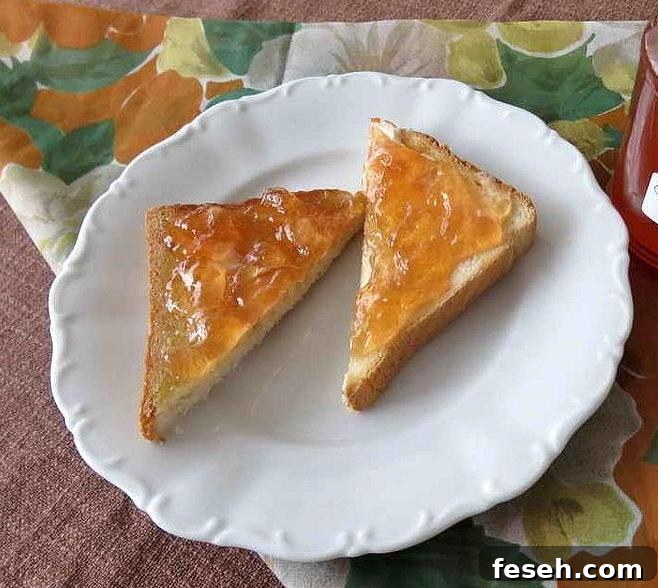
Learn how to make traditional German quince jelly without special “Gelierzucker” (jam sugar). This recipe uses regular granulated sugar and produces a clear, intensely flavored jelly when made from very ripe quinces. Ripe quinces are fragrant—often described as pineapple-like—and turn fully yellow when ready. To make the jelly you first extract the juice from the fruit.
Quinces were once common in American gardens from colonial times through the 19th century, before commercial gelatin and pectin became widespread. Check farmers markets or local orchards—if you find quinces, try this simple jelly recipe and enjoy the result.

Ingredients — German Quince Jelly
5 kg ripe quinces (yields about 2–2.5 liters of juice)
1 kg sugar per liter of juice
juice of 1 lemon per liter of juice
optional: seeds from 1 vanilla bean
optional: 1 ripe pear, diced small

Cooking Instructions — German Quince Jelly
1. Clean the quinces by rubbing them with a damp cloth to remove the fine brown fuzz from the skin.
2. Cut the quinces into roughly 1-inch cubes. If using the optional pear, add it in small cubes.
3. Place the fruit cubes into a steam juicer or heat-extraction pot and bring to a boil with the lid on. Once boiling, reduce the heat and simmer for about 80 minutes. Rule of thumb: 5 kg quinces should yield about 2–2.5 liters of juice.
4. While the fruit cooks, prepare your jars: rinse them with boiling water and keep them warm in a low oven (about 70 °C / 160 °F) so they stay sanitized and ready for filling.
— Comes with Quince Jelly! —
Make the Jelly
1. For every liter of quince juice, measure 1 kg sugar and the juice of 1 lemon. Place only one-fifth of the total juice into a large pan at a time when you start cooking the jelly (this helps control the cooking process); you can repeat the process with the remaining juice as needed.
2. Stir the juice, sugar, and lemon juice well. Bring the mixture to a vigorous boil over high heat and maintain the boil for about 10 minutes, stirring occasionally to prevent sticking.
3. Test for set by lifting a small spoonful of the hot jelly and watching how it drips. It should fall slowly and form a thick trail—this indicates it will set once cooled. When the jelly is ready, remove the pan from the heat and allow it to stop boiling for a moment, then skim off any remaining foam for a clear result.
4. Carefully ladle the hot jelly into the warm jars, removing any surface foam with a teaspoon as you go. Fill jars to the desired level, seal with lids, and turn jars upside down for 10 minutes to help the seal form. After that, return jars upright and let them cool completely before storing.
Store the sealed jars in a cool, dark place such as a pantry. Properly processed and sealed quince jelly can keep for up to a year.

TIPS
– You can prepare the juice a day in advance: extract the juice, cool it, and refrigerate overnight. Making the jelly the next day can intensify its color.
– If you don’t own a steam juicer, you can cook the fruit in a pressure cooker for about 20 minutes with a little water, then strain the cooked fruit through a mesh sieve or cloth, allowing the juice to drip through overnight.