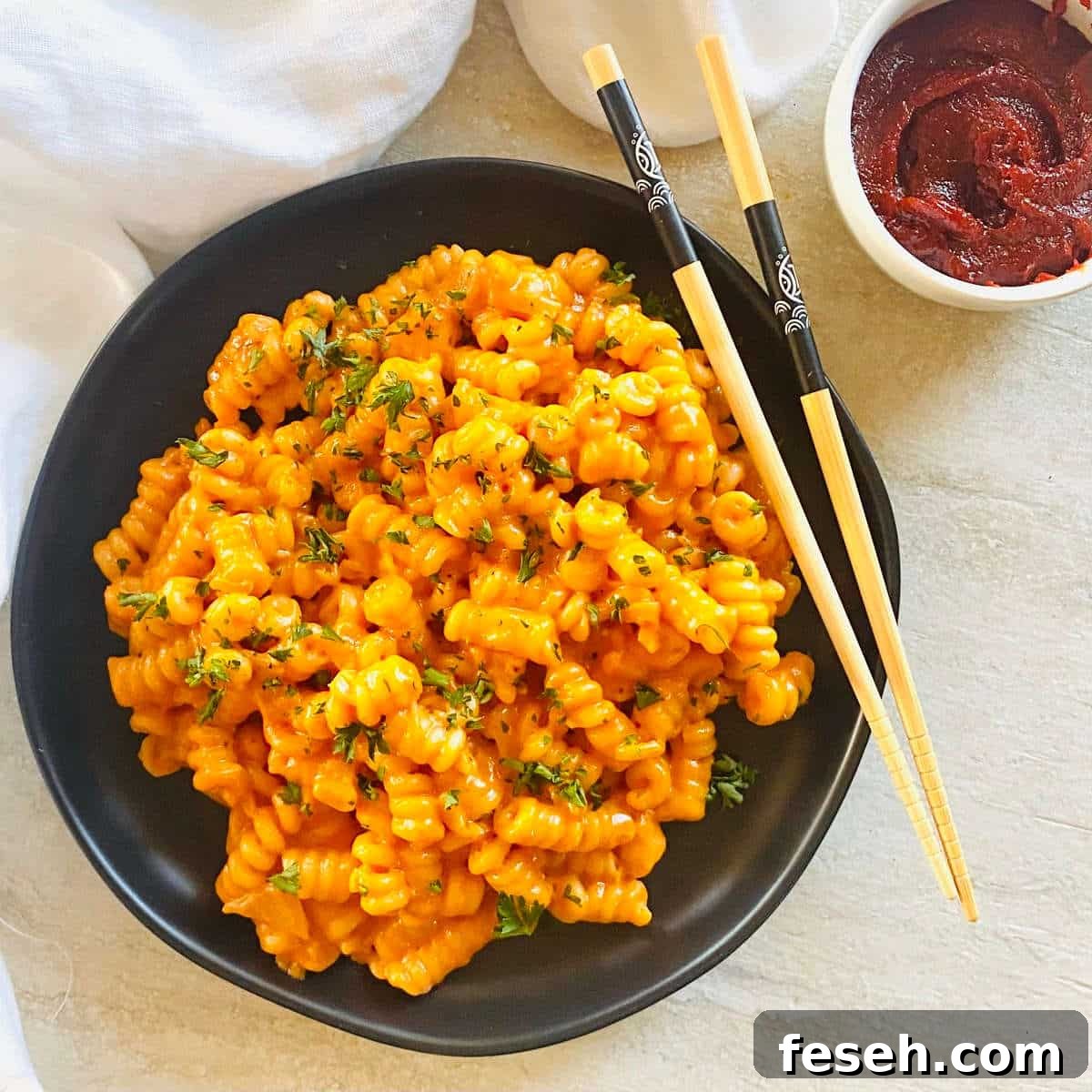
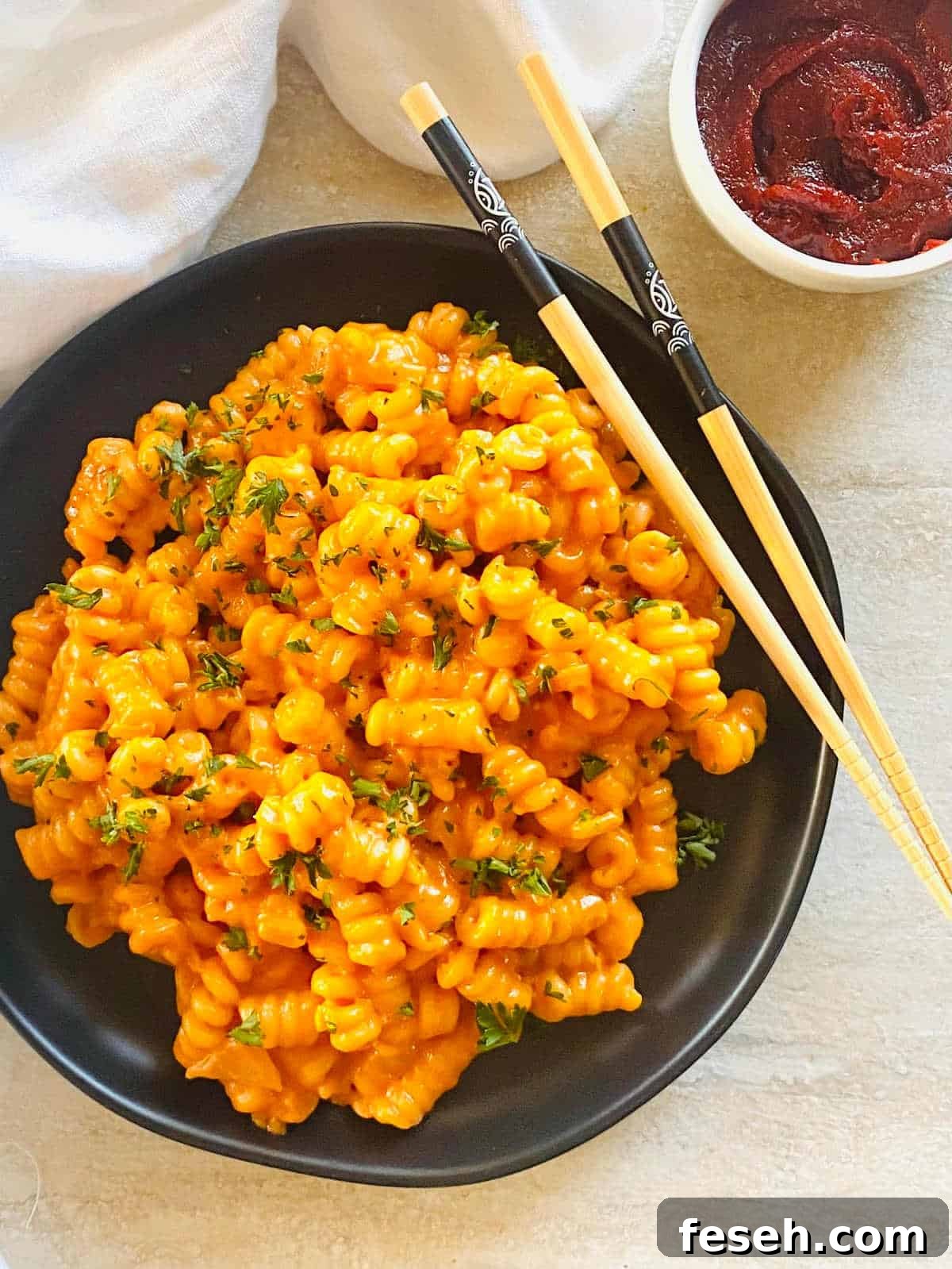
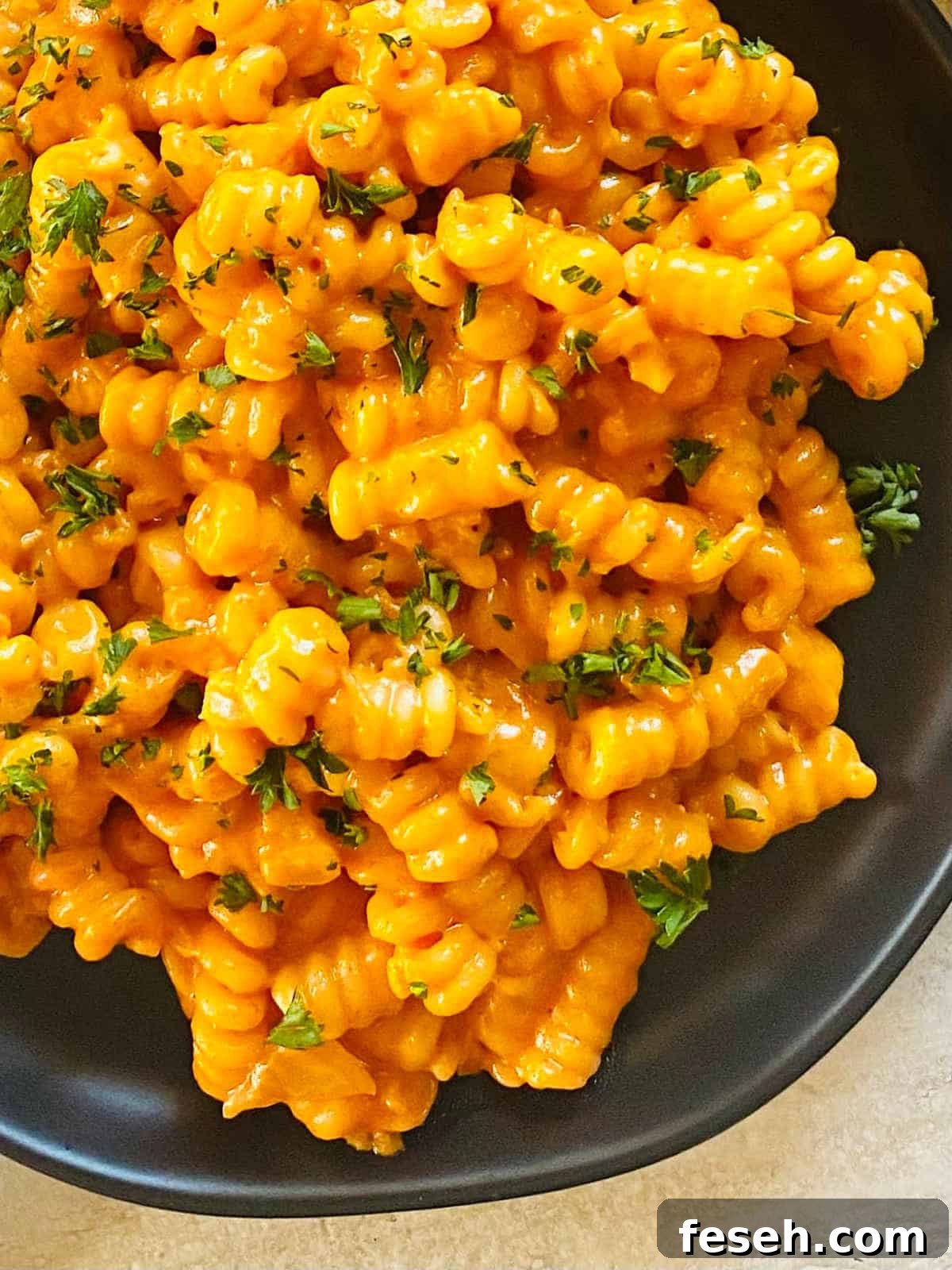
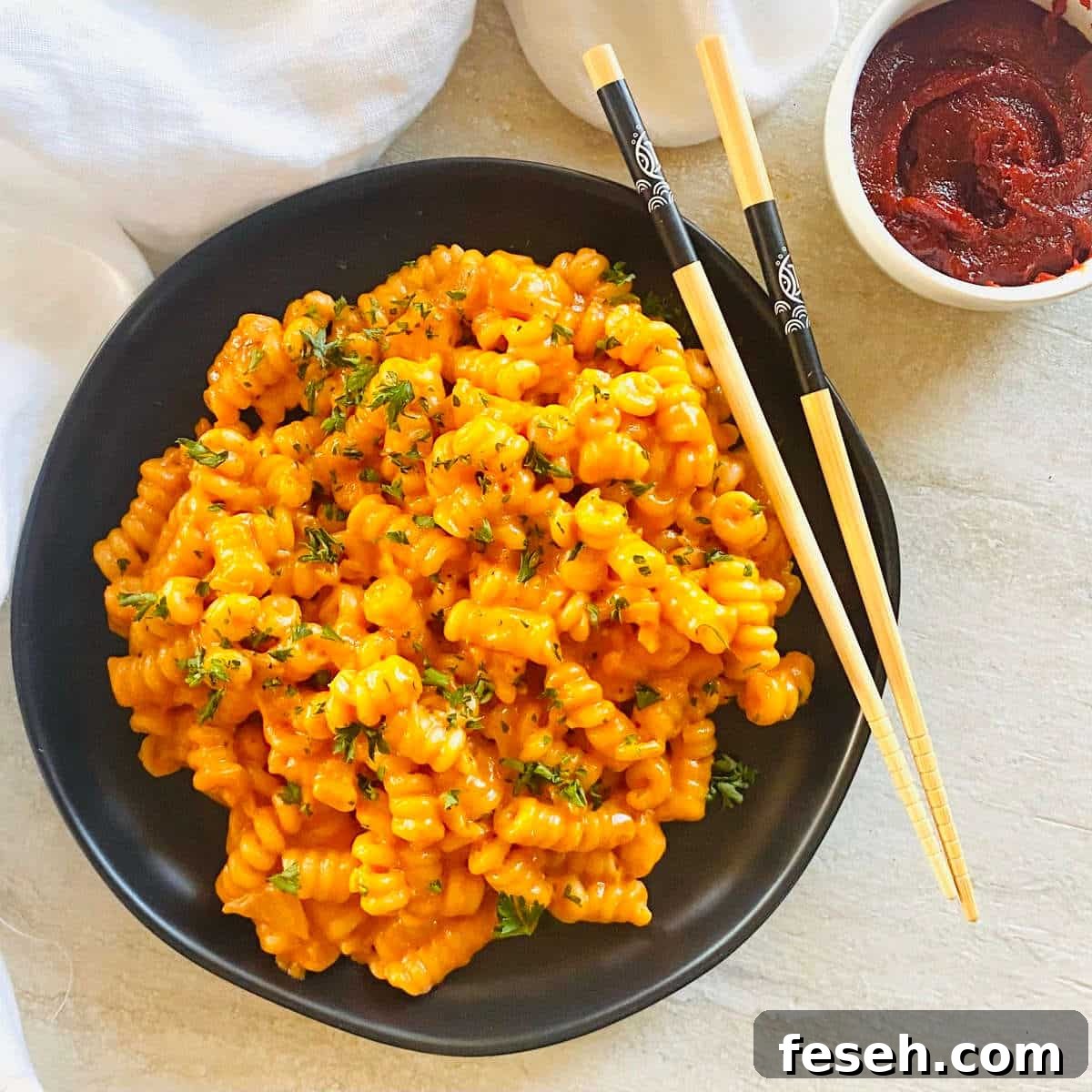
This gochujang pasta is rich, creamy, and surprisingly simple to prepare. Ready in under 15 minutes, this Korean-inspired pasta blends the bold, spicy-savoury heat of gochujang with a smooth, cheesy sauce for a comforting, umami-packed meal perfect for weeknights, date nights, or casual gatherings.
This post may contain affiliate links which means I may receive commissions if you choose to purchase through this link (at no extra cost to you).
Gochujang pasta is a fusion of Korean and Italian flavors: the spicy-sweet, fermented depth of gochujang meets a creamy, cheesy pasta base for a unique, craveable dish. Top it with seared shrimp, grilled steak, or keep it vegetarian—this sauce pairs well with many proteins and vegetables.
Why gochujang works so well with pasta
- Gochujang offers a layered combination of heat, sweetness, and umami that adds an exciting twist to everyday pasta.
- The recipe is quick and mostly one-pan, making it convenient for weeknight dinners with minimal cleanup.
- It feels elevated enough for a date night but is easy enough for casual meals.
- Gochujang is versatile: adjust the amount to make the sauce milder or spicier, and experiment by adding different cheeses, proteins, or vegetables.
Ingredients
- Pasta: 8 oz dry bucatini or any pasta shape you prefer.
- Gochujang: 2 tablespoons, Korean red chili paste.
- Garlic: 3 cloves, minced or pressed.
- Butter: 4 tablespoons salted butter.
- Olive oil: 2 tablespoons (or a neutral oil of choice).
- Cheese: ½ cup shredded Parmesan for a classic creamy finish, or cheddar for a richer, mac-and-cheese-style flavor.
- Heavy cream: ½ cup (or coconut cream for a dairy-free option).
- Black pepper: Freshly ground, about ½ teaspoon (optional).
- Parsley: 2 teaspoons chopped, for garnish (optional).
Instructions
Pasta
- Bring a pot of water to a rolling boil and salt if desired.
- Add the pasta and cook 7–12 minutes, or until al dente to your preference. Drain and set aside.
Gochujang cream sauce
- In a sauté pan over medium heat, melt the butter with the olive oil. Add the garlic and optional black pepper and cook 30–60 seconds until fragrant—avoid browning the garlic.
- Stir in the gochujang, then add the heavy cream and shredded cheese. Cook 1–2 minutes, stirring, until the sauce thickens slightly and the cheese melts into the cream.
- Add the cooked pasta to the pan and toss gently to coat the noodles evenly with the sauce.
- Plate, garnish with chopped parsley if desired, and serve immediately.
Tips and variations
- Storage: Refrigerate leftovers in an airtight container for up to five days. Reheat gently with a splash of cream or water to loosen the sauce.
- Proteins: Add grilled chicken, pan-seared shrimp, tofu, or thinly sliced steak to make it heartier.
- Vegetables: Stir in sautéed bell peppers, asparagus, zucchini, mushrooms, or roasted vegetables for extra texture and freshness.
- Vegan option: Use coconut or plant-based cream and a vegan shredded cheese or nutritional yeast; add mushrooms or tempeh for protein.
- Noodle swaps: Any pasta shape works well; you can also try ramen, udon, or rice noodles for a more Asian-style presentation.
- Accompaniments: Pickled radishes (danmuji), kimchi, or quick-pickled vegetables provide a bright contrast to the rich sauce.
- Herbs: Fresh cilantro, basil, or Thai basil can brighten each serving when used as a garnish.
What is gochujang and how does it taste?
Gochujang is a Korean fermented red chili paste with a balanced profile of spicy, sweet, and savory umami flavors. It adds depth, heat, and a subtle sweetness that works exceptionally well in creamy sauces.
FAQ and expert tips
Some gochujang brands are gluten-free and many are vegan, but formulations vary. Always check the label for wheat, soy, or other allergens and for any animal-derived ingredients.
Other delicious Asian recipes
-
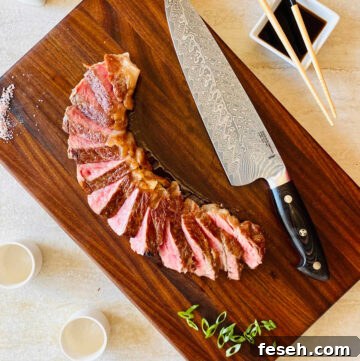
How to Cook Wagyu Steak
-
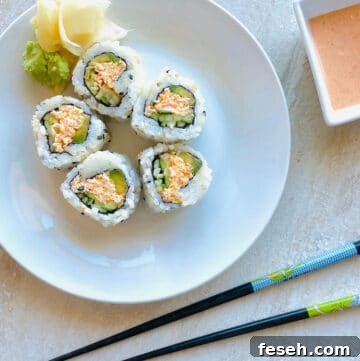
Spicy Kani Roll | Spicy Crab Roll (Kani Sushi Recipe)
-
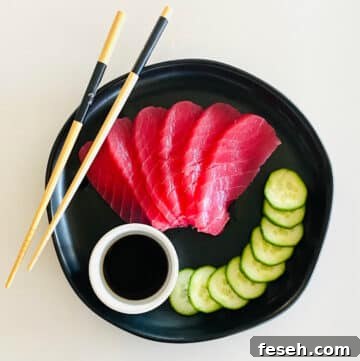
Tuna Sashimi
-
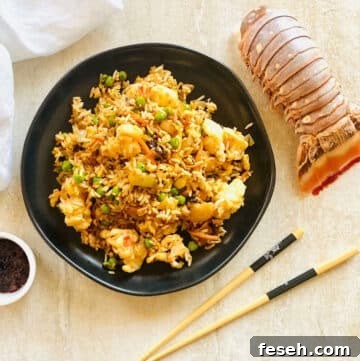
Lobster Fried Rice
Hungry for more? Subscribe to my EMAIL NEWSLETTER and follow me on social media for the latest recipes and updates. I love hearing from readers—leave a comment or rating if you try this dish!
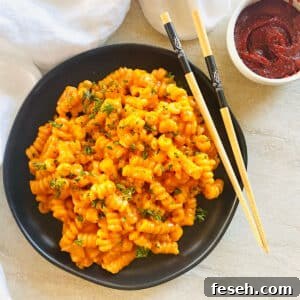
Gochujang Pasta
Print
Pin
Rate
Equipment
-
1 Pot
-
Saute Pan
Ingredients
Pasta
- 8 oz dry bucatini or other pasta
Gochujang Pasta Cream Sauce
- 2 tablespoons gochujang (Korean red chili paste)
- 3 clove garlic, minced or pressed
- 4 tablespoons salted butter
- 2 tablespoons olive oil
- ½ cup shredded Parmesan or cheddar
- ½ cup heavy cream (or coconut cream)
- ½ teaspoon freshly ground black pepper (optional)
- 2 teaspoon chopped parsley (optional)
Instructions
Pasta Preparation
-
Bring water to a rolling boil. Salt water if desired.
-
Add pasta and cook 7–12 minutes or until al dente. Drain and set aside.
Gochujang Pasta Cream Sauce
-
Melt butter with olive oil in a sauté pan over medium heat. Add garlic and optional black pepper; cook 30–60 seconds until fragrant.
-
Stir in gochujang, then add heavy cream and shredded cheese. Cook 1–2 minutes until the sauce slightly thickens.
-
Add cooked pasta and toss to coat evenly in the sauce.
-
Serve and garnish with fresh parsley.
Notes
- Storage/Leftovers: Store cooled pasta in an airtight container in the refrigerator for up to five days. Rewarm gently with a splash of liquid.
- Pairing Proteins: Try grilled chicken, shrimp, tofu, or ground beef for a heartier meal.
- Veggies: Add sautéed or roasted peppers, zucchini, asparagus, or mushrooms for texture and freshness.
- Vegan: Substitute plant-based cream and cheese alternatives and use mushrooms or tempeh for protein.
- Noodle options: Regular pasta, ramen, udon, or rice noodles all work well.
- Pickled Radishes: Korean-style pickled radishes (danmuji) make a bright, tangy side.
- Fresh herbs: Garnish with cilantro, basil, or Thai basil for a fresh finish.
- Kimchi: Serve a side of kimchi for an extra burst of Korean flavor.
Nutrition
|
Carbohydrates: 47g
|
Protein: 13g