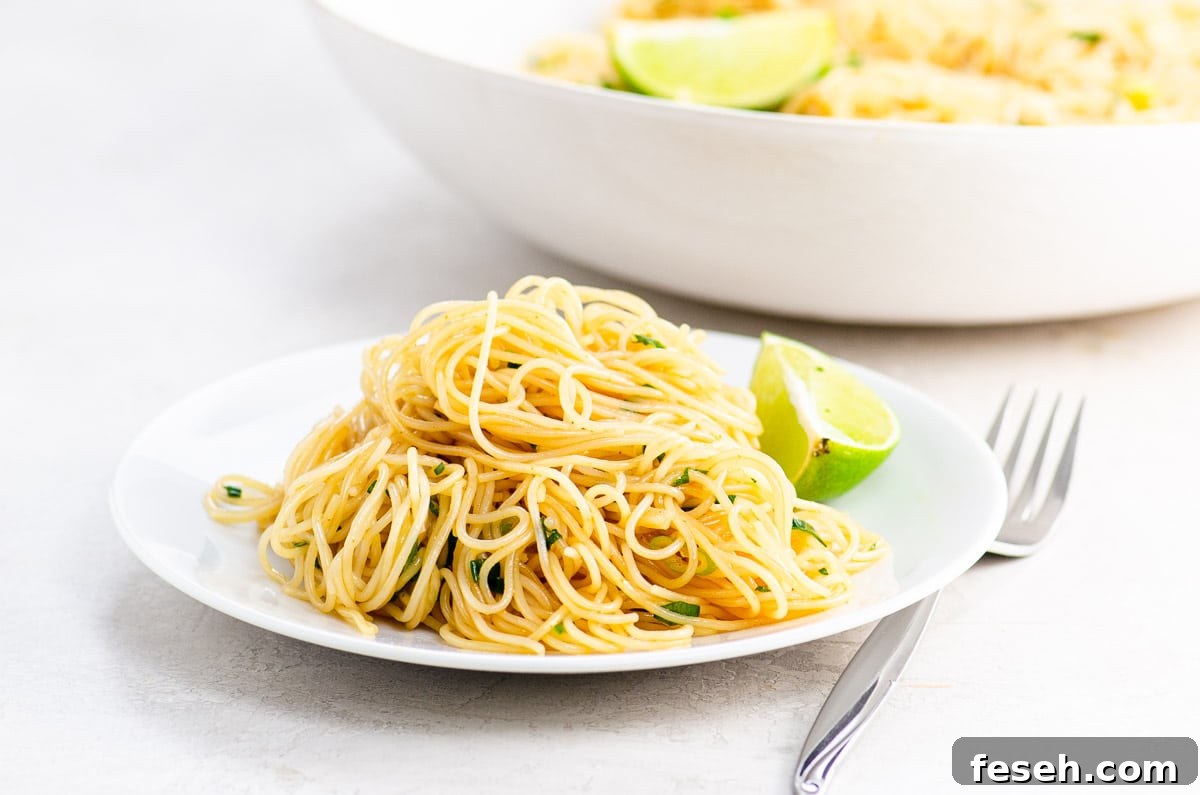
Don’t miss this ultra-flexible vegan rice noodles recipe. Ready in under 10 minutes, it’s savory, satisfying, and delicious on its own — but also easy to dress up with any vegetables or protein you like.
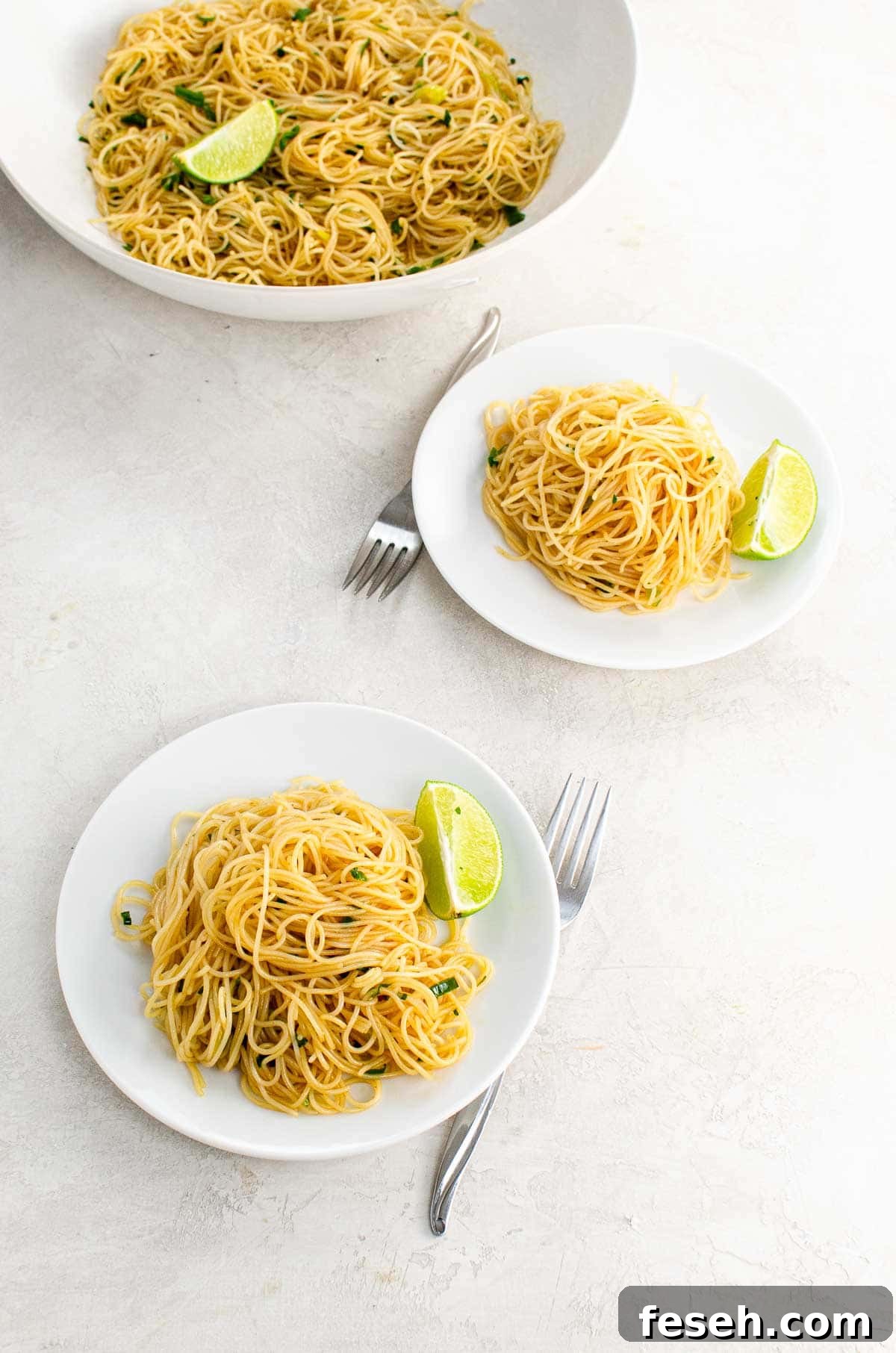
Why we love this recipe
It’s always handy to have a few fast, reliable recipes you can make when time is tight. This one is:
- Savory and satisfying
- Highly adaptable — add whatever you have on hand
- Ready in under 10 minutes
- Budget-friendly
- Made mostly from pantry staples
- Delicious as-is, or ready to accept extra vegetables and protein
What you’ll need
Here’s a quick look at the main ingredients for this recipe.
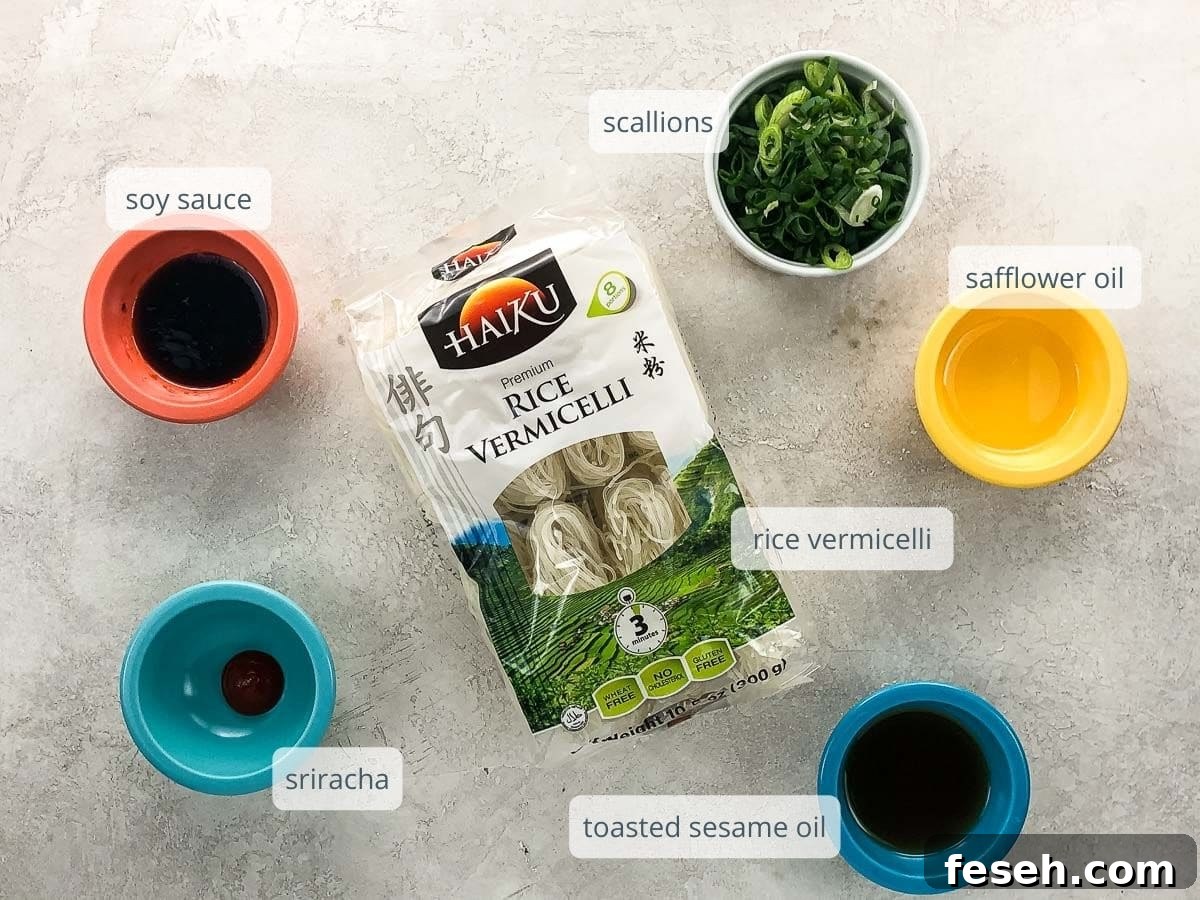
- Rice vermicelli — very thin, gluten-free noodles made from rice, salt, and water. They’re widely available and keep a long time in the pantry.
- Tamari — a gluten-free soy sauce alternative if you need the recipe to be gluten-free.
- Toasted sesame oil — adds deep, nutty flavor. Choose the spicy variety if you like heat. Don’t substitute with the light sesame oil used for high-heat cooking.
- Safflower oil — a neutral oil for the sauce. Canola, peanut, corn, or a vegetable blend work fine as substitutes.
- Scallions — thinly sliced for freshness; a minced shallot can work in a pinch.
- Fresh lime juice — brightens the dish at the end.
How to make it
This recipe comes together in just a few simple steps. It’s quick to prepare and forgiving to customize.
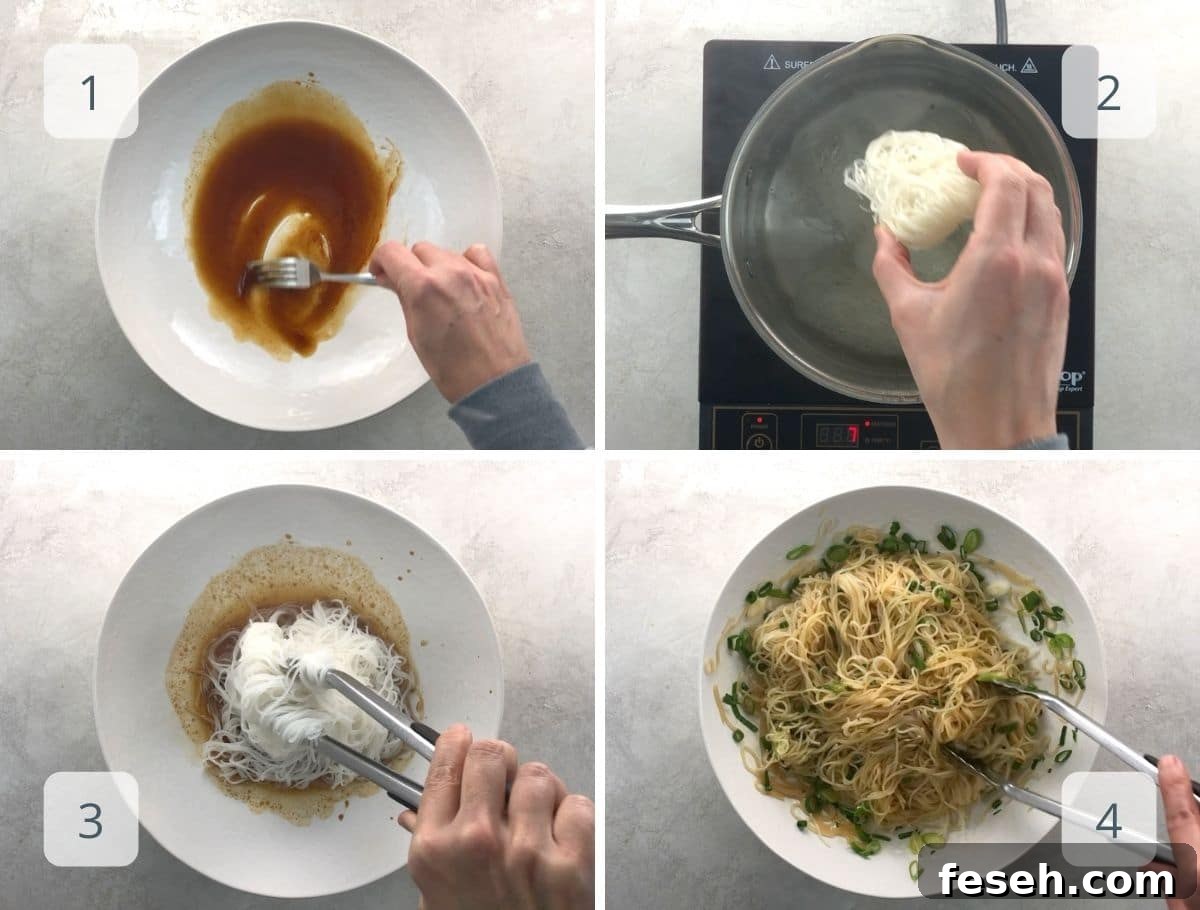
- Mix the sauce: In your serving bowl whisk together safflower oil, toasted sesame oil, tamari, and sriracha (if using).
- Cook the noodles: Boil rice vermicelli according to package instructions — most brands take just a few minutes.
- Combine: Drain (or rinse, if you prefer to reduce starch) and add the hot noodles directly to the sauce. Toss to coat evenly.
- Finish and serve: Stir in sliced scallions and squeeze plenty of lime juice. Add any vegetables or protein you like, then serve warm or at room temperature.
Expert tips and FAQs
Yes. These noodles are excellent at room temperature, so you can prepare them earlier in the day and leave them covered until serving.
Store leftovers tightly sealed in the refrigerator for up to a week. Bring to room temperature or warm briefly in the microwave (half power) before serving, as sesame oil can firm up when chilled.
How to serve it
These noodles are great as a simple main or a side. They’re also a perfect base for stir-ins. Try adding:
Vegetables
- Raw or lightly steamed snow peas or snap peas
- Shredded green or red cabbage
- Shredded carrots
- Thinly sliced red bell pepper
- Bean sprouts
- Steamed broccoli, asparagus, or green beans
Protein
- Salt-and-pepper tofu, smoked tofu, or char siu–style tofu
- Shelled edamame
- Roasted pumpkin seeds (pepitas)
- If you’re not vegan: ramen eggs, shredded chicken, sautéed shrimp or scallops, or thinly sliced steak work well
You might also love these vegan recipes
- Sesame noodles
- 20-minute vegan sushi bowls
- Easy vegetarian ramen
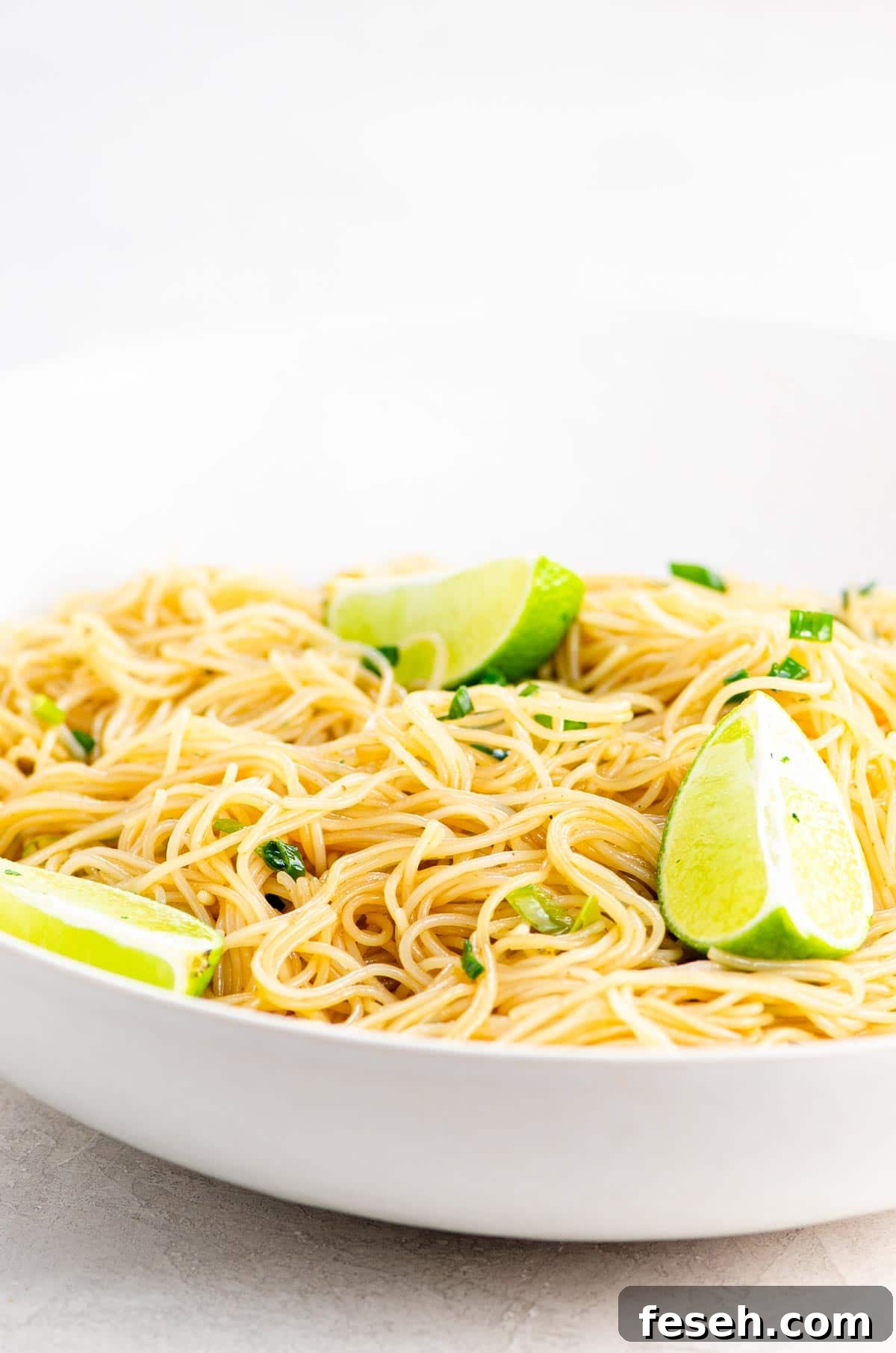
Vegan Rice Noodles Recipe
Ingredients
- 10.5 ounces (300 g) rice vermicelli noodles
- 2 tablespoons (30 ml) safflower oil
- 2 tablespoons (30 ml) toasted sesame oil
- 3 tablespoons (45 ml) tamari
- ½ teaspoon sriracha, more to taste (optional)
- ½ cup sliced scallions
- Fresh lime juice, to taste
Instructions
- Bring a large pot of water to a boil. Add rice vermicelli and cook according to package instructions, usually just a few minutes.
- While the noodles cook, combine safflower oil, toasted sesame oil, tamari, and sriracha in a serving bowl and whisk to combine.
- Drain noodles and add them to the sauce. You can rinse them if you prefer to remove some starch, but this is optional. Toss to coat.
- Add sliced scallions, a generous squeeze of fresh lime juice, and toss again. Serve warm or at room temperature with extra lime wedges if desired.
Notes
- Rice vermicelli are thin, gluten-free noodles made from rice, salt, and water. They store well in the pantry.
- Use tamari or another gluten-free soy sauce to keep this gluten-free.
- Toasted sesame oil delivers deep flavor; don’t confuse it with light sesame oil intended for high-heat cooking.
- Substitute safflower oil with any neutral oil you have on hand: canola, peanut, or vegetable blends are fine.
- If you don’t have scallions, a minced shallot works as a substitute.
- Leftovers keep tightly sealed in the fridge for up to a week. Bring to room temperature or warm briefly before serving.
Nutrition
Nutrition information is an estimate and should be used as a guide only.