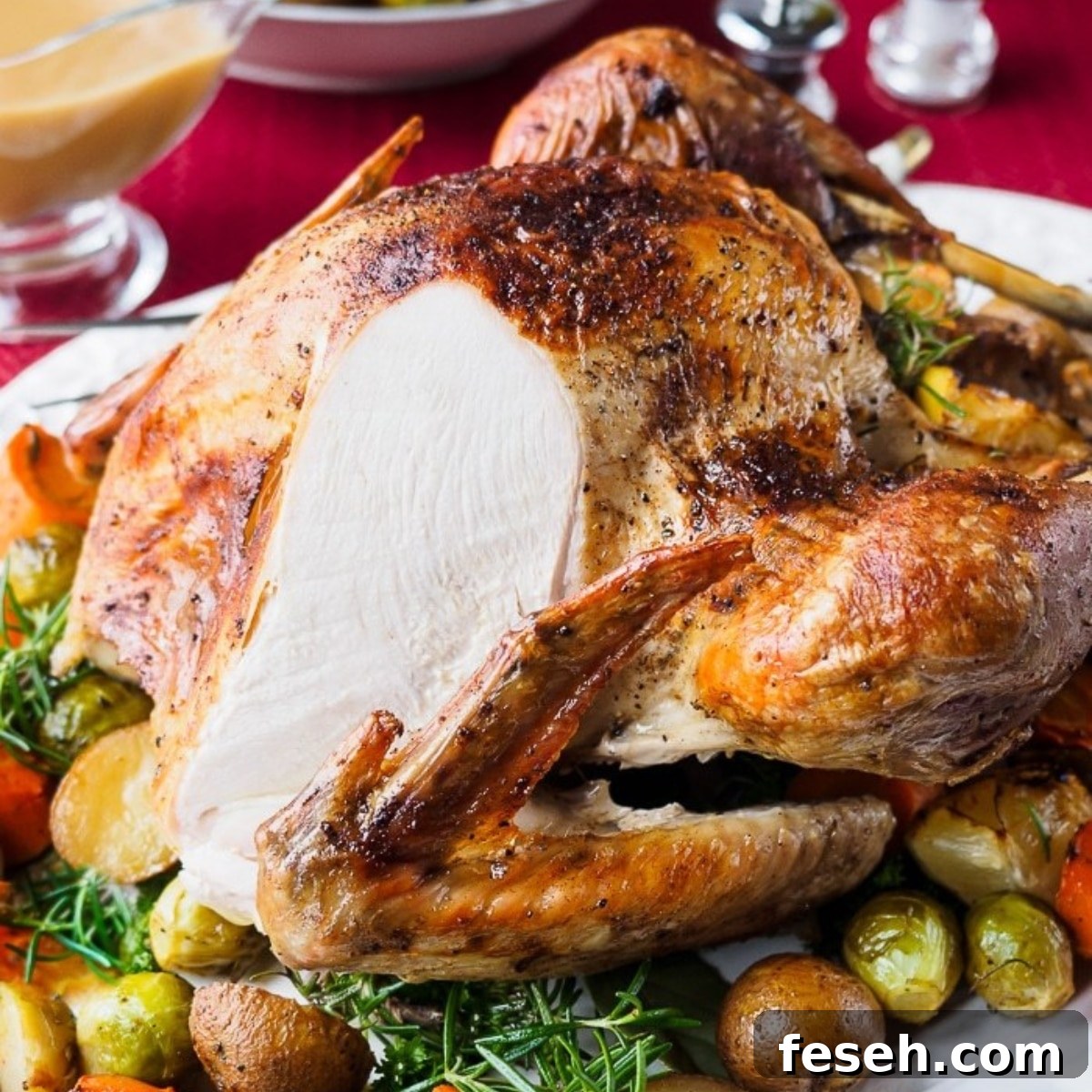
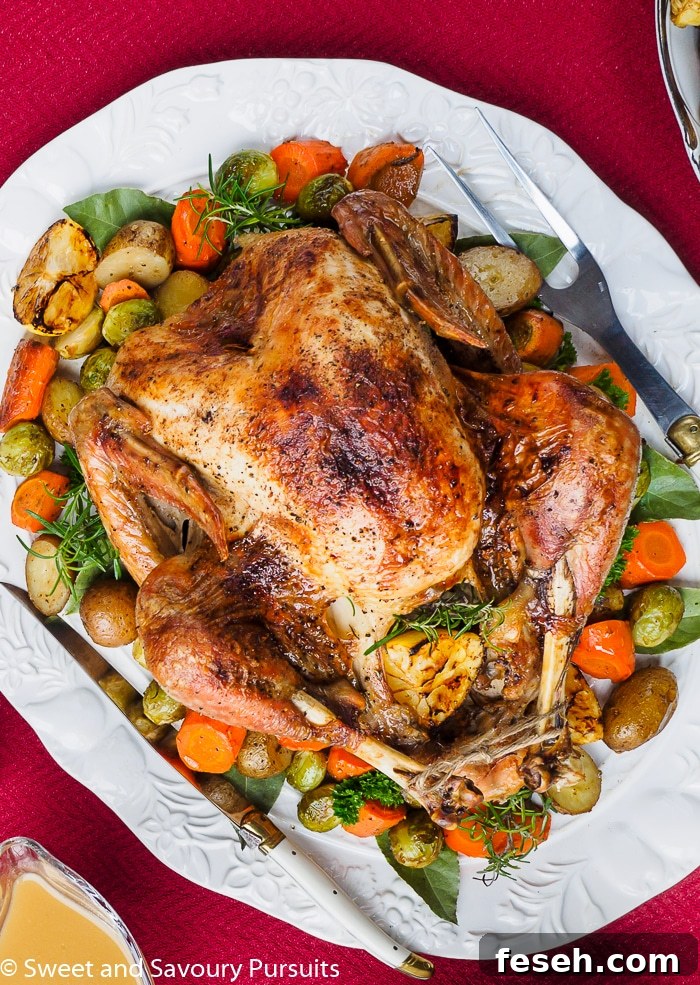
An easy roast turkey with gravy is straightforward to prepare. With a few simple steps and aromatic ingredients, you’ll have a flavorful centerpiece that’s perfect for holiday gatherings.
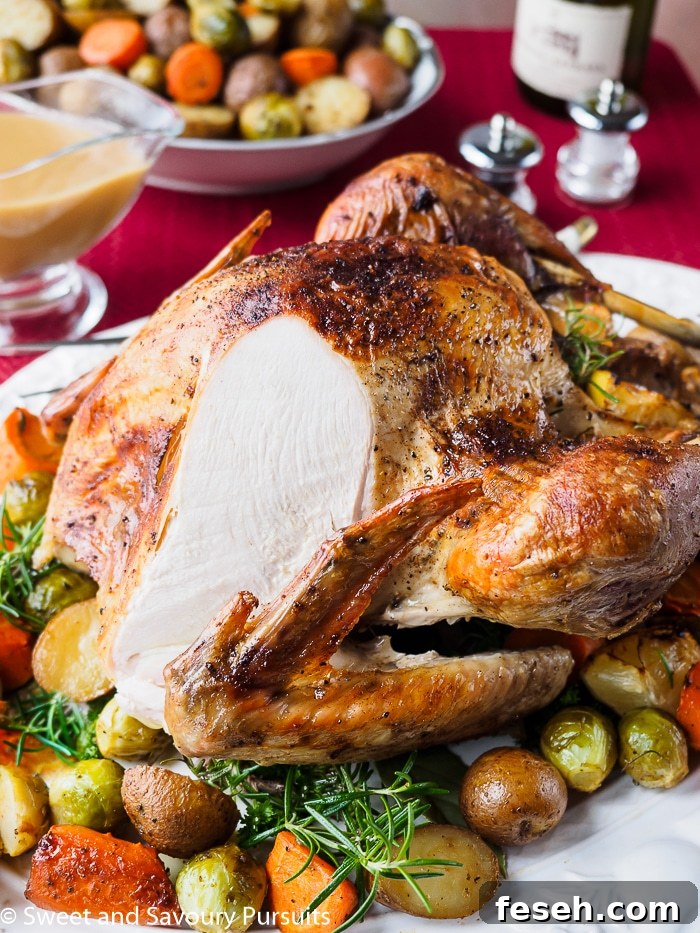
Though roasting a turkey takes time, it requires little hands-on effort. This recipe will guide you to a tender, juicy bird and a rich homemade gravy.
How to Defrost and Prepare a Turkey for Roasting
If your turkey is frozen, plan to thaw it in the refrigerator for several days—longer for larger birds. For faster thawing, submerge the turkey in cold water, changing the water every 30 minutes. Estimate about one hour per pound when using the cold-water method.
After thawing, remove the neck and giblets from the cavity and place them in the roasting pan to boost flavor in the drippings, which become the base for the gravy. Aromatic vegetables and fresh herbs add depth; they are used to rub the turkey, fill the cavity, and flavor the pan.
Below is an overview of ingredients for a 9–10 pound turkey. Refer to the recipe card later in the post for exact amounts and full instructions.
Ingredients Overview
- Turkey: fresh or fully thawed
- Butter: adds moisture and helps create golden brown, crispy skin
- Carrots, celery, onion: flavor the bird and the gravy
- Garlic cloves: crushed with salt to make a paste for the butter rub
- Fresh rosemary, thyme, parsley: aromatic herbs for flavor
- Salt and black pepper: use sea salt if available
- Ground cinnamon (optional): adds a warm, savory note used in many Middle Eastern meat dishes
These ingredients ensure a flavorful roast and produce rich pan drippings for a delicious gravy.
Steps Overview
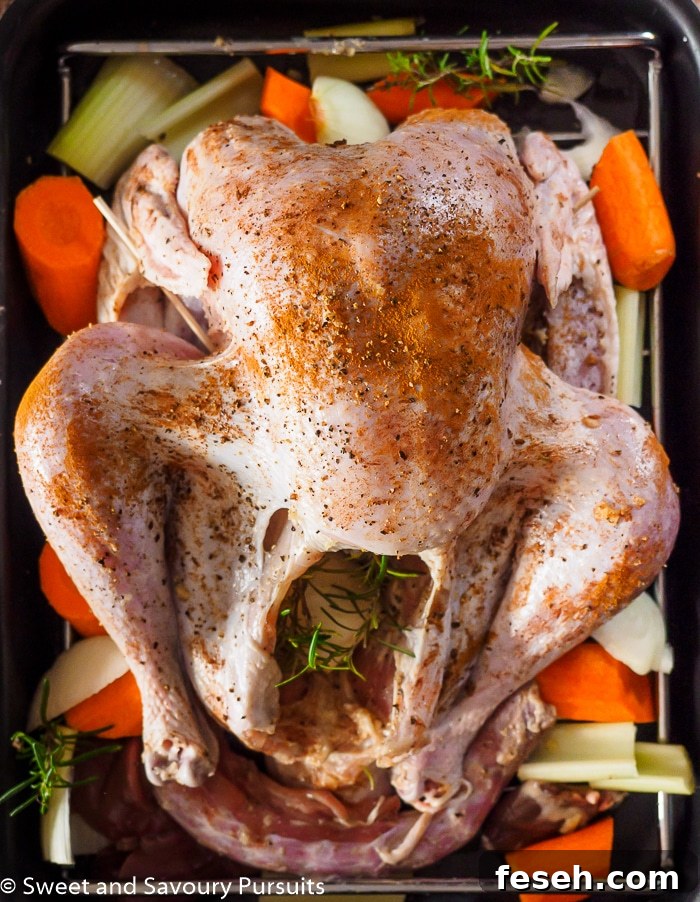
The butter-and-garlic rub is the key to flavor, color, and crisp skin. Rub it under and over the skin and inside the cavity so the turkey seasons while it roasts.
- Position the oven rack low and preheat the oven.
- Pat the turkey dry with paper towels.
- Crush garlic with salt to form a paste, blend with softened butter, and spread the mixture under and over the skin and inside the cavity. Season with freshly ground black pepper and a touch of cinnamon if using.
- Place the turkey breast-side up on a rack in a roasting pan. Tuck the wing tips under. Fill the cavity with some chopped carrots, celery, onion, and a few herb sprigs. Spread the remaining vegetables and herbs around the bird. Add the neck and giblets to the pan, tie the legs together, and pour about 1 cup of water into the pan.
- Roast the turkey, basting with pan juices every 30 minutes. Add water if the pan is drying out and rotate the pan occasionally for even browning. After roughly two hours, loosely cover the breast with foil to prevent over-browning.
Tip: Use an instant-read or meat thermometer to ensure accurate doneness. If you don’t have one, pierce the thickest part of the thigh—if the juices run clear, the turkey is done. Check a few spots since cooking can vary across the bird.
How to Make Gravy from Pan Drippings
The roasted vegetables and herbs provide excellent flavor for gravy. You’ll need the pan drippings, stock, flour, and a little butter. Follow these steps for smooth, flavorful gravy:
- Reserved turkey drippings, vegetables, and herbs
- Turkey or chicken stock
- All-purpose flour
- Butter
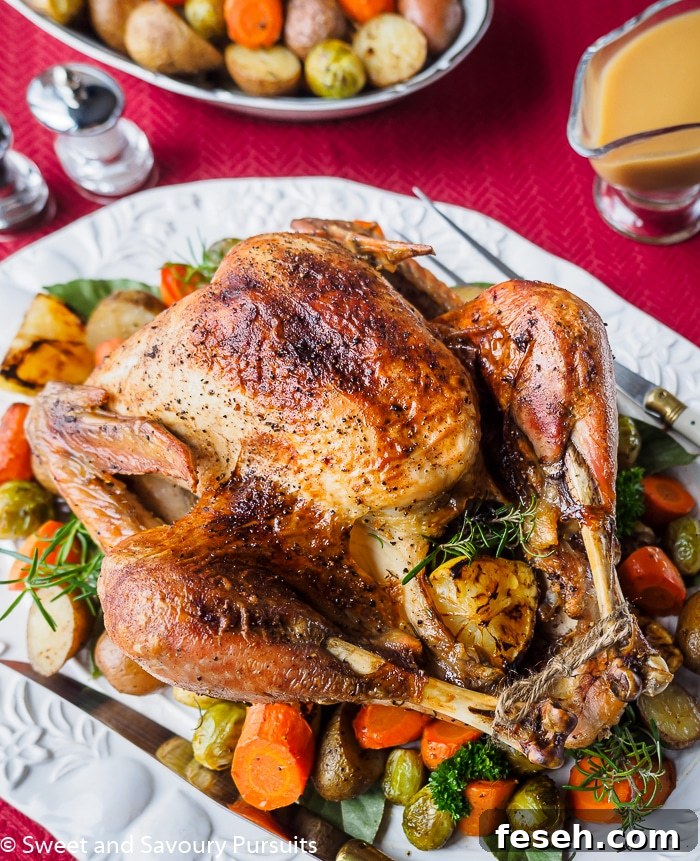
- After the turkey finishes cooking, transfer it to a cutting board to rest.
- Place the roasting pan with drippings and vegetables over medium heat. Add stock and scrape the browned bits from the bottom of the pan. Simmer briefly, then strain the liquid into a heatproof bowl or measuring cup.
- In a saucepan, melt butter and whisk in flour to form a roux. Cook until it begins to brown, then gradually add the reserved broth while whisking to prevent lumps. Simmer until the gravy thickens.
- Adjust seasoning with salt and pepper to taste, then serve with the carved turkey.
Serving Suggestions
Serve the turkey soon after carving for the best texture and temperature; if you need to wait, cover the carved bird with foil to keep it warm. Classic accompaniments include mashed potatoes, stuffing, and roasted vegetables.
For carving guidance, consult a trusted carving tutorial. Plan the timing so sides and gravy are ready when the turkey is rested and carved.
Storage Instructions
Refrigerate leftovers promptly and consume within three days, or freeze for longer storage. To freeze, remove the meat from the bones, place it in an appropriately sized airtight container, and freeze for up to three months.
Flour-based gravy can also be frozen for up to three months. Pour it into freezer-safe containers or bags, thaw overnight in the refrigerator, and reheat gently, stirring to restore smoothness.
Recipes for Leftovers
Leftover turkey makes quick sandwiches or can be added to soups and stews. Swap turkey into recipes that call for cooked chicken—such as creamy noodle and vegetable soup, tomato orzo soup, or a hearty bean soup—adding the meat at the end to warm through.
Happy holidays!
Summarize and Save This Content On
Side Dishes for Turkey Dinner
- Sweet Potato Biscuits
- Pomegranate, Pear and Pecan Salad with Balsamic Vinaigrette
- Spinach and Clementine Salad
- Roasted Sweet Potato Salad with Citrus Tahini Dressing
- Easy Spanakopita
⭐⭐⭐⭐⭐ Have you made this recipe? Let us know how it turned out! Leave a star rating and a comment below — we’d love to hear from you.
Easy Roast Turkey with Gravy Recipe
Pin Recipe
SaveSaved!
Ingredients
- 9 to 10 lbs turkey fresh or defrosted
- 3 tablespoons butter softened
- 3 carrots coarsely chopped
- 2 celery stalks coarsely chopped
- 1 large onion quartered
- fresh herbs: rosemary, thyme, parsley sprigs
- 3 garlic medium cloves
- 2 teaspoons salt
- 1 teaspoon ground pepper
- ½–¾ teaspoon ground cinnamon optional
For the Gravy
- reserved pan drippings, veggies and herbs
- 4 cups turkey or chicken stock more broth to thin the gravy if needed
- 4 tablespoons flour
- 2 tablespoons butter use sparingly—pan drippings provide fat
Instructions
-
Preheat the oven to 325° F and set the rack in the lower position.
-
Pat the turkey dry with paper towels.
-
Crush garlic with salt into a paste and mix with softened butter. Rub the mixture all over the turkey, under the skin (especially over the breast), and inside the cavity. Season with freshly ground pepper and about ½ teaspoon cinnamon if using.
-
Place a rack inside a large roasting pan and set the turkey breast-side up. Tuck the wing tips under. Add some chopped carrots, celery, onion, and herb sprigs into the cavity, then spread the remaining vegetables and herbs around the bird. Add the neck and giblets to the pan, tie the legs with kitchen twine, and pour 1 cup of water into the pan.
-
Roast the turkey, basting about every 30 minutes with pan juices. Add water if the pan dries out and rotate the pan occasionally for even browning. Around two hours in, cover the breast loosely with foil to protect it from over-browning.
-
Begin checking for doneness at the two-hour mark for a 9–10 lb turkey using a meat thermometer. The thigh should read 170° F and the breast 165° F. When fully cooked, transfer the turkey to a cutting board or platter, cover loosely with foil, and let it rest while you make the gravy.
How to Make Gravy
-
Place the roasting pan with drippings, vegetables, and herbs over medium heat. Add stock and scrape the browned bits from the pan. Simmer briefly, then strain the liquid into a large measuring cup or heatproof bowl.
-
In a saucepan over medium-high heat, melt butter and whisk in flour to form a roux. Cook until it begins to color, then slowly whisk in the reserved broth to remove lumps. Simmer until the gravy thickens and adjust seasoning with salt and pepper.
-
Serve the carved turkey with the warm gravy.
Notes
- Turkey cooking time varies with weight. Always verify doneness with a meat thermometer: 170° F in the thigh and 165° F in the breast.
- Cinnamon is optional but adds a warm, savory depth and is commonly used in Middle Eastern savory dishes.
- Freeze leftovers if not eaten within three days. Remove meat from bones and store in appropriately sized airtight containers for up to three months.
- To freeze gravy, pour it into freezer-safe containers or bags and freeze up to three months. Thaw overnight in the refrigerator and reheat gently, stirring to restore a smooth texture.
Nutrition
This post has been updated. It was originally published in December 2017.