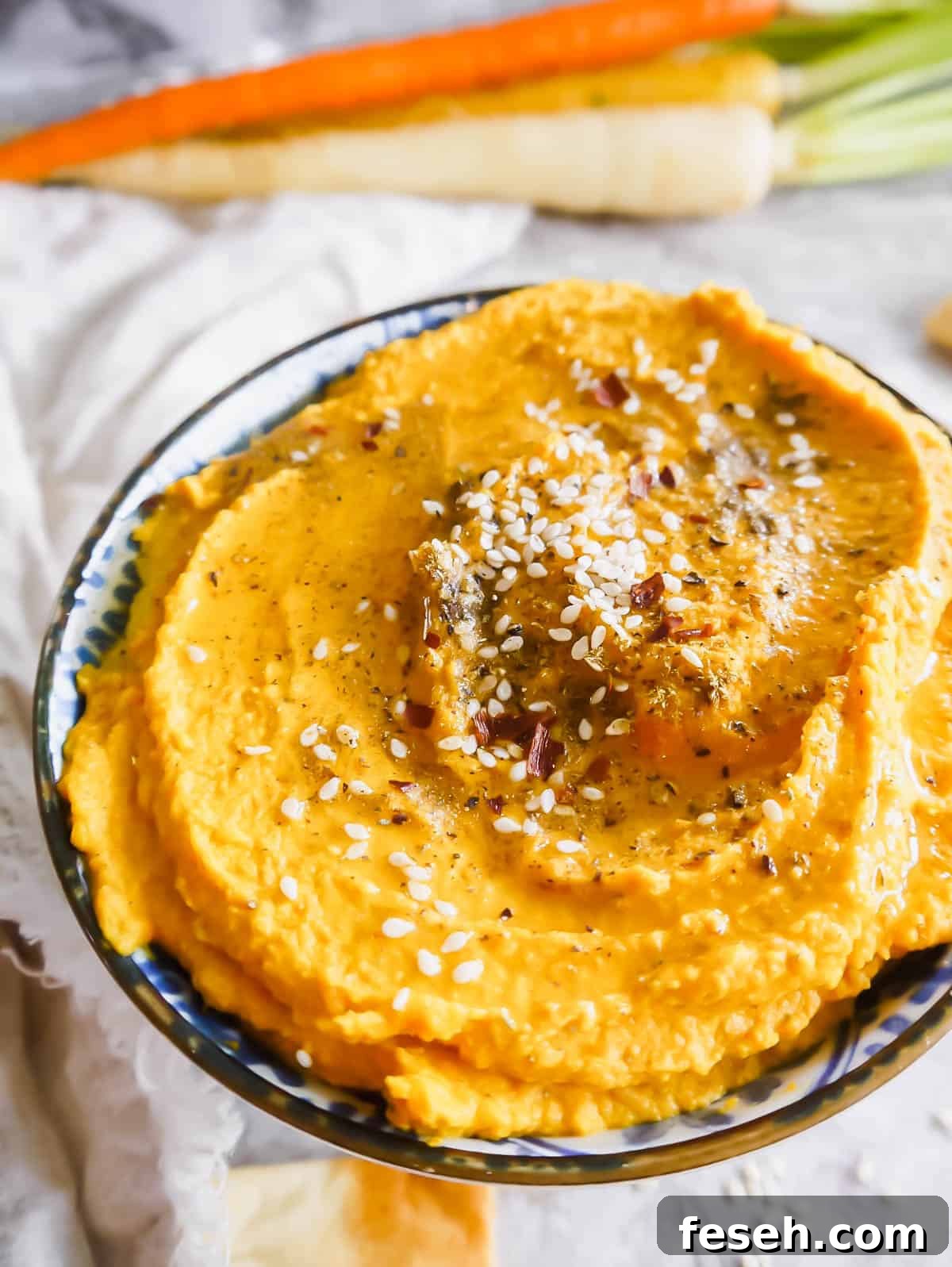
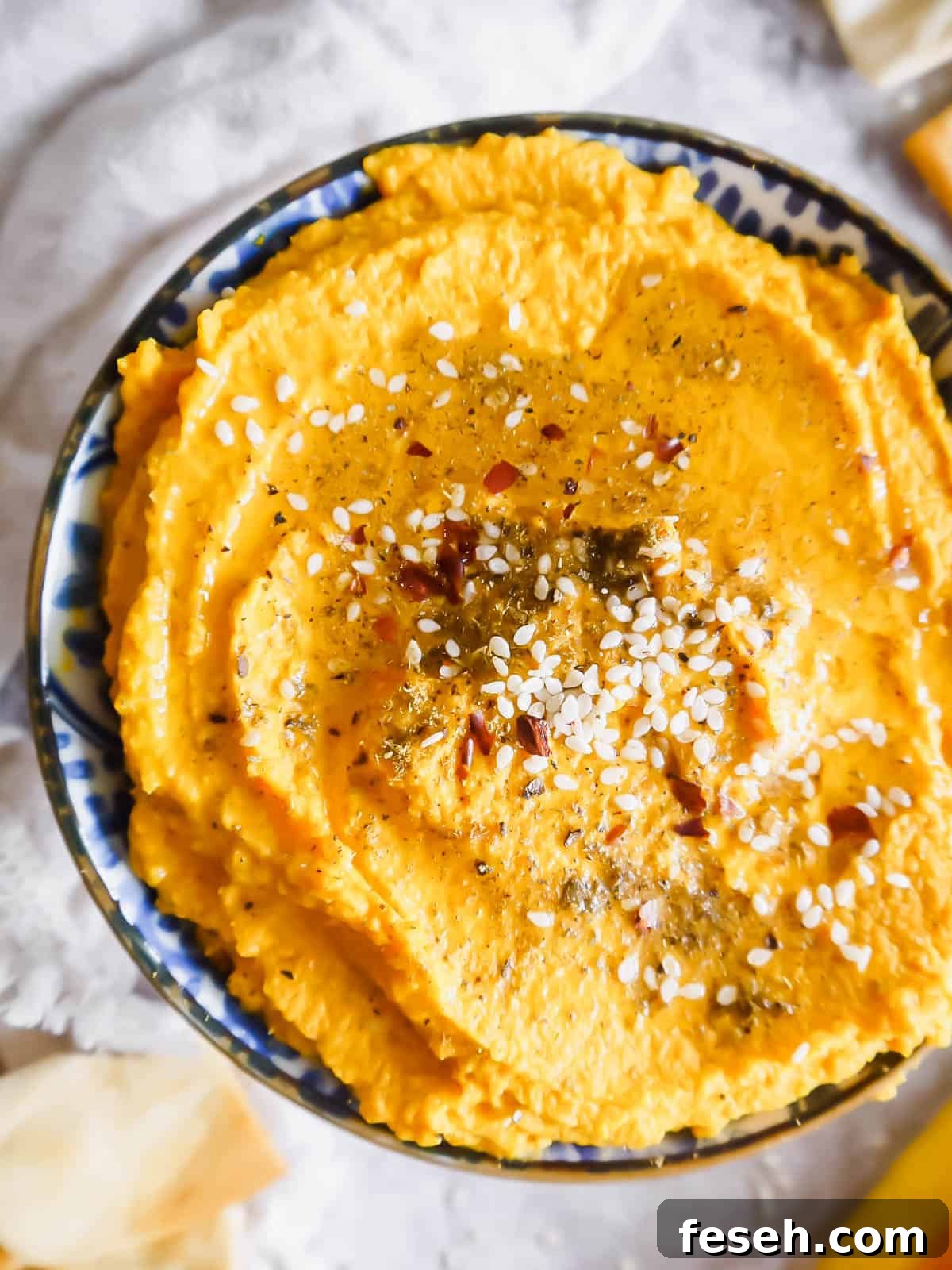
This Roasted Carrot Hummus with za’atar is a light, fluffy, and flavorful hummus made from roasted carrots, roasted garlic, and canned chickpeas. It’s seasoned with tahini, lemon juice, olive oil, and a bright za’atar blend for a nutrient-packed appetizer or spread.
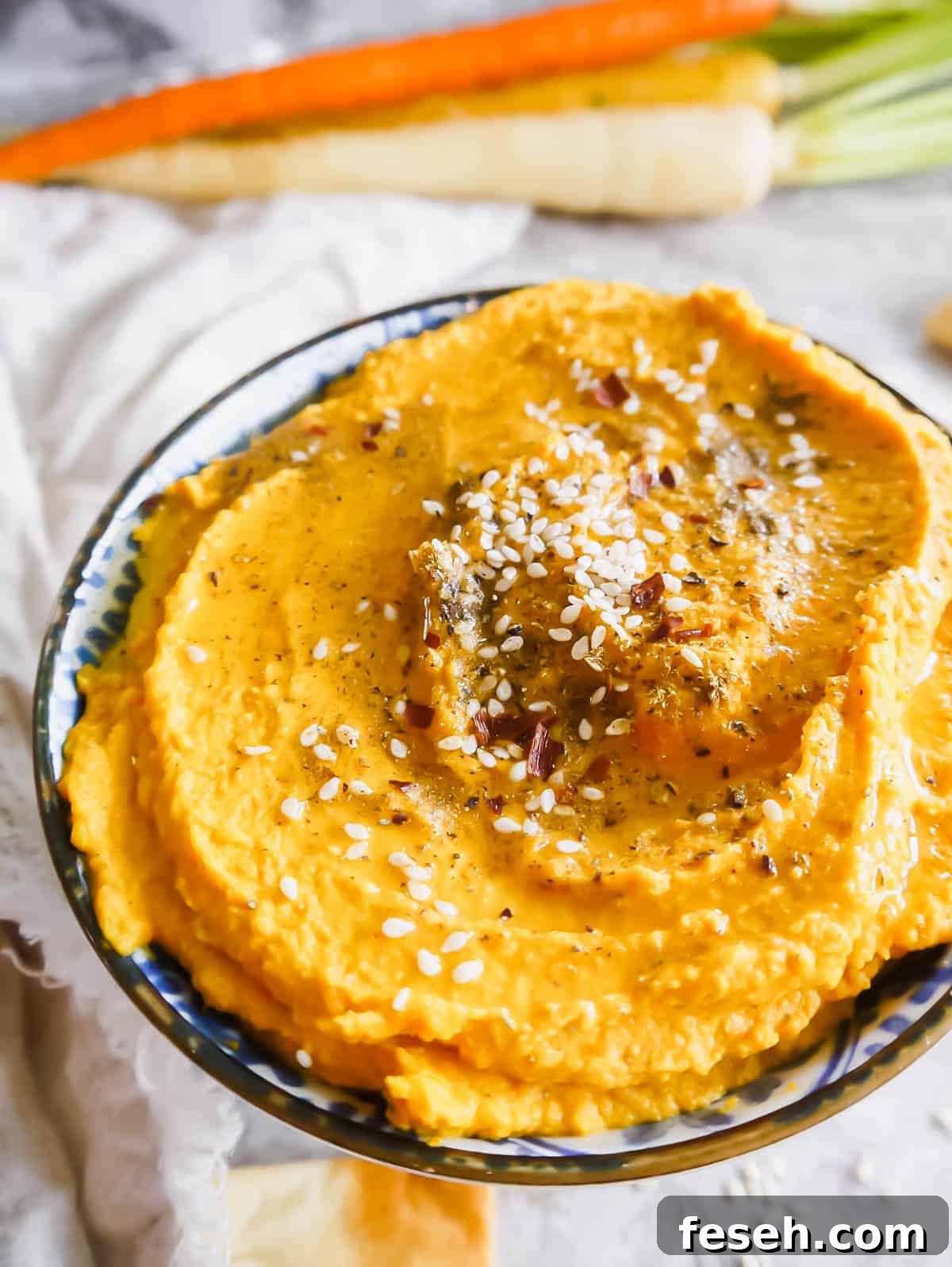
This is honestly one of the best hummus recipes I’ve made. The natural sweetness of roasted carrots combined with roasted garlic creates a rich, savory-sweet profile. Za’atar adds an herby, tangy note that complements the carrots perfectly. The texture turns out incredibly fluffy when blended properly — guests always ask for the recipe.
I like serving it with almond flour everything crackers or baked plantain chips, but pita chips, fresh vegetables, or your favorite crackers work just as well. It’s simple enough for a snack or lunch and makes a great dish to bring to gatherings.
Table of Contents
- What makes this recipe great
- Recipe ingredients:
- Additions/ Substitutions:
- Step by step roasted carrot hummus instructions:
- Expert Tips:
- Ways to use carrot hummus
- Recipe FAQs:
- Other chickpea recipes you will enjoy:
- Other carrot recipes you will enjoy:
- Roasted Carrot Hummus with Za’atar Spice Recipe
What makes this recipe great
- Uses a short list of fresh, healthy ingredients.
- Quick and simple — ready in under an hour.
- Extremely fluffy texture when made with ice-cold water.
- Bold, complementary flavors that appeal to many palates.
- Easy to customize with different spices or beans.
- A smart way to use up extra carrots.
- Naturally vegan, dairy-free, and gluten-free.
Recipe ingredients:
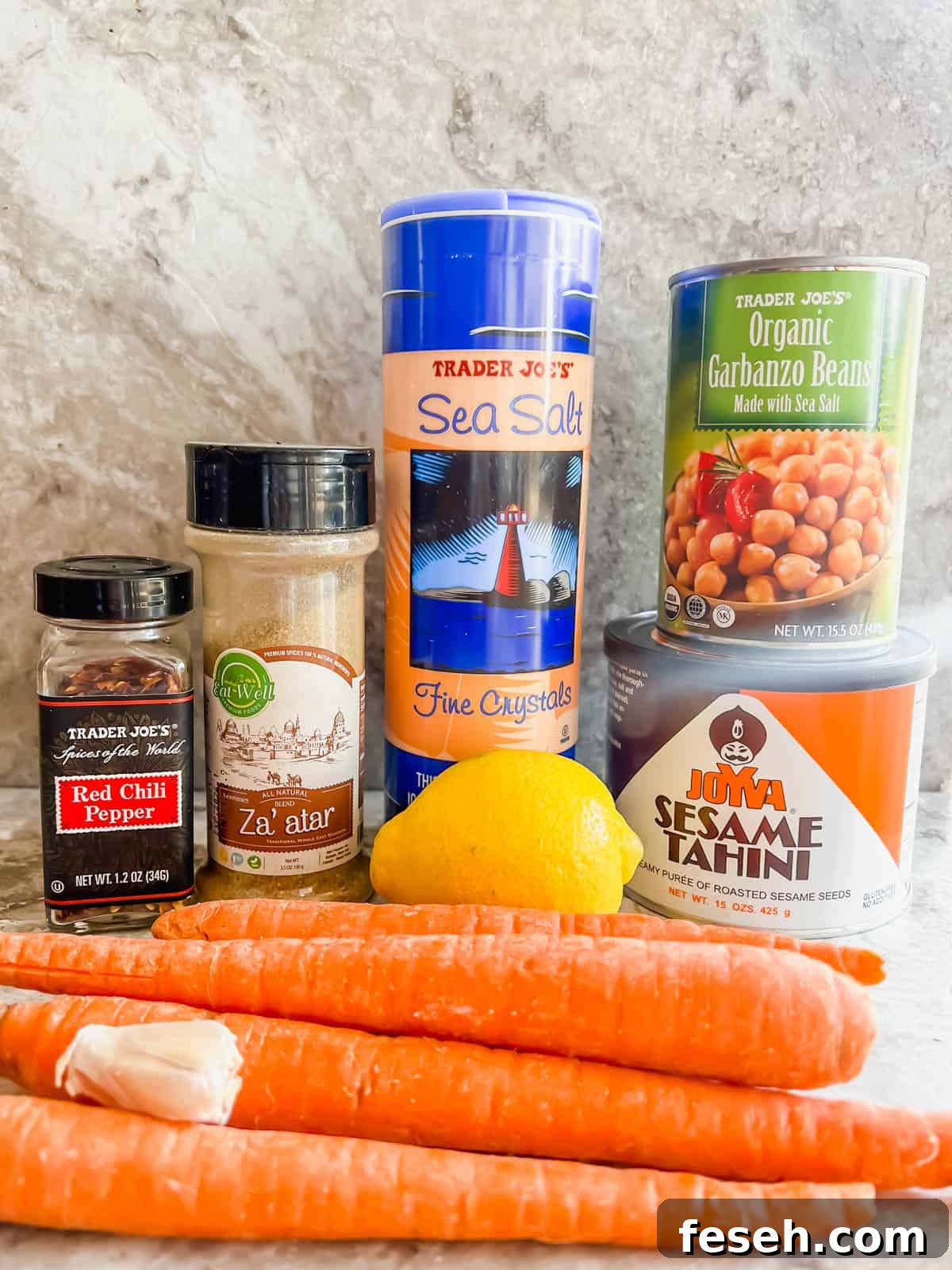
- Carrots – fresh, preferably organic.
- Garlic – roasted to balance the carrots’ sweetness.
- Canned chickpeas – garbanzo beans provide creaminess and protein.
- Tahini – pure roasted sesame seed paste for depth of flavor.
- Lemon juice – fresh-squeezed is best for brightness.
- Olive oil – good-quality extra virgin olive oil.
- Chili flakes – optional, for a gentle heat.
- Za’atar seasoning – a mix of thyme, oregano, sumac, and sesame for a distinctive finish.
Refer to the recipe card below for exact measurements.
Additions/ Substitutions:
- Swap chickpeas for cannellini (white) beans for a milder base.
- Use sunflower seed butter in place of tahini for a sesame-free option.
- If you don’t have za’atar, mix thyme, oregano, sumac, and sesame seeds.
- Add cumin or smoked paprika to adjust the spice profile.
Step by step roasted carrot hummus instructions:
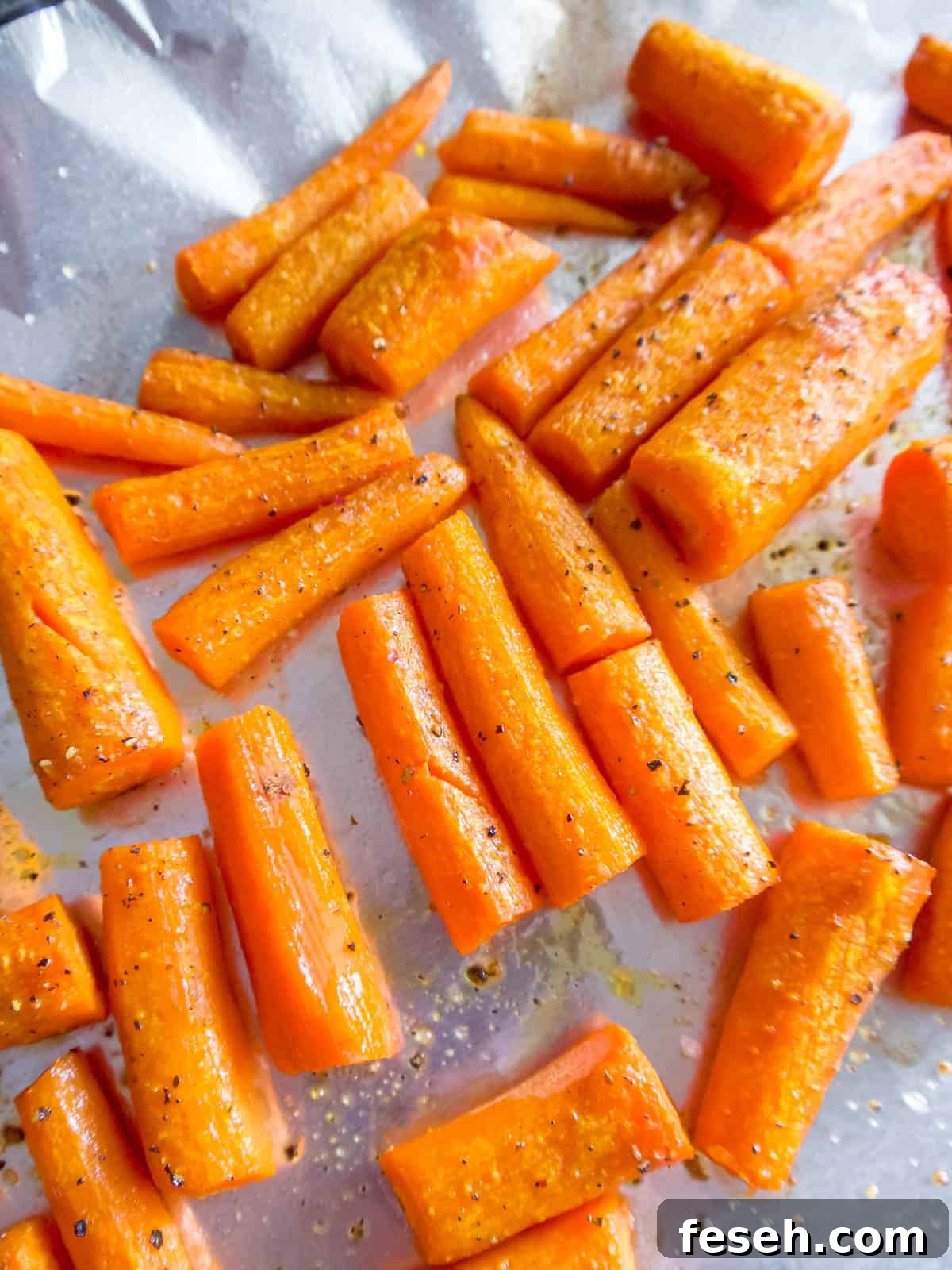
Step 1: Peel and cut carrots into roughly 2-inch pieces. Toss them and a garlic clove with olive oil, salt, and pepper. Roast on a baking sheet until fork-tender and slightly caramelized.
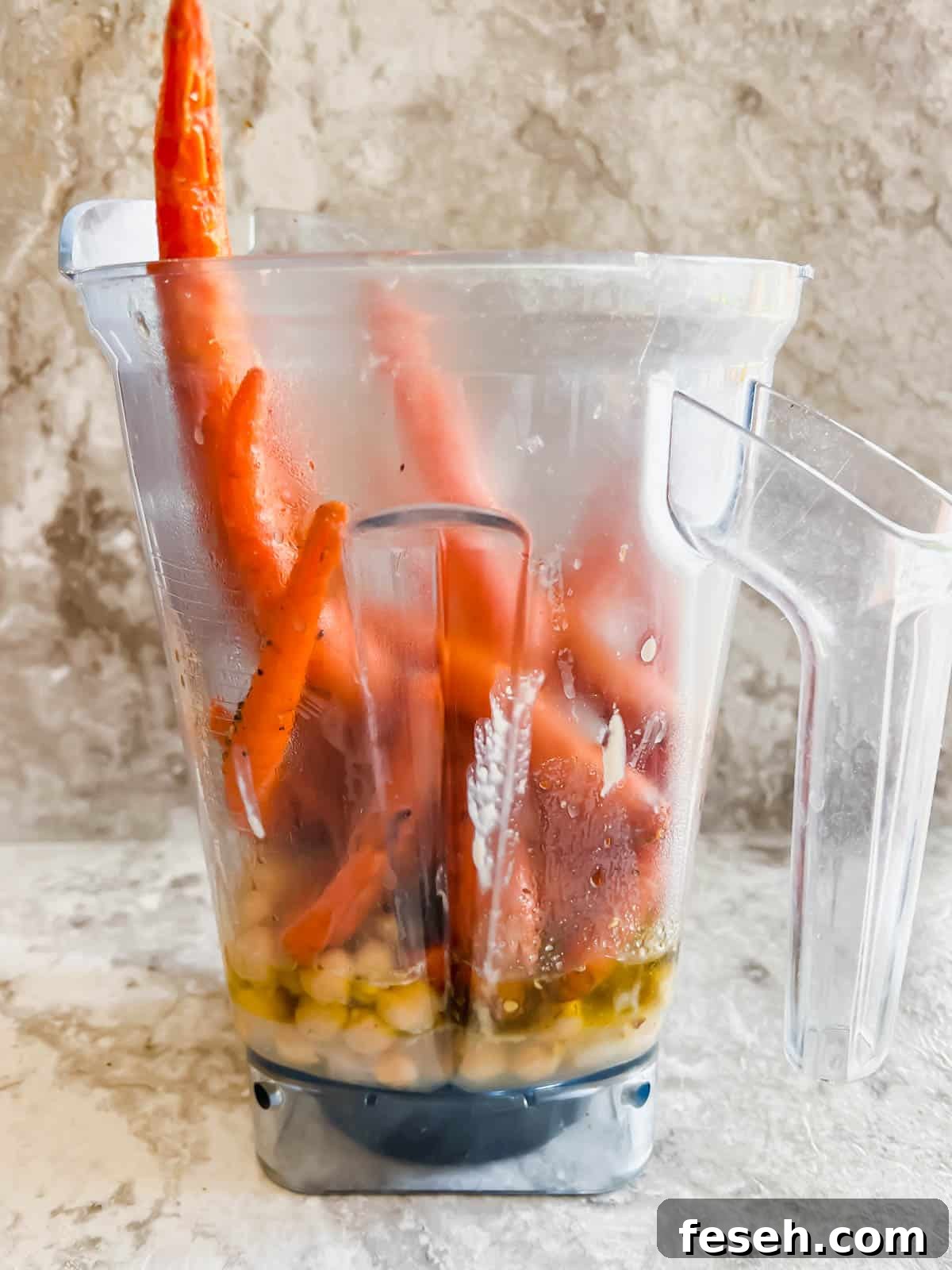
Step 2: Let the roasted carrots and garlic cool slightly, then add them to a food processor or high-speed blender with chickpeas, tahini, lemon juice, olive oil, salt, chili flakes (if using), and za’atar.
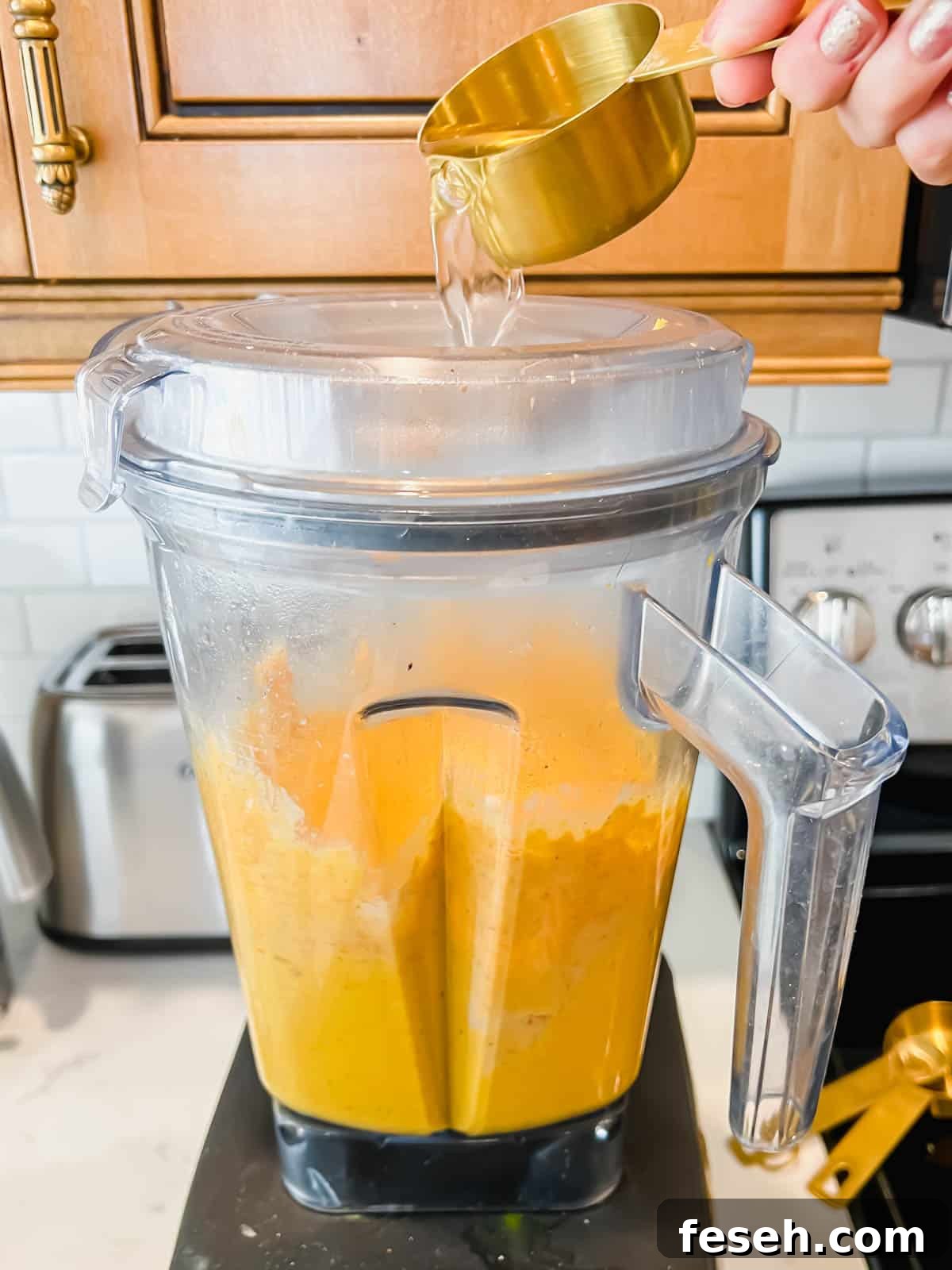
Step 3: While blending, pour in ice-cold water a little at a time. The cold water helps create a lighter, fluffier texture.
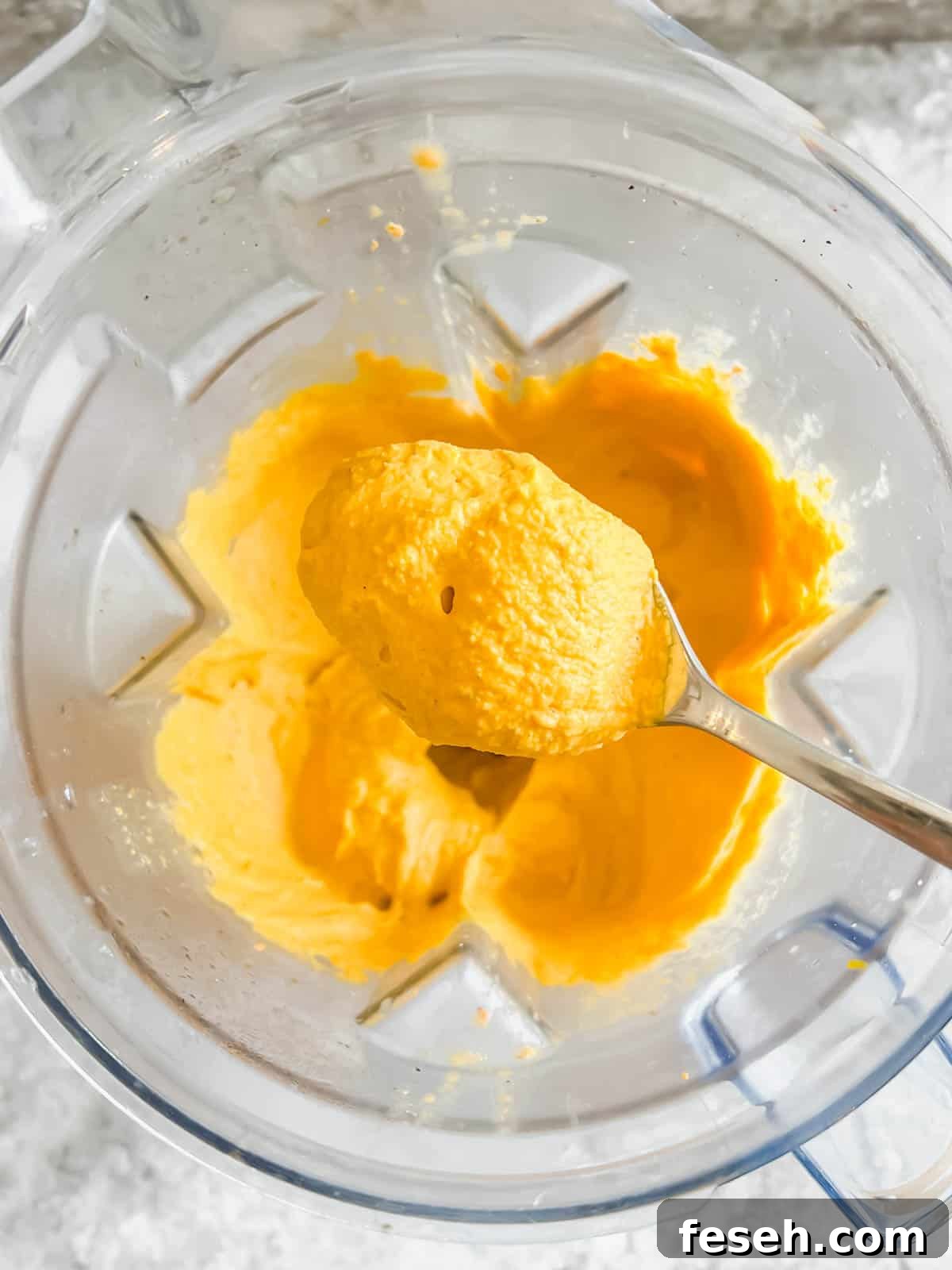
Step 4: Blend until smooth. Taste and adjust seasoning — add more salt, lemon, or za’atar to suit your preference.
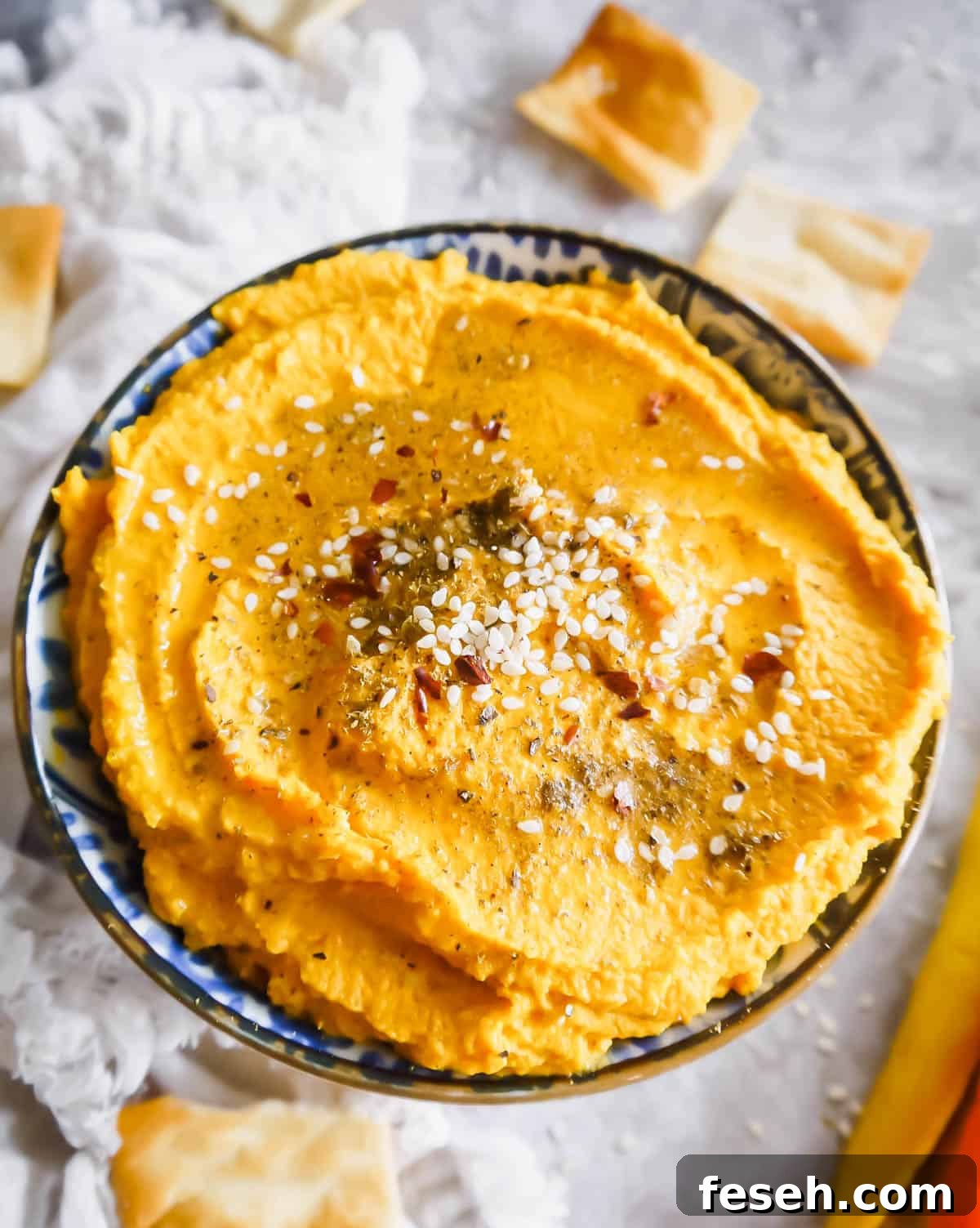
Step 5: Transfer to a serving bowl and garnish as desired. I love a drizzle of olive oil, a sprinkle of za’atar, sesame seeds, and a few chili flakes for contrast.
Expert Tips:
- Cut large carrots evenly so they roast uniformly; small carrots can be roasted whole.
- If carrots are well-scrubbed and organic, you can skip peeling to save time.
- Use a food processor or high-speed blender for the smoothest consistency.
- Always add ice-cold water while blending to achieve a light, airy hummus.
- Store leftovers in an airtight container in the refrigerator for 3–4 days.
Ways to use carrot hummus
- As a dip with pita, chips, or fresh vegetables.
- As a spread on sandwiches, wraps, or toast.
- As a creamy topper for salads to add flavor and richness.
Recipe FAQs:
No. Chickpeas are legumes, which are not typically included in Paleo diets. For a Paleo-friendly alternative, use roasted vegetables like eggplant and cauliflower as a base.
No. Roasting the carrots concentrates their sweetness and softens them; using raw carrots will result in a grainy texture and less developed flavor.
For a sweeter hummus, add extra carrots or a touch of honey or maple syrup. To increase savory depth, add more roasted garlic and spices like cumin or smoked paprika.
Za’atar is a blend commonly made from thyme, oregano, sumac, and sesame seeds. It adds a bright, earthy, and slightly tangy flavor that pairs beautifully with roasted carrots.
Other chickpea recipes you will enjoy:
Try other hummus variations like pumpkin, sweet potato, or green goddess hummus for different flavor profiles. Chickpea salad is another easy, nutritious option.
Other carrot recipes you will enjoy:
Explore recipes such as maple bacon–glazed roasted carrots, carrot-grapefruit salad, or other roasted carrot dips for more ways to enjoy carrots.
Did you try this recipe? Please leave a ⭐ review!
Roasted Carrot Hummus with Za’atar Spice
Ingredients
- 1 lb carrots, peeled and cut into 2-inch pieces
- 1 clove garlic
- 1 cup canned chickpeas, (not the whole can)
- 3 Tablespoons tahini
- 3 Tablespoons lemon juice
- 1/4 cup olive oil
- 1/2 teaspoon salt
- a pinch red chili flakes
- 2 teaspoons za’atar seasoning
- 1/2 cup ice cold water
Instructions
-
Preheat oven to 415°F (about 215°C). Toss carrots and garlic with olive oil, salt, and pepper. Roast for 30–35 minutes, until fork tender. Let cool 10–15 minutes.
-
Add roasted carrots and garlic to a food processor or blender with chickpeas, tahini, lemon juice, 1/4 cup olive oil, salt, a pinch of chili flakes, and za’atar. Start blending.
-
While blending, pour in 1/2 cup ice-cold water to achieve a light texture.
-
Blend until smooth and creamy, stopping to scrape the sides as needed.
-
Serve topped with extra olive oil and a sprinkle of za’atar.
Notes
- If carrots are large, cut them evenly so they roast uniformly; small carrots can be roasted whole.
- If carrots are well-scrubbed and organic, peeling is optional.
- Use a food processor or high-speed blender for the smoothest result.
- Ice-cold water is essential to achieve the fluffy texture.
Nutrition
Nutrition information is an approximation.