Wondering how to use your new Santoku knife? You’ve come to the right place.
In this guide you’ll learn:
- What a Santoku knife is
- How to use it safely and effectively
- What foods it’s best for
- How to care for and choose a Santoku knife
What is a Santoku Knife?
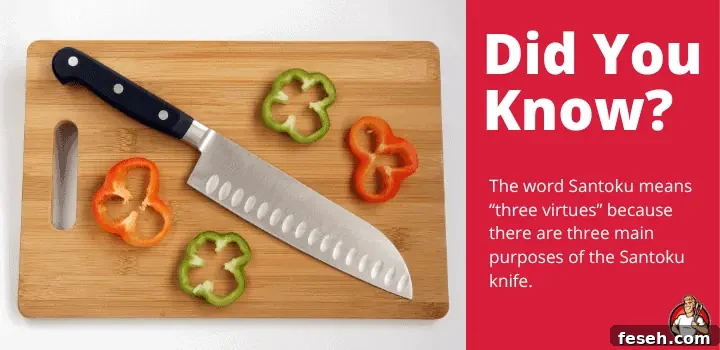
The Santoku is a classic Japanese kitchen knife valued for its versatility. The name Santoku translates to “three virtues,” referring to its primary roles: cutting, slicing, and chopping. Designed for everyday kitchen tasks, it’s popular with home cooks and professional chefs alike.
Compared with a Western chef’s knife, the Santoku typically has a shorter, thinner blade and a flatter profile with a gently rounded tip. Many models are forged from high-quality carbon or stainless steel and feature a comfortable rectangular handle often textured or grooved for a secure grip, even when hands are wet.
Because the blade is thin and keen, the Santoku excels at producing clean, precise slices. That thinness is an advantage for precision work but also means the edge can chip if used improperly, such as cutting through bone or very hard items.
How to Use a Santoku Knife
Using a Santoku effectively is both technique and habit. Proper grip, finger placement, and motion make cutting safer, faster, and more precise. Below are simple steps to get the best results.
1. Start with the Right Grip
Hold the knife with a secure, comfortable grip. Many cooks use a pinch grip: pinch the blade between thumb and index finger where it meets the handle, while the remaining three fingers wrap around the handle. Position your forearm at roughly a 45-degree angle to the cutting board with a slight bend in the elbow—this gives control and range of motion.
2. Position Your Fingers
On the hand holding the food, curl your fingertips inward and use your knuckles as a guide. This “claw” position protects fingertips and helps you slice against a stable guide. Your index finger may rest lightly on the blade spine for extra control if comfortable, but avoid placing it where it could slip forward onto the cutting edge.
3. Follow with the Proper Motion
Santoku knives favor short, efficient strokes rather than an extended rocking motion. Lower the blade straight down through the food, then finish with a gentle forward roll to complete the cut. That forward motion helps produce clean slices and reduces drag on the blade, preserving sharpness. For mincing herbs or garlic, use a controlled up-and-down or short rocking action while keeping the tip near the board.
What Types of Food Can You Cut With a Santoku Knife?
The Santoku is a true all-purpose blade suited to many everyday kitchen tasks. Typical uses include:
- Slicing vegetables and fruits to thin, even pieces
- Carving thin slices of poultry, fish, and other meats
- Mincing garlic, herbs, and aromatics
- Dicing onions, peppers, potatoes, and similar produce
Its thin, sharp blade makes it especially good for delicate slicing and fine work. Avoid using a Santoku to cut through bones, frozen foods, or very hard items that can chip the edge.
What You Need to Know About the Santoku Knife
Although the name emphasizes three virtues, the Santoku is commonly used for four main kitchen tasks: basic cutting, slicing, mincing, and dicing. Its design supports precision and control, making it a go-to for cooks who prefer accurate, repeatable cuts.
Common uses at a glance:
- Basic cutting: Ideal for trimming and portioning meats that don’t require cutting through bone.
- Slicing: Excellent for thin, even slices of vegetables, fish, and cooked meats.
- Mincing: Great for garlic and herbs when the blade is sharp.
- Dicing: Produces clean, consistent dice for vegetables and fruits.
What are the Benefits of Using a Santoku Knife?
Home cooks who use a Santoku regularly appreciate several clear benefits:
Versatility
One knife can handle many tasks—mincing, slicing, dicing—so it reduces the need to switch tools frequently during prep.
Ability to Cut Thin Slices
The thin, sharp blade is optimized for precise, thin cuts of vegetables, fish, and boneless meats.
Efficient Cutting Motion
The Santoku’s flatter profile encourages short, efficient strokes that are fast and controlled. This differs from the long rocking motion used with some Western chef’s knives.
The Best Type of Santoku Knife
There are many reputable brands and models. When choosing a Santoku, consider blade material, length, handle comfort, and edge retention. High-quality stainless or powder steels hold an edge well; carbon steels can be sharper but may require more maintenance.
Blade length often ranges from about 5 to 7 inches—shorter blades offer precision and control, while slightly longer blades increase reach for larger tasks. Try to handle a knife before buying to ensure the balance and grip suit your hand.
Tips for Caring for Your Santoku Knife
Proper care keeps the Santoku performing and extends its life:
- Wash by hand with mild soap and warm water; avoid the dishwasher to prevent edge damage and handle wear.
- Dry thoroughly immediately after washing to prevent corrosion, especially with carbon steel blades.
- Hone regularly with a honing rod to maintain edge alignment; sharpen with a whetstone or professional sharpening service when the edge dulls.
- Store safely—knife blocks, magnetic strips, or blade guards protect the edge and reduce the risk of accidents.
Pros and Cons of Using a Santoku Knife
Pros:
- Precise slicing and clean cuts
- Lightweight and easy to maneuver
- Highly versatile for many kitchen tasks
Cons:
- Thin blade can chip if misused
- Not ideal for cutting through thick bones or extremely tough material
Final Thoughts on Using a Santoku Knife
The Santoku is an excellent, versatile knife that can become a primary tool in your kitchen. Use proper technique, keep it clean and sharp, and select a model that fits your hand and cooking style. With the right care and handling, a Santoku will deliver precise, reliable performance for years.