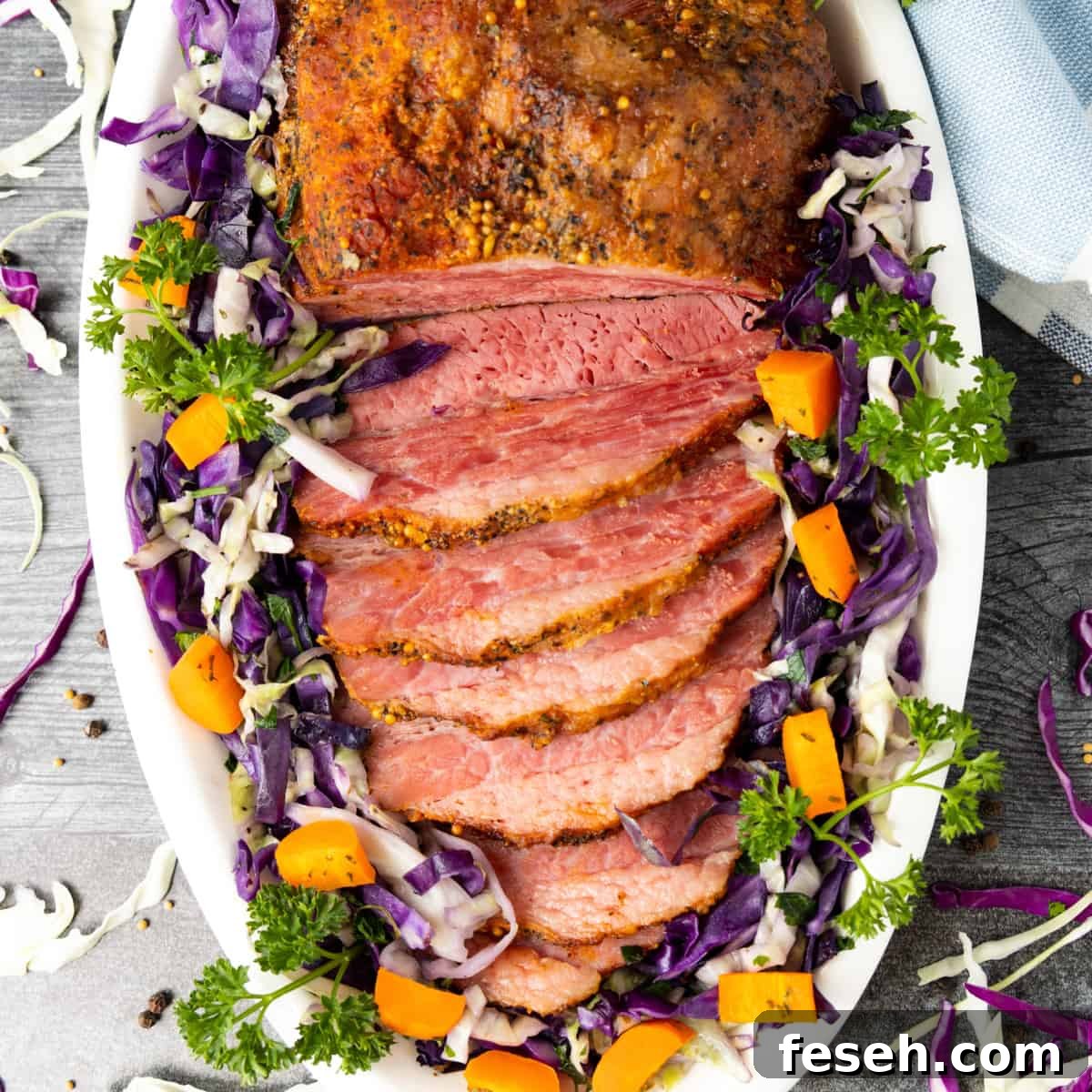
There is nothing better than a perfectly smoked corned beef served with classic sides for St. Patrick’s Day—or any day. Smoking the brisket adds a deep, savory layer of flavor you won’t get with other cooking methods, elevating the whole meal.
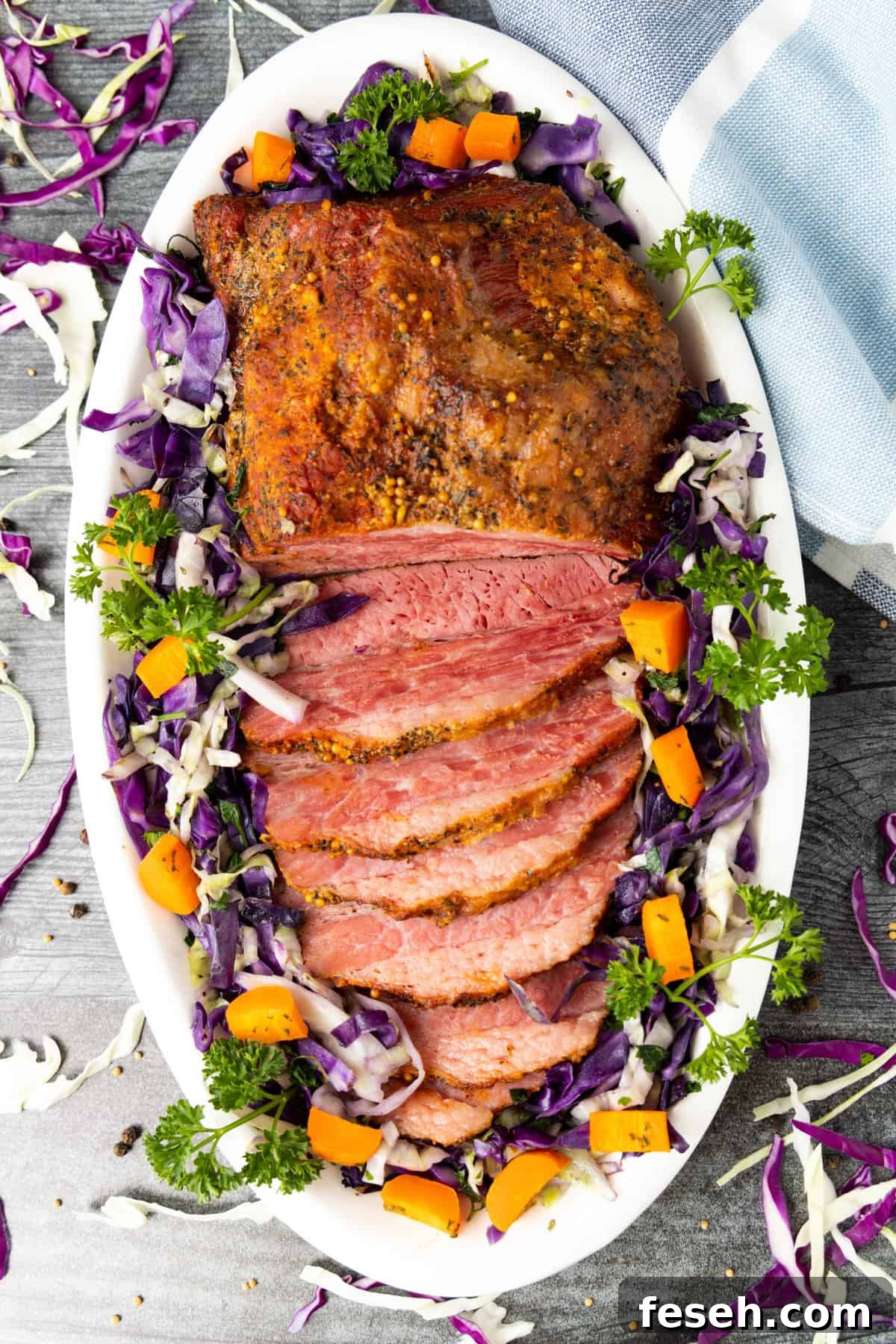
Video – How to smoke corned beef
Watch a clear step-by-step demonstration to see technique, timing, and tips for a tender, flavorful smoked corned beef. The video shows seasoning, placement in the smoker, spritzing, and the proper wrap-and-finish method.
What is corned beef?
Corned beef typically refers to a 3–4 lb flat-cut brisket that has been cured in a salt brine. You’ll usually find it vacuum-sealed at the grocery store. Because brisket is a relatively tough cut, it requires slow, gentle cooking to become tender and juicy.
In the United States, smoked corned beef is popular for St. Patrick’s Day celebrations. Another common preparation is corned beef hash, made with chopped corned beef and potatoes and often served for breakfast year‑round.
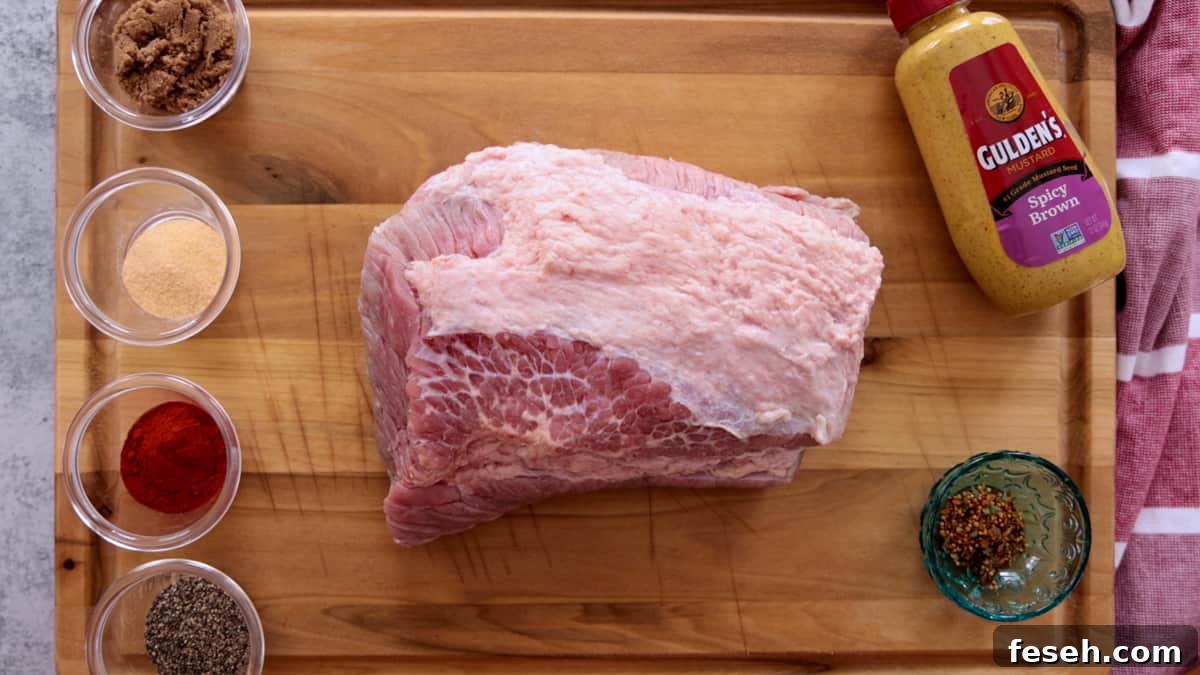
Ingredients
- 3–4 lb corned beef brisket (flat cut)
- Brown mustard
- Dark brown sugar
- Garlic powder
- Black pepper (freshly cracked recommended)
- Paprika
- Mustard seed (often included in the packaging)
- Beef broth (for spritzing while smoking)
Preparing the meat
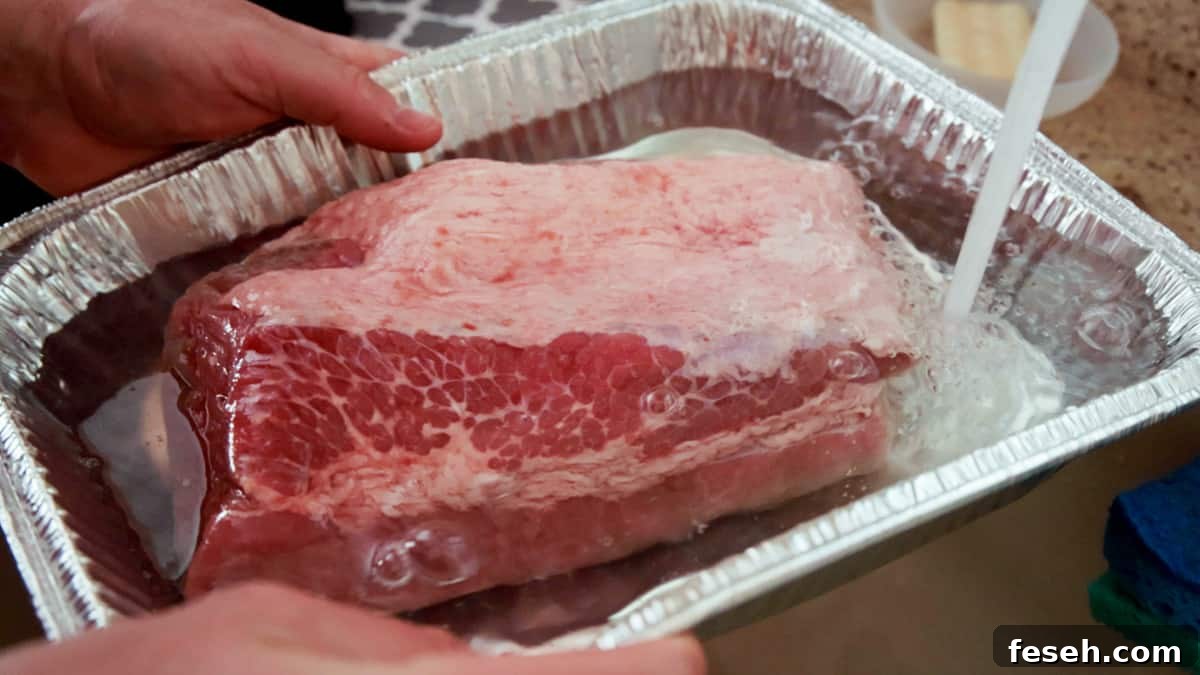
Store-bought corned beef is salt-brined and can be quite salty straight from the package. Taking time to rinse and soak helps remove excess salt and improves the final flavor.
- Rinse the brisket under cold water after removing it from the package.
- Soak the brisket in cold water for about 3 hours to leach out extra salt.
- Change the water every 30 minutes to keep the soak effective.
- After soaking, pat the brisket dry with paper towels before seasoning.
Fire up the smoker & choose wood
Preheat your smoker to 250°F while you finish preparing the meat and rub. A steady temperature around 250°F gives consistent smoke penetration and even cooking for brisket.
Smokers
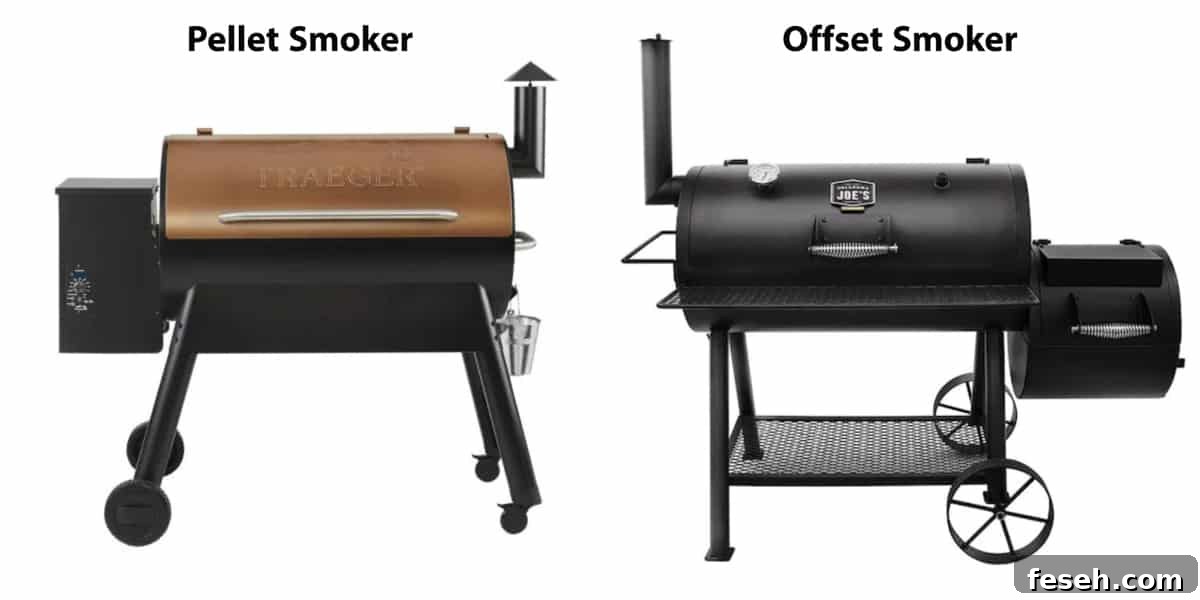
Pellet smokers are popular because they offer convenience and consistent temperatures, making it easy to achieve steady smoke over several hours. Traditional offset smokers also work well if you prefer manual fire control. Use whatever smoker you have, but make sure it holds temperature reliably for long cooks.
Wood
Hickory is an excellent choice for beef—robust but not overwhelming. For pellet grills, blended competition pellets (a mix of hardwoods) also produce a balanced, appealing smoke profile. Avoid very strong woods like mesquite unless you want a strong, assertive smoke flavor.
Seasonings
Corned beef often comes with a small seasoning packet that can be used, but you’ll want to add more to build flavor. The following approach layers mustard and a dry rub for a flavorful bark.
- Spread brown mustard over the surface of the brisket to help the rub adhere.
- Combine and apply the dry seasoning mix (including any packet spices from the packaging) liberally over all sides.
- Reserve beef broth for spritzing during the smoke—don’t pour it over the meat before cooking.
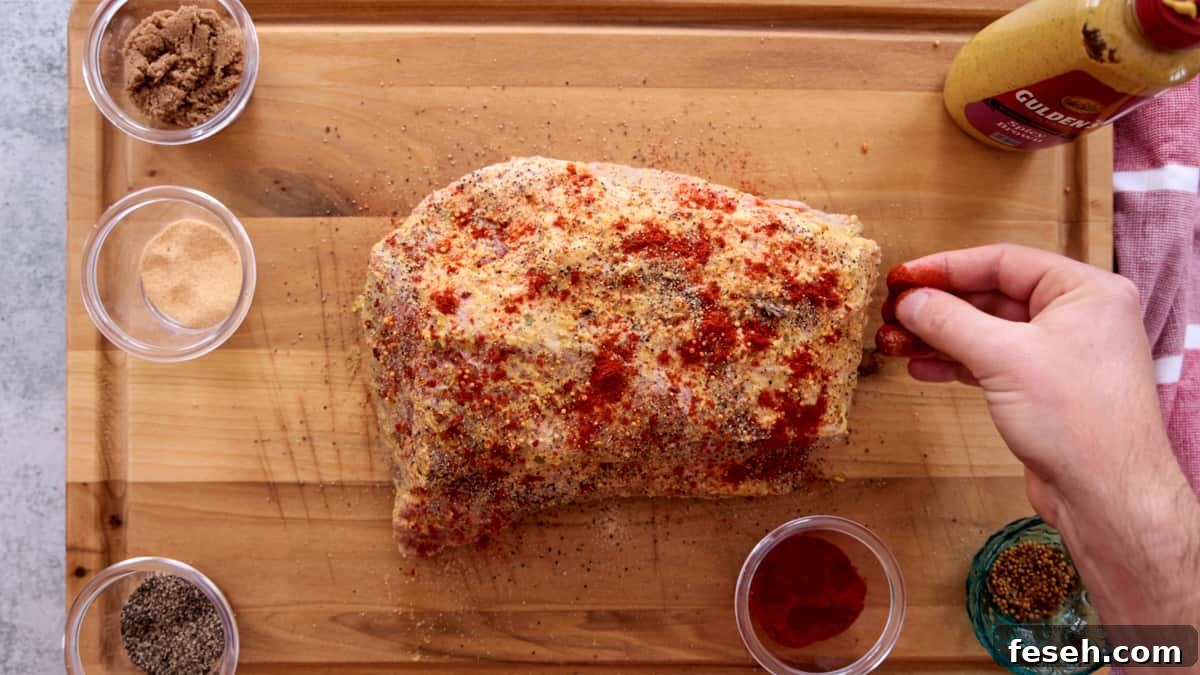
Note: Take a photo or note the direction of the muscle fibers before seasoning. The grain typically runs lengthwise; you’ll want to slice against this grain when serving.
Smoking the beef
With the smoker steady at 250°F and the brisket seasoned, it’s time to smoke. Follow the two-stage process below to get smoke flavor and a tender finish.
Initial smoke
Place the brisket directly on the grates fat side up so the fat can baste the meat as it renders. Smoke until the internal temperature reaches about 150°F—typically 3–4 hours, depending on size and smoker consistency.
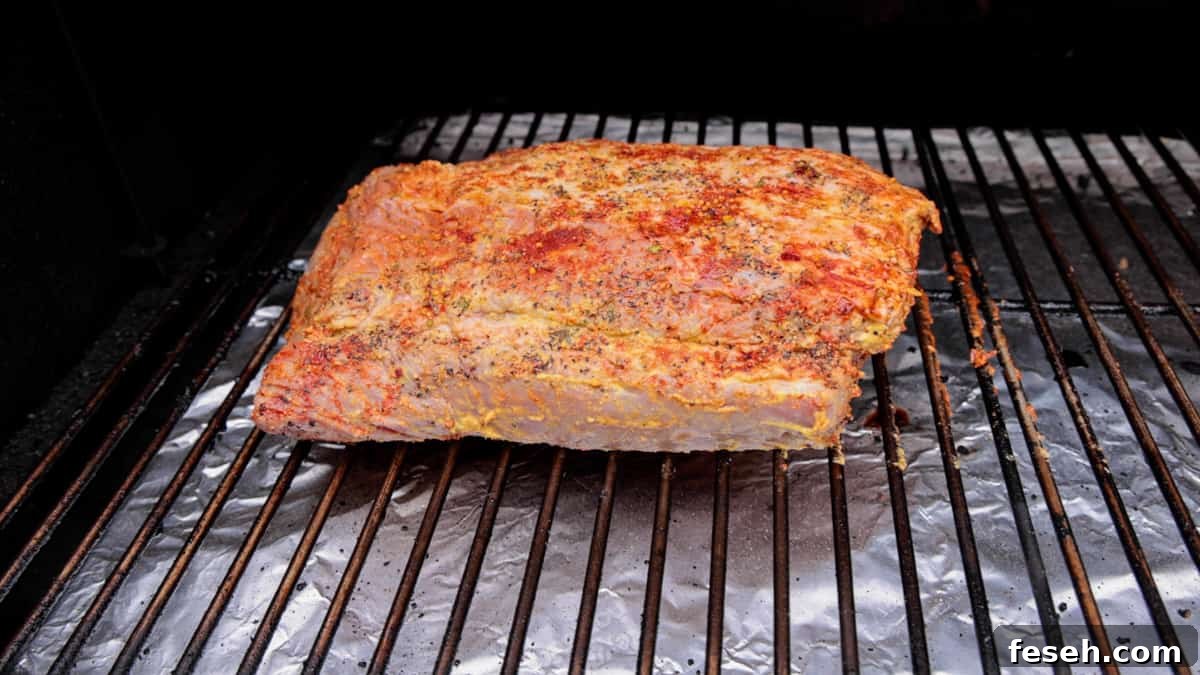
Every 45–60 minutes, spritz the brisket with beef broth from a spray bottle to maintain surface moisture and encourage a flavorful bark.
Wrapping / covering in foil
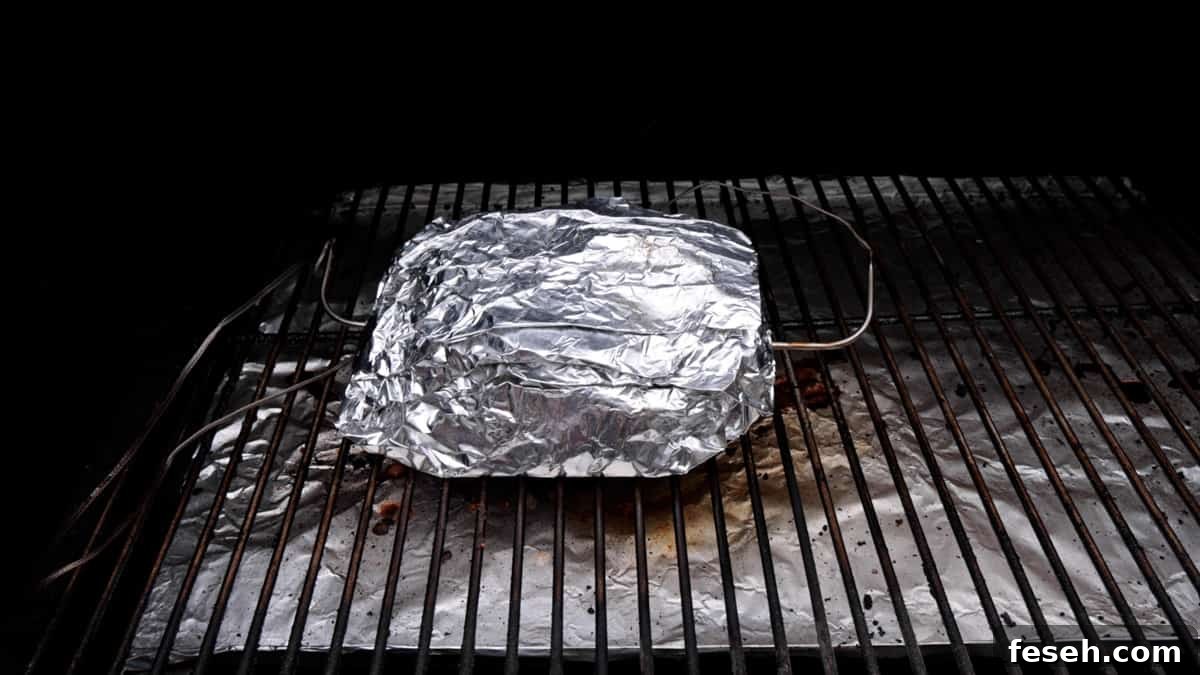
Once the brisket hits 150°F, remove it and wrap tightly in foil or transfer it to a covered aluminum pan. Returning it to the smoker wrapped helps push the meat to higher temperatures while retaining moisture.
Continue smoking until the internal temperature reaches between 195°F and 203°F. A finish closer to 203°F will yield a softer, more tender texture, while 195°F produces a firmer slice.
Slicing & Serving
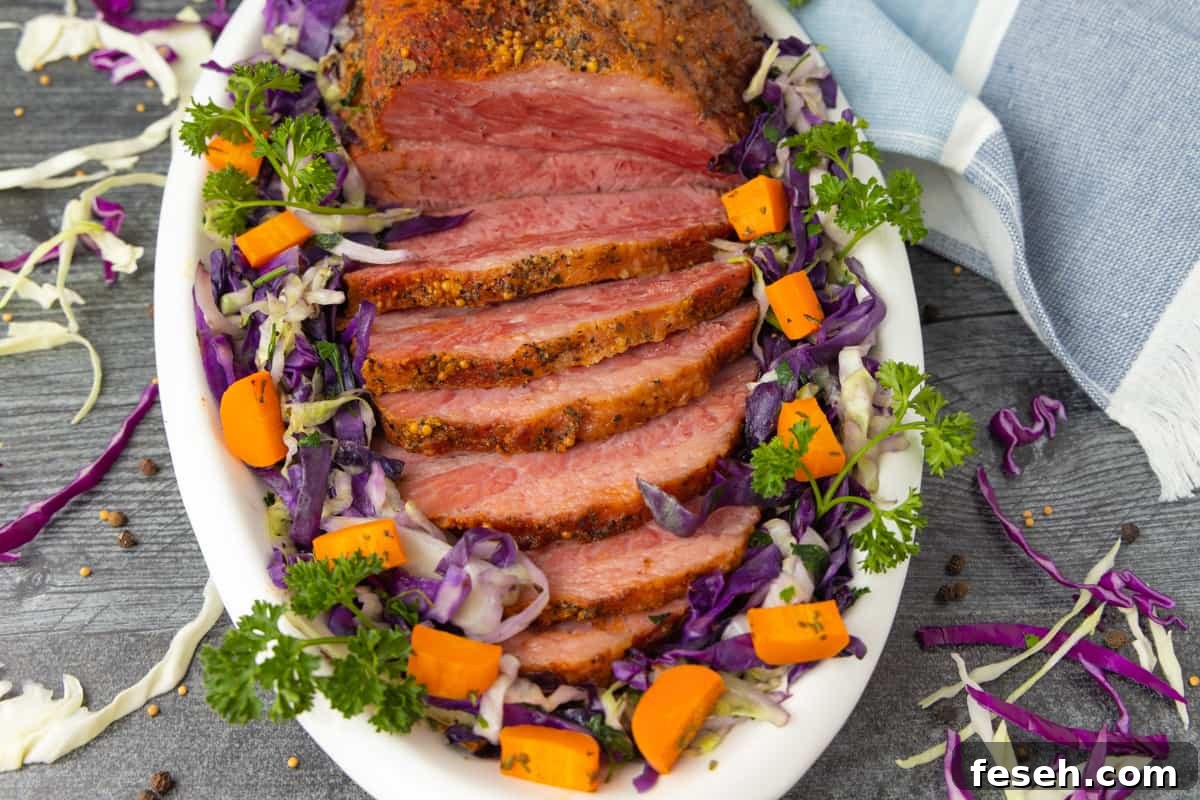
Rest the brisket for about 10 minutes after removing it from the smoker to allow juices to redistribute. Use a sharp knife and slice against the grain into roughly 1/4″ wide slices. Slicing against the grain shortens the muscle fibers and makes each bite tender and easier to chew.
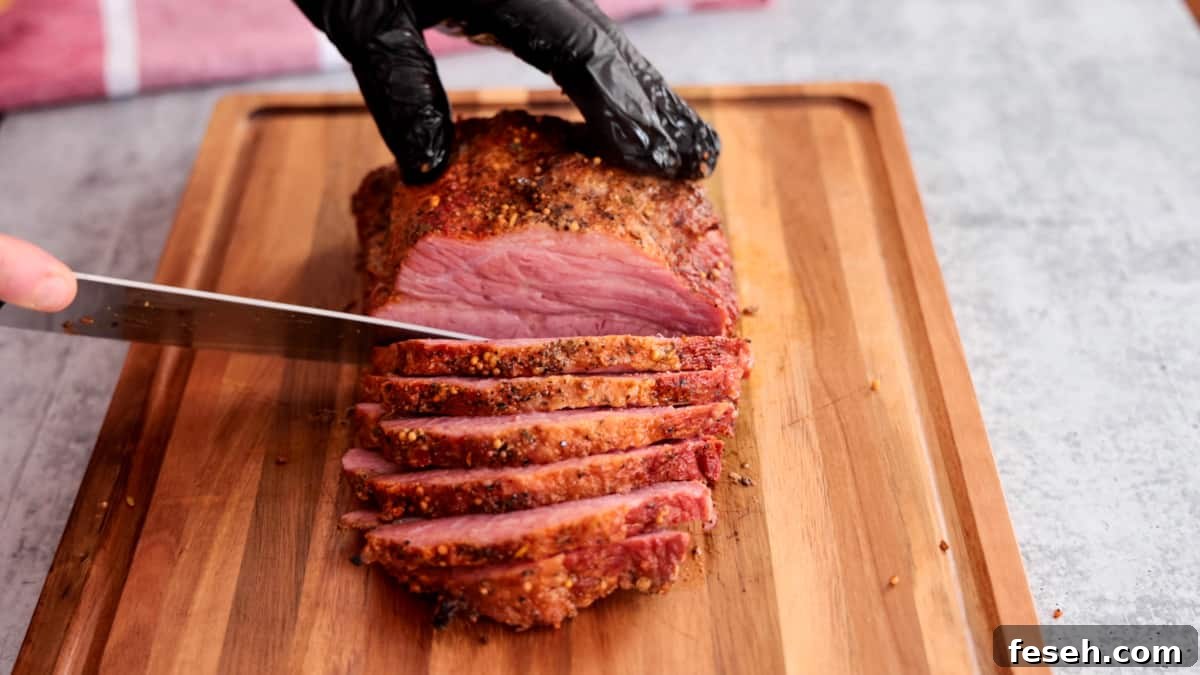
Do not slice lengthwise along the grain—this will yield chewier, tougher pieces. Serve the sliced corned beef with brown mustard, Dijon, or yellow mustard on the side.
This smoked corned beef offers a balanced blend of the original brine flavors with a pleasant smoke finish. It’s a standout choice for St. Patrick’s Day dinner or any gathering where you want a delicious, hearty main course.
Side Dishes
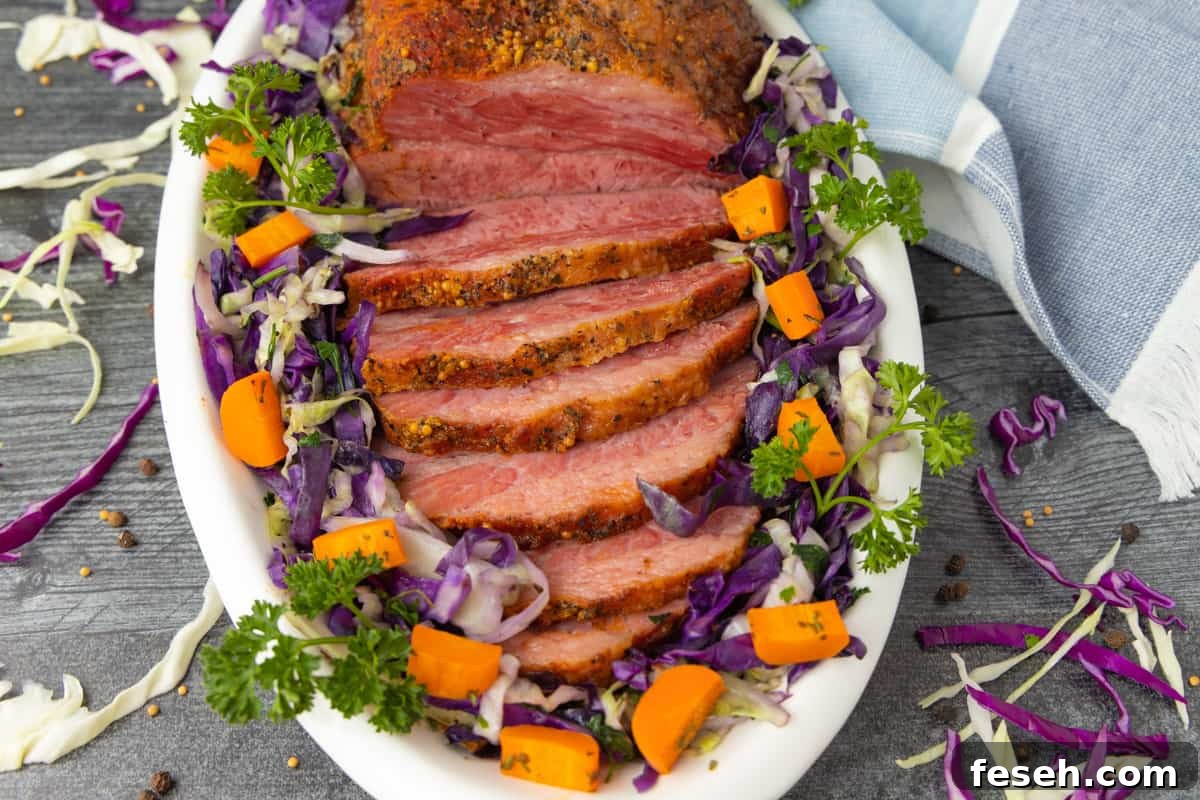
Cabbage is the classic accompaniment for corned beef, but several sides pair beautifully and round out the meal.
- Boiled cabbage
- Potato gratin
- Honey-glazed roasted carrots
- Smoked Brussels sprouts
FAQ
Corned beef is a salt‑brined flat brisket that is slow-cooked until tender.
Corned beef has historical ties to both Ireland and British markets. In the U.S., corned beef with cabbage is an Irish‑American tradition commonly served for St. Patrick’s Day.
Yes. Adding 1/2 to 1 cup of beef broth in a foil pan or wrapping with broth helps keep the meat moist during the finishing stage.
No. Corned beef should be tender and easy to slice while still holding together—not falling apart like pulled pork.
Try smoking these great recipes!
-
Smoked Shrimp
-
Grilled Sliced Potatoes
-
Grilled Filet Mignon – The Perfect Steak
-
Grilled Sausage and Peppers


Smoked Corned Beef
Ingredients
Meat
- 3 pound corned beef brisket
Seasonings
- 3 tablespoon brown mustard
- 2 tablespoon dark brown sugar
- 1 tablespoon black pepper (freshly cracked)
- 1 tablespoon garlic powder
- 2 teaspoon paprika
- 1 tablespoon mustard seed (1 included packet)
Spritz
- 1 cup beef broth
Equipment
Instructions
- Remove corned beef from packaging and rinse with cold water. Soak in cold water for 3 hours, draining and refilling the water every 30–60 minutes to reduce excess salt.
- Preheat your smoker to 250°F and select a mild hardwood like hickory or a blended pellet for balanced smoke.
- Mix the dry seasonings (excluding the beef broth and mustard) in a bowl until combined.
- Spread brown mustard over the brisket and press the seasoning evenly onto all sides.
- Place the brisket on the smoker grates, fat side up, away from direct heat. Spritz with beef broth every 45–60 minutes to keep the surface moist.
- Smoke until the internal temperature reaches about 150°F, which usually takes 3–4 hours, depending on your smoker and the brisket.
- Remove and wrap the brisket tightly in aluminum foil or place it in a covered foil pan with 1/2–1 cup beef broth. Return to the smoker and continue until the internal temperature reaches 195–203°F.
- Let the meat rest about 10 minutes, then slice against the grain into 1/4″ pieces. Serve with mustard and enjoy.
Pro Tips
- For even more tenderness, finish the brisket in a covered foil pan with 1/2–1 cup beef broth and smoke to 203°F.
- Offer a variety of mustards—brown, Dijon, or yellow—so guests can choose their favorite.
- Leftovers make excellent corned beef hash for breakfast or hearty sandwiches.
Nutrition
|
Calories: 490kcal
|
Carbohydrates: 7 g
|
Protein: 35 g
|
Fat: 35 g