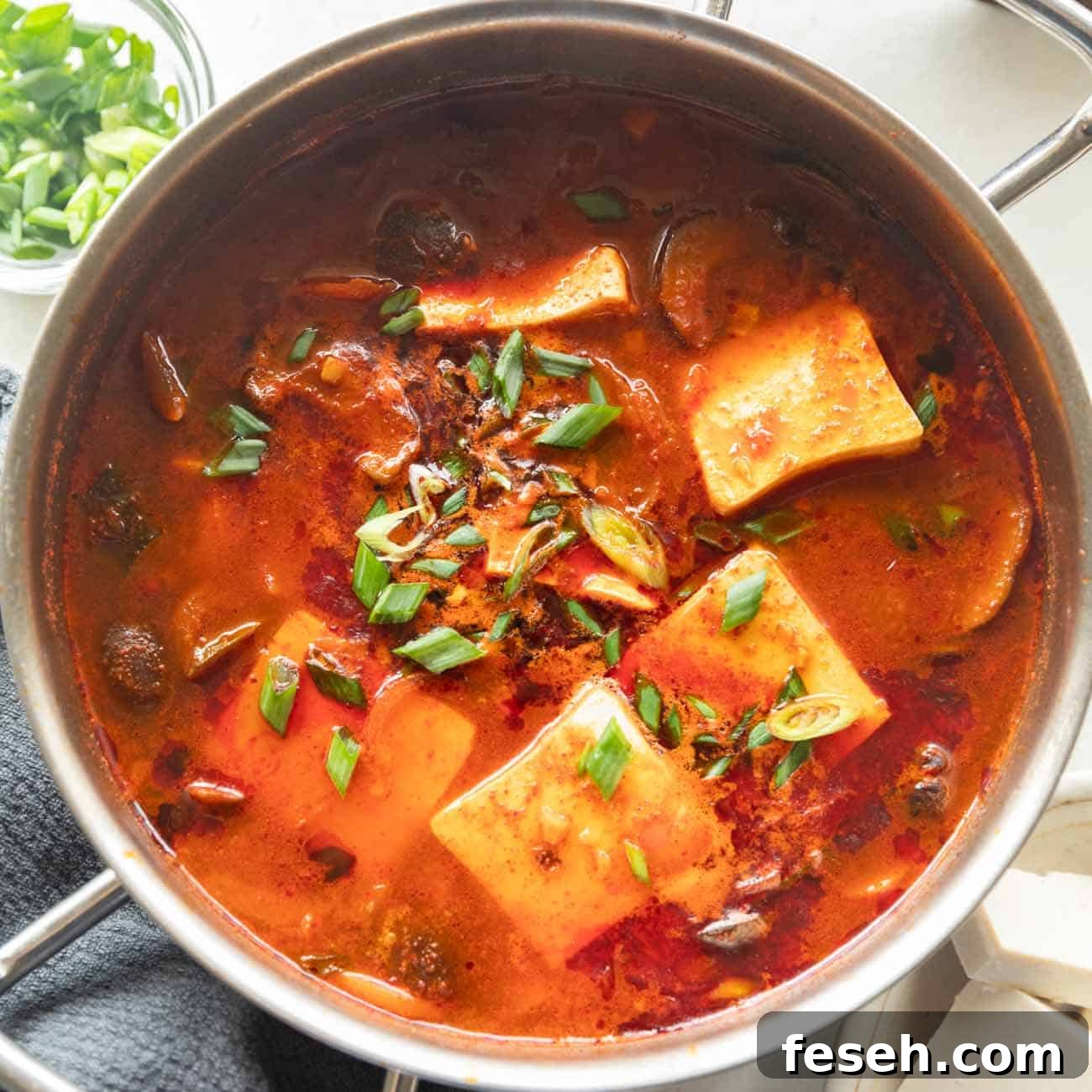
This Korean Soft Tofu Soup, or Soondubu Jjigae, is an umami-rich, spicy, and savory stew loaded with vegetables and silky soft tofu. It pairs perfectly with steamed jasmine rice or noodles. While commonly seen on K-BBQ menus, it’s simple to prepare at home and makes a comforting weeknight dinner.

In Korean, soondubu means soft tofu and jjigae means stew — a fitting name for this dish. The soft tofu is the highlight, but you can customize the stew with extra vegetables, a poached egg, or your choice of meat. The version here is vegan-friendly, and further down you’ll find notes for making a more traditional version if you prefer.
Two pantry essentials I recommend are gochujang (Korean hot pepper paste) and gochugaru (Korean red chili flakes). Even if you don’t cook Korean food often, these condiments are versatile and elevate many dishes.
How to use Gochujang and Gochugaru in other recipes
Gochujang adds a sweet-spicy depth to marinades and sauces — try it in chicken marinades, wings, or mixed with soy and oyster sauce as a dumpling dip. Gochugaru provides bright color and a clean chili flavor when used as a seasoning. Both ingredients are small investments that pay off across many recipes.
All other ingredients are pantry staples; I keep a package of silken tofu in the fridge for quick meals.
Ingredients You’ll Need to Make Korean Soft Tofu Stew
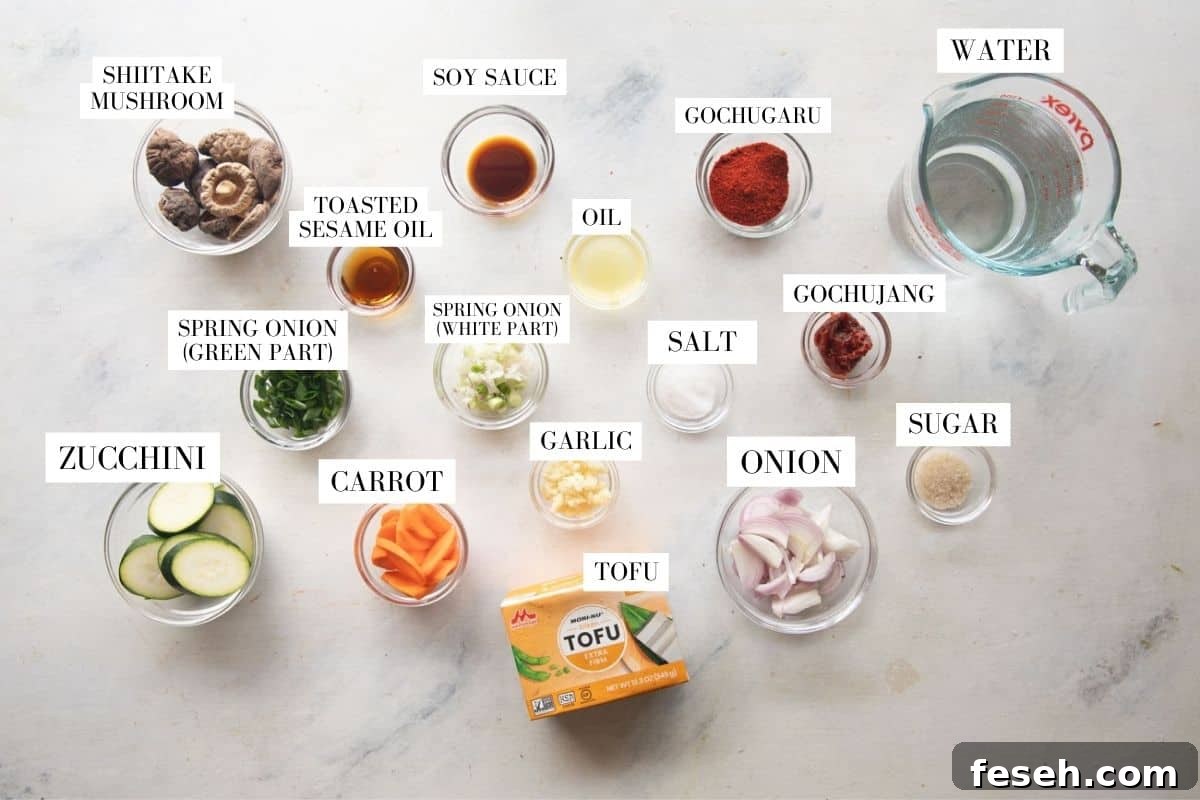
- Soft Tofu: Use silken (soft) tofu — brands like Mori-nu work well. Soft tofu gives the stew its silky texture.
- Dried Shiitake Mushrooms: These add a deep, savory umami. They also provide a flavorful soaking liquid for the broth.
- Toasted Sesame Oil: A small amount adds a nutty aroma and rounds the flavors.
- Gochujang: A fermented red pepper paste that delivers savory, sweet, and spicy notes. A little goes a long way.
- Gochugaru: Korean red pepper flakes that contribute bright color and balanced heat.
- Spring Onions: Use whites and greens separately — the whites for sautéing and the greens for garnish.
How to Make Korean Soft Tofu Stew
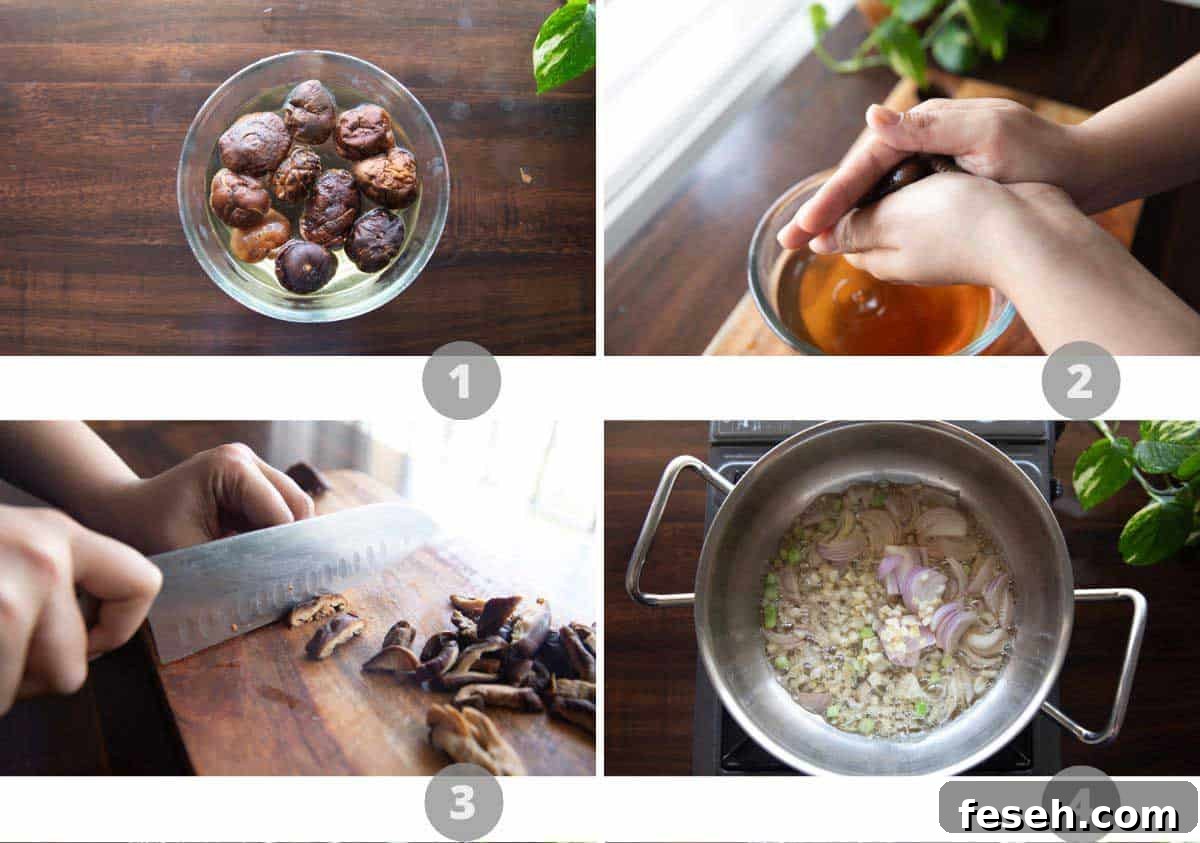
- Soak dried shiitake mushrooms in 1 cup hot water for 10–15 minutes. Drain, squeeze the mushrooms and reserve the soaking liquid.
- Slice the rehydrated mushrooms and set aside.
- In a pot, heat toasted sesame oil and a neutral oil. Add the white parts of the spring onions, sliced onion and chopped garlic; sauté for 1–2 minutes until fragrant.
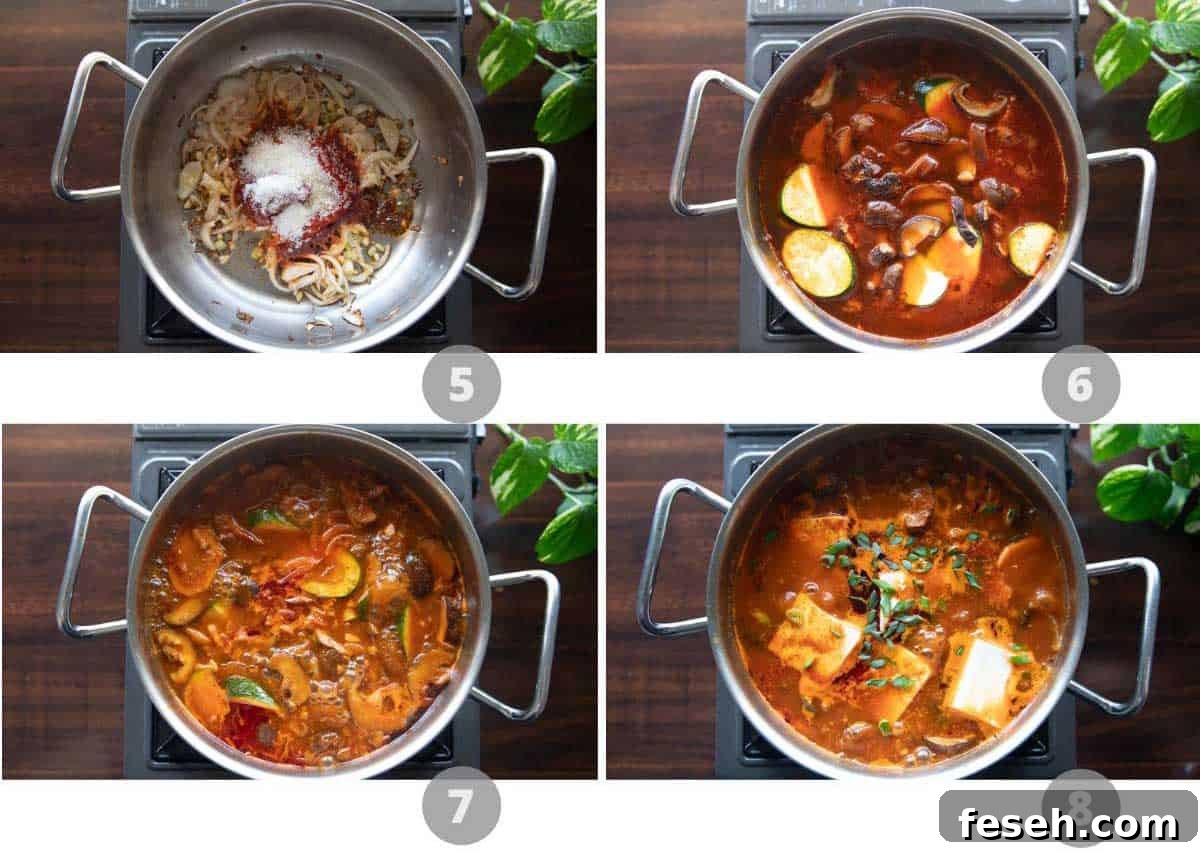
- Add gochugaru, gochujang, salt, sugar, light soy sauce, the reserved mushroom soaking water, and 2 cups additional water. Stir to dissolve the pastes.
- Bring the broth to a boil, then add zucchini, carrot and the sliced shiitake. Reduce heat and simmer for about 10 minutes, until vegetables are tender.
- Gently add pieces of soft tofu on top and sprinkle the green parts of the spring onions. Turn off the heat and serve hot, ladled over steamed rice or with noodles.
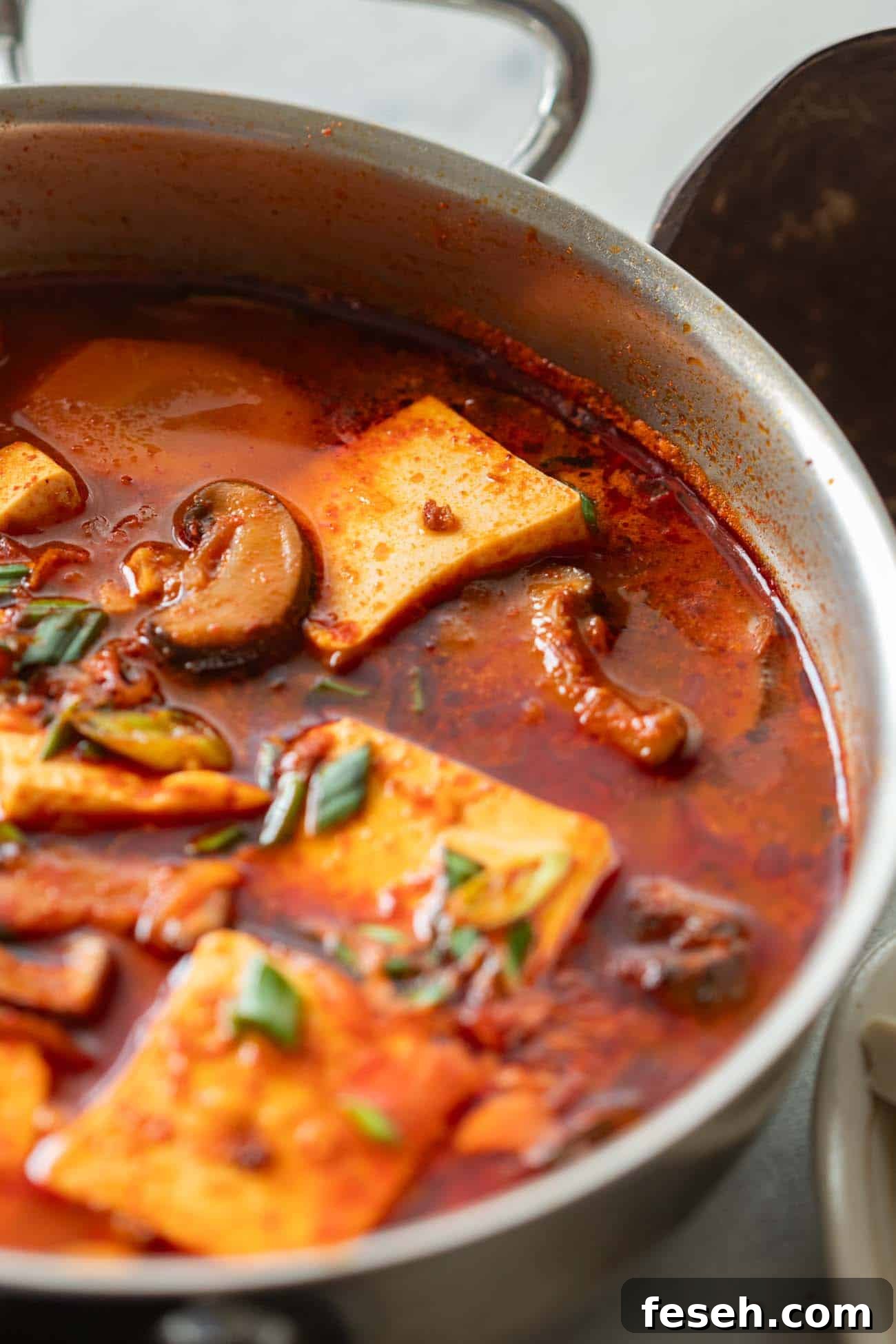
This Soondubu Jjigae is an easy, satisfying recipe to add to your dinner rotation. It’s forgiving, quick to prepare, and packed with comforting flavors. I often serve it with jasmine rice and a drizzle of sesame oil over the rice for extra richness.
If you enjoy this dish, try other Korean-inspired meals and share your recreations on social platforms to inspire others.
Watch the Recipe Video
LOVE THIS RECIPE? Subscribe to the newsletter to receive new recipes and updates.
Soondubu Jjigae (Korean Soft Tofu Stew)
Ingredients
- 7-8 dried Shiitake mushrooms
- 1 tbsp toasted sesame oil
- 1 tbsp vegetable oil
- 2 chopped green onions, keeping whites and greens separate
- 1/2 cup sliced onions
- 1 tbsp chopped garlic
- 2-3 tbsp gochugaru (Korean chili flakes)
- 1 tbsp gochujang
- 1 tsp salt
- 1 tsp sugar
- 2 tsp light soy sauce
- 3 cups water, divided (includes mushroom soaking liquid)
- 1/2 zucchini, sliced thickly
- 1 small carrot, sliced thickly
- 150 grams tofu, cut into pieces
Instructions
- Soak shiitake mushrooms in 1 cup hot water for 10–15 minutes. Drain and squeeze the mushrooms, reserving the soaking liquid. Slice mushrooms and set aside.
- Heat sesame oil and vegetable oil in a pot. Add the white part of the green onions, sliced onions and garlic; sauté for 1–2 minutes.
- Stir in gochugaru, gochujang, salt, sugar, soy sauce, the reserved mushroom water and 2 cups regular water.
- Bring to a boil, add zucchini, sliced shiitake and carrot. Reduce heat and simmer 10 minutes until vegetables are tender.
- Top with soft tofu and the green parts of the spring onions. Turn off the heat and serve hot over sticky rice or with noodles.
Notes
- Optional additions: kelp, wakame, kimchi, egg, seafood or meats can be added for extra flavor.
- Paneer vs tofu: Paneer is firmer and won’t give the melt-in-the-mouth texture of silken tofu, so it’s not the best direct substitute for this stew.
- How to eat it: Drink the stew like a soup, add noodles, or serve it ladled over steamed jasmine rice.
Nutrition
, Carbohydrates: 12g
, Protein: 4g
, Fat: 5g
More Korean Recipes
- Crunchy Korean Popcorn
- Slow Cooker Korean Pork Bulgogi
- Baked Gochujang Chicken Wings
- Korean Chicken Thighs
Additions You Can Make to Korean Tofu Stew
- Kelp: Add a strip of kelp to the broth for an umami boost. Dried anchovies are another traditional option for depth of flavor.
- Wakame: Rehydrated wakame adds a silky texture and nutrients; it pairs well in stews if you enjoy seaweed.
- Kimchi: Stir in chopped kimchi and some kimchi juice while sautéing the onions for a tangy, fermented twist similar to kimchi jjigae.
- Egg: Crack an egg into the boiling broth and cover the pot for a minute to poach it; the yolk adds richness. Add cooked meats, seafood or noodles as you like.
Frequently Asked Questions
You can drink Soondubu Jjigae like a soup, add noodles, or serve it with steamed jasmine rice.
Kimchi stew (kimchi jjigae) uses kimchi as a core ingredient. Soft tofu stew typically doesn’t include kimchi, though you can combine them for extra tang and depth.
Soon = soft, Dubu = tofu.
Soft tofu is uncooked as sold and safe to eat, but in this recipe it is warmed in the hot broth rather than served raw.
Paneer is firmer and won’t replicate the silky texture of silken tofu in this stew, so it’s not recommended as a direct substitute.