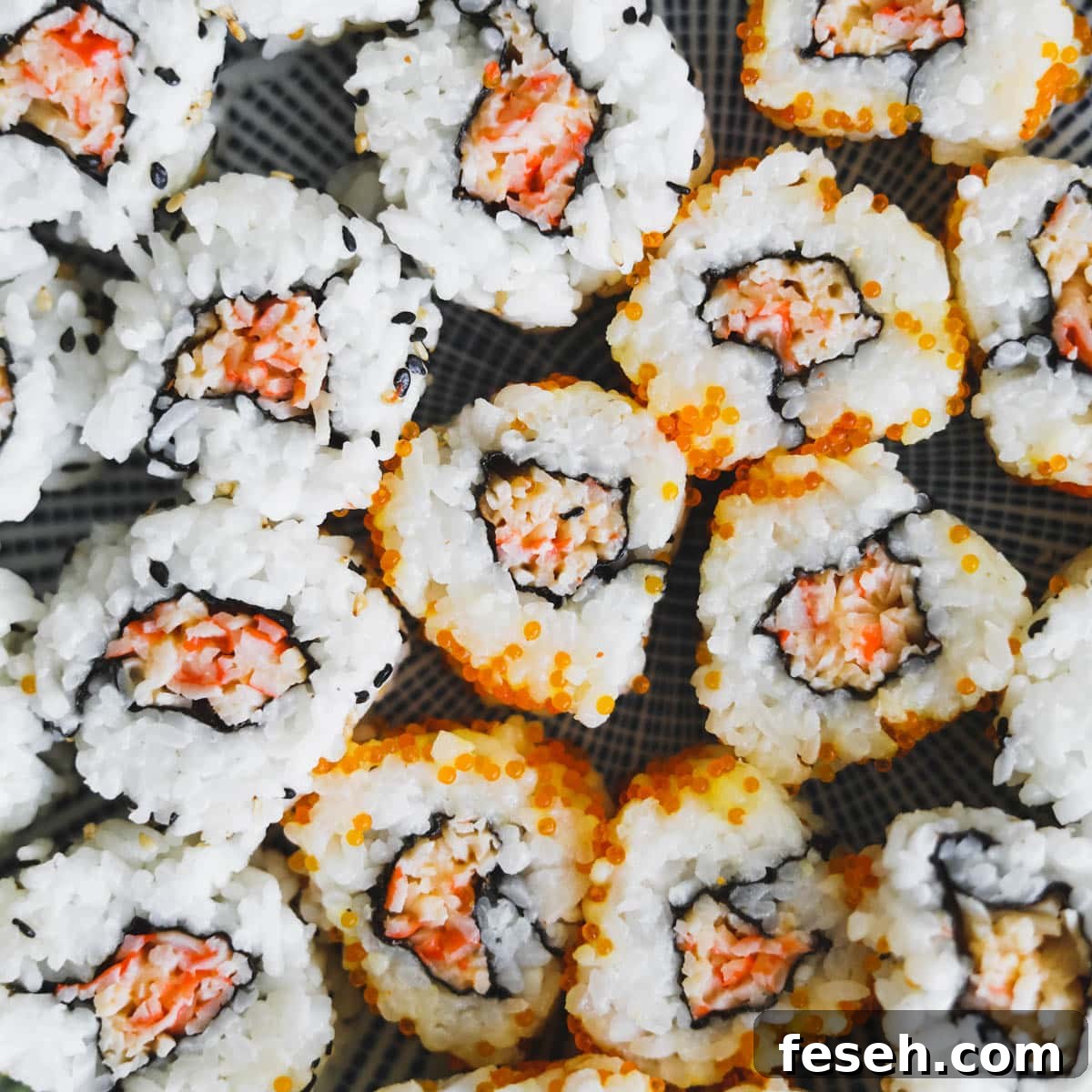
Spicy Kani Roll is a creamy, slightly spicy sushi roll made with shredded kani crab sticks tossed in a zesty Kewpie mayo sauce, then rolled in seasoned sushi rice and nori, and finished with either sesame seeds or tobiko. Simple to prepare, this roll comes together quickly and is ideal for sushi beginners and casual entertaining.
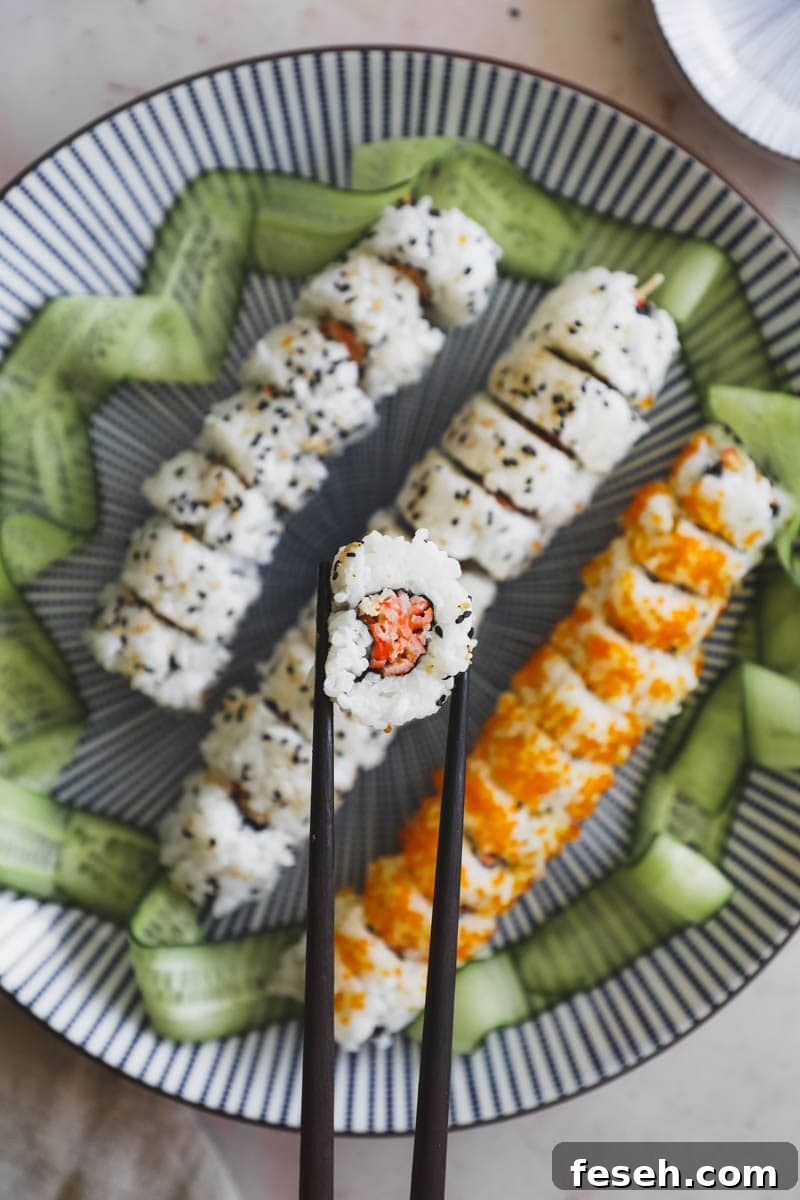
This spicy crab roll is a favorite for parties or casual dinners. It’s easy to make, looks attractive on a platter, and serves as a great base recipe to build other sushi variations.
- Taste – The kani and Kewpie mayo deliver savory umami while sriracha adds a balanced heat.
- Texture – Soft, shredded imitation crab contrasts with the slight chew of sushi rice and the crispness of nori.
- Effort – One of the more approachable sushi rolls to prepare at home.
- Time – Rice takes about 30 minutes to cook; assembling the roll requires another 15–20 minutes. Practice shortens assembly time.
Ingredients
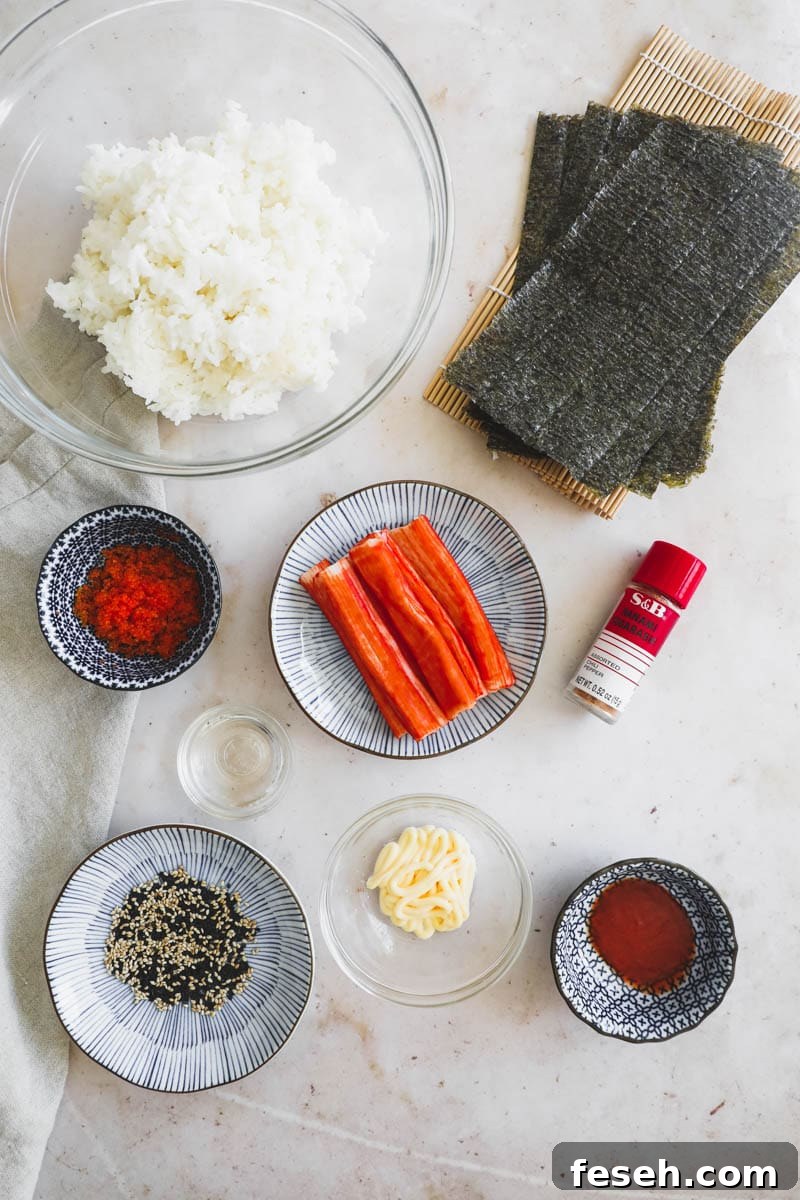
- Rice – Short-grain Japanese sushi rice is best because it’s sticky yet fluffy and holds shape when rolled. Lightly season for flavor.
- Seasoned rice vinegar (sushi vinegar) – Adds sweet-tart balance to the cooked rice to make authentic sushi rice.
- Kewpie mayo – Japanese mayonnaise with rich umami that forms the base of the spicy mayo.
- Sriracha – Adds a mild chili heat that complements the crab without overpowering it.
- Togarashi – Optional Japanese chili seasoning for subtle spice and depth.
- Kani kamaboko (imitation crab) – Surimi-based crab-style sticks with a slightly sweet, savory flavor.
- Nori seaweed sheets – Dried seaweed used to wrap rice and filling.
- Tobiko (flying fish roe) – Optional briny garnish that adds color and texture.
- Sesame seeds – White or black seeds add a mild, nutty finish when sprinkled on the exterior.
See recipe card for exact quantities.
How to Make a Kani Roll
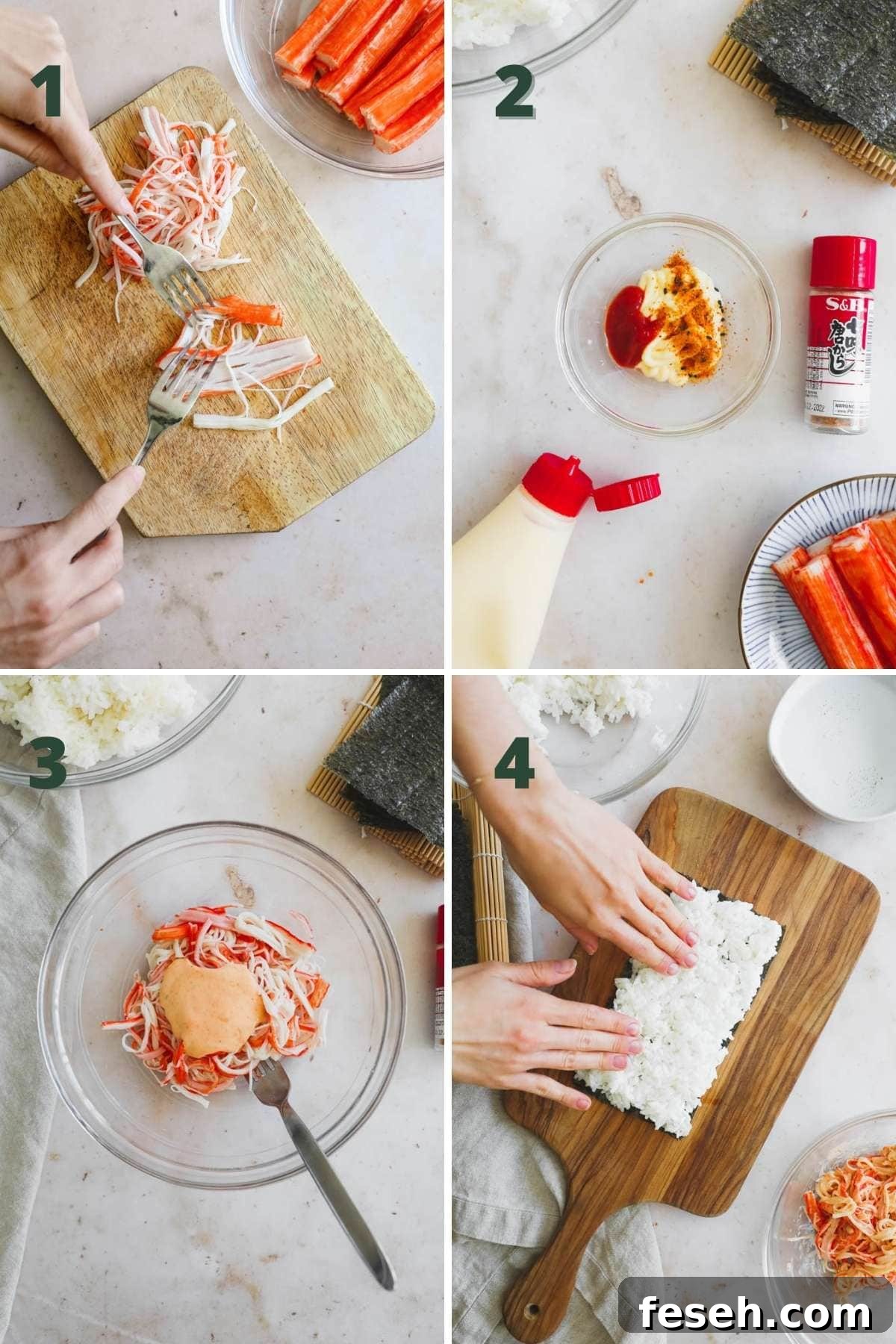
- Make the rice – Rinse the rice until the water is clear. Cook on the stovetop or in a rice cooker per package directions. Once cooked, transfer to a bowl, season with sushi vinegar, and fan while fluffing until cool.
- Prepare spicy Kewpie mayo – Whisk together Kewpie mayo, sriracha, and a pinch of togarashi (if using) until smooth.
- Mix the kani – Shred crab sticks with two forks into flakes in a bowl, add the spicy mayo, and toss until evenly coated.
- Spread rice on nori – Place a nori sheet rough-side up on a clean, dry surface. Wet your hands and press an even layer of rice (about one-quarter of the batch) onto the nori. Lightly sprinkle tobiko or sesame seeds over the rice.
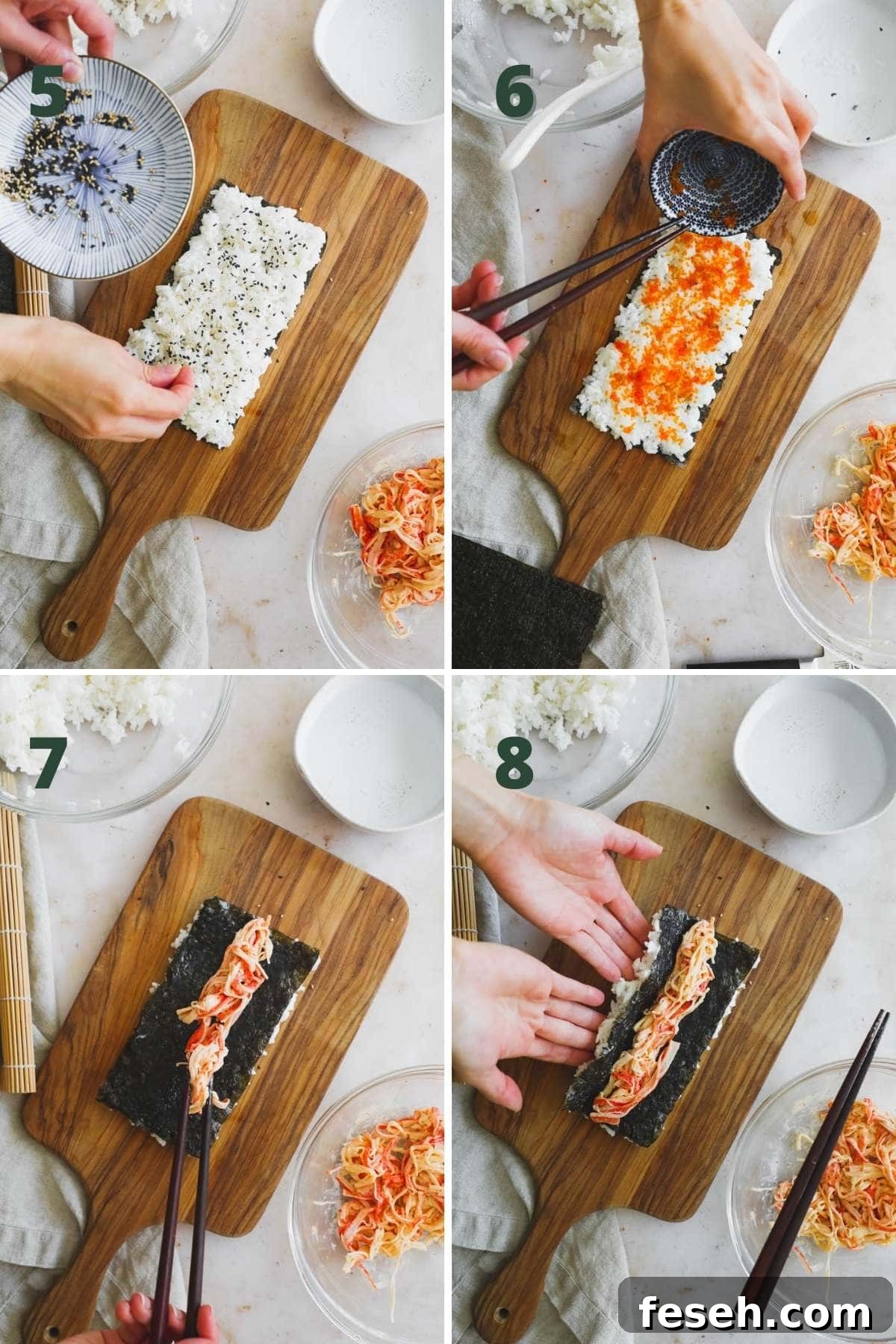
- Add the crab – Flip the sheet so rice faces down and nori faces up. Line one-quarter of the spicy kani across the center of the nori, then lift the long edge and fold it over the filling.
- Shape the roll – Use a bamboo mat (makisu) to press and shape the roll gently. Slide the mat and repeat to tighten and even the roll.
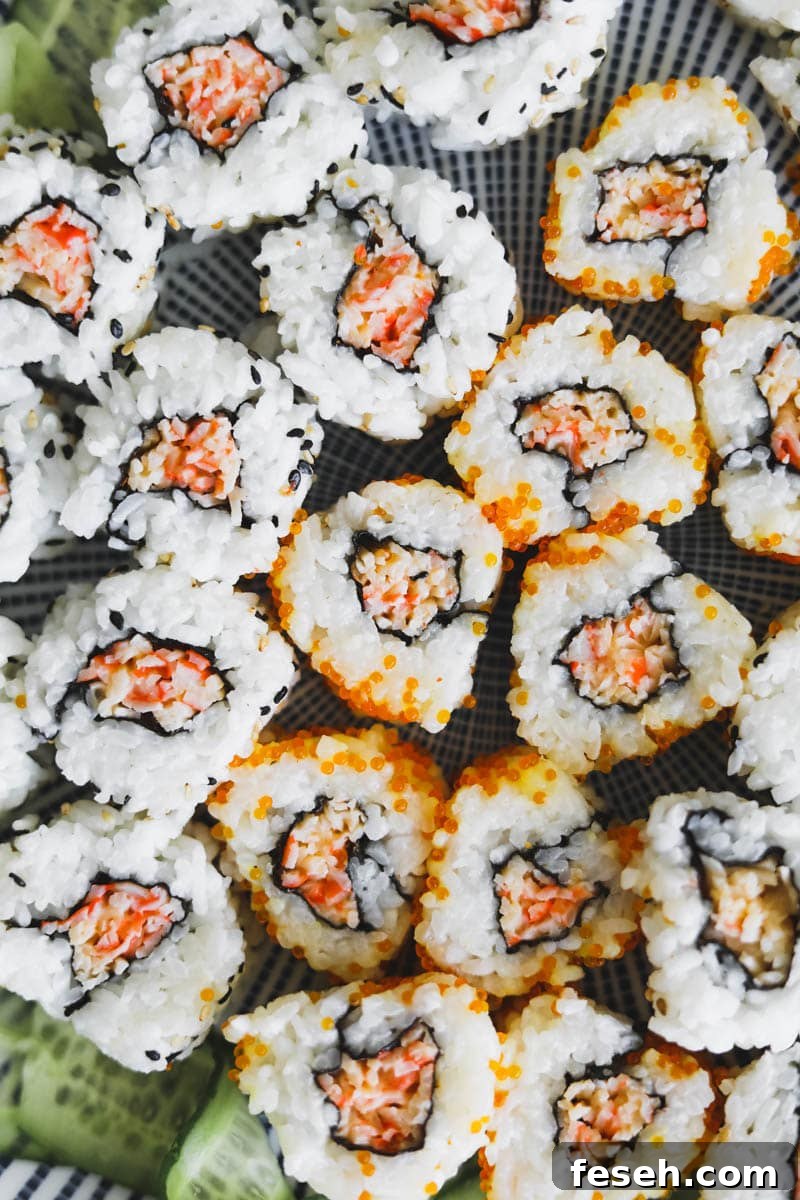
- Slice – With a sharp, wet knife, cut the roll into eight equal pieces and serve with soy sauce.
Hint: Press rice gently when spreading on nori—too much pressure turns the rice pasty. You should still see individual rice grains.
How to Enjoy Spicy Kani Sushi
Serve with soy sauce and a touch of wasabi for brightness. For a fuller meal, pair this roll with light Japanese sides such as a simple salad, tempura, or grilled vegetables.
Substitutions
- Masago – Capelin roe is a lower-cost alternative to tobiko with a similar texture and flavor.
- Fresh crab – Use cooked fresh crab instead of imitation crab for a more luxurious version.
- Ikura – Salmon roe provides a different, more pronounced briny flavor if you prefer it to tobiko.
Variations
- Cucumber – Add thin cucumber strips for crispness.
- Avocado – Top or include sliced avocado for creaminess and a nutty note.
- California-style – Add both cucumber and avocado to transform it into a California roll.
- Extra spicy – Increase sriracha or togarashi to boost heat.
- Mild – Omit sriracha for a non-spicy version.
- Sesame oil – Add ½ teaspoon for a subtle nutty aroma.
- Panko crunch – Coat the outside with toasted panko for extra texture.
- Soy paper – Wrap with soy paper for a different texture and color.
FAQ
Yes. Imitation crab (surimi) is made from cooked white fish and is safe to eat as prepared in this roll. Pregnant people should check with their healthcare provider if unsure.
Ingredients are available at Japanese markets, many grocery stores, and online specialty shops.
A California roll typically includes avocado and cucumber in addition to the kani filling.
A sushi roll (maki) is cylindrical and sliced into bite-sized pieces. A hand roll (temaki) is cone-shaped and meant to be eaten by hand.
Imitation crab is made from fish (surimi) and typically contains no real crab, though some products may include small amounts of crab flavoring. Avoid if you have shellfish allergies.
To keep nori on the outside, simply spread rice on the nori and do not flip it over before adding the filling; then roll as usual.
Equipment
Helpful tools include a sharp knife, cutting board, mixing bowls, a pot or rice cooker for the rice, a bamboo mat (makisu) to shape the roll, and a rice paddle. Measuring spoons are useful for the spicy mayo.
Storage
Store leftover kani rolls in an airtight container or wrapped tightly in the refrigerator for up to 3 days to prevent drying. This recipe does not freeze well.
Top Tips
- Avoid adding too much water when cooking rice to prevent mushiness.
- Do not overcook rice; it should remain pliable for rolling.
- If rice becomes slightly dry on the edges in a rice cooker, fluff it with a fork and redistribute moisture.
- Use a very sharp knife (wet the blade between cuts) to slice clean pieces.
- To help nori seal, press a few grains of rice where the edges meet.
- If slices become misshapen, re-wrap the roll with the bamboo mat and apply gentle pressure to reshape.
Similar Recipes
- Alaska Sushi Roll
- Spicy Ahi Poke (Spicy Tuna Bowl)
- Crunchy Spicy California Sushi Roll
- Unagi Sushi (Eel Hand Roll)
Did You Like This Recipe?
If you try this kani roll, consider leaving a rating and a comment. Tag your photos on social media so others can see your creation.
📖 Recipe

Spicy Kani Roll (Crab Sushi)
Ingredients
- 1½ cups sushi rice
- 2 cups filtered water
- 1½ tablespoons sushi vinegar
- 2 tablespoons Kewpie mayo
- 1 teaspoon sriracha (adjust to taste)
- ½ teaspoon togarashi (optional)
- 6 pieces kani kamaboko (imitation crab)
- 2 sheets nori (cut in half to make 4)
- 2 tablespoons tobiko (optional, for garnish)
- 1 tablespoon sesame seeds (optional, for garnish)
Instructions
Sushi Rice
- Stovetop: Rinse rice until water runs clear. Combine rice and water in a saucepan, bring to a low boil, then reduce to low, cover, and simmer 20 minutes. Remove from heat and let rest, covered, 10 minutes. Fluff with a fork.
- Rice cooker: Rinse rice, add to rice cooker with water, and cook per manufacturer instructions.
- Make sushi rice: Transfer cooked rice to a bowl, season with sushi vinegar, and fan while fluffing until cooled slightly.
Spicy Kani Roll
- Make spicy Kewpie mayo: Whisk together Kewpie mayo, sriracha, and togarashi until smooth.
- Combine kani: Shred kani sticks with forks, toss with spicy mayo until evenly coated.
- Assemble: Place a nori sheet rough-side up, spread ¼ of the rice across the nori, and sprinkle tobiko or sesame seeds.
- Add filling: Flip so rice faces down, place ¼ of the kani along the center, then roll and tuck the filling in as you go.
- Shape and slice: Use a bamboo mat to shape the roll, then slice into 8 pieces with a sharp knife. Serve with soy sauce.
Notes
Storage
Refrigerate rolls in an airtight container for up to 3 days. Keep moisture sealed; do not freeze.
Top Tips
- Use the correct rice-to-water ratio to avoid mushy or hard rice.
- Wet your knife between cuts to prevent sticking and keep slices neat.
- Apply gentle pressure with the bamboo mat to shape and realign slices if needed.
Nutrition
| Carbohydrates: 38 g
| Protein: 3 g
| Fat: 1 g
Share your results and tag your photos so others can enjoy your sushi.