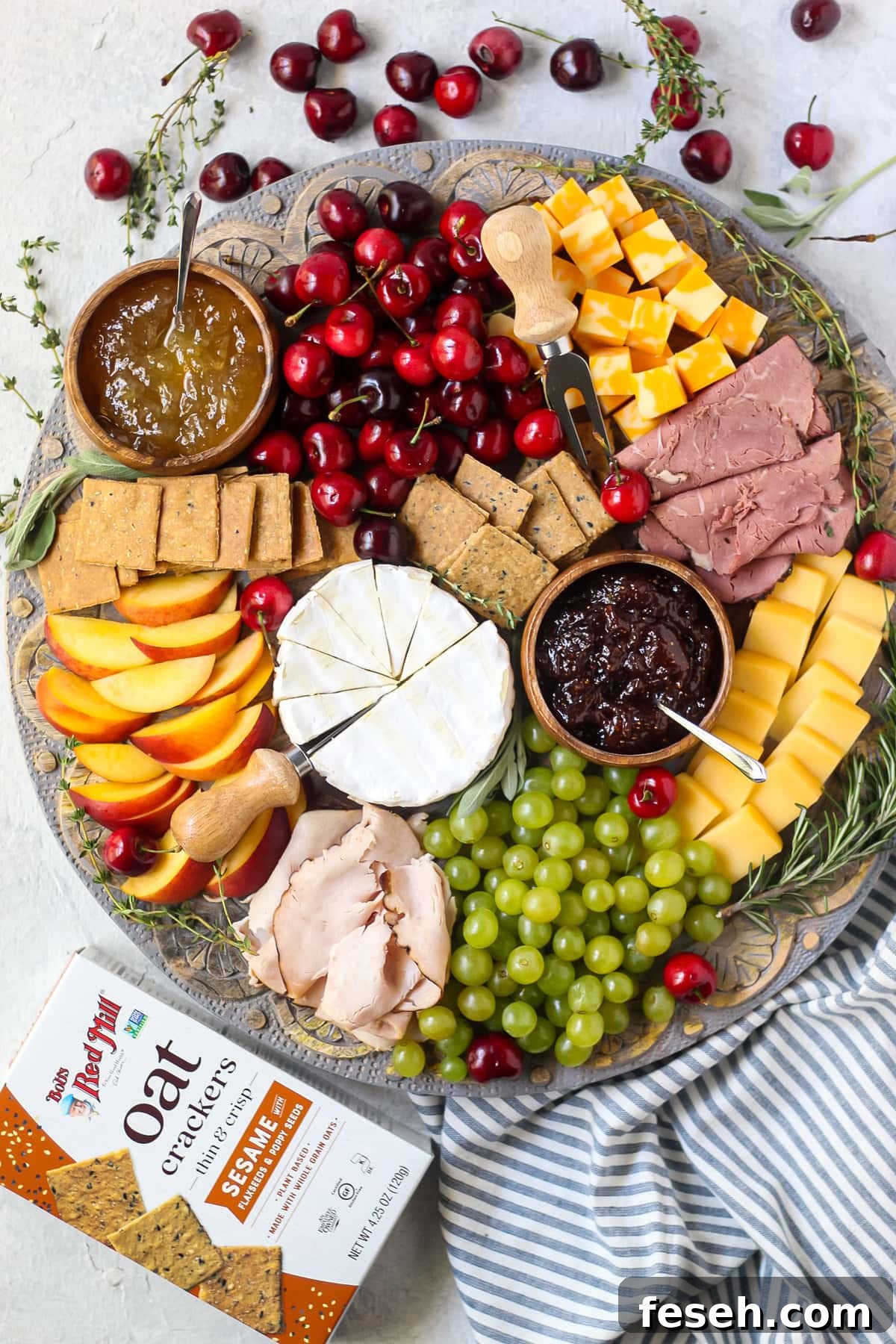
Learn how to build a beautiful summer charcuterie board for your next gathering with practical tips and ingredient suggestions.
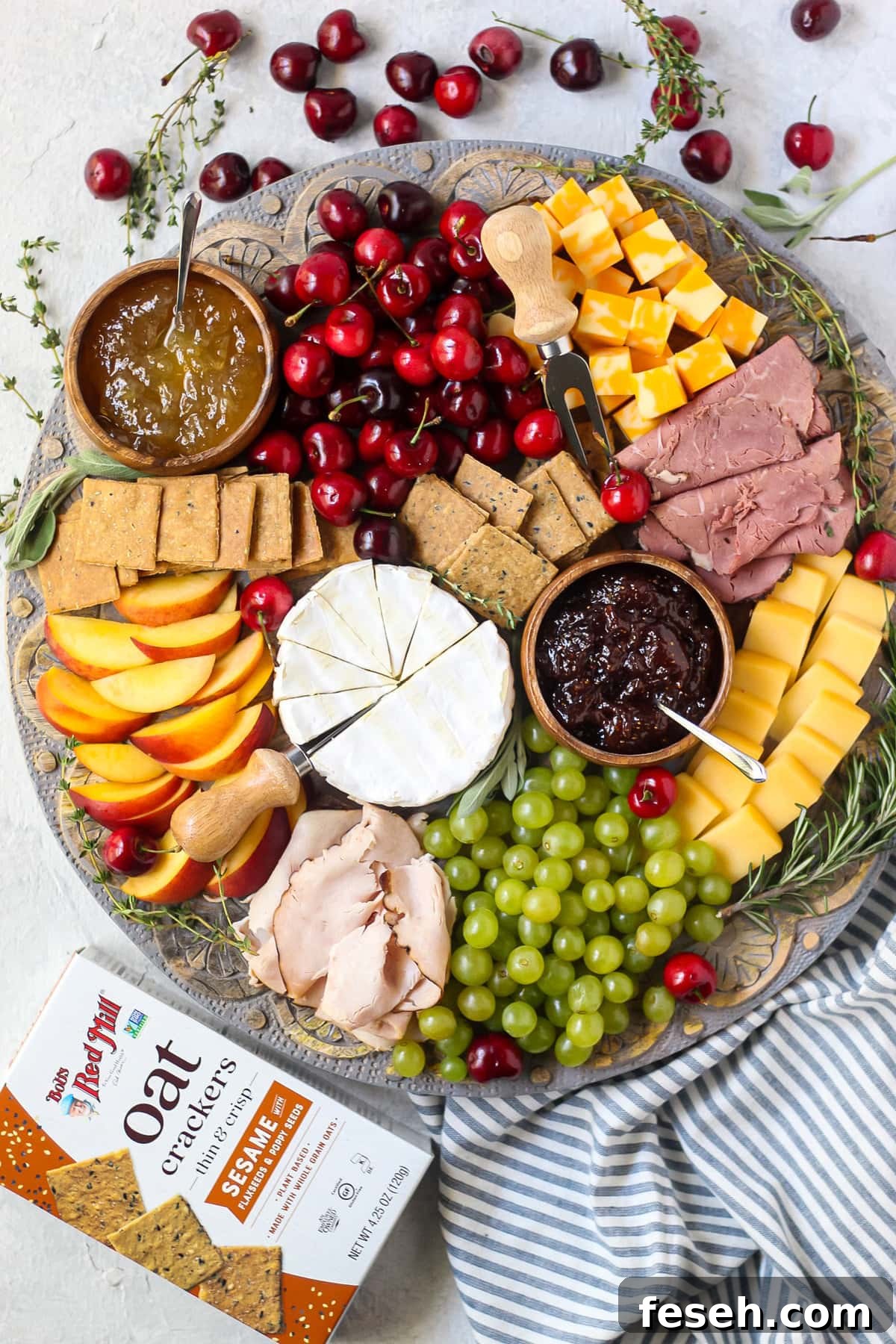
Having friends and family over again is such a joy, and summer entertaining is one of my favorite ways to celebrate. In hot weather, a charcuterie or grazing board is a simple, crowd-pleasing appetizer that requires minimal hands-on time and looks impressive on the table.
What Is A Charcuterie Board?
Traditionally, charcuterie refers to cured meats, but a modern charcuterie board includes an assortment of cured meats, cheeses, crackers or bread, fruits, nuts, dips, and small accoutrements. There’s no single “right” way to assemble one — focus on contrasts in flavor and texture and on creating inviting combinations that encourage grazing.
When building a board, choose cheeses and meats that offer variety: creamy, firm, smoky, mild, or tangy. Mix textures and strengths to keep every bite interesting. Seasonal fruit and dried fruit work well as palate cleansers; in summer I favor stone fruits like cherries, peaches, apricots, and plums, plus grapes and berries.
What Elements Make Up A Charcuterie Board?
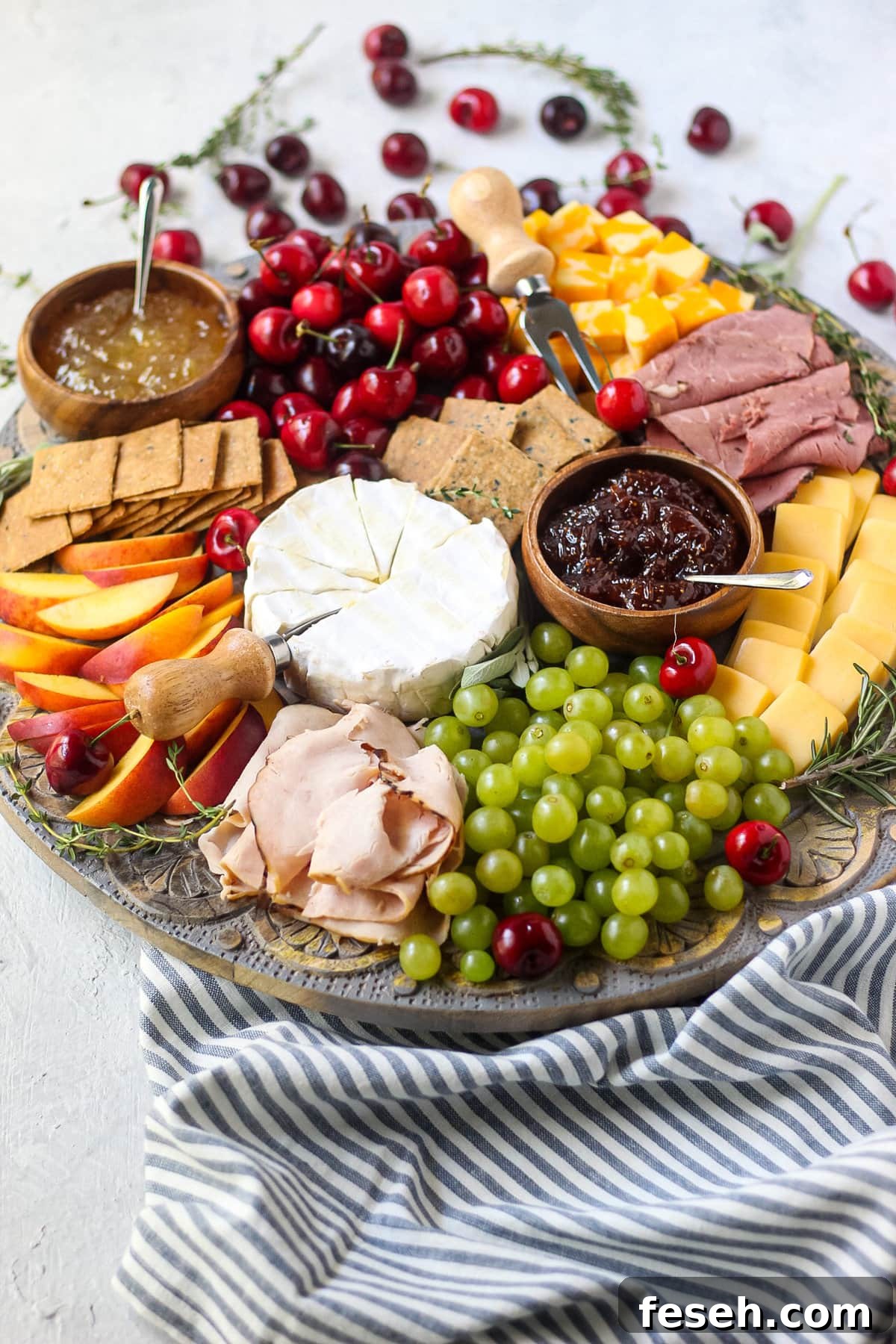
- Pick a food-safe foundation: Use a wooden cutting board, slate, serving platter, tray, or even a sheet pan. Consider the number of guests and how much you want to spend — bigger boards serve more people but require more items to fill.
- Use small dishes to create structure: Little bowls and ramekins hold spreads, dips, olives, and nuts and help organize the board. You can use mismatched dishes — they add character and save you from buying specialty pieces.
- Offer several cheeses: Aim for at least three cheeses with different textures and flavors: a soft creamy cheese, a firm or aged cheese, and a milder semi-soft cheese. Examples: Brie, goat cheese, or blue for soft; aged Gouda, Manchego, or Gruyère for firm; and Havarti, Munster, or young Gouda for semi-soft.
- Include a variety of cured meats: Thinly sliced meats arranged flat or in loose rolls are easiest for guests. Popular options include prosciutto, salami, pancetta, and smoked sausages. You can also add deli-style cured meats like roast beef or pastrami for variety.
- Add starchy elements like crackers and bread: Serve 2–3 types of crackers or some petite toasts and breadsticks. Include a gluten-free or seed-based cracker option for guests with sensitivities.
- Fresh fruit and vegetables: Bright produce adds color and freshness and balances salty meats and cheeses. Choose items that are easy to pick or slice and that are in season to keep costs down and flavors at their peak.
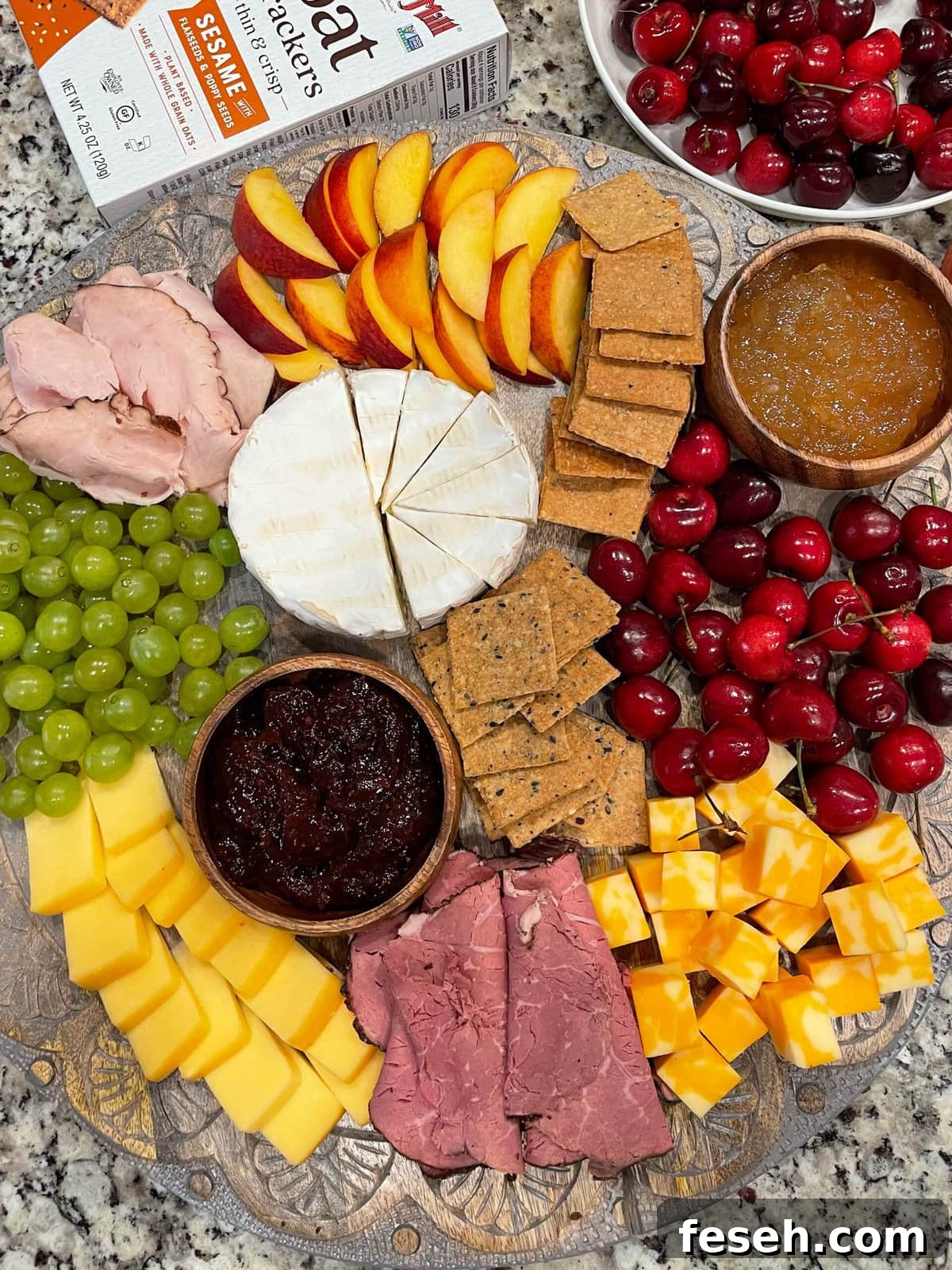
How to Build Your Charcuterie Board
Assembling the board is an opportunity to be creative. Aim for a balanced, attractive layout that makes it easy for guests to graze.
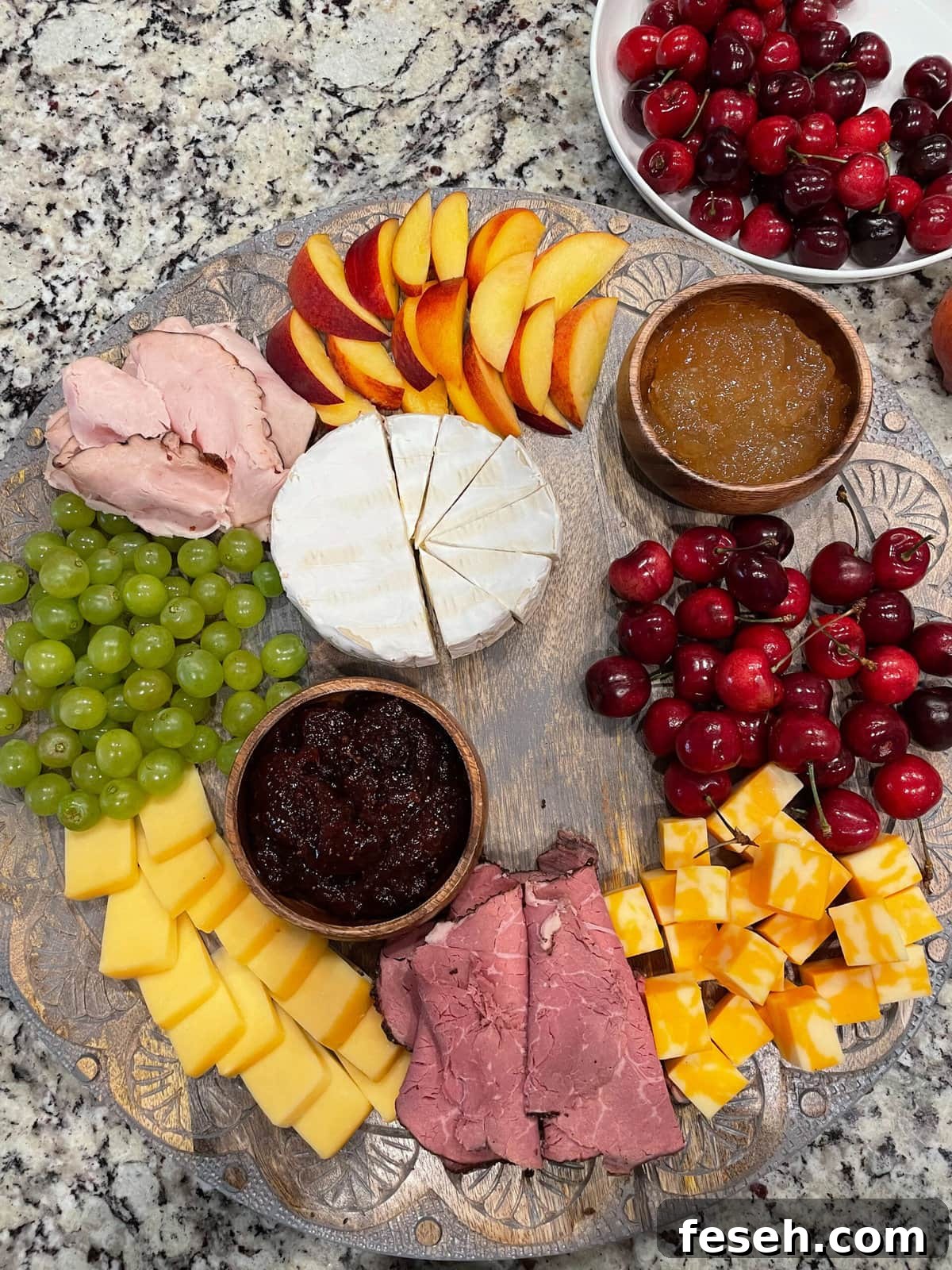
- Anchor the board first: Place small dishes and cheeses in positions that create structure. Cut cheeses into bite-sized slices or wedges so guests can serve themselves easily.
- Add fruit, vegetables, and meats around the cheeses: Create small pockets of fruit like sliced peaches, clusters of grapes, or bowls of cherries. Arrange meats in small stacks or rolled bundles for easy picking.
- Arrange crackers and bread: Place crackers where they’re easy to reach, either fanned or stacked neatly.
- Fill bowls with spreads and dips: Add jams, marmalades, honey, or savory spreads to the small dishes to pair with cheeses and meats.
- Fill gaps with herbs and loose fruit: Fresh rosemary, thyme, and sage are great for garnish and give the board a finished look. Scatter a few loose berries or cherries to add color and texture.
- Provide utensils: Include mini forks, spoons, tongs, and spreaders so guests can serve themselves without mixing flavors.
When finished, you’ll have an inviting summer charcuterie board that guests can graze on throughout your gathering.
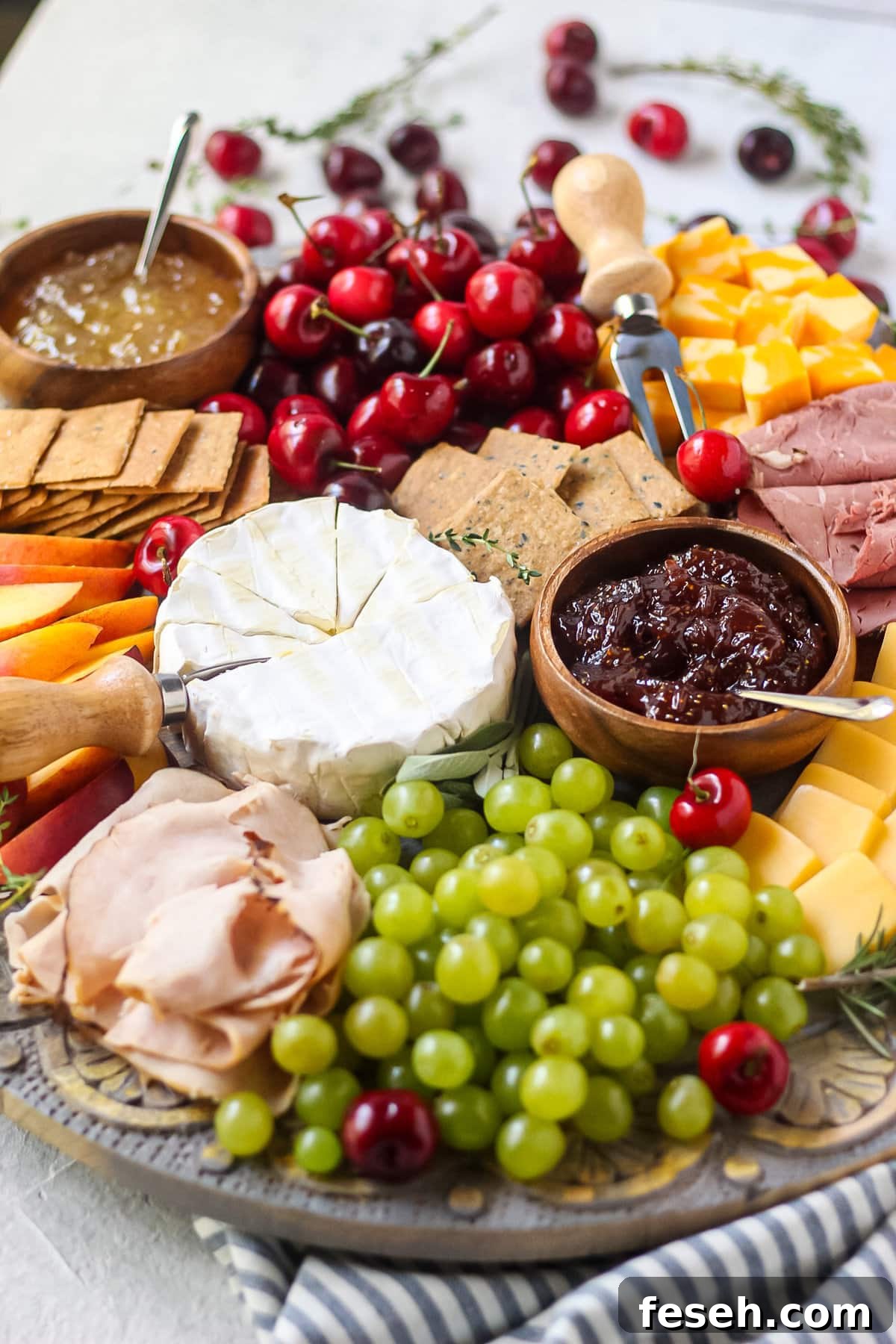
Important tip: Meats and cheeses taste best at room temperature, but perishable items should not be left out for more than two hours. Keep extra sliced meats, cheeses, and refill items chilled in zippered bags in the refrigerator so you can quickly top up the board as needed.
Recommended Tools for this Recipe
- Wooden serving board or platter
- Small bowls, ramekins, or cups
- Mini utensils including forks, spoons, tongs, and spreaders
How to Create the Perfect Summer Charcuterie Board
Ashley Boyd
Equipment
- Wooden cutting board, slate board, serving platter, tray, or sheet pan for serving
- Small dishes such as cups, ramekins, or candy dishes
- Mini utensils including forks, spoons, tongs and spreaders
Ingredients
- 2 oz cheese per person — at least three varieties of different textures, cut into small slices or cubes (examples used: Brie, smoked Gouda, Colby Jack)
- 1–2 oz meat per person, thinly sliced (examples used: cured turkey, roast beef)
- 1.5 lbs grapes, washed and removed from the stem
- 1.5 lbs fresh cherries
- 4 peaches, rinsed, pitted, and sliced
- 2 types of fruit spread or marmalade (examples used: lemon marmalade and fig spread)
- 2 types of crackers (examples used: rosemary and sesame oat crackers)
- Fresh herbs for garnish and filling gaps (rosemary, sage, and thyme)
Instructions
- Start by placing elements that anchor the board, such as small dishes and cheeses. Cut cheeses into bite-sized pieces for easy serving.
- Add fruit, vegetables, and meats around the cheeses. Create small pockets of sliced peaches, arrange cherries and grapes, and stack or roll the sliced meats.
- Fill in with crackers and bread, arranging them so guests can easily grab them.
- Place spreads and dips into the containers and position them near complementary cheeses or crackers.
- Fill any gaps with fresh herbs and loose fruit pieces to add color and fragrance.
- Provide small utensils such as mini forks, spoons, tongs, and spreaders for hygienic serving.