The purpose of this post is not to prescribe exactly how much rice you should eat, but to offer practical alternatives so you can enjoy a varied gluten-free diet without relying heavily on a single grain. Rice can be a healthy part of a gluten-free lifestyle, but adding different grains, seeds, vegetables, and flours gives you a broader range of nutrients, textures, and flavors.
Rice intake has become a common discussion point among people following gluten-free diets. Some research has found higher levels of arsenic and mercury associated with rice consumption compared with other grains, which has prompted debate about whether the increased rice intake typical of many gluten-free diets is a concern. For example, a University of Illinois study reported higher average arsenic and mercury biomarkers in gluten-free participants. It’s helpful to keep this in context: the study had a limited sample size and the measured levels were well below thresholds for arsenic toxicity or mercury poisoning. Still, diversifying grains and starches is a reasonable approach to reduce potential exposure and broaden nutritional intake.
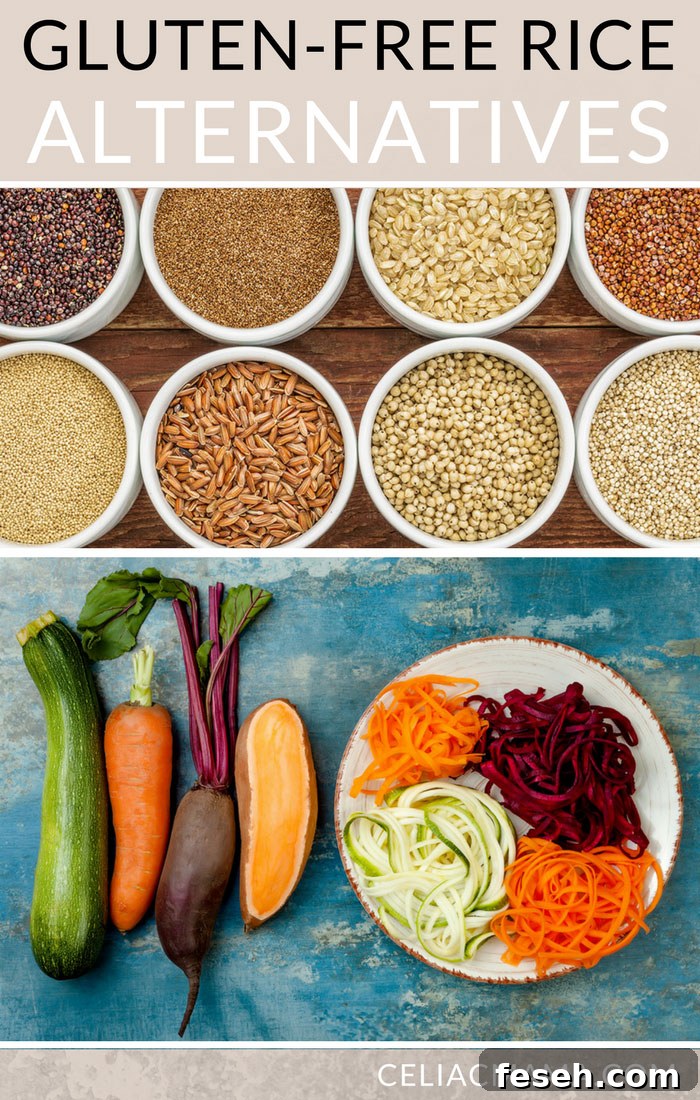
Gluten-Free Rice Pasta Alternatives
- Spaghetti squash — A simple and satisfying vegetable-based pasta substitute. Slice the squash in half, remove the seeds, brush the cut sides lightly with olive or vegetable oil, and place face down on a baking sheet. Roast at 400°F (about 200°C) until fork-tender, roughly 35–45 minutes depending on size. Once cooled, scrape the flesh with a fork to reveal spaghetti-like strands and top with your favorite sauce.
- Store-bought pastas — If you prefer packaged pasta, there are many non-rice options available. Quinoa, corn, chickpea, and bean-based pastas provide different textures, protein levels, and flavors and are widely found in grocery stores and retailers with gluten-free selections.
- Zucchini noodles (zoodles) — Zoodles are light and fresh-tasting. To avoid sogginess, skip boiling and instead sauté briefly in a skillet with a little olive oil until they reach your preferred texture. They pair well with sauces or mixed with other sautéed vegetables.
Gluten-Free Rice Flour Alternatives
- Flour blends — Single gluten-free flours often don’t match the texture and flavor balance of a blend. Store-bought multipurpose blends frequently include rice flour as a main ingredient, so consider making your own blends to reduce rice content and tailor results. Homemade blends are straightforward to assemble and can be stored in airtight containers. Non-rice flours and starches effective for baking include almond, coconut, buckwheat, millet, amaranth, teff, sorghum, potato starch, tapioca starch, and flours made from various beans and chickpeas.
- Pre-made mixes — Many commercial baking mixes are based primarily on almond, coconut, or bean flours rather than rice. When choosing a packaged mix, look for gluten-free certification and read the ingredient list to identify blends that minimize rice or use alternative flours as primary ingredients.
Gluten-Free Rice Alternatives
- Quinoa — A versatile, rice-like seed that cooks similarly to rice and can be used plain, as a pilaf, or combined with broths, herbs, and vegetables for added flavor. Quinoa provides protein, fiber, and a distinct nutty taste.
- Cauliflower rice — Finely chopped cauliflower can be used in place of rice for a low-carb, vegetable-forward option. You can make it at home by pulsing florets in a food processor or blender, or buy pre-prepared cauliflower rice in the produce or frozen sections of many grocery stores. Lightly sauté or steam for a few minutes and season to taste.
Expanding beyond rice can enrich your meals and reduce reliance on one ingredient while keeping your gluten-free diet enjoyable and nutritionally balanced. Experimenting with different grains, flours, and vegetable-based substitutes will help you find textures and flavors you and your family enjoy.