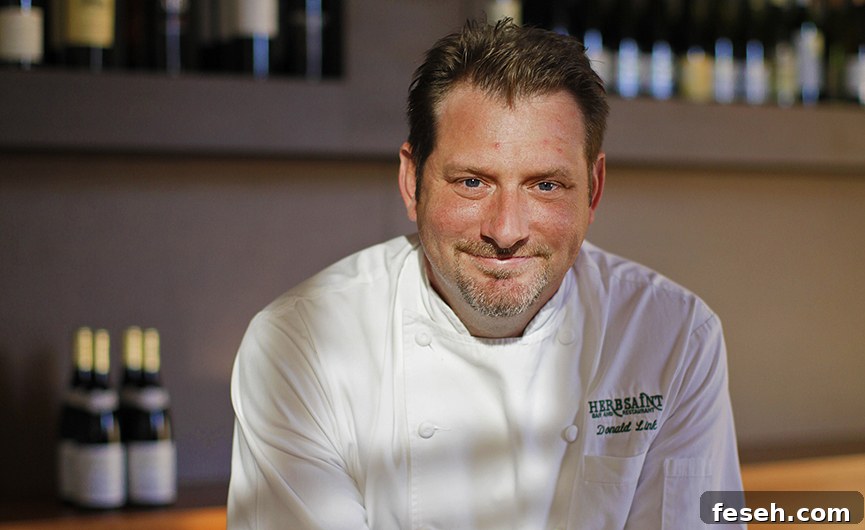
Reviving Cajun Cuisine
Born and raised in Cajun country, James Beard Award-winning chef and restaurateur Donald Link has built a culinary career rooted in Louisiana traditions. In New Orleans’ Warehouse District, his acclaimed restaurant Cochon pays tribute to the food he grew up eating and consistently ranks among the city’s most sought-after dining destinations. Nearby, Cochon Butcher serves housemade Louisiana-style charcuterie, sandwiches, and small plates with a devoted following. Link’s culinary journey began with his flagship white-tablecloth bistro Herbsaint, a French-inspired restaurant honored among America’s best. Here, Donald discusses his seafood-focused project Peche, the evolving New Orleans food scene, and what Cajun cuisine means to him.
AndrewZimmern.com: Has food always been central to your life? When did you know you wanted to become a chef?
Donald Link: Food was a constant presence in my childhood. I learned by watching my grandparents cook and by helping my grandfather shuck bags of black-eyed peas and corn. My first restaurant job came at 15, but it wasn’t until I was 23—after five years studying finance—that I realized I wanted to cook for the rest of my life. I remember that day clearly; it shaped everything that followed.
AZ.com: How would you describe your different dining concepts in New Orleans? What are your favorite dishes at each?
DL: Each restaurant has a distinct personality. Herbsaint is a French-inspired New Orleans bistro with a thoughtful wine list and a focus on refined, seasonal cooking. Cochon draws from my Cajun and Southern roots with rustic, bold flavors in a more casual setting. Cochon Butcher channels the energy of an old-world salumeria and deli—rock-and-roll spirit, house charcuterie, sandwiches, and a lively bar program.
- Herbsaint: Duck confit with dirty rice
- Cochon: Rabbit and dumplings or catfish courtbouillon
- Cochon Butcher: A classic muffaletta
AZ.com: People know you for pork and charcuterie, but you’re opening a seafood restaurant. Tell us about it.
DL: I want to apply the sensibilities of my other restaurants to a New Orleans seafood spot. Expect a traditional oyster bar alongside crudos and ceviche at a raw bar. The center of the kitchen will be a South American- and Spanish-style fire hearth and grill where fish and meats cook over coals from oak and pecan. The menu will feature many small plates, an expansive raw section, and fresh, local seafood. There will be far less frying than you might expect—though a little fry here and there could appear.
AZ.com: What’s the state of Gulf Coast seafood?
DL: The Gulf produces outstanding seafood—oysters, shrimp, flounder, redfish, red snapper, crab, cobia, and even tuna. The quality and variety make it an incredible resource for any chef focused on regional ingredients.
AZ.com: What sets New Orleans’ food culture apart?
DL: New Orleans food has layers and depth you don’t often find elsewhere. There’s a warmth and intensity—extra salt, a touch more heat, and a soulful richness in the cooking. It’s food with personality and history built into every bite.
AZ.com: How has the local food scene changed since you opened Herbsaint?
DL: The biggest shift is a stronger commitment to local ingredients and a greater openness to global influences. While classic Creole dishes remain essential and beloved, chefs now feel freer to reinterpret tradition and incorporate techniques and flavors from around the world. That evolution has expanded the city’s culinary vocabulary while still honoring its roots.
AZ.com: Cajun cuisine varies by interpretation. What does it mean to you?
DL: Definitions will differ, but for me Cajun food evokes boudin, gumbo, smothered pork with rice, smoked sausage, and abundant crawfish boils. It’s rustic, straightforward cooking that relies on slow techniques to build deep flavor. There’s a plain-spoken authenticity to it—food made with patience and heart.
AZ.com: What makes a great crawfish boil?
DL: Start with quality rice-field crawfish and let them sit in clean water overnight. Bring a large pot to a boil—plain or lightly salted—then transfer the crawfish to an ice chest, add your seasoning, and close the lid for 10 to 15 minutes so the flavors infuse. Good friends and plenty of cold beer complete the experience.
AZ.com: Favorite restaurants in New Orleans?
DL: It depends on my mood, but several places always stand out: Lillette, Bayona, La Boca, and Domenica are on my regular list. For less conventional finds I enjoy local spots like Tony Angelos and Pho Tau Bay.
AZ.com: What’s in your fridge?
DL: Practical staples—jams from Burris Market, pickles and mustard I make, leftover dinners for late nights, eggs, quality cheese, mayonnaise, and usually some salami. I tend to buy what I need to cook and it disappears quickly; the pantry is another story entirely.
Inspired by the Cajun and Southern cooking of his grandparents, Louisiana native Chef Donald Link began cooking professionally at 15. Over the last decade he has established several renowned restaurants in New Orleans’ Warehouse District. Herbsaint introduced his contemporary take on the French-American bistro; Cochon, opened with chef-partner Stephen Stryjewski, showcases authentic Cajun and Southern cooking; Cochon Butcher pays homage to Old World butcher shops with charcuterie, sandwiches, and a lively bar menu; Calcasieu serves as a private event space named after a parish in southwest Louisiana; and Peche Seafood Grill focuses on coastal seafood prepared over fire. Link earned a James Beard Award for Best Chef: South in 2007, and his cookbook Real Cajun: Rustic Home Cooking from Donald Link’s Louisiana has been honored for its celebration of family recipes and regional authenticity.